Domestic travel to lead revival in tourism, hospitality sectors
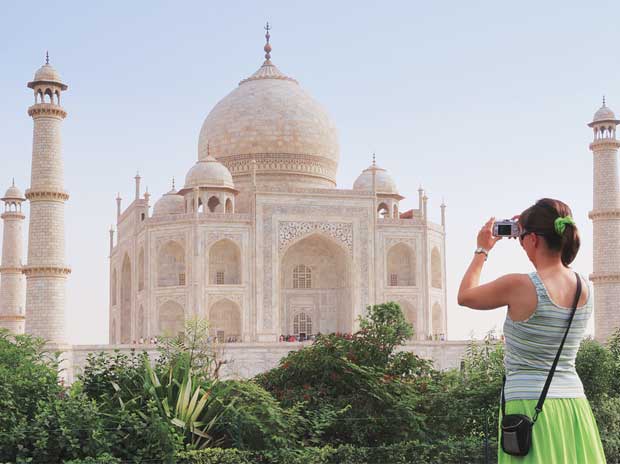
The tourism and hospitality sectors, which depend on free movement of people, were the first to be affected by the travel restrictions, first on international and then domestic travel, followed by a lockdown across the country in late March. Some expect the sectors to bounce back once the lockdown ends and domestic travel restrictions ease, even with restrictions on international travel.
This is because domestic travel has a higher share in the Indian tourism and hospitality industry compared to foreign arrivals. The hotel industry in India relies more on domestic demand compared to neighbouring countries such as Sri Lanka or Maldives. In other words, domestic demand is adequate to keep the sectors in business.
According to government data, domestic tourist visits to all states and Union territories in India in 2018 were at over 1.8 bln compared to inbound international tourist arrivals at 17.4 mln. In 2018-19 (Apr-Mar), airlines carried 140 mln domestic passengers compared with 63.9 mln international passengers, while the railways carried 8.4 bln passengers during the same period.
In February and March, when international flights to India were progressively restricted, the sector still showed buoyancy as domestic travel was strong. In a recent webinar, data analytics company STR said hotel occupancy fell 12% in the first week of March, 43% in the second week, and 67% in the third week, when all domestic flights were stopped.
"Indian hospitality industry was comparatively less impacted in the earlier months of …(2020) because of the dominance of domestic travellers in the overall mix," the company said. In the last nine days of March, occupancies fell more than 80%.
Tourism and hotel occupancy took a dive in cities such as Mumbai, Bengaluru, Hyderabad and Goa, as these are dependent on international travellers. Once travel restarts, it is likely to be mainly essential travel for work or family reasons, medical factors, and travel by those stranded at various places due to the lockdown.
"I expect Mumbai to bounce back fast," said Subhadeep Datta, general manager at Goldfinch Hotels, which caters to business travellers. He expects domestic business travel to pick up three to six months after the lockdown ends. Tourism contributes 9% to the country's GDP and, directly and indirectly, employs 50 mln people. The government is also seeking ways and means to facilitate travel. In a release on Apr 10, the Ministry of Tourism said it would come out with guidelines soon for tourists to travel.
CHALLENGES
Despite the opportunities, the challenges are daunting. When flights resume, social distancing norms have to be followed and it is unclear how this will be carried out or how feasible it is. The government has indicated nothing about train services, long-distance or suburban, where things will be even more difficult.
Domestic airlines, including Air India, were preparing to resume flights from May 4, after the current lockdown ends, and were taking advance bookings. That is, until the government stopped them, saying it was not certain if flights would be permitted from that date. SpiceJet chief Ajay Singh told a business channel on Monday that he and other airlines hoped to start flying from mid-May.
Hotels, too, are preparing for changes in the way people will travel and stay. Check-in formalities might be automated to ensure no crowding in hotel lobbies. Anirban Chakraborty, managing director and chief executive officer of Tourism Finance Corp, told Cogencis in an interview recently that while he expected domestic travel to boost tourism, there were several obstacles.
"One is social distancing, second is psychological impact, third is corporate discretionary spending will come down because a lot of people who travel, won't do so for six-nine months till things stabilise. Fourth, corporate seminars and nights won't happen as people will curtail costs as everybody is under pressure." June is the earliest when hoteliers expect rooms to start filling up slowly
"It will take two-three months for it to take effect," said Jinesh Rajpara, senior analyst at India Ratings. He pointed out that the tourism sector would lose the summer months, when most domestic tourists plan their holidays. The next opportunity is the festival season that starts in October. Leisure travel looks distant due to cautiousness among domestic and overseas travellers. Uncertainty on income will also play a critical role.
"Even if they want to travel, they should have the spending capacity. So, we expect leisure travel to resume by the end of this year to early next year," Rajpara said. Some companies have laid off employees, sent them on unpaid leave, or cut salaries in order to conserve cash.
High-end hotels may see lower occupancy compared to mid-level hotels, which have the potential to fill up faster. Hotels in tier-II and tier-III cities, which depend on casual and contract labour, will find it hard to service travellers as migrant labourers are missing.
Average room rates could see moderation and the average revenue per available room till June is expected to be 65-70% lower for 4-star and above hotels, and down 50-60% for mid-tier and below ones, Rajpara said. End