India framing policy to make airports transit hubs for South Asia
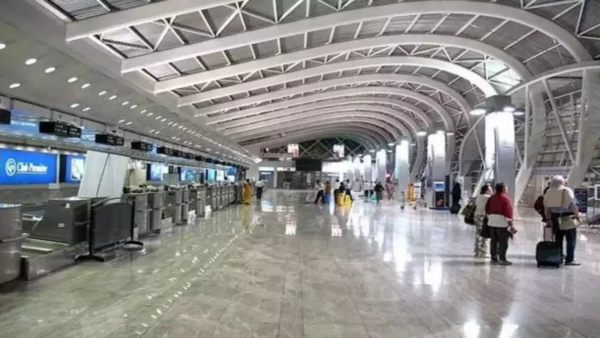
New Delhi: India is framing a national policy to transform its airports into major international hubs that will offer single-point international connectivity to the South Asian region. The policy, which will need cabinet approval, aims to frame laws for easing security and immigration bottlenecks at airports, allocation of international flying rights and building necessary infrastructure so that airports like Delhi can become transit hubs competing with the likes of Dubai and Singapore’s Changi Airport, people involved in making of the policy said.
Hubs aggregate passenger demand from the entire area and offer multiple
direct flights to major cities across the world.
In FY20, 69% of Indian passengers flying to Europe and North America
travelled through hubs such as Dubai, Abu Dhabi and Doha on foreign
airlines.
“This is a big leakage of revenue for airlines and airports and the Indian
aviation ecosystem is not being able to take benefit of the growth in long-haul
international traffic,” a government official said. “With Air India and IndiGo
eyeing more international traffic, the government is looking to frame this
policy.”
A uniform policy, he said, will make it easier for multiple ministries to work in
tandem and frame rules.
“Reform of security rules and immigration are governed by the Ministry of
Home Affairs while international flying rights are the domain of external
affairs,” he said. “Building of infrastructure will be through the National
Infrastructure Pipeline. Hence, the requirement of a single framework is
necessary.”
There are three aspects to a hub airport — favourable geographic location, the
presence of a strong airline and the ability to connect quickly between
international and domestic flights. “IndiGo and Air India are strong brands
now. The policy will now target to simplify other areas,” the official said.
The policy will seek to reform security rules for faster connections between
flights, reducing immigration wait times and developing infrastructure
linking multiple terminals of airports.
Sources said that the government has identified certain bottlenecks such as
the requirement of double security checks while transiting between domestic
and international areas, requirement of immigration only from the city of
departure and manpower crunch at immigration desks as reasons that
impede smooth connectivity at airports.
Delhi Airport currently has three terminals and the plan is to connect them
through a train. Currently, passengers have to leave the airport and take a bus.
“Every hub airport with more than 100 million passengers has a transport
model where a passenger can transfer without leaving the secured area of the
airport,” the official said. “As a part of the policy, we are deciding on the
financial model as this will be a huge capital investment.”
Videh Kumar Jaipuriar, CEO of Delhi Airport, said that the airport is well
located to become a major transit hub of the region.
“We are strategically located in the corridor of North America and Europe to
South East Asia or East Africa to North East Asia,” he said. “However, other
airports, due to their competitiveness have been able to take that traffic.”
Building a hub is about coordination among airlines, airports and government
policy.
“That is what we are working on — so that the airport gets its rightful position
and airlines benefit financially by offering direct flights,” he said.
The airport has started working on harmonisation of airport slots so that
IndiGo and Air India can align their domestic and international network in a
way that a passenger can connect in minimum time.
“We are working with both the airlines to create slot banks for European and
North American flights so that they can schedule adequate domestic flights
within two hours before departure of their Europe and North America flights,”
Jaipuriar said.