From obstacles to opportunities: Ho India looks to grow Border Tourism
Despite efforts, remote border areas in India struggle with the provision of basic amenitie
and efficient transportation options for potential tourists. This gap limits tourist footfall a
also obstructs the growth of related commercial activities. Urging a comprehensive
approach, the sector experts that ETTravelWorld spoke to emphasised on revising policie
effective marketing, simplified visa structures, investment in infrastructure, better
accessibility, among others.
India's foray into border tourism confronts a spectrum of challenges
despite the government's proactive measures. The Vibrant Villages
Programme, aimed at opening up northern border villages to tourists,
and engagement with public representatives by the Ministry of Home
Affairs are notable initiatives. However, the vast tourism potential in
India's border regions remains largely untapped, primarily due to the
inherent remoteness and associated accessibility challenges of these
locations.
Infrastructure deficiencies pose a significant hurdle. Despite efforts,
remote border areas struggle with the provision of basic amenities and
efficient transportation options for potential visitors. This infrastructure
gap not only limits tourist footfall but also obstructs the growth of
related commercial activities.Security considerations loom large, as outlined in the 2022 White Paper
on Border Tourism by PHDCCI. India shares its borders with multiple
nations, some of which face security challenges, potentially dissuading
tourists. The intricate task of balancing security measures without
deterring potential visitors remains a critical aspect that demands
nuanced solutions.
According to Yogesh Srivastav, Director General at WTC Business &
Industry Association, the diverse cultural landscape of border areas is
another challenge. Managing this diversity requires careful
consideration to respect local traditions and prevent potential conflicts.
Cultural sensitivity issues, therefore, form a substantial barrier to the
seamless promotion and sustainability of tourism activities in these
regions.
Regulatory hurdles further complicate the landscape. The need for
permits and adherence to complex security procedures hampers the ease
of doing business in border tourism.
In light of these multifaceted challenges, Srivastav said there is need for
a comprehensive approach to address issues ranging from security
concerns to cultural sensitivities, to foster sustainable and inclusive
growth in these often-overlooked areas.
Strained geopolitical relations, particularly with China and Pakistan—
countries sharing the majority of India's international borders—present a
formidable challenge to the nation's border tourism, according to Tsering
Namgyal, Chairman of IATO Ladakh Chapter. This geopolitical tension
has resulted in adverse conditions and imposed various restrictions on
opening borders for tourism. Namgyal points out, "Our strategic defense
policies are also not soft when it comes to border tourism."Supporting this perspective, Nasir Shah, Chairman of IATO Jammu &
Kashmir Chapter, underscores the importance of fostering positive
relations with neighboring countries as a foundational step for advancing
border tourism, particularly in Jammu & Kashmir. Shah cites the
successful Suchetgarh Border Tourism in the Jammu region as an
example. However, he notes setbacks following the 2016 Pulwama
attack, leading to the suspension of initiatives due to strained relationsbetween India and Pakistan.
On the brighter side, Namgyal said that India has immense opportunities
to improve the conditions of economically marginalised and
geographically isolated villages along the borders as many of our border
villages in India and habitats have immense tourism potential.
In line with this, he urged the Government of India to reassess and take
decisive steps to revise border policies, specifically by opening restricted
border areas for tourism. Namgyal suggests that such a bold move would
not only enhance border security but also revitalise the economy of
border communities, creating new job opportunities.
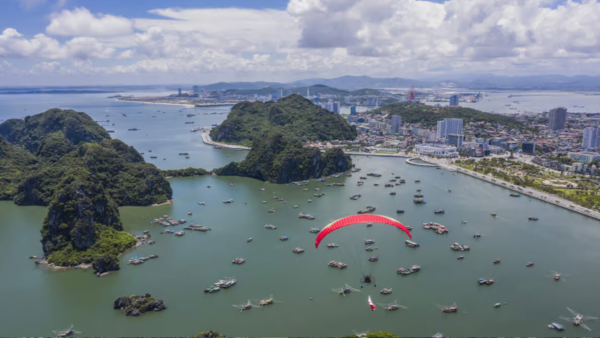
Namgyal also draws attention to successful international case studies,
such as the China-Vietnam border and cross-border tourism initiatives,
as well as effective border tourism policies between South AfricaBotswana and Zimbabwe, offering valuable lessons for consideration for
India.
Suresh Singh Budal, CEO of Pacific Asia Travel Association- Nepal Chapter, emphasised that India serves as the dominant source market for regional tourism, just as it is a major market for other international destinations. . Acknowledging India's significant influence in both
inbound and outbound tourism, Budal highlighted challenges hindering
seamless travel.The hurdles of travel formalities and permission limitations significantly
impact tourists, especially those from Bangladesh and Nepal, says Budal,
who face constraints like double-entry visa limitations for land entry into
India. This constraint has inflated air travel costs, leading potential
travelers to seek alternatives beyond regional borders. Post-pandemic,
surging long-haul flight fares further discourage regional travel. Budal
urges a reassessment of travel arrangements, emphasizing the
government's crucial role in simplifying formalities to encourage
regional tourism.
Challenges for travel businesses, agents:
As mentioned in the PHDCCI White Paper, the travel agents and
hospitality providers encounter a series of challenges when promoting
Border Tourism packages.
Security concerns, often compounded by the need for permits, can deter
potential tourists, making it crucial for travel agents to stay informed
about the security situation and guide clients through permit
procedures.
Infrastructure limitations, such as inadequate roads and accommodations, require collaboration with local authorities for improvement. Overcoming risk perceptions, complex documentation,
and cultural sensitivity adds to the complexity travel agents face.
Moreover, the lack of information and limited marketing attention to
border destinations, as mentioned by Srivastav, intensify challenges.
As a Ladakh-based operator, Namgyal highlights challenges faced by From obstacles to opportunities: How India looks to grow Border Tourism, ET TravelWorld
https://travel.economictimes.indiatimes.com/news/destination/states/from-obstacles-to-opportunities-how-india-looks-to-grow-border-tourism/105250… 7/14
local tour operators, including inadequate infrastructure, poor mobile
connectivity, and border permit hurdles for foreign travellers. The
absence of primary health centers with proper oxygen facilities at key
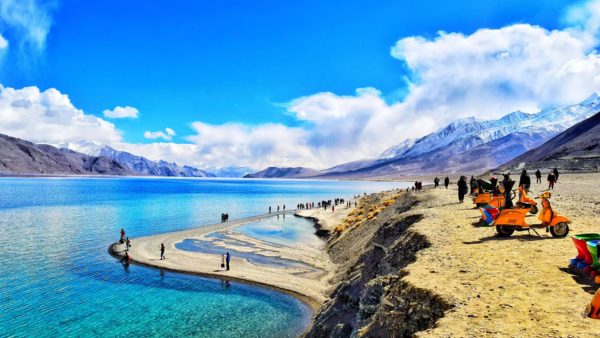
border tourist destinations like Pangong Lake, Hanle, and Tsomoriri
Lake tourist circuits, compounds operational difficulties in Ladakh, he
said.
From J&K perspective, Shah stated that currently, there are no existing
challenges; potential difficulties may arise once Border Tourism
activities commence. “Presently, Suchetgarh Border Tourism is the sole
ongoing initiative from the industry perspective. The government should
further focus on improving road infrastructure, establishing stadium
stands resembling the model ofWagah Border, creating toilet blocks and
the inclusion of multiple restaurant chains which would contribute to the
overall development of Border Tourism facilities,” he suggested.
To enhance Border Tourism packages, Srivastav suggested strategic
approaches for travel agents and hospitality providers. These include
creating educational tours focusing on history and geopolitics, ensuring
safety measures through collaborations with local security forces, and
implementing robust emergency response plans.
Collaborating with local communities and promoting responsible
tourism practices helps share benefits with locals. A strong online
presence, effective use of social media showcase, providing specialised
training to guides and staff will also contribute to the overall appeal of
Border Tourism packages.
Opportunities:Border destinations in India, once secluded, now draw large numbers of
travellers. Official data underscores the potential of Border Tourism to
uplift local communities, especially in regions like the northeast and
Jammu and Kashmir (J&K). The Line of Control, from Bangus Valley to
Tangdhar, offers stunning landscapes and diverse opportunities for
adventure and leisure tourism.
Sikkim leverages border tourism with attractions like Nathu La pass,
stimulating the local economy and prioritising eco-tourism. Arunachal
Pradesh embraces tourism, generating income through homestays and
guiding services while showcasing its diverse tribal cultures. Nagaland's
Hornbill Festival, internationally acclaimed for tribal traditions, not only
generates income but also promotes cultural preservationIn Meghalaya, increased tourism has not only generated employment but
also spurred infrastructure development in remote areas. Hanle, near the
Chinese border in Ladakh, is a successful example of Border Tourism,
renowned for its night observatory and the distinction of being India'sfirst "Dark Sky sanctuary." Formerly restricted, plans are underway to
allow foreign tourists to spend nights in Hanle.
Overall, Ladakh has also witnessed a massive tourism surge in the last
few years, creating jobs and boosting local industries.
“Local villagers have embraced tourism by opening small homestays
here, along with the restaurants, and engaging in guiding services,
transforming the economic landscape. Similarly, Thang, a petite village
near Turtuk in the Nubra Valley on the Pakistan border, has opened its
doors to tourists, significantly boosting the economy, employment
opportunities, and offering a glimpse of rich cultural traditions to the
outside world,” noted Namgyal.
Meanwhile, the Wagah Border in Punjab, continues to draw in 25,000
daily visitors for its flag-lowering ceremony, embodying the shared
history between India and Pakistan.
When asked how Punjab is making efforts to push border tourism,
Rakhee Gupta Bhandari, Principal Secretary Tourism & Cultural Affairs,
Govt of Punjab, shared, “In addition to Atari, we have other notable
borders like Hussainiwala and Sadqi, and we have ambitious plans for
their development. While work has already begun at Atari and Wagah,
we're planning for Sadqi as well. The current government is actively
promoting these three borders in various ways.”
“We are fortunate to have these borders, and when I say 'fortunate', I'm
referring to the immense tourism opportunities they offer,” she added.
Learning from the best; paving the way aheadTaking a cue from initiatives like the Schengen Area in Europe, which
enables passport-free travel across 26 countries, and the Nordic Passport
Union allowing free movement, Budal sees them as valuable examples
for India. He emphasises the need for neighboring countries like
Bangladesh, Sri Lanka, Nepal, Bhutan, and Pakistan to facilitate easy
travel within the region. Budal suggests introducing promotional
packages, shifting focus from international destinations, and actively
promoting the unique experiences India offers to specific target
markets.
He emphasised the need for heightened collaboration among National
Tourism Organisations (NTOs) at the private business level, advocating
for partnerships and relationships between businesses. Stressing the
importance of collaboration beyond government levels, he urged
dialogue between the Nepalese government and India, India with
Bangladesh, and other neighboring countries to revitalise the region's
products and services.
Srivastav emphasised that nations excelling in border tourism prioritize
infrastructure, effective marketing, simplified visas, and cultural
exchange. He suggests India should draw inspiration from these
strategies, particularly investing in roads, airports, and accommodations
for improved accessibility.
A significant portion of the population residing near J&K borders resides
below the poverty line, shared Shah, stressing on the need to do a robust
and enthusiastic promotion of tourism activities. “With this, the local
communities surrounding these borders will undoubtedly experience
benefits, leading to economic growth.”