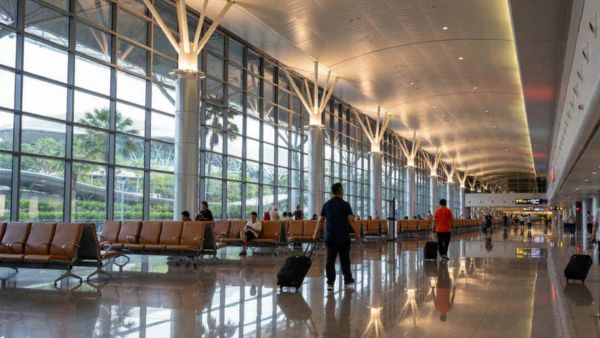
British Airways Boosts On-Time Departures with AI Rollout

Global Impact: What This Means for International Travelers
It was suggested that British Airways’ tech-driven efficiency upgrades at Heathrow Airport could mark a turning point in how airlines manage punctuality across global hubs. If such digital innovations were to be widely adopted, industry analysts believed it might reshape international flight expectations, particularly in delay-prone hubs across Europe, North America, and Asia. Travelers who frequently experienced long layovers or missed connections could potentially benefit from shorter transit times, smoother re-routings during poor weather, and a higher likelihood of on-time arrivals and departures.
Advertisement
The use of real-time data, machine learning, and AI-powered systems has started to challenge the idea that weather, traffic congestion, and staffing constraints are insurmountable causes of delay. Observers within the travel sector considered this a benchmark development—one that could lead to a broader digital transformation across the airline industry.
Reimagining Passenger Experience Through Predictive Efficiency
It was suggested that one of the most notable technological advancements introduced at Heathrow Airport involved an intelligent system designed to enhance operational efficiency after aircraft landed. Reports indicated that this AI-powered innovation dynamically allocated aircraft stands based on real-time data related to passenger connection needs. Rather than assigning gates in a static or traditional manner, the system continuously analyzed incoming flight data and passenger itineraries, adjusting gate assignments accordingly to ensure the smoothest possible transfer process.
This strategic approach appeared to have a major impact on minimizing delays, particularly for international travelers with tight layovers. By prioritizing gate placement based on the urgency of connecting flights, the system helped passengers disembark closer to their next departure point, effectively trimming down the distance and time needed to move through the terminal.
According to internal estimations, the application of this smart gate allocation method had already led to the prevention of approximately 160,000 minutes of potential delays. These time savings translated not only into improved on-time performance for departing flights but also into a more seamless and less stressful experience for connecting passengers. Travelers reportedly encountered fewer missed flights and tighter, more manageable transitions within the airport.