Artificial Intelligence (AI) is taking over travel faster than you think
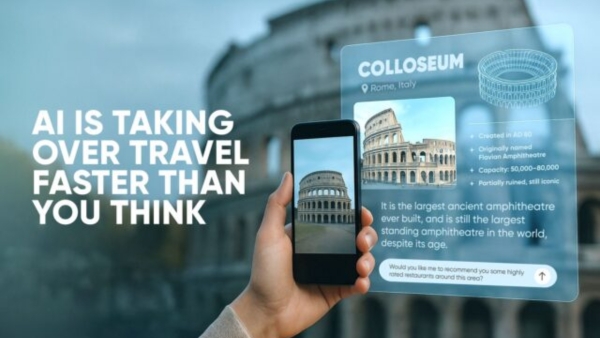
Artificial Intelligence (AI) is rapidly reshaping the global B2B travel trade, bringing new efficiencies and capabilities to companies planning, booking, and managing corporate travel in an industry built on complex logistics and vast data, including flight schedules, hotel rates, and corporate travel policies.
AI-driven tools are helping travel providers and corporate travel managers make smarter decisions. This analytical overview examines how key AI innovations are transforming business-to-business travel services today and what future developments lie ahead. The content explores generative AI chatbots for trip planning, intelligent itinerary optimisation, agentic AI systems capable of autonomous action, and emerging concepts set to transform travel procurement and service delivery. Throughout, the focus is on how these technologies enhance personalisation, efficiency, and strategic decision-making in corporate travel management.
Generative AI and Chat-Based Travel Planning
One of the most visible advances has been the rise of generative AI in travel planning. Generative AI models (such as GPT-based systems) can understand natural language queries and produce human-like responses. In the travel context, this enables chat-based planning tools where users can converse with an AI assistant to research and organise trips. For example, a travel manager or employee might type, “Find me a three-day itinerary in Singapore with client meetings, and suggest evening networking activities.” The AI can instantly parse this request and provide tailored recommendations, drawing on vast travel databases and contextual knowledge. This chat-driven approach makes trip planning more interactive and intuitive than traditional keyword-based search forms. It feels akin to consulting a knowledgeable human agent, except that it is available 24/7 and can sift through far more options in seconds.
Recent industry analyses indicate growing adoption of AI planning tools among travellers and travel managers. Many business travellers, especially younger professionals, are experimenting with AI chatbots to plan trips or seek advice during travel. Travel management companies (TMCs) are also piloting AI-driven chat interfaces in their online booking tools. While this trend is still in early stages for corporate programmes, it mirrors the enthusiastic uptake seen in the consumer travel sector. The promise is that chat-based AI planners will reduce the time spent researching trips and empower employees to handle simple arrangements themselves, freeing human travel consultants to focus on more complex or high-value tasks.
AI-Driven Itinerary Creation and Optimisation
Beyond chat interfaces, AI is being leveraged to create and optimise travel itineraries automatically. An AI trip planner can take a set of parameters, such as destinations, dates, meeting times, budget constraints, and traveller preferences, and construct an optimal itinerary in moments. This involves complex decision-making that AI excels at: selecting flights that minimise total travel time, choosing hotels that balance cost with proximity to meeting venues, scheduling ground transport, and accommodating any required layovers or rest periods.
AI itinerary tools are also improving travel procurement by analysing historical trip data. They can identify patterns such as frequently visited city pairs or seasonal spikes in travel, and then optimise future itineraries accordingly. By crunching big data on past travel, AI helps travel managers refine their travel programmes with evidence-based insights. Overall, AI-driven itinerary creation not only saves time but ensures each trip is as cost-effective and smooth as possible, benefiting both the traveller’s experience and the company’s bottom line.
Agentic AI
As AI capabilities advance, the concept of agentic AI has emerged; AI systems can act autonomously across platforms and travel APIs to execute tasks without needing step-by-step human instructions. In corporate travel management, agentic AI refers to an intelligent assistant that not only makes recommendations but also carries out travel tasks end-to-end. This is revolutionising how travel bookings and changes are handled behind the scenes.
The agentic AI approach goes beyond reactive assistance; it anticipates and manages needs. Because the agent operates via APIs, it can interface with various systems, including airline reservation systems, hotel booking platforms, rideshare apps, expense management software, and more. This interconnectedness enables it to perform complex cross-system tasks, such as synchronising travel booking details with expense reports or calendar entries, without human intervention.
However, adopting autonomous AI also calls for careful governance. Travel policies, preferred suppliers, and duty of care considerations must be coded correctly into the AI’s decision logic. The balance may shift toward greater autonomy, but in the interim, the collaboration of AI speed with human judgment defines the best practice.