Goa tourism is moving beyond beaches
You would be amazed at how much history resides within a few square kilometres of central Panjim, to be precise the Campal area.
Mugdha Pawar, the erudite storyteller of the heritage tour firm Make It Happen, opened our eyes to it as we passed by historical landmarks during the Campal Heritage Walk. As she did this, events of the past revealed themselves and lent a better understanding of today’s Goa.
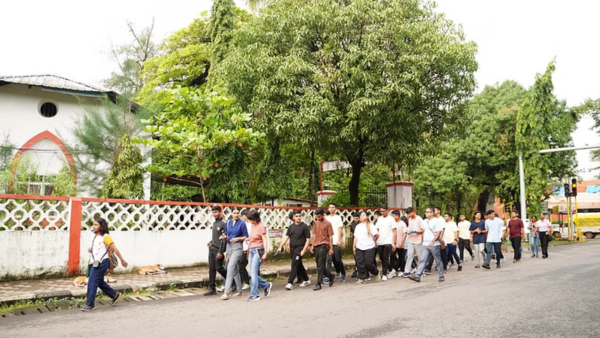
The state government’s move to take Goa tourism beyond beaches has seen heritage walks, eco-adventures and other such experience tourism gaining popularity. So, it was not surprising that the tiny coastal state, as a part of its celebration to mark World Tourism Day on Wednesday (September 27), decided to take students of the Institute of Hotel Management, V M Salgaocar Institute of International Hospitality Education and Don Bosco College on a heritage walk.
It was organised by the Travel and Tourism Association of Goa (TTAG), SKAL-Goa and Goa Tourism.
The heritage tour kicked off from Kala Academy, once a thriving hub of Goa’s art and culture, at 8 am and meandered through the lanes and bylanes of Panjim.
In two hours, Pawar made several pitstops at historical monuments and buildings to explain their significance in Goa’s past of over 450 years.
She did this by engaging the students, most of whom were from outside the state; prodding and nudging them to be more participative and emotive. Mostly succeeding in arousing their interest in her narrative on Goa’s history.
The layout of this part of Panjim, which was built under the supervision of Viceroy Dom Manuel in 1843 when the Portuguese decided to shift their capital from old Goa to Panjim, is based on the blueprint of Lisbon – the capital of Portugal.
It was transformed from a marshy land to a neatly laid out city with amenities that exist even today. To connect villages around the area, Manuel constructed six bridges. These bridges have withstood the ravages of times and have traffic plying over them even today.