Indian travellers 2nd among APAC's most assured; Booking.com region head shares trends, platform's growth strategy
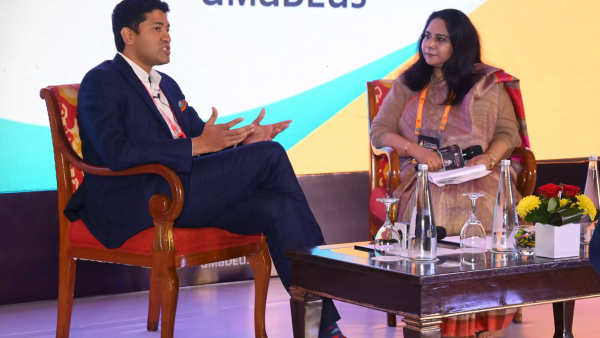
Indians tend to have shorter booking windows, said Santosh Kumar, Country Head (India Sub-Continent & Indonesia), Booking.com, adding that for domestic travel, it is somewhe around 27-28 days, and for international travel, the window is three times higher than the other. He also spoke at length about the platform's emphasis on alternate accommodation a segment constituting 33 per cent of their global room nights.
At a fireside chat at ET Travel & Tourism Conclave & Awards, Santosh Kumar, Country Head (Indian Sub-Continent & Indonesia), Booking.com delved into the platform's distinctive approach within the Indian market and across the globe. He highlighted several aspects that set the Indian market apart while discussing emerging traveller behaviours, company's innovative strategies, focus on sustainability and alternate accommodations ruling over traditional hotels. Platform’s approach to the Indian Market vs Global Indian travellers have earned the second position among APAC's most assured travellers, according to a Booking.com report. Speaking during the session, Kumar highlighted Booking.com's adaptable platform,
“We started with the pay-at-hotel model, which is still popular here because it suits Indian travelers who like flexibility. Most of our global transactions use a different payment model. Presently, 55 per cent of our global transactions stem from the merchant model, wherein we handle payments for travellers. But in India, the pay-at-hotel system is still a big hit,” he said. This model, he added, offers flexibility and convenience and aligns closely with the Indian consumer psyche, particularly for domestic and outbound travel consistent across countries but also tailored to unique factors in India, given its burgeoning appeal.
Another unique facet is India's wide parity market, stated Kumar. “As a fulfillment provider, we maintain consistent pricing across partner platforms, ensuring uniform rates, availability, and conditions, which differs somewhat from global norms. Additionally, the emergence of value-added services and bundled rates caters well to the value-driven preferences of Indian travelers. They seek not only accommodation but also crave inclusive add-ons such as spa treatments, meals, and diverse
experiences, making bundled rates a hit in India,” he added.
Emerging Traveller Behaviours Kumar also discussed evolving travel patterns in the Asia Pacific, emphasising a normalisation of travel behaviours post-pandemic, a rise in experiential travel, and an increased awareness of responsible tourism. “Now, when focusing specifically on the Indian market, we see some distinct behavioural traits. Indians are notoriously late bookers; they tend to have shorter booking windows, meaning they often book closer to their travel dates compared to other nationalities. For India, it is somewhere around 27-28 days, and for international booking the window
is roughly three times higher than the domestic booking window,” he revealed.