Will Tuvalu disappear in the next few years?
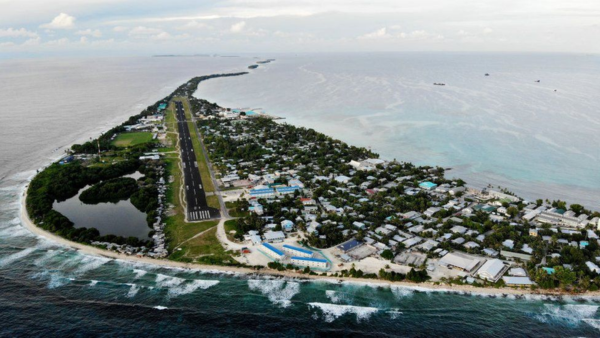
Tuvalu, famed as one of the world's most enchanting island destinations, not only receives the least number of visitors, but is also facing the unfortunate possibility of becoming inaccessible in the foreseeable future. The cause for concern is the potential disappearance of the nation at an accelerated rate.
Situated in the west-central Pacific Ocean, Tuvalu occupies a strategic location approximately halfway between Hawaii and Australia. The country is characterised by a ring-shaped coral reef encompassing a lagoon, adorned with islands With a reported population of around 12,000 residents, Tuvalu holds the distinction of being the world's least visited country. Despite its diminutive size, it stands as one of the smallest nations globally and has its own currency.
If reports are to go by, Tuvalu is fragile and low-lying, with elevations barely exceeding 15 ft above sea level. This vulnerability makes it easy to fall prey to the relentless waves washing over them. As the world's fourth-smallest nation, Tuvalu faces an uncertain future due to climate change. Reports suggest that rising seas and severe storms are gradually submerging the islands, fostering concerns that Tuvalu might become uninhabitable or completely disappear within a few decades.
The challenge lies in navigating through the rhetoric and conflicting scientific perspectives to discern where global climate theory intersects—or doesn't—with the lives of Tuvalu's people. Gaining clarity proves difficult, as many experts providing opinions on the matter have not visited Tuvalu, and those who have often bring their own agendas.
If numerous reports are to go by, it becomes evident that the nation and its nearly 10,000 residents are indeed grappling with significant challenges, with rising seas representing just one facet of a multifaceted problem.