Romania and Bulgaria to Join Schengen Area in January 2025
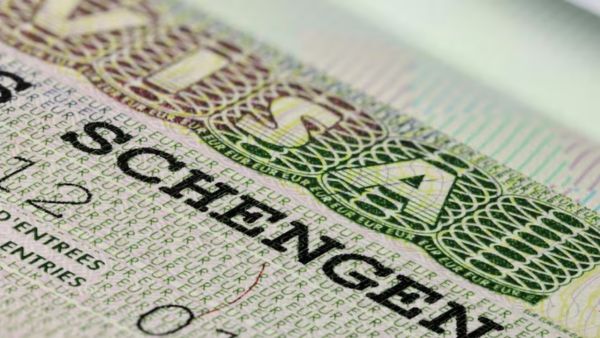
Two more countries, Romania and Bulgaria, are set to join the Schengen Area by January 2025, according to Hungarian officials cited by Economic Times. This significant development comes after years of partial membership following their European Union accession in 2007. Both nations have long awaited full Schengen integration, which promises to simplify travel and bolster connectivity across Europe.
A Long-Awaited Inclusion
Although Romania and Bulgaria joined the EU in 2007, their full integration into the Schengen Zone was delayed due to concerns over illegal migration, particularly voiced by Austria, which had opposed their entry. While air and maritime border checks were removed as of March 2023, land borders remained restricted.
Recent diplomatic efforts appear to have resolved these longstanding issues. During a meeting in Budapest, attended by interior ministers from Austria, Bulgaria, Hungary, and Romania, Austria agreed to lift its opposition. This agreement is expected to pave the way for a final decision by EU interior ministers in December 2024, formally approving Romania and Bulgaria’s full membership in the Schengen Area.
Expanded Schengen Zone: Current and Future Composition
The Schengen Zone, a unique area allowing passport-free travel between member states, currently comprises 29 European countries:
EU Members: Belgium, Croatia, Czech Republic, Denmark, Germany, Estonia, Greece, Spain, France, Italy, Latvia, Lithuania, Luxembourg, Hungary, Malta, Netherlands, Austria, Poland, Portugal, Slovenia, Slovakia, Finland, and Sweden.
Non-EU Members: Iceland, Liechtenstein, Norway, and Switzerland.
With the inclusion of Romania and Bulgaria, the Schengen Area will become even more expansive, making it easier for travelers to explore these regions seamlessly.
Security Measures to Facilitate Membership
To address security concerns, particularly along Bulgaria’s borders, the integration process includes deploying at least 100 border guards along the Bulgaria-Turkey border. Hungarian Interior Minister Sándor Pintér confirmed this step, noting it as a crucial move toward achieving full membership.
The decision has been well-received by EU officials. Home Affairs Commissioner Ylva Johansson and European Commission President Ursula von der Leyen hailed the agreement as a historic moment, emphasizing that Romania and Bulgaria “fully belong” in the Schengen Zone. Johansson remarked that the decision represents greater freedom for citizens of these two countries and aligns with the EU’s commitment to fostering mobility within its borders.
Impact on Global Travelers and Tourism
Expanded Travel Opportunities
The inclusion of Romania and Bulgaria in the Schengen Area will allow travelers holding Schengen visas to visit these two nations without additional border checks. This development is expected to:
Simplify travel: Tourists and business travelers will benefit from seamless cross-border movement.
Boost tourism: Romania and Bulgaria’s integration will position them as attractive destinations, increasing visitor numbers and enhancing local economies.
Strengthen trade ties: The move will facilitate smoother transportation of goods across European markets.
Enhanced Benefits for Indian Travelers
The expansion coincides with a cascade visa regime introduced in April 2024 for Indian nationals. Under this scheme, Indian travelers with an established travel history can be granted:
Two-year multi-entry visas after utilizing two visas within three years.
Five-year multi-entry visas upon meeting specific criteria, such as valid passports.
This policy aims to simplify the visa process for Indian citizens, encouraging more frequent visits to Europe and potentially including Romania and Bulgaria in their itineraries.
Implications for the Travel Industry
The full integration of Romania and Bulgaria into the Schengen Area represents a significant milestone for the European travel industry. By eliminating border checks, the move is expected to:
Streamline travel logistics: Making multi-destination trips within Europe more efficient.
Increase demand for tourism services: Airlines, hotels, and tour operators in Romania and Bulgaria stand to benefit.
Encourage global travel: The simplified Schengen visa process, coupled with expanded travel options, will attract international visitors.