
First in India, Jaipur is now home to two leopard reserves
- Jun 07,2022
- Times of India
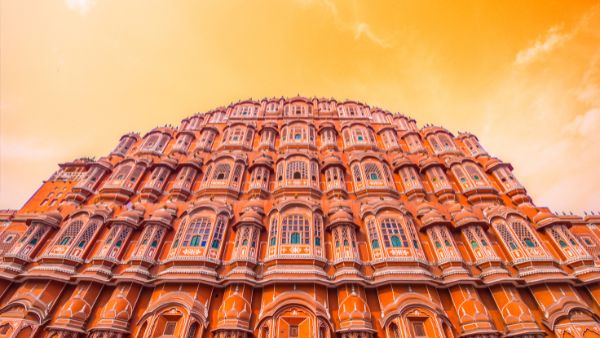
Jaipur is India’s first city to get two leopard reserves – Jhalana Leopard Reserve and the newly-added Amagarh Leopard Reserve. The reserve forest of Amagarh is located in the Aravalis, and is an important leopard habitat. Spread across a total of 1,524 ha, the Amagarh Leopard Reserve is home to 15 leopards. This development is a part of Project Leopard, an initiative started in Rajasthan back in 2017 for the conservation of the big cat population in the state. Under this project, the leopard population in Jhalana Leopard Reserve showed a good and healthy increase. Amagarh Reserve is an important wildlife corridor for not just leopards, but also other important animals like hyenas, jackals, wild cats, foxes, civet cats, nilgai, sambhar, rabbits, among others. The forest department has also announced that there will be leopard safaris in these areas and will be conducted in two shifts – morning and evening. The forest department is allowing only a limited number of safari vehicles inside the reserve forest in order to avoid overcrowding and creating a disturbance for the wildlife in the area. For safaris, bookings can be done through the Forest Department, Rajasthan Government official website. Other popular wildlife destinations in Rajasthan are: Ranthambore National Park, Sariska Tiger Reserve, Kumbhalgarh Wildlife Sanctuary, Mount Abu Wildlife Sanctuary, Bharatpur Bird Sanctuary, Jamwa Ramgarh and Tal Chappar Sanctuary. Though Tal Chappar is a lesser known destination, it is one of the best in the region for blackbuck sightings and birdwatching, especially raptors. Also, a very good place to find the spiny-tailed lizard, listed as Vulnerable by IUCN.
Read more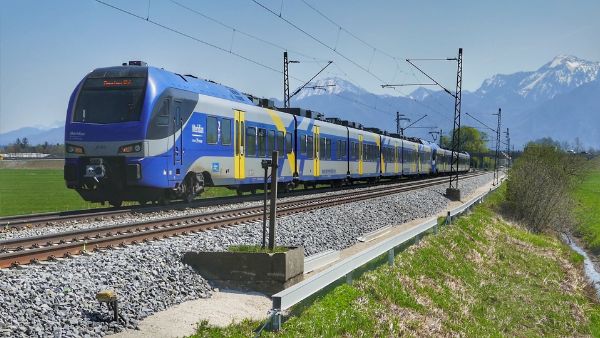
Rail rendezvous: The most scenic train routes in India
- Jun 07,2022
- Hindustan Times
Knots of people with suitcases waiting on a dusty platform, a rhythmic clacket and thud slowing to a screeching halt, a temporary lull in conversations as people clamber lazily onto their coaches and off we go! Greenery, distant cattle and occasional humans outside the window — train rides are the epitome of the Indian travel experience. As railway life gradually chugs back to pre-pandemic levels, with travellers adapting to the new normal, an increasing number of people are setting out on slow travel modes to make up for the pent-up wanderlust. And, the Indian Railways has taken note! They are all set to deploy three new toy trains on the Kalka-Shimla route for the first time since the service became operational 118 years ago. We take you through some of the most scenic train routes in India for a ride to remember. Kalka-Shimla Heritage Train Start: Kalka; End: Shimla; Distance: 96km; Duration: 5 hours 30 minutes The Kalka-Shimla train ride is back after Covid-induced hiatus, taking you on one of the world’s most scenic trails. The hop-on, hop-off train service takes you across the UNESCO World Heritage Site of 96.6 km narrow-gauge railway section built in 1903. With 103 tunnels and 800 bridges built in just three years, this engineering marvel treats passengers with breathtaking views of rugged mountains, lush pine forests, waterfalls, valleys and picture-perfect hill stations along the way. Starting from Kalka in Haryana, the train starts ascending through steep mountains and curves at 656 metres, passing through the 18 stations to reach Shimla, located at an elevation of 2,076 metres. Darjeeling Himalayan Railway Start: New Jalpaiguri; End: Darjeeling; Distance: 84km; Duration: 7 hours 20 minutes Resuming services after a 17-month long gap due to Covid-19, this train zig-zags uphill from New Jalpaiguri (NJP) through thick groves of pine every day, working its way around rich green tea plantations before hooting into Darjeeling. Established in the late 19th century, the railway was originally used to transport tea and rice down to the plains. Today, this UNESCO World Heritage-listed attraction languorously makes its way on the winding 2-feet narrow gauge track taking passengers through spectacular tracks with striking views of the snow-capped Himalayas. A particularly thrilling section of the track, the Batasia Loop, is an engineering marvel worth witnessing. The Mandovi Express Start: Mumbai CST; End: Madgaon Junction (Goa); Distance: 581km; Duration: 11 hours 50 minutes With the towering Sahyadri Hills on the left and the Arabian Sea sparkling on the right, the Konkan Railway is one of the most scenic railway experiences in India. The journey will take you through thick forests and winding valleys as the coach rushes along pristine rivers. You are likely to have your nose pressed up against the window during most of the ride as the scenery changes every few hours, offering new sights at every bend. The train navigates more than 2,000 bridges and 92 tunnels, and offers and exquisite view with coconut trees bending in the background and rivers gushing beneath the sleepers. Island Express Start: Bengaluru; End: Kanniyakumari; Distance: 944km; Duration: 20 hours 30 minutes The 87-km long stretch from Thiruvananthapuram (Kerala) to the last stop in Tamil Nadu is a testament to the fact that good things come in small packages. As the train chugs forward, waterlogged paddy fields roll by, palm trees bend as if bowing to welcome you, and glimpses of children playing street cricket take one back to a simpler time, so much so that you won’t even mind the occasional stray branches that thwack against the sides of the train, leaving broken twigs scattered up the aisles. Kyq Capital Express Start: Rajendranagar T (Bihar); End: Kamakhya (Assam); Distance: 968 km Duration: 22 hours 50 minutes While this train covers a significant distance, from Bihar to Assam, it is the route that the train takes from Siliguri Junction to Alipurduar towards the last leg of its journey that makes the experience memorable. The trail promises many natural marvels and wildlife attractions such as the Mahananda Wildlife Sanctuary, Chapramari Forest, Jaldapara Wildlife Sanctuary and Buxa Tiger Reserve. Even though it’s hard to witness any wild animals from a moving train, the natural beauty of the Himalayas, and the sights of Teesta and Sankosh rivers flowing against this mountainous backdrop are a treat for all the passengers. The Deccan Odyssey Start: New Delhi/Mumbai; End: Mumbai/New Delhi; Distance: 1524km; Duration: 7 nights, 8 days, Price: $7,320/Per cabin ( ₹5.12 lakh approximately per person) If you believe in the adage that the journey is more important than the destination, then this ride is for you. With 21 luxuriously appointed coaches – out of which 11 are to accommodate guests and the rest are used for different purposes such as dining, lounge, conference car and health spa – a ride aboard the Deccan Odyssey is a superlative experience. From a UNESCO World Heritage Site, an excellent vineyard, a palatial residence to sun-kissed beaches and tranquil backwaters, there are six meticulously designed itineraries at the disposal of tourists – Maharashtra splendor journey, Indian odyssey journey, Jewels of the Deccan, Hidden treasures of Gujarat, Maharashtra wild trail and Indian Sojourn.
Read more
Tourists visiting Japan told to wear masks, buy private health insurance or risk getting kicked out
- Jun 07,2022
- Hindustan Times
Tourists visiting Japan may be sent home if they fail to abide by rules requiring them to wear masks, sanitize their hands thoroughly and buy private health insurance, according to guidelines set by the government ahead of the cautious, gradual reopening of Japan’s border. Travel companies will be required to explain the rules and book tours only for customers who have agreed to comply. That will include a warning that the tourists could be asked to leave Japan if they disobey the rules. The guidelines, announced by the government’s tourism agency on Tuesday, are part of an effort to restart inbound tourism after the borders closed in early 2020 The island nation is set to allow package-tour visitors from June 10. Although a limit on arrivals from overseas will be doubled to 20,000 people per day, that’s just a trickle compared with pre-pandemic visitor levels. While some businesses and lawmakers are calling for the country to end the daily cap, Prime Minister Fumio Kishida’s administration has also been keen to project a strict-on-Covid-19 stance ahead of upper house elections in July. Under the proposed guidelines, tested last month with a limited number of tour groups, visitors will be asked to sit at designated seats in restaurants. Travel agents should plan tours that avoid crowds, keep records of movements and accompany those testing positive for Covid and close contacts to facilities for isolation. The rule isn’t based on scientific evidence and is extremely unfriendly to travellers, said Kenji Shibuya, an epidemiologist and research director at the Tokyo Foundation for Policy Research. Japan has acquired high immunity against Covid now and can further ease its infection controls to boost social activities, he said. “The government is treating Japanese and foreign tourists differently and the differences can’t be scientifically explained,” said Shibuya. “There’s no evidence that being accompanied by tour guides will lower the risks of infection. In endemic situations, it should be left to individuals to manage their own risks.” Last month, Japan softened its mask guidance to note that masks aren’t always necessary outdoors. Still, most people in Japan continue to wear masks when outside. They’re still recommended when in crowded places or during conversations outdoors, as well as in most indoor spaces and on public transport, according to the health ministry. Japan’s reopening involves allowing entry from countries and regions where infection levels are low. They will be divided into three categories — red, yellow and blue — depending on their assessed virus risk, according to the Foreign Ministry. Travellers arriving from the 98 countries or regions on the blue list will be able to bypass quarantine as long as they pass a pre-departure Covid test, according to the Foreign Ministry. Those on the yellow list will also require proof of vaccination to skip quarantine. Japan has fared relatively well during the pandemic, with the lowest mortality rate per 100,000 among the G-7 countries, according to data compiled by Johns Hopkins University.
Read more
World Ocean Day: Sail away to the ocean deep
- Jun 07,2022
- Hindustan Times
The life of a sailor can be difficult in many ways especially as they have to be away from their families for more than six months at a stretch. It can be mentally and physically tiring for a person. Professions like the merchant navy, ocean liners, etc. their personnel have to stay at sea for a long time hence on this occasion here are a few sailors who voiced their experiences and lessons that they learned from the sea. 1) Karanvir Singh Nayyar, Second Officer Navigation, Maersk Line The sea has made me a self-reliant, careful person in terms of how to utilize the limited resources. At the same time, it has taught me on a personal and a spiritual level how less a person needs to be happy in life. The sea taught me to be calm, resilient, and a more responsible person as there are multiple people on board the ship, sleeping in confidence that you are there to make sure that the ship and the crew is safe. - “It is physically challenging, yes. But it is more challenging to you mentally so, I call my life a ghost life to put forward what we do, the hardships we face, and what exactly happens at sea. That’s why my Youtube journey started.” 2) Tedrin Braganza, Information Technology Officer, Ocean Cruise Liner The sea has taught me that it is cruel and dangerous, yet a beautiful and alluring mistress. Never turn your back on it and never disrespect it. I have seen the sea when it is stormy and wild, when it is quiet and serene and when it is dark and moody. And in all its moods I see a reflection of myself. One important lesson that the sea taught me was - “By failing to prepare, you are prepared to fail.” There are a few words that I can relate to the most - “See the line where the sky meets the sea it calls me, And no one knows, how far it goes.” [Lines from the movie ‘Moana’] 3) Captain Rajeev Pharaswal, Master, Stolt Tankers Life at sea is very tough, you face multiple challenges daily. Sea makes you a tough guy and makes you capable to solve and manage multiple tasks day today. Makes you capable to make a balance between professional life and personal life. Sea also makes your family tough as they have to manage things alone in your absence. Every problem has a solution. Everyone on board is important and has the potential to contribute to the safe running of the ship. Teamwork is key to success. 4)Pranshu Barnwal, Deck Cadet, Merchant navy “Seafarers are the most resilient creatures, they persevere when others give up”. This precisely gives you an idea of how tough the circumstances can get and you have to work it out with a high level of professionalism, resilience & discipline. Regardless of your rank, you get to learn a lot and face various situations which leave you with life lessons to pen down forever. 5)Lydia Almeida, Hotel Director, MV Empress They say once a seafarer, always a seafarer. One of the biggest difficulties in seafarers’ life is staying away from their loved ones while they carry out their duties at sea. We believe that the show must go on and deliver those experiences to our guests onboard. Life at sea has taught me to appreciate my life more and when the guests leave with a smile on their faces it gives me immense pride in what we decided to achieve at the outset. It has allowed me to remain strong and think on my feet in various situations that are thrown day in and day out.
Read more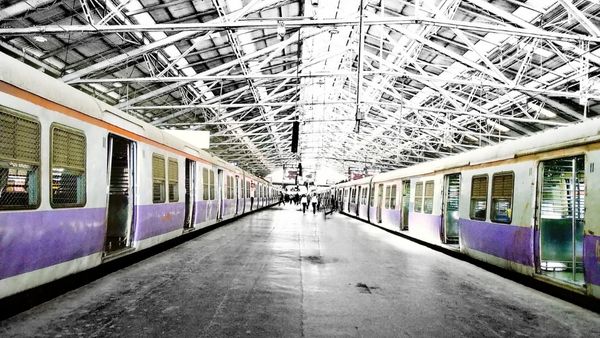
Booking up to 24 train tickets a month allowed if IRCTC user ID linked to Aadhaar
- Jun 06,2022
- ET Travel World
People can now book 24 train tickets in a month on the IRCTC website and app if their user ID is linked to Aadhaar, otherwise only 12 tickets can be bought, the Railways announced recently. So far, the Indian Railways Catering and Tourism Corporation (IRCTC) allowed people to book six tickets a month if the account is not connected to Aadhar and 12 if it is linked. “To facilitate passengers, Indian Railways has decided to increase the limit of booking maximum 6 tickets in a month to 12 tickets by a user ID which is not Aadhaar linked and the limit of booking maximum 12 tickets in a month to 24 tickets by a user ID which is Aadhaar linked and that one of the passengers in the ticket to be booked is verifiable through Aadhaar,” the Ministry said in a statement Officials said that this will be helpful for frequent travellers as well as those using the same account to book train tickets for family members.
Read more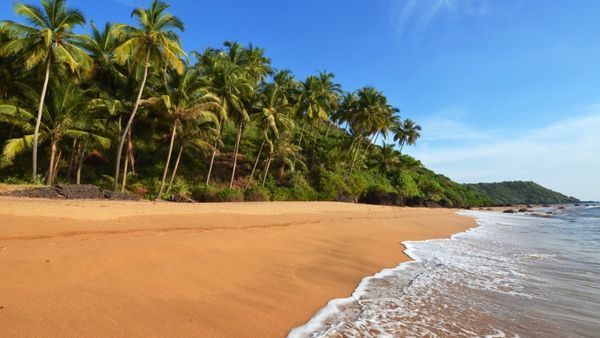
Goa CM Pramod Sawant introduces ‘Beach Vigil App’ to keep an eye on beaches
- Jun 06,2022
- Times of India
In a bid to raise awareness and keep vigil on the beaches in Goa, the state Chief Minister has introduced a new app, Beach Vigil App, on Friday. Talking to the media, the CM said that the app will benefit the institutions working in the beach tourism sector and that the collaboration between IT and the tourism sector will open several avenues in future. He further said, "The development of tourism and safety is an all-around and collective effort. With these kinds of apps, the ecosystem shall enhance in the future". During the launch, Goa IT and Tourism Minister Rohan Khaunte was also present. Throwing light on the usability of the app, he said that with the app Drishti workers, police and other stakeholders will be able to raise issues for safeguarding tourists' interests. "The government is in the process to finalize an integrated plan for beach cleaning. The Beach Vigil App will cover everything from reporting illegal hawkers and illegal massage services to beach cleanliness," Khaunte informed further. A few days back, Mr Khaunte said that Goa beaches were not cleaned properly and that he has been getting complaints about it. “I have been receiving a lot of complaints. It is indeed the case as beach wardens have inspected the stretches,” he had told reporters after meeting a beach cleaning agency. At that time, the Minister had hinted on launching an app “linked to all stakeholders to attend complaints of illegalities at beaches, non-cleaning of beaches and security issues. Subsequently, the public will also be involved”.
Read more