
More airports in Japan to allow international flights
- Jun 02,2022
- Travel World
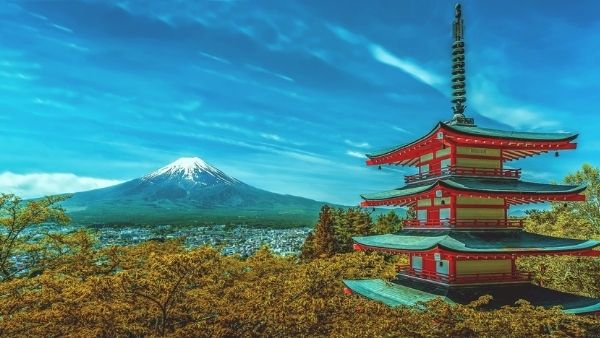
Japan plans to let more regional airports to accept entrants from abroad, Japanese Prime Minister Fumio Kishida said, amid the Asian country’s gradual relaxation of strict border measures implemented in response to the Covid-19 pandemic. “We will enable regional airports such as Sendai (in northeastern Japan) to resume accepting international flights, in consultation with local governments,” Kishida added on Tuesday at his office. At present, international flights are limited to five airports in Japan, Haneda, Narita, Kansai, Chubu and Fukuoka, as part of Covid-19 restrictions, Xinhua news agency reported. Naha and New Chitose airports, popular transportation hubs to tourist spots in Okinawa and Hokkaido respectively, are scheduled to resume accepting international flights by the end of June. The Japanese government also plans to announce guidelines on Covidera inbound tourism for the travel industry on June 7, the Prime Minister said, three days before the country resumes accepting tourists from overseas. As the Covid-19 situation in Japan has been improving in recent weeks, the cap on daily arrivals from overseas is set to be raised Wednesday to 20,000 people from the current 10,000. Since March, Japan has been gradually easing the Covid-19 rules, raising the daily cap on overseas arrivals to 10,000 people. The country has given priority to foreign residents, business people, students and returning Japanese citizens among others, while prohibiting the entry of tourists.
Read more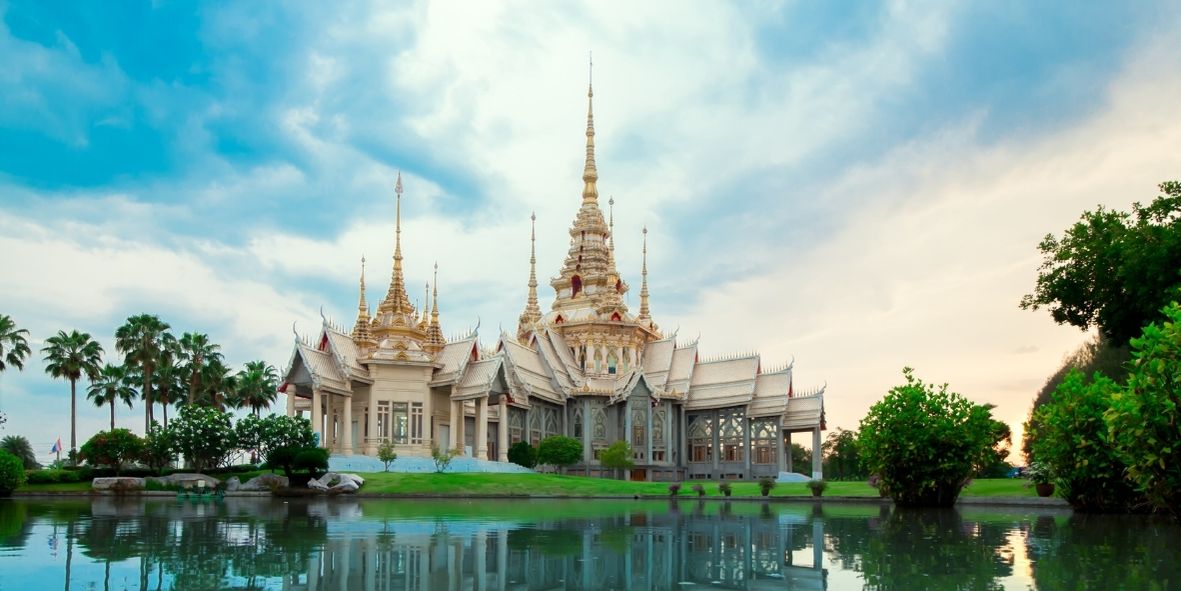
Thailand updates entry requirements
- Jun 02,2022
- Travel Trade Journal
Further easing measures for vaccinated and unvaccinated travelers from around the world, Thailand updates entry requirements. The following rules will be in effect from June 1, 2022, with specific requirements for vaccinated and unvaccinated/not fully vaccinated travelers from all countries/territories with scheduled arrivals from this date. Pre-arrival requirements :- Vaccinated travelers must have the following documents for entering Thailand: - A valid passport or a Border Pass for arrivals via border checkpoints. - A Thailand Pass (via https://tp.consular.go.th/) Thais are exempt from this requirement. Once all essential details have been completed via the system, the QR code will be automatically issued (no waiting time) - An insurance policy with coverage no less than US$10,000. Thais and foreign expatriates under Thailand’s national healthcare coverage are exempt from this requirement. - A Certificate of COVID-19 Vaccination - Everyone 18 years of age and older must be fully vaccinated for COVID-19 with an approved vaccine at least 14 days before traveling to Thailand. - Travelers 5-17 years of age traveling to Thailand unaccompanied must get vaccinated with at least 1 dose of an approved vaccine at least 14 days before traveling to Thailand. Those traveling with parents are exempt from this requirement. - Travelers with a history of COVID-19 infection who have recovered by medical treatment, and travelers who have received at least one dose of an approved vaccine post-infection must have a certificate of COVID-19 recovery. Unvaccinated/not fully vaccinated travelers must have the following documents for entering Thailand: - A valid passport or a Border Pass for arrivals via border checkpoints. - A Thailand Pass (via https://tp.consular.go.th/) (Thais are exempt from this requirement.) Once all essential details have been completed via the system, the QR code will be automatically issued (no waiting time) - An insurance policy with coverage no less than US$10,000. Thais and foreign expatriates under Thailand’s national healthcare coverage are exempt from this requirement. On Arrival Requirements:- -Upon arriving in Thailand, all travelers must undergo entry screening, including body temperature check, and present the required documents to the Immigration/Health Control officer to carry out the checks. -The vaccinated travelers will then be allowed entry and are free to go anywhere in the kingdom. *For arrivals by land using a border pass, they will be allowed a stay of no longer than 3 days within the specified areas only. - Likewise, unvaccinated/not fully vaccinated travelers who have uploaded proof of a negative result from an RT-PCR test or professional ATK within 72 hours of travel via the Thailand Pass system will be allowed entry and are free to go anywhere in the kingdom. - Unvaccinated/not fully vaccinated travelers without a negative test result within 72 hours of travel are required to follow the public health instructions and guidelines as deemed appropriate by the Health Control officer at the point of arrival. During the Stay :- While in Thailand, both vaccinated and unvaccinated/not fully vaccinated travelers are advised to strictly follow the health and safety standards. Travelers who are experiencing COVID-like symptoms should get tested. If testing positive, they must get the appropriate medical treatment.
Read more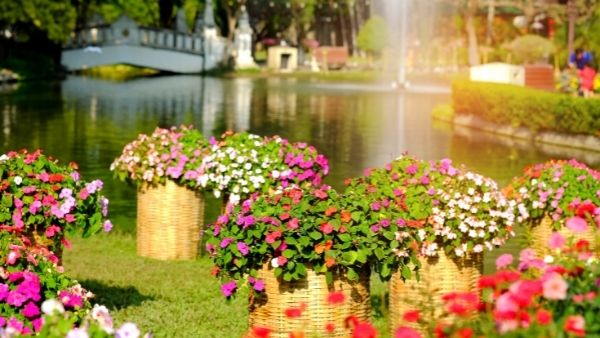
UNESCO World Heritage Site ‘Valley Of Flowers’ Opens On June 1
- May 31,2022
- Travel Trends Today
The sylvan surroundings of Uttarakhand are the best bet for tourists who look for a respite from their hectic schedule. And, with the extreme heatwave scorching most parts of the country, it will be a welcome break when the Valley of Flowers opens on 1st June 2022. The state of Uttarakhand has been bestowed with nature’s pristine beauty and the living proof is the Valley of Flowers, located in the higher Garhwal Himalayas, rich in floral and faunal wealth. At a height of 3,000 meters, in the Chamoli district of Uttarakhand, the Valley of Flowers is accessible to the public from June to October. And remains covered in a blanket of snow for the remaining six months beginning in October. It was an accidental discovery by an avid British mountaineer and a botanist, Frank S Smythe, when he was traversing through the region in 1931. The valley today is home to over six hundred flowering species, including some exotic varieties like Brahmkamal, which is also the state flower of Uttarakhand. Other varieties include blue poppy, described as the Queen of Flowers, Bluebell, Primula, Potentilla, Aster, Lilium, Himalayan Blue Poppy, Delphinium, and Ranunculus. The region also has a rich faunal diversity with species like the leopard, musk deer, and blue sheep. Declared a National Park in 1982, the Valley of Flowers stretches over an expanse of 87.50 sq. km. It was declared a UNESCO World Heritage Site in 2005. Accessible only on foot, it is a paradise for trekkers. The valley has seventeen kilometers long trek thatbegins at Ghangaria, situated at an altitude of 10,000 feet, which can be reached via a trek from Govindghat, a small township near Joshimath.
Read more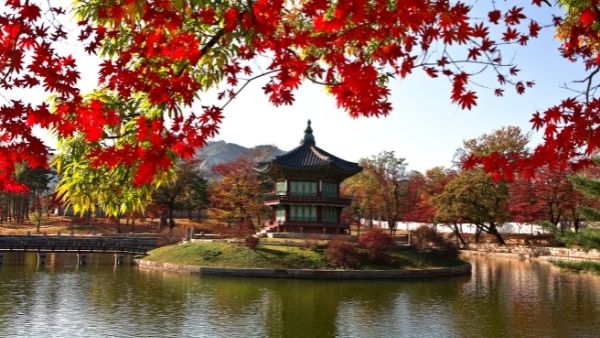
South Korea reopens for Indian travellers
- May 31,2022
- Travel Trade Journal
As leisure travel is re-opening across the globe, South Korea is all set to welcome outbound travellers from India post two years of the COVID-19 Pandemic hitting the world. Indian travellers can now apply for a short-term (C-3) visa which allows foreigners to stay up to 90 days for marketing research, travel, visiting relatives, meetings or similar reasons. The visa can be applied physically at the VFS Global centers. Effective from June 1, 2022, the VFS Global South Korea Visa application Center, New Delhi and Kolkata would accept all the visa categories Including express visa applications. Applicants would need to take a prior appointment to submit the application in New Delhi, however, for Kolkata applicants can walk in without an appointment to submit the application. The online appointment link would be available soon on the website. All travellers must provide a Negative COVID-19 PCR Test Result Certificate from a PCR test taken within 48 hours prior to departure date irrespective of their vaccination status. Fully vaccinated individuals (WHO approved emergency COVID-19 vaccine) are exempt from quarantine. These individuals must have been fully vaccinated for at least 14 days, but within 180 days, or have received a booster shot (third dosage). Non-vaccinated or individuals who have not completed three doses have to undergo a mandatory quarantine of 7 days. For details related to pre and post-departure mandates, visit Korea Travel Safety Guidelines. Korea Tourism Organization has launched multiple campaigns on global and regional levels to encourage leisure travel to Korea. The Global campaign is called “Travel to Korea Begins Again”. KTO New Delhi has also launched a regional campaign called “Let’s Go Korea Plan”. Travel to Korea Begins Again: The global campaign targets world over travellers with a showcase of new recommended attractions like K-Drama filming sites, food, culture and unexplored regions to visit in Korea, discount offers on flights, discount coupons for local transportation, shopping and tourist attraction, etc. Let’s Go Korea Plan: The Indian campaign targets PAN India outbound travellers, with a customer-centric approach. The plan was launched by KTO, New Delhi Office in April 2022, in collaboration with Shinhan Bank and Utazzo Travel. The customers have the ease to invest in monthly installments ranging from INR 2,000 to INR 100,000 with Shinhan Bank for a duration of up to 1 year. The Shinhan bank offers an attractive rate of interest of 5.75 per cent * per annum that can be availed at the end of the deposit period. The buyers of this monthly saving cum recurring deposit plan are entitled to exclusive discounts and money-back offers provided by Utazzo travel. Pleased about the reopening of Korea for Indian travellers, Y.G. Choi, Director Korea Tourism Organization said, “We are very excited to welcome the Indian travellers to South Korea after a long pause. We have just switched on the reset button for South Korea travel. Our offerings will be focused on new market segments like luxury and entertainment for generation Z. There is a variety of assets S. Korea has in terms of luxury experiences and entertainment inspired by the world of K-pop and K-Drama shoot locations. We will also be focusing on coworking with multiple travel trade partners and make the best price options available for the Indian travellers to visit Korea.” With the rise in Korea awareness and preference for Korean luxury consumer brands in India, especially through the Korean entertainment world of K-Pop and K-Drama, KTO expects a rise in demand for travel to Korea by Indian outbound travellers in the year 2022-23.
Read more
Biometrics not required for visa applicants to Turkey
- May 31,2022
- Travel Trade Journal
Gateway Management on Friday announced that visa applicants to Turkey are no longer required to submit their biometrics at Gateway visa centres in India and Nepal. According to a directive from The Ministry of Turkey, effective May 27, 2022, Turkey visa applicants are no longer required to submit biometrics (fingerprints and live photos) at Gateway visa centres in India and Nepal. Therefore, applicants no longer have to visit Turkey visa centers to complete their visa applications. A person/agent whom the applicant authorizes can apply for a Turkey visa on the applicant’s behalf. Gateway Management is the only company authorised by the Ministry of Foreign Affairs of Turkey to accept Turkey Visa Applications in İndia
Read more
Japan, wary of foreign 'bad manners', cautiously eases borders to aid tourism
- May 31,2022
- Hindustan Times
Japan's easing of a two-year ban on foreign tourists seeks to balance the enormous economic importance of tourism with concerns that travellers would trigger a Covid outbreak, insiders say. Under the decision, Japan will allow in a limited number of foreign tourists on package tours starting June 10. Last week a few "test tours", mainly of overseas travel agents, started to arrive. Relaxing some of the world's strictest pandemic border measures required months of pressure from travel and tourism executives, three insiders told Reuters, describing both the government's fears of public backlash if infections spiked and the industry's concerns of an economic wipeout. "There were worries that foreign tourists would include a lot of people with bad manners - people who don't wear masks or don't use hand sanitiser and that infections could spread again," said one tourism company executive, who like the others spoke on condition of anonymity because of the sensitivity of the issue. Government resistance softened after Japan's "Golden Week" holidays in May, when people travelled domestically but infections didn't sharply increase, the executive said. "If the government doesn't open up the country, more companies will go bankrupt, and that's no good politically," he said. Kishida's LDP faces an election in July. Although the closed-border policy was overwhelmingly popular early on, the public has warmed up to reopening as the pandemic has eased and the cost of closure became more apparent. A recent Nikkei poll showed 67% of respondents felt it was "reasonable" to allow in foreign tourists. The foreign ministry felt some pressure from overseas on relaxing border controls, and was one of a handful of ministries that tried to persuade Kishida's government, another insider said. Ultimately, foreign pressure may have helped ensure the change, said an industry executive. Local governments remain worried that foreign tourists will bring in the coronavirus, the industry executive said, making it difficult to open the country fully. Japan, where guidelines such as mask wearing and hand sanitising are scrupulously followed, has avoided the kind of massive infections that have swept through other countries. Already, the test tours have hit a snag. The Japan Tourism Agency said on Monday that a participant on a trip to the southern prefecture of Oita had tested positive for Covid. The three other travellers are asymptomatic, it said, but the rest of the tour was cancelled. TOTAL BUST Hotel operator Resol Holdings Co Ltd opened four new locations in the run-up to the Tokyo Olympics, expecting a massive influx of foreign tourists. It was a total bust, said operations manager Hideaki Kageyama. "You can't pay the bills, the rent, the labour without inbound tourism," he said, adding that the border easing would not be enough to quickly revive the industry. The number of hotels that shut down nationwide rose to the highest in five years last year, and hotel debt levels have more than doubled since 2019, according to researcher Teikoku Databank Ltd. Government subsidies have helped stave off widespread bankruptcies. Resol might have gone under if it weren't for side businesses such as golf courses and solar plants, Kageyama said. Tourism was a rare bright spot for Japan before the pandemic. A record of about 32 million foreign tourists visited in 2019, spending some $38 billion. The government still aims to bring in 60 million tourists a year by 2030. The rickshaw pullers in Tokyo's Asakusa temple district have gotten by giving rides to domestic tourists instead of the throngs of Chinese who used to come. "I want the foreigners to return," said Yui Oikawa of Rise Up Tokyo Rickshaw. "It was more lively that way, with people from all over coming to Asakusa to pray or have a drink." There's also a lost opportunity: the yen is at its weakest level in 20 years, making Japan a cheaper destination for travellers. For now, tourists can only come on guided, package tours and as part of a quota of 20,000 arrivals each day, including residents. Other Asian tourist destinations like Singapore and Thailand began welcoming back tourists in the second half of 2021 and in April further eased entry rules. Japan doesn't have a timeline for a resumption of full-scale, independent tourism, and the easing could be reversed it Covid worsens, the government says. The small test tours that started last week are mainly made up of foreign travel agents. They have been subject to strict itineraries that have been mocked online as reminiscent of a visit to North Korea. The test tours will help the government flesh out guidelines for trips from June 10, officials say. But Clement Kueh, an Australian travel agent who arrived at Tokyo's Haneda airport last week, said he and his colleagues still weren't certain how authorities would define what constitutes "group" travel. "We're not sure what that means exactly," he said.
Read more