
Too little, too late? Tourism sector revives in Middle East
- May 28,2022
- Hindustan Times
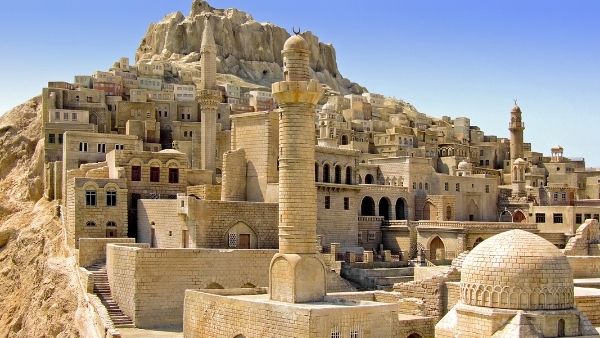
After two years of pandemic-induced closures, popular holiday destinations in North Africa are slowly coming back to life. Tourism makes up a vital part of national income in countries like Tunisia, Egypt, Morocco and Jordan and as such, also helps maintain political stability. "When there is no tourism, the primary livelihood for the population here, that generates a lot of anger and frustration," Saied Boukidour, a caterer from Kalaat M’gouna in southern Morocco, told DW. Most of the inhabitants of his small city, famed for its castles and rose plantations, are involved in tourism one way or another. As yet, the downturn has not caused any political unrest, according to Boukidour. But it has impacted local people's "social status and their livelihoods. Prices have risen and the needs of families are increasing," said Boukidour, whose business caters to tourist groups coming through the town. Changing jobs or leaving altogether Things are picking up again, he said, and his phone has started ringing. But the recent uncertainty during the pandemic and now the war in Ukraine mean some locals are still thinking about changing jobs entirely, even though that's difficult in Kalaat M'gouna, which has little other work to offer. "This feeling also leads people to think about emigrating," Boukidour said. Studies have found that during the COVID-19 pandemic, when borders were closed and tourists could not enter the country, foreign remittances — money being sent into the country by expats working elsewhere — helped plug the foreign currency gap left by tourism. And it has also made emigration seem more attractive, Boukidour noted. Tourism a foreign currency 'lifeline' Over the past few decades tourism has become an increasingly important national earner, bringing billions into countries like Tunisia, Morocco, Egypt and Jordan. "Tourism revenues are lifelines for these countries," Basem Aly, an analyst at Control Risks, a global risk monitoring consultancy, told DW. "Egypt, Tunisia and Morocco are not major industrial states. The tourism sector represents one of very few sources of foreign currency. And the more tourism revenue generated, the less likely their governments will ask the [International Monetary Fund] for loans," he said. According to the OECD, pre-pandemic tourism accounted for up to 15% of Egypt’s gross domestic product, or GDP. It made up to 10% of Morocco’s GDP, 12% of Tunisia’s and up to 19% of Jordan’s. Those numbers all plummeted during the pandemic. Official records show that the tourism sector employs millions of people in each of those countries — for example, around 3 million in Egypt and about half a million each in Morocco and Tunisia. But those official numbers account only for people directly employed in the sector. There are actually many more locals working in tourism-related jobs. They may be involved in what's known as the informal sector as waiters, taxi drivers, guides or souvenir sellers. Or they may be working in a business dependent on international visitors but not directly linked to tourism, like making handicrafts, catering or transport. "The distress felt by the tourism sectors in Egypt, Morocco, Tunisia and Jordan is amplified by the industry's crucial role in sustaining a large number of informal jobs," a 2020 Control Risks briefing stated in an assessment of how the pandemic was impacting tourism in the Middle East. "The informal sector plays an important economic and social role in these countries, absorbing large numbers of labor market entrants who are not able to find formal employment … or acting as an overspill for workers who have lost their jobs during recent crises," it said. 'Ominous sign' Those in the informal sector were worst-hit by the pandemic's impact on tourism, as they were often living without savings and couldn't access government aid, the briefing argued. Given that many of the demonstrations and the political unrest of the so-called Arab Spring, starting in 2011, were driven by frustrations about unemployment, "the demise of their countries' tourism sectors should be an ominous sign to the respective governments," Control Risks concluded. Over the past two years, regional governments did try to reduce the pandemic's impact on this all-important sector. In Morocco, tourism industry staff received about $200 (€187) a month from the government, provided their employers kept on at least 80% of staff. In Jordan, tour companies were exempted from various fees and offered loans. Some countries promoted more domestic tourism; others tried to appeal to new markets, pushing medical tourism or holidays to eastern Europeans. Happily, since earlier this year, the tourism sector in those countries has been experiencing something of a resurgence. Moroccan authorities reopened airports to foreigners in February and now say they expect numbers for the year to be down only about 25% on pre-pandemic figures from 2019, when the country had 13 million visitors. Although Tunisia has already counted more than a million visitors since January, numbers there are not expected to be as positive as Morocco's. Tourism Minister Mohamed Moez Belhassine told local media his office expects only about half of the 9.4 million visitors Tunisia had in 2019, before the health crisis hit. Political uncertainty in Tunisia could cause a problem, researchers at The Economist magazine's business intelligence unit suggested late last year. "Tourism sentiment is likely to take much longer to recover than in other countries including neighboring markets such as Egypt and Morocco," they argued. If protests against Tunisian President Kais Saied's power grab continue to grow or become violent, this will put even more of a damper on Tunisia's international tourism, they said. Impact of Ukraine war There may also be some other obstacles to an ongoing recovery. Another wave of COVID-19 infections would stall a comeback. And the Russian invasion of Ukraine also has an impact. "The Ukrainian and Russian markets are also very important [in Egypt], and now Ukrainian tourists are completely gone," Alaa Akel, chairman of the Egyptian Hotels Association, complained. Tourists from those countries previously made up about 40% of the country's beach tourists, he noted. "And I don't think Russian tourists will come this summer. Nobody knows when the war will end." Mahmoud Radwan, a receptionist at a hotel in the popular Egyptian beach resort town, Hurghada, pointed out another problem: "Even if they [Russians] do return, another problem will arise. Egypt does not accept payment in rubles," he added. Russian tourists also account for around 7% of Tunisia's visitors. In fact, Tunisia’s tourism authorities recently said they want to encourage Russians to visit despite the war, and private airlines have been organized to bring them to the country. At the same time, Control Risks analyst Aly remains comparatively optimistic. "The social and economic problems mentioned in [the 2020 briefing] will be less of a concern in 2022," he told DW. "Improved prospects for tourism in Tunisia, Morocco and Egypt will reduce the threat of protests despite increases in living costs," he concluded.
Read more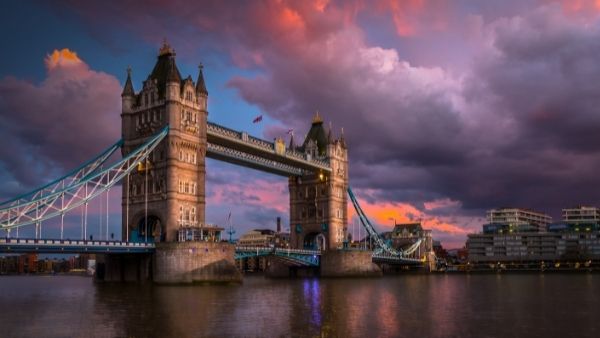
Britain’s airports, airlines and ports see surge of jubilee holidaymakers
- May 28,2022
- Hindustan Times
Britain’s airports, airlines and ports face their most frenetic weekend for years as a surge of vacation-bound passengers puts further stress on travel hubs already hobbled by a staffing shortfall and other issues London’s Gatwick airport said Friday was set to be its busiest day since the start of the coronavirus pandemic, surpassing April’s Easter rush, with more than 800 scheduled flights set to transport 120,000 passengers. The great get-away will continue in coming days as school holidays and a four-day weekend for Queen Elizabeth’s platinum jubilee celebrations combine to trigger an exodus of Brits to sunnier climes. Numbers will be swollen this weekend by an estimated 70,000 fans of Liverpool football club heading to the Champions League final in Paris. While Gatwick said it had “no significant queues,” passengers earlier took to social media complaining of long delays for security, boarding and even water fountains. Traffic lined up on roads near the Port of Dover as P&O Ferries continued to run a reduced service, and discount airline EasyJet Plc canceled further flights after scrapping more than 200 Thursday amid an IT outage. Travel firms have urged people to arrive in good time for their departures after the Easter holiday saw chaos at hubs including Manchester airport, with facilities unable to cope amid worker and equipment shortages. Staff shortages have been the chief trigger for disruption, with companies that dismissed workers or lost them to other sectors at the height of the pandemic struggling to make up the gap as bookings rebound with the easing of travel curbs. The situation has been compounded by issues such as the EasyJet IT glitch, with British Airways suffering a similar incident in March. P&O also had its ships confined to port for safety checks after firing experienced seafarers and replacing them with lower paid ones, though the fleet is almost back to strength after several vessels cleared inspections. “The industry is grappling with shortages across functions including security, cabin crew and baggage handling, and the coming week promises to be the next big test,” said Rob Morris, global head of consulting at Ascend by Cirium. “There’s a risk that if things go awry it could put people off traveling.” While Britons are currently still in “a euphoric phase” as borders reopen, significant upheaval now could hurt demand later in the year when increased household costs are likely to be weighing on travel budgets, he said. London Heathrow airport reported that operations were running smoothly while suggesting customer numbers may build toward Thursday, when the jubilee holiday begins. Europe’s busiest hub prior to the Covid crisis, Heathrow has been operating at reduced capacity with the long-haul flights in which it specializes taking longer to return. British Airways said flights were operating normally on Friday. The unit of IAG SA has pared back its timetable by 10% through October following disruption earlier in the year as it struggled to hire sufficient workers in ground-services roles. EasyJet has cut capacity on its smallest planes for a limited period to allow operations with fewer crew while it seeks to recruit staff. Eurostar International Ltd. said it expects a busy period for the jubilee celebrations, though is sticking to only 80% of 2019 capacity in order to ensure the resilience of its cross-Channel express-train service.
Read more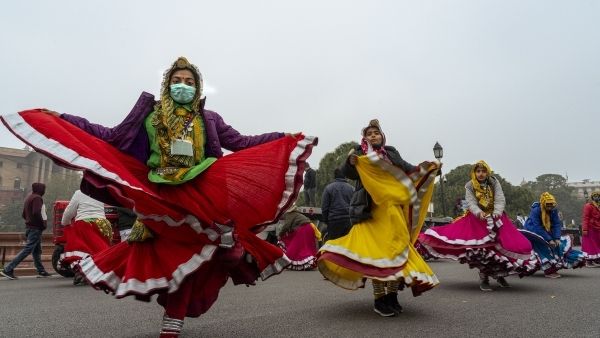
Ladakh's Nubra Valley to host the 6th Siachen Folk Festival soon
- May 28,2022
- Times of India
If you are looking for a place to go to and things to do this summer, look no further because this June you need to be in Nubra Valley in Ladakh, home to the mighty Siachen glacier. The sixth edition of the Siachen Folk Festival is going to be held on June 5, 2022, at Chamsen Polo ground in Nubra. The festival will include various cultural shows, traditional games such as archery, and an array of traditional food items. The Siachen Folk Festival is organised to keep the legacy of the old silk route trade alive. It’s an effort to let people know more about the rich cultural heritage of Ladakh. The two-day festival draws in a number of visitors, both domestic and international. The festival venue, Chamshen Pologround, is not any ordinary polo ground. This present venue used to be a polo ground back when it was an important trading route. The festival is a very lively and colourful affair. Complete with various groups performing cultural shows, songs and dance. The traditional archery competition has always been a huge crowd puller too. These activities are ways to teach the present younger generation the beauty of their culture and the importance of preserving one’s old traditions and cultures. After the festival, you might as well explore the region. We hear this time is the best time to do the Bactrian camel ride, also known as the double-humped camel ride. The Hunder sand dunes of Nubra are another great place for quad biking, if that’s something that interests you. Whatever it is that you choose, you will all agree that this is the best time to be in Ladakh, enjoying the outdoors. Let this Siachen Folk Festival be your wonderful summer break.
Read more
Jagannath Rath Yatra for the first timers
- May 28,2022
- Times of India
Jagannath Rath Yatra festival, one of the biggest Hindu festivals in India, is that time of the year when the whole town of Puri, Odisha, comes to life. Millions of devotees of Lord Krishna come to attend this festival, to pull the rath (chariot), which is considered as an act of devotion and cleansing of sins. The festival is dedicated to Lord Jagannath (Lord Krishna), Goddess Subhadra and Lord Balabhadra. Jagannath Rath Yatra will be celebrated on July 1, 2022. The Rath Yatra signifies the journey of Lord Jagannath (Lord Krishna) from Gokul to Mathura. The devotees believe that whoever pulls the rath will be blessed with good fortune and will get their wishes fulfilled. The festival is a major annual event in Odisha. It is a grand celebration where the three idols are bathed and dressed and taken from Jagannath Temple to the Gundicha temple. The decorated chariots, sound of millions of devotees chanting and the blowing of conches, all these are unforgettable experiences one can have at the festival. Rath Yatra trivia for the first timers: The ceremony where the three idols are bathed with 108 buckets of water is called Snana Purnima. And that’s not the only thing, before the main procession, the idols go through a ceremony, called Ansara, where they are kept in isolation as they are believed to be unwell! Due to the COVID-19 pandemic, people were not allowed to participate in the Rath Yatra in 2020 and 2021. Devotees are not sure whether they will be allowed or not to take part in the festival this year. The state government is yet to make its final decision. It will depend on the state’s COVID-19 situation.
Read more
How hostels are spicing up backpackers travel schedules
- May 28,2022
- Travel World
Travel in India is one of the top five fastest-growing industries and accounts for 15 per cent of the country’s GDP. India at present boasts of one of the largest youth populations in the world, who absolutely love travelling. According to a recent Glance Spotlight Travel Report, younger audiences are the most eager to travel as 56 per cent of people in the 18-30 age group actively plan trips. This data then becomes a clear testament to the fact that there is no better time to enter the youth travel market than now. Domestic youth travel accounts for a whopping USD 12 bn market today, out of which accommodation takes a share of USD 5 bn. With the youth’s growing affinity for experiential travel, authentic experiences, and adventure tourism,there is an additional USD 7 bn opportunity in the market. They are all in for unique experiences at a great value, which helps them take back fascinating travel stories full of new experiences, insights, and learnings. Understanding the travel appetite/ demand of an Indian youth Travel for the youth is synonymous with an escape from their mundane routine giving them an opportunity to indulge in themselves. They yearn for wholesome community living, rich with experiences and value consciousness. Individuals may travel either for leisure or business but for the youth, leisure travel is definitely picking up steam. Moreover, digitisation has enabled them to remain active on social media and be more culturally aware and curious about off-beat travel. That is why a huge percentage of youth in the 18-35 years age bracket plan at least one trip each quarter. Also, the youth like to plan their travel itinerary very smartly. Be it a staycation, workstation, or just a solo trip to detox, an increasing number of Indian youth prefers to travel like a local via public transport and spends a sizable share of their discretionary spending on experiences instead of stay and transport. Limited resources no longer mean a big compromise on trip quality, as young travel enthusiasts seek out budget-friendly accommodations that offer highquality hospitality. That’s why a MakeMyTrip report claims that 10 per cent of the youth traveller population is happy with an accommodation expense less than INR 1000 ADR. In fact, a study quoted approximately 182 million Indian youth expected to take at least one trip in a year in the sub-INR 800 ADR range. Therefore, a planned approach to serve this humongous base can be profitable and unlock new travel trends for future generations. The plight of backpackers in India However, the youth’s aspiration toward budget-friendly travel doesn’t quite resonate with the accommodations that the market offers right now. Only 10 per cent of hostel brands are equipped to meet the youth’s travel needs today because the remaining options are festered with issues such as poor service, negligible or no experiential offerings, lack of hygiene, security, and no scope for socialisation, thereby posing several risks for young backpackers. Youth hostel category fast gaining popularity This is where youth hostels come to the rescue with affordable accommodations, state-of-the-art infrastructure, optimal functionality, and maximum comfort. Built on social and community-led interactions, these hostels act as an experiential melting pot for youth across backgrounds and cultures. One of the most important USPs of youth hostels is their strong focus on standardisation of services across the country with a quality that is synonymous across the brand. Due to these reasons, backpacker hostels are fast gaining popularity among youngsters who seek transformative travel experiences equipped with safety, comfort, and affordability. Starting at an unbelievably low price of INR 400-500 per day per bed, these hostels offer 24×7 cafés, common/hangout areas full of fun activities and games, dedicated workstations, secure lockers, free Wi-Fi, bonfire celebrations, sightseeing, and much more. That’s equal to facilities roughly worth INR 4,000-5,000, akin to a four-star hotel. What more can a young traveller ask for? Accessibility to hostels bringing a cultural revolution With access to various cultures, arts, languages, and delicacies, Indian youth have a tendency to be drawn to youthful and colourful spaces. They like vibrant environments and are open to newer experiences and adventures. By virtue of offering pocket-friendly pricing, hygienic, high-quality, and youthful living spaces with an exciting environment, new-age hostels are bringing a cultural revolution to the country. They are enabling more young people to travel frequently for longer durations, meet new travellers and gain new experiences. Such an ecosystem gels perfectly with adventure-loving youngsters who like to create their own travel experiences with a gamut of apps and services informing and guiding them to their ideal convenience. Catering to such an informed clientele are tech-enabled, integrated hostels that provide a seamless travel experience and leave a positive travel sentiment among the youth. Supporting youth travel through an overall ecosystem Tourism impacts the economy and the government has certainly taken note of it through the Union Budget 2022 announcement that laid emphasis on enhancing road and railway infrastructure and supporting SMEs through increased investments. Besides, an increased focus on enhancing partnerships with private players will optimise such investments further and aid the growth of this segment overall. Finally, on the execution front, a solid foundation of on-ground operations and high-quality service delivery will seal the deal for a reliable, affordable, and rewarding travel combo for the youth. Opportunity and the way ahead Travel as an industry is slowly making its resurgence post-pandemic. Pandemic proved that even during the worst of times, youngsters are the ones who kept the small businesses afloat by travelling and working from far-flung destinations. New words like ‘workstations’ have become a part of pop culture, thanks to the youth for their zeal to travel and at the same time ensuring that they traveled with full adherence to Covid protocols, following sensible ways in order to reduce the risks for themselves and others. By following simple rules, they acted responsibly while traveling and helped minimise the spread of the virus further. While the domestic youth travel market still stands at a nascent stage, the opportunity to grow is huge, especially for small businesses that wish to enter the segment and earn a livelihood. Existing brands must prioritise experiences and affordability to appeal to the lion’s share of the market. The youth loves to live in colourful, vibrant environments and monitor any and every service they consume with consistency. That is one of the main advantages of youth hostels, which provide consistent and high-quality service through accommodations and experiences in facilities across the country.
Read more
Cathay Pacific to increase flight services from Mumbai and Delhi to Hong Kong
- May 28,2022
- Travel World
Cathay Pacific will be increasing the frequency of its flight services from Mumbai and Delhi to Hong Kong. The Hong Kong-headquartered airline had stopped flying to India in late March 2020 due to the suspension of passenger traffic to and from India. Cathay Pacific resumed its services to Mumbai and Delhi from May 4 and May 6, respectively, this year, after the government lifted the ban on March 27. The airline resumed operations from Mumbai and Delhi with three flights in May. For June, the airline will operate eight flights from Mumbai and nine flights from Delhi, it said in a statement. From July onwards, Cathay Pacific said that it will operate two flights per week on the Hong Kong-Mumbai route and vice versa on Friday and Sunday. On the Delhi-Hong Kong-Delhi route, the airline will have four flights per week Tuesday, Wednesday, Friday and Sunday.
Read more