Singapore tourism numbers soar as it commits to remaining open, Indians visitors ranked first

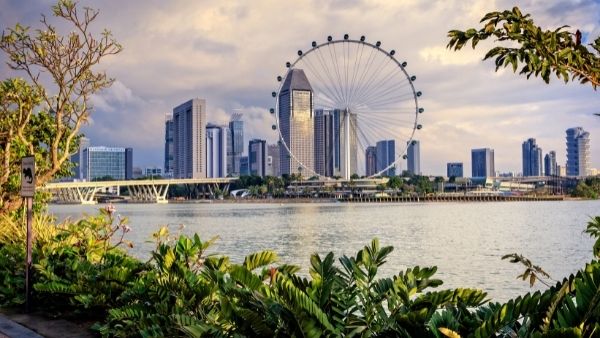
Singapore tourism numbers have been climbing since it re-opened its borders to foreign visitors earlier this year with Indians making the largest number of visitors by country of origin. The island city-state now accepts all fully vaccinated travellers from around the world without any need for testing or quarantine. Looking around the tourist areas, one can see signs of tourists returning and various businesses gearing up for more visitors from abroad. Popular tourist services like open top tour buses and trishaws (three-wheeler bicycles with a seat by the side) have suddenly made an appearance in Suntec City and Rochor Road respectively. A sight last seen pre-COVID. Indeed, April saw tourist arrivals more than double from March's figure of 121,200 to 294,200. This is based on numbers published by the Singapore Tourism Board. However, this is still a far cry from the 1.638 million average monthly visitors Singapore received in the last pre-COVID year in 2019. Over 300,000 of these came from China, Singapore largest tourism source pre-pandemic, which is still largely closed to travel. Indians are making up for the missing Chinese and have since the beginning of the year, been the largest group of nationals travelling to Singapore. About 95,500 Indians entered Singapore from January to April. Second are Indonesians at 89,700 and third, Malaysians with 45,600 making the trip by air to Singapore. In these numbers, Singapore does not count Malaysians coming into the country by the land border which has now fully re-opened as the majority of those who use this route, come daily to study or to work. Passenger traffic at Changi Airport is expected to reach more than 40 percent of pre-COVID levels this month compared with less than 20 percent in March. This number is expected to reach 50 percent in the coming months with one of the two terminals closed since COVID preparing to re-open. Changi Airport has four terminals and is currently operating just two of them. Tourist numbers are rising so rapidly that travel related firms and those providing services to visitors like restaurants are struggling to keep up with the demand. Customers have been complaining about poor service due to the lack of service staff. The Singapore government is at the moment trying to help firms hire enough people to cope. Little India in Serangoon Road is beginning to buzz again and is starting to burst over its seams with people especially during the weekends when migrant workers have their off days. Until recently, there was a restriction on the number of migrant workers allowed to leave their dormitories for recreation. This was due to fears of an uncontrolled outbreak within the small quarters the workers live in. During the early phase of the pandemic, Singapore had a vast outbreak within the worker dormitories which dominated the COVID cases on the island for a period and led to criticism that the government acted too slowly. However, this and other restrictions were lifted as the island city grew in confidence in its ability to cope with the coronavirus as more than 90 percent of its residents are now fully vaccinated and 75 percent have received a booster. COVID cases are now hovering between 2,000 and 3,000 after spiking to almost 20,000 in February. Hospitalisation rates are low - well below 100 cases for a population of around 5.6 million. In a Bloomberg interview on the side of the Changi Aviation Summit, Singapore's Transport Minister S Iswaran said that Singapore will strive to keep its borders open and stay connected to the rest of world even if a new variant of Covid-19 emerges. "We've all learned to adapt," the Minister was quoted as saying. "We have more tools in the toolkit. It's not as if you always only have a hammer. Now I've got you know, a wrench and a screwdriver and all kinds of other things as well. It really comes down to an assessment of the situation and the risk and then to take a calibrated response." Minister Iswaran added that optimism is returning to the travel industry, but it is tempered by some challenges as companies scale up operations. He said that this is a challenge of transition, and the government is working hard at the system level and with aviation stakeholders to make sure Changi Airport is well prepared for the transition. One of the companies benefiting from Singapore's re-opening is its flag carrier Singapore Airlines. Last week, during its annual financial reporting, the airline reported that it narrowed losses in the second fiscal half year which ended in March. For the entire year, it posted a net loss of SGD 962 million (USD 697 million) for the year, an improvement of 77.5 percent or SGD 3,309 million (USD 2,398 million). It had a profitable fourth quarter. Singapore Airlines said that it carried 1.45 million passengers in April, the most since the pandemic. As international borders re-open and people begin to travel again, the airline expects to reach 61 percent of pre-COVID passenger capacity by June and around 67 percent of pre-COVID levels by September. By September, it also expects to server over 70 percent of its pre-COVID destinations.

Read more

Paris tourism rebounds as Europeans, Americans return post drop in mask wearing

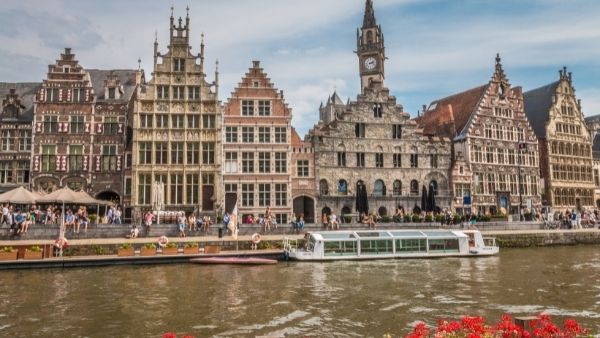
Paris tourism is bouncing back as European and American visitors return to take in the sights of the French capital after two years of Covid-related lockdowns and restrictions. The city is the second-most sought-after destination worldwide this year, behind London, according to booking aggregator Trivago. That has steadily pushed up hotel room rates and occupancy since the beginning of the year. The average hotel price in Paris was around 173 euros ($183) the last week of April, a 17% increase from the same period in 2019 and up even more sharply compared with the start of the year, according to data from tourism research firm MKG Consulting. Paris is traditionally one of the most-visited cities in the world and, before Covid, tourism-related spending represented more than 7% of France’s economy, according to the Organization for Economic Cooperation and Development. After the country dropped some of its last mask-wearing requirements this month, the rise in visitors should accelerate, said Jean-Bernard Falco, founder of hotel and tourism industry group Atop.“I think we’ll see the best year we’ve ever seen,” Falco said. “We’re going to surpass 2019. The future is wonderful.” The tourism boom has only really taken hold over the past several weeks, with current hotel revenue up 20% and occupancy on par with the first half of May 2019, at around 80%-90%, Falco said. That was far from the case earlier in the year. Hotel stays through March in the greater Paris region were down 26%, according to the most recent data available from the statistics institute Insee. Accor SA, France’s biggest hotel group, said it has seen continuous improvement each month this year in revenue per available room in Paris, with a particularly large jump in April. “We’re very happy to see Paris become reinvigorated again,” Maud Bailly, CEO for Southern Europe, said in an email, adding that leisure travel overall was now running at a higher rate than in 2019. May Surge This month may show yet another surge in visitors. Hotel searches for Paris in the first half of May were up 60% compared to 2019, according to travel-booking platform Kayak. More Europeans are coming to Paris, according to Trivago and Accor, while Americans have also returned, enjoying the effects of a weaker euro, which is down about 7% this year versus the dollar. Other major cities, like London, are seeing a return to pre-pandemic activity as well. And London has prepared itself for a big uptick in visitors with thousands of new hotel rooms added in the UK capital.

Read more

Belgium becomes first country to introduce compulsory monkeypox quarantine

Belgium has become the first country to introduce a compulsory 21-day monkeypox quarantine as 14 countries now confirm outbreaks of the viral disease and doctors warn of a 'significant rise' in UK cases, the media reported. Those who contract the virus will now have to self-isolate for three weeks, Belgian health authorities have said, after three cases were recorded in the country. The infections, the first of which was recorded on Friday, are all linked to a festival in the port city of Antwerp, the Daily Mail reported. It comes as doctors have warned that the UK faces a 'significant' rise in infections and the government's response is 'critical' in containing its spread. Dr Claire Dewsnap, president of the British Association for Sexual Health and HIV, has also said the outbreak could have a 'massive impact' on access to sexual health services in Britain. Another 11 Britons had tested positive for the virus, taking the total to 20. The cases include a British child currently in a critical condition at a London hospital, while a further 100 infections have been recorded in Europe. The rare viral infection, which people usually pick up in the tropical areas of west and central Africa, can be transmitted by very close contact with an infected person. It is usually mild, with most patients recovering within a few weeks without treatment. However, the disease can prove fatal with the strain causing the current outbreak killing one in 100 infected. The disease, which was first found in monkeys, can be transmitted from person to person through close physical contact as well as sexual intercourse, Daily Mail reported.

Read more

Night markets in Seoul to reopen after 2 yrs

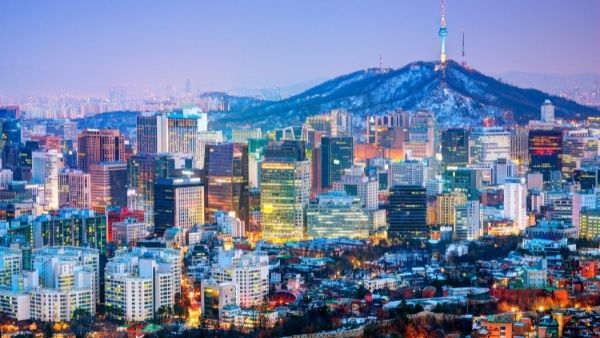
Seoul 's major night markets are set to reopen, after more than two years of hiatus due to the Covid-19 pandemic, their operator said on Monday. The Seoul metropolitan government previously operated a number of night markets at different locations to attract tourists and offer more business opportunities for small vendors, reports Yonhap News Agency. The city government said that it has begun recruiting vendors and traders that wish to participate in "Doggabi" night markets, with locations and the opening schedule yet undecided. Night markets previously opened from 6 pm to midnight in locations such as Hangang Park, Dongdaemun Design Plaza and Cheonggye Plaza. A total of 3.41 million people visited the markets in 2019, the city government said. A record high of 125 food trucks and 206 vendors participated in the market in one day, it said. The city officials expect the night markets to boost local businesses and provide opportunities for young business owners.

Read more

Japan to double cap on foreign arrivals from next month to 20,000 a day

Japan will next month double its limit on foreign arrivals to 20,000 a day, the top government spokesperson said on Friday. Chief Cabinet Secretary Hirokazu Matsuno told a regular news conference that travellers from most countries, about 80 per cent of the total foreign entrants to Japan, would not be required to provide proof of negative COVID tests, nor would they have to quarantine on arrival. This included people from all other members of the G7 group of developed economies. Japan is accepting business travellers, foreign students and academics but not tourists, except a limited number in a trial of package tours. Matsuno said experience with the trials would be used in later decisions to further reopen.

Read more

No proof of foreign travel required for those seeking booster shots

Vaccination centres are not allowed to ask for proof of travelling abroad from those seeking a booster, or precautionary, dose, the health ministry said on Friday. In a meeting with states and union territories, Rajesh Bhushan, Secretary, Health Ministry, said, “Under no circumstances should any COVID-19 Vaccination Centre or any State government insist on any documentary proof of foreign travel for those who are seeking a precaution dose.” During the meeting, it was pointed out that in some states, people wishing to travel abroad and seeking a booster dose within 90 days of the second dose, are being asked to furnish proof of the intended journey. The Centre recently allowed citizens and students travelling overseas to take booster covid-19 vaccine shots, as required by the guidelines of the destination country. India started its Covid-19 vaccination drive last year in January, with the country’s cumulative vaccination coverage now exceeding 191.96 crore. The administration of a booster or a precautionary, dose for healthcare, frontline workers and people above 60 years of age with co-morbidities started this year from January 10. The government has, however, removed the co-morbid clause for people above 60 years of age and made everyone eligible for COVID-19 vaccine precaution dose. Around 3,19,20,599 people have received their booster doses. The health ministry opened precautionary doses for all above 18 years of age from 10 April.

Read more