

Fund shortage? You may travel now and pay later
- May 21,2022
- Financial Express
After BNPL (Buy Now, Pay Later), it’s now TNPL (Travel Now, Pay Later). BNPL has gained popularity specially riding on the demand of e-commerce retail marketplaces, the BNPL industry is poised to grow at a 56 per cent CAGR in the coming year. After remaining indoors for almost two years during full and partial lockdowns imposed to counter the COVID-19 pandemic, people are enthusiastic to travel. However, loss of income due to job loss, salary cut etc due to lockdowns and increased expenditures due to high rate of inflation may prove a dampener. After the restoration of jobs and full pay with the normalcy in the pandemic situation, the financial prospect may have got better, but the dent in savings during the financial crisis may result in shortage of funds for planning a trip. So, people are looking for ways to fund their travel without missing the opportunities. The nuances of a travel industry have created a demand for a TNPL, which is more specific to the needs of the travel industry versus a generic BNPL. “The traveler’s expectations are continuing to shift from the traditional lending modes, towards alternative and easy digital payment solutions. Having said that, the one-size-fits-all approach of a BNPL cannot be replicated for a complex product like travel, with its own nuances,” says Abhilasha Negi, Co-Founder, SanKash, a TNPL specialist. Here is how the needs of travel industry are different from retail marketplaces: Travel is a complex and highly customised product The purchasing cycle of travel has three primary steps – First, it starts with dreaming about an experience; Second, exploring options with various travel merchants to identify the dream package; Third, finally booking for the dream vacation. This takes anywhere between 2-3 days to a week for a traveler to plan and finalise his choice of holiday, with highly time sensitive price fluctuations in the final product. In addition each holiday has to be customised as per the requirements of the traveler. The complexity of the product and high level of customisation makes the purchase more likely to be pushed through offline merchants than online. Hence, it requires a specialised TNPL payment solution, sensitive to the needs of the traveler. This is unlike a retail, e-commerce product which is just available at a few clicks. TNPL considers the customisation nuances as a part of the underwriting criteria for each holiday package. Travel industry is peculiar and makes credit assessment difficult for lenders Unlike any other industry, the travel industry does not have a fixed MRP. It has a complex distribution of services and there is no OEM in the segment. All these factors make it difficult for any lender to do a credit risk assessment of the travel product being purchased by a traveler. TNPLs on the other hand enable risk assessments based on travel data points to analyse the risk in each case. “The risk assessment coupled with travel data points other than just financial data points, makes the credit check a lot more superior than in a regular BNPL based on only financial data. SanKash aggregates all B2B pricing in a manner that it is easy to assess any overpricing or underpricing, enabling better risk assessment,” says Akash Dahiya, Co-founder for SanKash. Average ticket size in travel is big Usually BNPLs finance smaller ticket size retail products ranging from Rs 1,000 to maximum Rs 50,000 for a shorter duration of time (upto 90 days). Whereas, an average holiday even for a domestic destination for a family of two goes beyond Rs 70,000. Hence, the KYC and assessment requirements for travel become different which a specialised TNPL can cater to and can offer repayment up to 36 months of term allowing them to spread the cost of large tickets, especially the international travel which goes beyond Rs 1.25 lakh on an average. Traveler’s financial purchasing behaviour differs from that of other industries In view of the pandemic, a lot of customers want to travel, but pay for it spread out over a period of time instead of paying a huge lump sum before the travel. Given that the ticket size is big, and the booking costs are time sensitive, travelers prefer to book the price at a cheaper rate. This can be enabled by specialised TNPL which can assess price mark-ups over the average cost easily rather than a generic BNPL. “Just like a super-specialist can cater to the exact needs of a patient as against a general physician, TNPL can provide more accurate credit risk assessment and hence more economical rates of interest as compared to a retail oriented generic BNPL,” said Dahiya.
Read more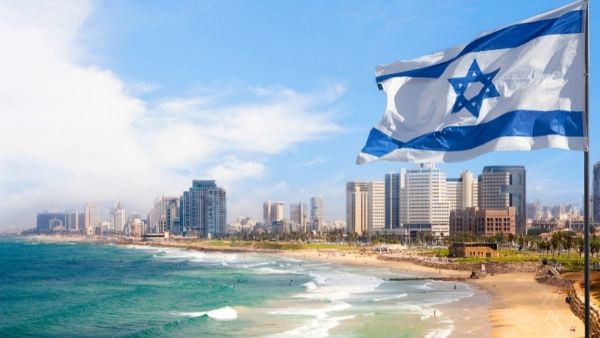
Israel to remove pre-departure COVID-19 testing for tourists from May 21
- May 21,2022
- Times of India
In a bid to boost tourism, Israel has announced to remove pre-arrival testing for tourists from May 21. The latest COVID-19 travel update was shared by the Israel Ministry of Tourism wherein it said that the rule will go into effect at 12:01 AM on May 21 and it will be applicable to both vaccinated and unvaccinated travellers. The country is also removing the need to get tested upon arrival, making it easier for travellers. But visitors will still have to fill an entry statement form before their departure. Eyal Carlin, the tourism commissioner for North America, told a leading travel website, "This new development in Israel's testing and entry requirements is another fantastic step in being able to welcome visitors back to Israel." He further said that with tourists planning their summer and fall trips now, this will make travelling to Israel simpler. The tourism department hopes that this new relaxation in restrictions will allow for even more visitors to enjoy the country. As of now, visitors to Israel need to show their negative PCR test taken within 72 hours or a negative rapid antigen test taken within 24 hours. They also need to get tested with another PCR test upon arrival in Israel and remain isolated in a hotel room until they get the negative results or for up to 24 hours. If a traveller had COVID-19 and has recovered, he/she needs to show proof of that instead of a PCR test. but now, all these rules will be relaxed and entry to the country will become easier and hassle free.
Read more
GORGEOUS ISLANDS INDIANS CAN TRAVEL TO WITHOUT A VISA
- May 21,2022
- Times of India
Gorgeous islands Indians can travel to without a visa! Planning an international trip can be a tedious task even for the most seasoned travellers. You not only have to scout for cheap flight deals, book accommodation ahead of your planned travel, sort out itineraries, and last but not the least, sort out visa hassles. To save your time, we have listed some gorgeous island destinations that allow Indian tourists to enter their boundaries without a visa. Fiji This island nation has earned fame due to its striking beauty, and is home to some of the top-of-the-line spas, heavenly beaches, delectable food scene, exemplary adventure sports, and a melange of cultures. Fiji needs to be on your travel wishlist as it will save you from all visa hassles. No visa is required for Indians for a stay of up to four months! All you have to do is provide proof of return travel tickets, bank statements, proof of stay, and a passport that's valid for six months following the date of arrival. Tuvalu Home to tropical fishes, sea turtles, gorgeous coral reefs, beautiful blue sea, swaying coconut palms, Tuvalu has enough to keep you hooked for a month! Plus, going there will save you from travel woes. All you need is enough money, a proof of stay, and a passport that is valid for a period of at least six months from the date of entry. Seychelles Dotted with a number of beautiful beaches and natural reserves, Seychelles is a place that you should visit once in a lifetime. Plus, when it allows you to travel into its border visa-free, why give it a miss. You will get a visitor’s permit when you land there, which will let you spend and explore three entire months there, provided you present proof of your return ticket. A good deal for sure! Niue It’s one of the hidden gems of the South Pacific and if you've a chance, you should visit it at least once. This scenic island nation will make you swoon with its rock pools, limestone cliffs, breathtaking coral reefs and, not to forget, friendly dolphins. Oh, and we would like to mention here that you will not have to bother about getting an entry visa, in case your visit to this place lasts less than 30 days, have sufficient funds, and have a return ticket too. Maldives A sought-after beach destination among Indian travellers, this place has everything that makes it a lovers’ paradise. Plus, it allows Indians to visit it without a visa, which is an icing on the cake! So book your tickets and explore this place at your own pace. All you need to have is a valid passport, and ensure that you have all documents regarding your bank account statement and proof of stay to avoid any hassle. Mauritius Mauritius can be called one of the world’s most scenic nations. Blessed with white sand beaches, thrilling hiking trails, beautiful rainforests, pristine beaches, and a wide range of flora and fauna, it makes for a great international getaway. If you are an Indian travelling to this nation, you are good to go even without a visa! Plus, with a valid visa, you can stay there up to 90 days as well. Samoa The clusters of breathtakingly beautiful islands of the South Pacific, goes by the name of Samoa, and have earned the reputation of being endowed with picturesque spots to lose yourself in the wilderness. Also, the fact that this country issues entry permits on arrival, which lasts till 60 days, offers you all the good reasons to plan a vacation any time. Trinidad and Tobago The twin-island country makes for a great island vacation, and is situated towards the south of Grenada. Famed for its festivities and beautiful landscape, these twin islands also witness tropical weather for almost all part of the year. All you will need is a six-month valid passport from the date of arrival to departure, adequate health insurance, valid round trip tickets and sufficient funds.
Read more
You can get unlimited summer travel for $9.50 in this European country
- May 21,2022
- CNN
A whole month of unlimited transport for just $9.50 -- that's a great deal at any time, but in a time of fuel price hikes, rocketing car rental rates and a worldwide cost of living crisis, it becomes unbeatable. So pack your bags, because the most affordable travel destination this summer, if we're going by transport, appears to be Germany. The German government has today approved the creation of a €9 ($9.50) monthly public transport ticket. It will be launched in June -- just in time for a summer trip. The card can be used across the entire country, on local and regional transport -- trains, buses and trams, according to local media. However, local means local -- so it can't be used for long-distance bus or train services. In other words, the popular IC, EC and ICE trains are exempt -- although you can combine a long-distance trip with regional transport covered by the pass. Trains marked RE are regional, and therefore part of the package. The deal will run for the months of June, July and August, as part of a government energy relief package by incentivizing people to use public transport to get around this summer. €2.5 billion ($2.6 billion) has been pumped into the project by the government. Each pass will be valid per calendar month -- so if you buy yours on the 14th, you'll still only be able to use it on the end of the month. But though it's been designed for locals, tourists can buy the pass too. Germany's national railway, Deutsche Bahn, has already added the passes to its website. They will go on sale on May 23. The only catch? You can't make a seat reservation with this pass. But at this price, you'd probably happily ride on the roof.
Read more
Thailand allows bars, pubs and karaoke clubs to reopen to woo back tourists
- May 20,2022
- Hindustan Times
Thailand will allow bars, pubs and karaoke clubs to reopen in some regions from next month, ending a more than a year-long shutdown, as the tourism-reliant nation targets more travellers to bolster an economic recovery amid an easing Covid outbreak. Popular tourist destinations including Bangkok, Phuket, Chiang Mai and Chonburi are among 31 provinces classified as green and blue zones where pubs, bars and karaoke lounges can serve alcohol to patrons until midnight from June 1, Rachada Dhnadirek, a government spokeswoman, said on Twitter on Friday after a meeting of the nation’s virus task force chaired by Prime Minister Prayuth Chan-Ocha. The gradual reopening of nightlife entertainment venues marks an end of some of the toughest pandemic-era restrictions and is seen as key to luring more foreign tourists in the June-September period, considered a low season for Thai tourism. The Southeast Asian nation has seen its omicron-fuelled Covid-19 wave ease in recent days with new daily cases averaging about 5,000 from a peak of almost 30,000 in early April. “Improving Covid-19 infections and further easing demonstrate the government’s attempt to quickly bring back economic activities,” said Koraphat Vorachet, an analyst at Capital Nomura Securities Pcl. “What people are closely watching for is the quick recovery of overseas tourists and domestic spending” to spur the economy, he said. Thailand expects tourist arrivals to more than triple to about 1 million a month from October as the nation rolls back most border controls. While the country has scrapped mandatory Covid testing and quarantine for vaccinated tourists, pre-arrival registration and insurance requirements are seen as deterrents with other tourism-reliant nations doing away with such restrictions. The so-called Thailand Pass requirement for tourists will remain while it will be waived for Thai nationals returning to the country, according to Rachada. Unvaccinated foreign tourists who test negative in professionally-monitored rapid antigen tests on arrival will be able to skip quarantine, according to Taweesilp Visanuyothin, a spokesman for the virus task force. Nightlife venues must comply with the government’s Covid prevention protocols, and all employees must take a weekly rapid antigen test, Rachada said. The facilities should also refrain from holding promotional activities for alcoholic beverages, she said. Foreign tourist arrivals topped 1 million this year through May 18 with the easing of travel curbs, Rachada said. The country received only 427,869 visitors last year, compared with almost 40 million in 2019, according to official data.
Read more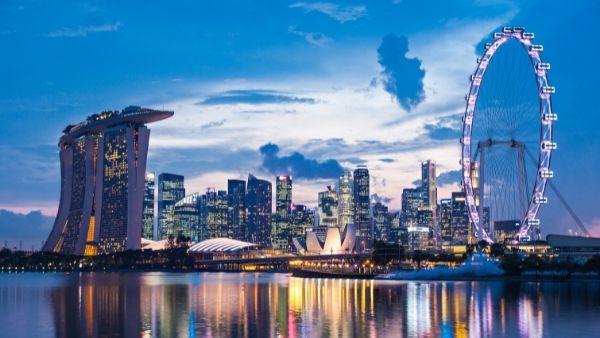
Singapore wants to keep borders open even if a new variant of Covid-19 emerges
- May 20,2022
- Hindustan Times
Singapore will strive to keep its borders open and stay connected to the rest of world even if a new variant of Covid-19 emerges, Transport Minister S Iswaran said. The island city has learned from its past experiences of dealing with Covid variants, Iswaran said Wednesday in an interview with Bloomberg News. When Omicron hit, Singapore didn’t backtrack on its reopening plans but rather decided to wait and see how things panned out, he said, noting that response was different versus the Delta outbreak. “We’ve all learned to adapt,” Iswaran said on the sidelines of the Changi Aviation Summit. “We have more tools in the toolkit. It’s not as if you always only have a hammer. Now I’ve got you know, a wrench and a screwdriver and all kinds of other things as well. It really comes down to an assessment of the situation and the risk and then to take a calibrated response.” Singapore was among the first countries in Asia to reopen its borders, initially allowing entry to fully-vaccinated people from selected countries late last year without quarantine in a bid to help revive the country’s aviation and tourism sectors. Since then, other restrictions have been progressively removed and Changi Airport is now working to keep up with demand. However while travel is returning, optimism is being tempered by some challenges as companies scale up operations, Iswaran said. The government is helping airlines, airport ground handlers and other firms to hire more people to meet demand. “This is a challenge of transition,” Iswaran said. “We’re working very hard at the system level and with aviation stakeholders individually and collectively, really pulling together. Our overriding objective is to make sure Changi is well prepared for this transition.” Passenger traffic at Changi Airport should reach more than 40% of pre-Covid levels this month compared with less than 20% in March. The government expects that figure to touch 50% by later this year and plans to reopen one of the two terminals closed due to the pandemic. Terminal 2 and 4 were shuttered in June 2020 as travel slumped. Terminals 1 and 3 are open but there are no plans yet on when Terminal 4 will restart. Iswaran wouldn’t be drawn Wednesday on whether Singapore may meet that 50% target earlier than expectations. Singapore Airlines Ltd. said earlier this week that it carried 1.45 million passengers in April, the most since the virus outbreak. The airline has restored about 60% of pre-Covid capacity as eased border rules encourage people to travel again. The carrier reported earnings late Wednesday that disappointed investors, who sent the shares down the most in almost three months Thursday morning. While the welcome revival in travel helped Singapore Air narrow losses in the second half of the fiscal year through March, the high price of oil weighed on operations. Changi Airport Group has meanwhile announced a “mass hiring” to fill over 6,600 vacancies across a range of jobs, while Singapore has restarted work on the airport’s fifth terminal. Construction of the facility will commence in two to three years in order for it to be ready by the mid-2030s.
Read more