

South Korea to increase int'l flights to meet travel demand
- May 13,2022
- Travel World
South Korea will add an additional 230 international flights by next month to meet growing demand for travel in the wake of an easing of Covid-19 restrictions, Interior Minister Lee Sang-min said. The addition will raise the number of weekly international flights from 532 in May to 762 in June, reports Yonhap News Agency. Starting May 23, the government will also recognise negative rapid antigen test results for travellers boarding flights to South Korea, on top of polymerase chain reaction (PCR) test results currently being accepted, the Minister said. From June, international arrivals will also be required to undergo a PCR test within three days of their entry into South Korea. The mandatory test is currently required on the day of arrival now. Oral Covid-19 medications enough to treat 1 million patients will be additionally brought in, while the age limit for taking such medications will be further reduced to include those aged at least 12 and with underlying health problems. Currently, people aged at least 40 and with underlying illnesses are entitled for such oral Covid-19 medications. The daily average Covid-19 tally in the week ending Thursday reached some 36,000, down 12.7 per cent from a week ago, Lee said. The hospital bed occupancy rate for seriously ill Covid-19 patients remained in the 10-per cent range over the past four days, he said.
Read more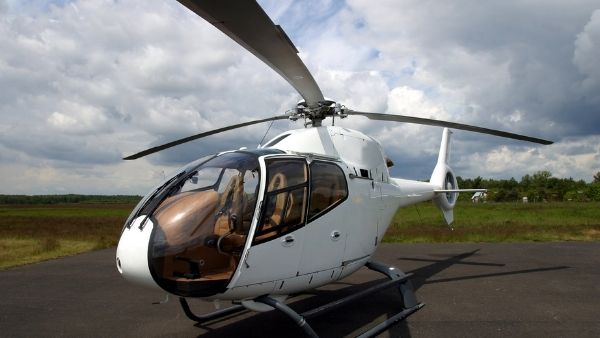
Travel time between Bengaluru city and Kempegowda International Airport to reduce
- May 13,2022
- Travel World
The almost 1.5-2 hour drive between Bengaluru city and its distant Kempegowda International Airport (KIA) could shrink to a short helicopter hop from this July. BLADE India is planning to have a morning and evening shuttle between the heliport at KIA, less than a km from the terminal, to Electronics City and the old HAL Airport, says the company's Commercial Director, Payal Satish. A one-way ticket for the helicopter ride will cost about INR 4,000. Bengaluru lost its brief chopper connectivity with the airport about 3.5 years back when Thumby Aviation stopped this service. People in the know say the shuttle service at that time suffered from several issues like low patronage and long waiting period for permission to operate chopper at the airport due to aircraft movement. “We currently have six times weekly return from Bengaluru's Jakkur aerodrome to Kodagu/Kabini. A one-way between Bengaluru and Kodagu costs INR 16,000. Our proposed BLADE airport shuttle will be five days weekly from Monday to Friday. Once this starts, we will add Mysuru to our helicopter network that will cost about INR 12,000 one-way,” Satish said. BLADE India, a helicopter aggregator, currently uses four choppers. It has flights between Mumbai and Pune, Ambi Valley, Shillim and Shirdi. “We offer fly-by-the seat service where a person buys a seat on the helicopter like an aircraft seat. We also offer charters,” she said. The company's US partner, Blade US, has for years been operating the BLADE Airport helicopter service between downtown Manhattan and JFK Airport. “We are getting the same thing to India with our Bengaluru service,” Satish said. Incidentally, the company is also working to bring electric vertical take-off and landing (eVTOL) aircraft to India. Blade India MD & Co-Founder Amit Dutta also heads the urban air mobility task force for CII and has submitted a detailed study on the subject to the government. India invited BLADE to simultaneously launch electric vertical craft simultaneously in the US and India in early 2024 (the expected launch date after getting all required FAA and EASA approvals). “The Blade team will come here again in July and I will be speaking to other electric vertical craft (EVA) makers in the US to do the same. They will examine climatic conditions here and the regulatory framework,” Dutta said.
Read more
Bengaluru witnesses increase in visa applications specifically for Europe travel
- May 13,2022
- Travel World
Backlog and surge in fresh applications following India lifting ban on international flight operations are delaying processing time for Europe and Canadian visas. Visa facilitator VFS Global has advised applicants, mainly from Bengaluru, to plan accordingly. Jaya Amit Mitra, head of VFS operations for South India, Sri Lanka and Maldives on Wednesday, said that visa applications and processes to various countries picked up pace in recent months with many opting to travel overseas for both work and leisure. “From January to March, there is a 50 per cent increase in visa applications, mainly in Bengaluru. There is indeed a bit of backlog of applications due to Covid-19 and at present, the surge in fresh applications has become challenging. But we are working to provide swift services,” she said. Admitting that there has been a surge in applications for Schengen visa, Jaya asked applicants to avoid booking tickets before receiving the visa. “Unlike pre-Covid times, visa processing period has now become unpredictable for many countries and, therefore, applicants must plan accordingly and not lose out on their air ticket money by booking tickets without anticipating the visa processing time,” she added. The pandemic situation saw many Bengaluru applicants opting for Visa At Your Doorstep (VAYD) service offered by VFS, for visas to the UK, Italy, Switzerland, Germany and France.
Read more
Barcelona sees the return of mass tourism
- May 13,2022
- Travel World
Visitors are once again jamming the narrow streets of Barcelona's Gothic quarter as global travel bounces back from the pandemic, reviving tensions over mass tourism in the Spanish port city. Hotel occupancy in the city rose in April, which included the Easter long weekend, to nearly 85 per cent, close to its pre-pandemic levels, according to the Barcelona Hotel Guild. “There are more and more cruise ships, more and more tourism, more and more massification,” said Marti Cuso, a high school biology teacher who has long campaigned against mass tourism invading the city centre. “This has been a shock after two years of pandemic,” said Cuso, 32, who had hoped the city would use the pandemic pause to change its tourism model. Cuso, who grew up in the Gothic quarter, said he enjoyed the calm that descended on the neighbourhood, which is normally flooded with tour groups visiting its mediaeval buildings. After receiving a record of nearly 12 million visitors at its hotels and tourist apartments in 2019, arrivals plunged by 76.8 per cent in 2020, mirroring declines across Europe. “People reclaimed the squares, children played in the streets again,” said Cuso. The pandemic also showed the dangers of having an “economic monoculture based on tourism,” he said. “The majority of residents who worked in tourism found themselves out of work overnight,” said Cuso. Tourist arrivals in Barcelona had risen steadily before the pandemic and the tourism sector accounted for around 15 per cent of the economy of Spain's second-largest city before the health crisis. Control the damage The boom in tourism sparked a backlash, with regular protests, including one in 2017 where vigilantes slashed the tyres of an open-top tourist bus and spray-painted its windshields. Barcelona residents identified tourism as the city's main problem in a poll carried out that year by city hall. “We must change the model to reconcile the two worlds. We can't have the tourists' city on one side and the city of locals on the other,” Francesc Munoz, who heads an Observatory studying Urbanisation at Barcelona's Autonomous University, told AFP. With terraces once again full of tourists drinking sangria, Barcelona's leftist city hall said recently it plans fresh measures to tame the sector. Access to the busiest squares could be restricted, and the circulation of tourist buses more tightly regulated. Barcelona city hall has already cracked down on illegal listings on online rental firms like Airbnb and banned tour groups from entering the historic La Boqueria market during peak shopping times. “Tourism is an important economic, social and cultural asset for Barcelona,” said Xavier Marce, the city councillor in charge of tourism. "We need to optimise the benefits and control the damage. This is the debate which all European cities are having,” he added. Find a balance Marce rejected the argument that the city did not use the two-year slump in arrivals due to the pandemic to change the city's tourism model. “Two years have not been lost. It is very difficult to solve the problems of tourism when there is no tourism,” he said. Tour guide Eva Marti, 51, said she understands the concerns of residents, but believes formulas must be found to maintain an activity which provides a living to many locals. “During this 13 years I have worked as a guide, it is harder and harder to show tourists around,” she said in a reference to measures such as rules limiting the size of tour groups to 15 people in some areas. “We have to find a balance,” she added at a sun-drenched esplanade in the Gothic quarter before taking a tour group back to their cruise ship in Barcelona's port. Cuso, the anti-mass tourism campaigner, agreed with her. “We are not asking for zero tourism. There will always be tourism, but we have to have a diversified city, where tourism coexists with other types of economic activity,” he said.
Read more
Booster gap cut to 3 months for those travelling overseas
- May 12,2022
- Hindustan Times
Indian citizens can take a third dose of their Covid-19 vaccine as soon as three months after second doses if they are set to fly abroad, the government announced on Thursday, reducing the gap for the so-called precaution doses to allow international travellers to meet conditions imposed by several countries. Union health minister Mansukh Mandaviya said the Co-WIN platform will be tweaked to allow people to book the third doses under the new rules shortly, while government officials aware of the matter said no proof of travel will be required for those seeking the third dose. “Indian citizens and students travelling overseas can now take the precaution dose as required by the guidelines of the destination country. This new facility will be available soon on the Co-WIN portal,” tweeted Mandaviya. The decision comes at a time when the uptake for the booster dose — all adults are eligible for it nine months after their second dose — has been slow, and there are fears that doses may be wasted. “No list of countries is shortlisted (by the government); it will be available for all the countries, even if not required by a particular country,” said a senior official in the central government aware of the matter, on condition of anonymity, adding that the mandatory gap will now be of only three months. “No proofs [of travel] are required to book a slot on Co-WIN or at the Covid vaccination centres,” added the official. Several countries require people to have taken booster doses before they can arrive from abroad. Most of the European Union region sets the cut-off at nine months: that is, people must have taken a Covid-19 vaccine in the last 270 days to be allowed to arrive. In Israel, people will need to be boosted if their last shot was more than 180 days ago. Several groups made a representation to the government to allow people to meet these requirements. The idea was one of several discussed by the government’s expert panel that looks at several issues related to booster doses, the National Technical Advisory Group on Immunisation (NTAGI). Since April 10, when all those 18 and above became eligible to take a “precaution dose” if their primary vaccination course was completed more than nine months earlier, the pace of vaccination has been slow. At least 117.9 million adults are eligible at present for the third doses, but only 30.4 million have taken it, according to data available on the Co-WIN dashboard. A section of experts said reducing the gap would speed up the booster drive. People aware of the matter said the slow uptake was also leading to wasted doses. Each vial contains multiple doses — Covishield contains 10, Covaxin 20 — and these need to be used up in six hours once they are opened. In other words, if a centre administering Covaxin has only 12 people turning up on a day, eight doses go to waste. Several studies have established that antibody levels decline over time in the vaccinated persons, with most finding a significant drop in protection from symptomatic infection from six months onwards, although protection from severe disease or death is typically more durable. Experts said precaution doses are also crucial in strengthening the immune system’s ability to combat variants of the coronavirus. “With Omicron we have seen how it managed to evade the immune response, which is why administering a booster dose becomes especially important for those at high-risk such as elderly people, and those with compromised immunity,” said Dr Gagandeep Kang, senior vaccine expert, and faculty, Christian Medical College, Vellore (Tamil Nadu). The current rule on type of doses will continue. People will be eligible for the same dose of a vaccine as the first two for their booster. Mix and match policy decision is likely to be based on clinical trials data. CMC Vellore is currently working on a trial with Covaxin and Covishield vaccines, and the results are expected to be submitted to the central drugs standard control organisation soon.
Read more
Desaru Coast set to announce its largest incentives to woo Indian travel trade at SATTE
- May 12,2022
- Travel Trade Journal
One of TIME Magazine’s World’s Greatest Places of 2021 and Malaysia’s newest and largest integrated destination, Desaru Coast Destination Resort (Desaru Coast) is set to announce its largest incentives package to entice Indian travellers, event planners and organisations to its pristine, idyllic coastal resort. Presenting at SATTE 2022, South Asia’s leading travel trade show at India Expo Mart, Greater Noida – Delhi NCR, the destination team will reintroduce its fully completed product portfolio of globally renowned resorts and attractions to Indian trade partners as well as qualified India-based international events planners and buyers. India is a key and coveted source market in all categories for Desaru Coast. Returning for the fourth time, the destination will continue its focus on strengthening partnerships and forging new ones with key trade operators. “The importance of the Indian market is undeniable for us at Desaru Coast and for this reason, SATTE 2022 is the first international trade show for the destination since the pandemic. Our priority this year is to re-engage and reintroduce our now fully operational destination to our Indian partners. This is the perfect opportunity to demonstrate Desaru Coast’s diverse offerings, infrastructure and readiness to welcome more Indian travellers to our destination,” said Roslina Arbak, Managing Director and Chief Executive Officer of Desaru Development Holdings One Sdn Bhd (DH1). Roslina added, “And this year, we are prepared to announce our biggest incentive package to capture the much-desired Indian market. Our incentives will cut across all segments; leisure travellers, MICE groups of all sizes as well as the Indian wedding segment. Aside from our competitive stimulus offerings, we look forward to introducing our new signature MICE Reinvented – bespoke, experiential and authentic events in addition to our Wanderlust Destination Wedding offerings. In essence, we are ready to offer Indian travellers, planners and organisations an unforgettable beach holiday, destination wedding and MICE experience.” Desaru Coast Globally Renowned Asset Portfolio Situated on the south-eastern coast of Johor, Malaysia, Desaru Coast, is home to a portfolio of globally renowned hotels and resorts, namely One&Only Desaru Coast, Anantara Desaru Coast Resort & Villas, The Westin Desaru Coast Resort, and Hard Rock Hotel Desaru Coast. Within its portfolio, the destination also houses the 45-hole award-winning scenic golf course – The Els Club Malaysia Desaru Coast, one of the region’s largest waterparks, Adventure Waterpark Desaru Coast and Desaru Coast Conference Centre. The destination provides an indulgent getaway for the discerning leisure and business travellers alike. Collectively, the destination holds an inventory of close to 800 rooms with indoor event spaces that can accommodate a total of more than 2300 delegates, and is set along 17 kilometres of beachfront and unbounded, wide-open spaces for endless possibilities for events. As an integrated destination, delegates can stay at any one resort and yet spread activities and experiences across any of the other three resorts, attractions and outdoor experiences. Easy Accessibility to Desaru Coast Desaru Coast is a four-hour drive from the capital city of Kuala Lumpur. The destination is within the close proximity of three international airports; approximately three and a half hours from Kuala Lumpur International Airport (KLIA), Senai International Airport is an hour away, and Changi International Airport – one of the busiest airports in the world – is nearby within a two-hour drive. Desaru Coast Ferry Terminal, the recently completed critical international connectivity infrastructure, will soon facilitate travel from Singapore’s Tanah Merah Ferry Terminal to the doorstep of the destination. The next great MICE destination In December 2021, Desaru Coast launched its MICE signature programme, MICE Reinvented, leveraging on its wide-open spaces to offer bespoke, experiential and authentic events that will inspire, rejuvenate and reconnect people. Through “MICE Reinvented”, Desaru Coast introduces five distinct event pillars for all occasions; i) Corporate Events, Reimagined, ii) Future-proof Conferences & Exhibitions, iii) Wanderlust Destination Weddings & Celebrations, iv) Sports & Such and v) Nature & Nurture. Programmes are designed and curated to meet any planner’s requirements and can be uniquely spread across the destination’s indoor and outdoor spaces.
Read more