
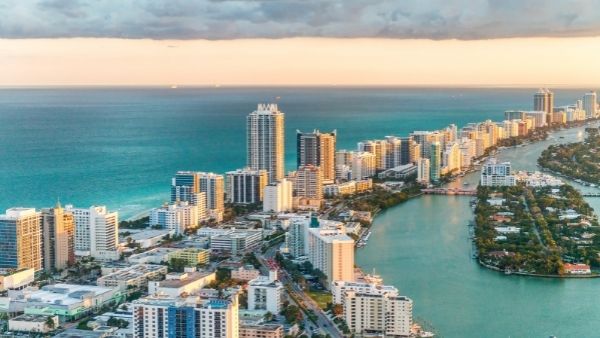
More than just parties: Exploring Miami Beach’s cultural side
- Apr 25,2022
- Hindustan Times
At the start of March each year, the neighbourhood of Miami Beach known as South Beach is packed with bathing suit-clad college kids. Music blasts from speakers in seemingly every direction and long lines form outside popular hotel bars. Miami Beach has long been a popular destination for Spring Break. But spring breakers are just one element of Miami Beach, an island city in the southern US state of Florida. The beach's white sands (which are shipped in from elsewhere) and stunning blue waters attract everyone. There's the middle-aged Midwestern couple frying like lobsters who have been waiting to see the sun all winter — and there's over-the-top glitz and glamour, too. The five-star Faena Hotel has a lobby decorated with gigantic golden columns and a low-lit bar where a Jazz band plays. Entry seems to be primarily allowed to women with designer handbags and high heels. Taco joints are numerous, as are Cuban restaurants — one can speak Spanish instead of English pretty much everywhere. After all, Miami not only has a sizeable Cuban population, but is home to people who have immigrated from all over Latin America. The island, which was once covered in mangrove forests and teeming with crocodiles, was designed from the start to be a vacationer's paradise. The pandemic didn't stop tourists Tourists flocked to Miami Beach in 2021, and they're still coming. As of April 10, 2022, the number of hotel rooms sold in the Greater Miami were up 18% from the same day in 2019, according to the Greater Miami Convention and Visitors Bureau. During the height of the pandemic, Florida's Republican governor imposed few restrictions, meaning when other states in the country were locked down, Florida was largely open for business. Tourist numbers in the second quarter of 2021 were already at pre-pandemic levels. Mark Gordon, a longtime staff member of the Miami Beach Design Preservation League says that a year ago, it was simply too busy with party tourists. "You had what I called the perfect storm — vaccines had just been introduced, people had been locked up North, hotels were empty and we were an open state.” Art Deco history Aside from the parties, Miami Beach has the largest number of Art Deco buildings in the USA. Over 800 colourful structures built between 1923 and 1943 put Miami Beach on the US National Register of Historic Places. The structures tell the story of the city, as guides of the daily Art Deco walking tour offered by the Miami Design Preservation League tell guests. The city's development is largely attributed to automobile industry mogul Carl Fisher who was hellbent on making Miami Beach a winter vacation resort for wealthy people from the North in the 1920s. He harnessed the power of marketing, and his advertising campaigns featured women in swimsuits, "bathing beauties” as they were called, giving the city a reputation for attracting beautiful women to its sandy shores. In Fisher's era, golf clubs and mansions were built in an architectural style known "Mediterranean revival” with porticos and Venetian-style windows to make people think they were vacationing on the French Riviera. In the 1930s, the island attracted tourists to the city's small Art Deco-style hotels, which were popping up almost overnight, despite the economic depression. The architects, some of whom were inspired by the Bauhaus movement in Germany, aimed to cheaply build basic hotels that would make people think of luxury and comfort. Some buildings even evoked images of cruise ships, since cruising was a luxurious venture at the time — the style is known as "nautical Art Deco.” "Tropical Art Deco," meanwhile, emerged in Miami, and featured ornate motifs and images of suns, moons and other symbols. Yet the "vacationer's paradise” also has a darker side. Its large elderly Jewish population, many of whom moved to Florida from the northern states, were also subject to anti-Semitism, beginning in the Carl Fisher years. It wasn't until the 1960s that African Americans could actually spend the night on Miami Beach — previously they had to leave the island by sundown. Re-creating the myth For a while, large parts of the city fell into poverty and disrepair. In the 1970s, the Miami Design Preservation League was founded by a group of activists who saw the architectural beauty of the Art Deco structures — and the cultural and economic benefits of showcasing them. In the 1980s, Art Deco architecture helped make it a popular vacation destination again. A 1985 Calvin Klein advertisement featured naked men and women on an Art Deco building; pop artist Andy Warhol took an architecture tour, giving the area his stamp of approval. Modelling agencies from New York came down to take advantage of the good lighting and cheaper costs. Miami Beach hotels were used as movie sets in "The Birdcage” and "Scarface.” Interestingly, the real-life gangster Al Capone, aka "Scarface,” started wintering in Miami Beach in 1927. A cultural re-brand? In recent years, Miami Beach has attempted to redefine itself as a cultural hub. Since 2002, Art Basel Miami Beach attracts gallerists and contemporary art lovers from around the world each December. The city is also gaining a reputation as a cryptocurrency hot spot — the Bitcoin 2022 conference recently brought tens of thousands to the beach city. The city's historic architecture is also playing a role in the revamp. NYC-based investment company Infinity Hospitality is redeveloping a historic pedestrian street called Espanola Way. Originally, the street was intended to be an artists' quarter. "By focusing on the historical roots of the street's original vision, we, among other groups are re-establishing Espanola Way as a cultural and artistic district that caters to locals and tourists alike," says David Berg, a partner at Infinity Hospitality. The group purchased a budget hotel and transformed it into a hip luxury Esme hotel, which has several bars and restaurants on site. Digital nomads are encouraged to spend the day working in the whitewashed passageway called the paseo, making one feel as if they are in a Spanish villa. Berg points out that the pandemic actually gave a boost to Miami tourism, noting that demand doesn't appear to be slowing down as "international travel, historically a major driver for Miami Beach, has yet to fully recover.”
Read more
Aeroflot to resume operations to Maldives from mid-May
- Apr 25,2022
- Travel World
Russia's flag carrier Aeroflot is to resume flights to the Maldives from May 13, the Maldives Civil Aviation Authority announced on Sunday. The civil aviation authority said Aeroflot would operate one daily flight between the Maldives and Russia on an A330-300 aircraft. Aeroflot suspended flights to the Maldives on March 8. The suspension led to a significant drop in tourist arrivals from the Russian market, which accounted for 15.8 per cent of total arrivals between January and March, according to the civil aviation authority. Russian authorities had asked the Maldives Civil Aviation Authority whether they can assure that Russian planes would be serviced. The civil aviation authority gave the requested assurances, saying that there was no obstacle to resuming operations under the civil aviation agreement between the Maldives and Russia.
Read more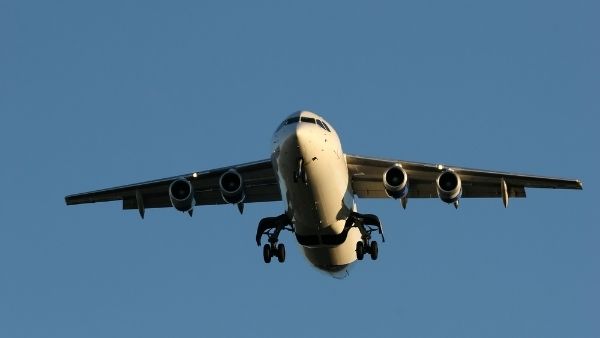
International flying rights to Indian carriers: Privatised Air India loses preferential status
- Apr 25,2022
- Travel World
Privatised Air India will no longer get precedence in getting international flying rights under India’s bilaterals with other countries and all Indian carriers will now be on the same footing. The Directorate General of Civil Aviation (DGCA) has revised the guidelines in this regard by dropping the clause that was meant for the erstwhile stateowned Maharaja, “Due consideration shall be given to the operational plans submitted by Air India before allocation of the traffic rights to the other eligible applicants”. The regulator, on April 19, 2022, issued the revised rules for granting permission for scheduled international flights to Indian carriers who can qualify for doing so after meeting the 0/20 requirement — no cap on years of operation but having a minimum of 20 aircraft in fleet. The Tatas had taken over AI and AI Express three months back. Alliance Air, which as an all turboprop fleet, is going to be privatised soon. Given the poor financial health of a majority of Indian carriers, under-utilisation of flying rights granted to them has been a common phenomenon in past few years. When airlines who wanted to add flights would approach the ministry for nod to do so, first consent would be taken from AI if it planned to operate on that particular route/s. “This used to delay the entire process and added to the problem of airlines under-utilising flying rights at the cost of those who could have done so,” said people in the know. The demand for international flying rights is soon going to increase as under the Tata’s, Air India and AI Express are expected to add international routes. IndiGo had major international expansion plans from mid-2024. Billionaire investor Rakesh Jhunjhunwala’s upcoming Akasa hopes to have a fleet of 20 aircraft by next year and will then seek international flying rights. So the move comes just ahead of the anticipated rise in demand. In this situation, the only requirement is that airlines should operate the flying rights they seek and not sit on them without deploying flights. “The traffic rights allocated to an airline for a particular schedule period shall be fully utilised by it during the same schedule period. Failure to do so shall result in the unutilised rights reverting to aviation ministry at the end of the schedule period for which they were allocated and the ministry will be free to allocate them to other airlines. The defaulter airline may also apply afresh, if it so wishes, but its priority for allocation of rights will be reckoned as the lowest among all the applicants,” the guidelines say. In case airlines apply for routes which go beyond services permitted by bilaterals or air service agreements (ASA) between India and the destination country, preference will be given to flights connecting small towns directly with foreign destinations. “In case the available traffic rights are not sufficient to cover the requirements reflected in the applications, the allocation shall be first made to satisfy the requirement contained in any application for operations from a non-metro airport...”
Read more
Plans to expedite work for int'l operations at Dehradun airport: Tirath Singh Rawat
- Apr 25,2022
- Travel World
In a bid to improve the air services in the Himalayan state, the members of the standing committee of Parliament on transport, tourism and culture in Mussoorie have decided to expedite the work for international operations at the Dehradun airport, also known as the Jolly Grant airport, along with expansion of the airport at Pantnagar and improvement of an airport at Pithoragarh. The discussions were held on Friday and Saturday in Mussoorie. Tirath Singh Rawat, former CM of Uttarakhand and a member of the committee, recently shared that meetings were held with state government officials regarding expediting work of starting international operations at Jolly Grant airport as well as expansion of Pantnagar airport and improvement of Pithoragarh airport. Meanwhile the improvement of chopper services in the state was also a key agenda in the meeting. “Development of decentralised helipads and improvement in chopper services for tourism, as well as for relief and medical emergencies is among the key agendas for Uttarakhand and this was discussed with state government officials,” said TG Venkatesh, MP and Chairman of the committee. He also said that the committee took notice of issues faced by the state with regard to land acquisition and clearance for helipads. “The committee would make suitable recommendations for getting land acquisition and clearance for the state wherever required,” he said while adding that the development of helipads at five star resorts would also be encouraged. The committee, which consists of 30 members, also discussed tourism development in the state, especially through homestays. “Promotion of tourism and also development of homestays have the potential to significantly enhance the incomes of the people in Uttarakhand," Rawat said.
Read more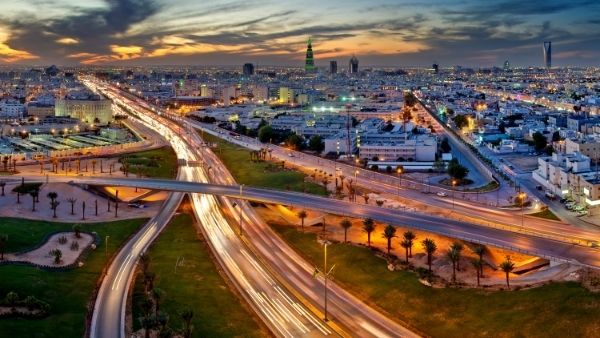
Saudi Arabia aiming for tenfold increase in air transit traffic by 2030
- Apr 25,2022
- Travel World
Saudi Arabia is targeting a tenfold increase in international airline passengers transiting the kingdom by the end of the decade as it looks to triple annual passenger traffic, an official said. The government last year announced plans to become a global transportation and logistics hub by 2030 targeting passenger traffic of 330 million a year, though few details have emerged. The strategy calls for 500 billion riyal (USD 133.32 billion) in investment and is part an economic policy to create jobs and wean the country off oil revenue. That policy, which has seen the government mandate that companies move their regional headquarters to the kingdom, puts Saudi Arabia in competition with neighbour the United Arab Emirates, where airline Emirates' main business model is transit traffic. Saudi Arabia's main aim is to increase the number of arrivals to the kingdom, said Mohammed Alkhuraisi, head of strategy at the General Authority of Civil Aviation. "We are not after the transit market," he told Reuters. The government wants direct international flights to rise to 250 for 99, in part to boost a nascent tourism sector but also to develop the kingdom into a major commercial centre. A tenfold increase would mean international transit traffic jumps to 30 million in 2030 from about 3 million in 2019, or 10 percent of Saudi Arabia's annual passenger traffic, up from 3 percent. Emirates carried more than 56 million passengers in the year before the pandemic, while Qatar Airways, which also targets transiting traffic, flew more than 32 million. Unlike Saudi Arabia, a country of some 30 million people, there is no domestic aviation market in the UAE or in Qatar. Some analysts argue there is space in the Gulf to compete for transit traffic, particularly after Abu Dhabi's Etihad Airways has scaled back its ambitions in recent years. Others are sceptical, in part, due to the impact of the Covid-19 pandemic on the global travel industry but also because of Etihad's troubles despite its wealthy state backing. Saudi Arabia also aims to increase annual air cargo volumes to 4.5 million by 2030 from 900,000 tonnes in 2019 , of which Alkhuraisi said half would be transiting elsewhere. Saudi Arabia is setting up a new airline to be based in the capital Riyadh, while 77-year-old state airline Saudia will be based out of the Red Sea city Jeddah under the transportation strategy that calls for the establishment for the two hubs. It is unclear when the new carrier, owned by the Public Investment Fund (PIF), will start operations, though sources have said it would compete with the UAE and Qatari carriers. Alkhuraisi deferred questions on the airline to the PIF.
Read more
After Tamil Nadu, Chhattisgarh, Jharkhand seek share in revenue when airports are privatised
- Apr 25,2022
- Travel World
Chhattisgarh and Jharkhand have come out in support of Tamil Nadu's stance that whenever the Central government privatises an airport in a state, the state government should get a share in the revenue. In a policy note issued earlier this month, Tamil Nadu said that if the state government acquires and transfers land to the Centre-run Airports Authority of India (AAI) free of cost, and if the AAI or the Centre transfers that land to a third party, the value realised or revenue accrued thereby must be proportionately shared with the state government "reflecting the huge investment in land being made by the state government". The AAI's board had in September last year gave the approval to privatise 13 airports, including Trichy in Tamil Nadu and Raipur in Chhattisgarh. T S Singhdeo, Chhattisgarh's Minister of Panchayat and Rural Development, Health and Family Welfare and Commercial Tax, said that land is a state resource and when the state and the central government come together for developing a project, which is supposed to be an earning project, the state government's capital is present as a shareholder in terms of the land. "So long as it is in the government sector, things are moving in a particular way, the government of India would be making some revenue and there would be something spilling over to the state government and there would be benefit to the public, so that is fine," he told PTI. "Now when you are selling it to a third entity which is a private party, then you are selling the assets of the company, which include apart from the infrastructure, the land also. So, the state government should be given theThe sale when it comes about would be by means of a valuation of the entire property which would include the sale price of the land, he noted, adding states should get their share. "When you are in a joint venture then the investment which has been made, the government of India would put in capital in terms of infrastructure, the state government puts up its capital in terms of its land. So, definitely in every such venture the value of the land should be given to the state government if and when it is sold to a third party which is a private player," he asserted. According to the National Monetisation Pipeline issued last year, 25 AAI-run airports have been earmarked for asset monetisation that include Bhubaneshwar, Varanasi, Amritsar, Trichy, Indore, Raipur, Calicut, Coimbatore, Nagpur, Patna, Madurai, Surat, Ranchi Jodhpur, Chennai, Vijayawada, Vadodara, Bhopal, Tirupati, Hubli, Imphal, Agartala, Udaipur, Dehradun and Rajahmundry. Tamil Nadu's policy note, issued earlier this month, stated that the value of land, at an appropriate stage, should be converted into equity of the state government in the airport's special purpose vehicle or an appropriate revenue sharing arrangement should be arrived at before the airport is transferred to a private party. Asked about Tamil Nadu's demand, Jharkhand Finance Minister Rameshwar Oraon told PTI, "I agree (with the Tamil Nadu government). Land belongs to the state." "When it is under the central government, we have no issues, we give land, water and other resources. But if the Centre is handing it to private parties, revenue should be shared with the state government. A policy should be framed in this regard for all the states, not just Jharkhand," Oraon added. While the Ministry of Civil Aviation is yet to officially comment on this matter, its officials told PTI that the decision regarding the matter will be taken at the higher levels of the government. The Centre had in 2019 privatised airports at Lucknow, Ahmedabad, Jaipur, Mangaluru, Thiruvananthapuram, and Guwahati for operation, management and development through publicprivate partnership (PPP) model. The Adani group won the bids to run all six airports.
Read more