Game-changer Delhi-Mumbai Expressway to complete travel in 12-13 hours

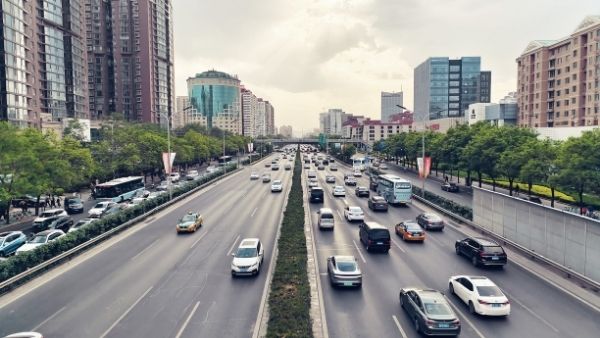
National Road Infra Conclave 2022: Today, the first edition of the National Road Infra Conclave (NRIC), organized by the FinancialExpress.com, discussed emerging opportunities and trends in the road infrastructure sector. Besides, it also analyzed the impact of government policies and initiatives while identifying the strategies for the faster execution of road projects. The Chief Guest for the event, Alka Upadhyaya, Chairperson, NHAI, said while National Highways and the State Highways contribute to only about 3% of the overall road network in the country, they cater to 80% of the national freight traffic. “So, we understand the importance of the National Road network for improving the economy in the country. She also mentioned the huge employment potential in road construction,” she said. According to Upadhyaya, some of the initiatives taken by the NHAI have also contributed in a big way in terms of having a very high multiplier effect by the road sector in the country. “This is one sector where the multiplier effect is more than two times when we construct a road. Some of the works which were started in the decades of 2000 by the government at that point of time in terms of the Golden Quadrilateral, the north-south and the east-west corridors and laid the foundation for world-class infrastructure for the country and kind of brought a paradigm shift in all of us. And now through Bharatmala Pariyojna, the government is building a number of national highways, access-controlled expressways, freeways and greenfield expressways, which will change the basic canvas of road infrastructure in the country.” “The Bharatmala Pariyojna which is India’s largest highway programme till date, is envisaged for the development of about 34,800 km at an estimated cost of Rs 5.35 lakh crores. The NHAI, at present, is looking at the development of 22 greenfield expressways and access controlled corridors and in Bharatmala Pariyojna, the authority hopes to tender out the works by the year 2023-24 so that the rest of the time can be used for completing the works taken up under Bharatmala-1 as the NHAI also has Bharatmala-2 coming up with due approval of the government,” she said. So far, the NHAI has planned 22 greenfield corridors, which will have a lot of savings on CO2 emissions. These corridors are expected to save around Rs 10,000 crore in regard to fuel savings. In 2002, India took up 95 km long Mumbai-Pune expressway and till 2019, the government was able to take up only 1359 km road length under expressways. Now, under the Bharatmala Pariyojana, the NHAI has taken up Delhi-Mumbai Expressway with about 1400 km length. This was conceptualized, designed and started in 2019 and the authority is hopeful to complete the project by 2023. With this game-changer corridor, the travel between Delhi and Mumbai will be completed in 12-13 hours, Upadhyaya said. Amit Kumar Ghosh, Additional Secretary, Ministry Of Roads Transport & Highway, while speaking on the initiatives taken by the government on reducing carbon footprint, said that more and more green materials are being used for construction. He also said that the government is strongly promoting the use of soil stabilization agents. The ministry is also encouraging the adoption of more sustainable fuels. The government is also shifting toward stricter pollution norms as well as promotion of electric vehicles, he said.

Read more

41 spots in Gadchiroli to be developed to boost tourism

The waning influence of Maoists has prompted the Gadchiroli district administration to develop 41 spots to attract tourists in the tribal-dominated district which remained underdeveloped due to the unstable security situation for four decades owing to the armed rebel movement. The district has around 80 such spots which have tourism potential but the district administration had priorities the more significant ones which are already experiencing encouraging footfalls. Apart from burying its gory past, the district administration is also eyeing revenue through tourism. The district administration, which developed infrastructure at Sironcha for the ongoing Pranhita Pushkar mela by spending INR 10 crore, has now earmarked other places in Gadchiroli for development as places of tourist interest. The district, which has a substantial green cover, also has diverse flora and popular places like ‘Glory of Alapalli’ for forest lovers and environmental activists. The earlier list had 35 places but six new ones were included in January namely Sironcha ghat, Nagram ghat, Tekda ghat and Wadhdham Fossil park in Sironcha tehsil due to the schedule of the ongoing Pranhita Pushkar mela for which guardian minister Eknath Shinde had sanctioned funds from the district planning council (DPC). The mela is held after gaps of 12 years with a particular planetary positions as per the Indian astrology indicating it's exact time. Collector Sanjay Meena said that the encouraging improvement in the district’s security perception has prompted the administration to plan a major image overhaul through development of tourist places. “We have categorized the tourist spots in three divisions. The ‘A’ and ‘B’ categories of tourist places are of higher significance which are developed by the state government but the ones (41) earmarked as ‘C’ category can be developed by the district administration with budget allocated from DPC,” he said. Though there are no tourist spots in the ‘A’ category, the Markanda Mahadev temple site was identified in the ‘B’ category which is also a place of archeological significance. The collector said the district administration is now shooting a documentary on the Pranhita Pushkar mela which would be used for promoting tourism in the district. “We are also planning to compile a coffee table book on the places of historical and scenic beauty in the district which was the vision of the erstwhile collector Shekhar Singh,” said Meena. Apart from historical forts at Vairagadh and Surjagarh, the district also has several religious places located at different scenic locations which are now being included in the list of tourist places which shall be developed. The district also has a rich traditional tribal culture, their unique socio-cultural and religious festivals or ‘Yatras’ are held annually. District information officer Sachin Adsul stated Gadchiroli's all 80 tourist spots have some or the other significance associated with them. "There is ample scope for developing tourism in the district which is already gifted with natural splendour," he said.

Read more

Cambodia reduces quarantine period for unvaccinated inbound travellers

Cambodia has decided to reduce the quarantine period for unvaccinated inbound travellers from 14 days to seven days, Health Minister Mam Bunheng announced on Thursday. "Travellers entering Cambodia by land borders must undergo two rapid testsone on the first day before entering the quarantine center and the other on the seventh day to end their quarantine," he said. "For those entering the country by air, they must take a rapid test on the seventh day to end their quarantine," Xinhua news agency quoted the Minister as saying. Bunheng said that the decision took effect immediately. The Minister also advised health authorities to provide Covid-19 jabs to unvaccinated or not fully vaccinated Cambodian travellers on the seventh day when they are allowed to leave quarantine facilities. The Southeast Asian nation has fully resumed its socio-economic activities and reopened its borders to fully vaccinated travellers without quarantine since last November after most of its population have been inoculated against the disease. The kingdom has so far administered one dose of Covid-19 vaccines to 14.86 million people, or 92.9 per cent of its 16-million population, the Health Ministry said, adding that of them, 14.12 million, or 88.3 per cent, have been fully vaccinated with two required shots.

Read more

Radisson Hotel Group plans AsiaPacific expansion as travel restrictions ease

Radisson Hotel Group plans to add 150 hotels in Asia-Pacific this year as it banks on travel, tourism, and economic recovery in the region, its CEO said on Thursday. Radisson, one of the world's largest hotel groups, is in the midst of a five-year plan to double its properties to 3,200 hotels in 120 countries by 2025. "Overall, Asia plays a significant role in our business plans because of the significant presence that we can build in the future," Radisson CEO Federico Gonzalez told reporters. Radisson last year signed deals to put up 200 hotels worldwide, of which 137 are in Asia-Pacific. It takes three to five years for hotel deals to reach operation stage. Radisson sees its China and India portfolios increasing to 1,000 and 200 hotels, respectively, by 2025, Gonzalez said, adding that around 150 deals will be signed this year. But China's stringent lockdown measures could impact the completion of new hotels, he said. Travel in Asia-Pacific is trailing the rest of the world and should expect a bumpy recovery, because of slower border reopenings, a Booking.com executive said in March. At the end of the company's expansion programme, Asia-Pacific will account for most of Radisson's hotel rooms though much of revenues will still come from Europe. Revenues and profits are expected to return to pre-pandemic levels by next year, Gonzalez said, as Covid-19 restrictions are lifted around the world.

Read more

World Bank to offer emergency support to Sri Lanka

The World Bank is ready to provide emergency support to Sri Lanka and protect the vulnerable people amidst the unprecedented economic crisis in the country, a media report on Wednesday quoted a senior official of the global lender as saying. Sri Lanka, which is on the brink of bankruptcy, is grappling with an unprecedented economic turmoil, the worst since its independence from Britain in 1948. World Bank Vice President Hartwig Schafer held talks with Sri Lankan Finance Minister Ali Sabry in Washington on Tuesday, the Colombo Gazette reported on Wednesday. Finance Minister Sabry is in the US for the annual spring meetings of the International Monetary Fund IMF and the World Bank. Schafer said they discussed actions to address the economic crisis, support stabilisation and recovery, and protect the vulnerable people, the report added. Schafer said that the World Bank is deeply concerned about the impact of the crisis on the poor and vulnerable and stands ready to provide emergency support for essential medicines and health-related supplies, nutrition, and education, the report said. The Finance Minister also had talks with the International Monetary Fund (IMF) and India's Finance Minister Nirmala Sitharaman in Washington on Monday. The IMF has commended the steps already taken by the Finance Minister to mitigate the present financial situation in Sri Lanka, the report said. The IMF has also assured their fullest support to Sri Lanka and a positive response has also been received to expedite the process to strengthen the support extended towards Sri Lanka. As the island nation is experiencing its worst economic crisis in history, massive anti-government protests are being held throughout the country against the government's failure to tackle the crisis. With long lines for fuel, cooking gas, essentials in short supply, and long hours of power cuts, the public has been suffering for months. With the economic crisis and the shortage of forex, an Indian credit line of USD 500 million for fuel imports provided a lifeline to the island nation. India recently announced to extend a USD 1 billion line of credit to Sri Lanka as part of its financial assistance to the country to deal with the economic crisis following a previous USD 500 billion line of credit in February to help it purchase petroleum products. President Gotabaya Rajapaksa has defended his government's actions, saying the foreign exchange crisis was not his making and the economic downturn was largely pandemic driven with the island nation's tourism revenue and inward remittances waning.

Read more

India's March domestic air passenger traffic rose over 36% YoY

Lower base effect as well as easing Covid travel restrictions accelerated India's domestic air passenger traffic growth by over 36 per cent in March on a yearon-year basis. Pent-up demand and accelerated economic recovery also pushed the air passenger numbers higher during the month under review. According to the Directorate General of Civil Aviation (DGCA), the country's scheduled domestic flight operations ferried 1.06 crore passengers last month. In March 2021, the traffic numbers stood at 78.22 lakh. On a sequential basis, the sector had ferried 76.96 lakh passengers in February this year. "Passengers carried by domestic airlines during January-March 2022 were 248 lakh as against 233.83 lakh during the corresponding period of previous year, thereby registering annual growth of 6.06 per cent and monthly growth of 36.74 per cent," the DGCA said in its March data report. The report said that the overall cancellation rate of scheduled domestic airlines last month stood at 0.30 per cent.In the month under review, a total of 458 passenger-related complaints were received by the scheduled domestic airlines. "The number of complaints per 10,000 passengers carried for the month of March has been around 0.43," the DGCA said.

Read more