

The future of business travel in India
- Apr 05,2022
- Hindustan Times
In 2019, scores of domestic and foreign guests travelled to Berlin to attend conferences and conventions, like the annual international tourism trade fair, ITB. Their visits translated into considerable revenue for the transportation and hospitality sector. Estimates by Germany's business travel association (VDR) show that in 2019, German companies spent a record €55 billion ($61 billion) on business trips, sending 13 million employees on work-related trips. The following year, business travel all but ceased. In a bid to contain the coronavirus, countries around the globe shut their borders. Countless conferences and trade fairs were cancelled or replaced by virtual events. According to VDR estimates, in 2020, German companies reduced business trips by a staggering 80% compared to 2019. Last year was similarly grim. Germany's transport and hotel sector have taken a beating. Airlines adapt to drop in corporate travel Prior to the pandemic, Lufthansa, Germany's biggest carrier, earned half all revenue from business trips. Selling business class tickets has been highly lucrative for carriers, says professor Yvonne Ziegler, an aviation expert at Frankfurt's University of Applied Sciences. So lucrative, in fact, that some airlines, including Lufthansa, have relied heavily on corporate travellers and afforded less attention to holidaymakers. Now, major airlines like American, Delta, Emirates and Finnair have reacted to the sudden drop in work-related travel by removing business class berths from aircrafts and replacing them with premium economy class seats. These boast additional leg room and better service, albeit at a higher ticket cost. Airlines, in short, are looking to woo leisure travellers willing to spend extra cash for extra comfort. It's a move born out of economic necessity. "Very few conventions and conferences are being held at the moment, so few business travellers are flying, which means reserving excess space aboard aircrafts makes no sense," explains Ziegler. While she expects business travel to make a comeback, Ziegler thinks recovery will be slow. Still, she is cautiously optimistic as ever more countries are lifting restrictions for business travellers.
Read more
Czech Republic travel update: Indian travellers can enter the country
- Apr 05,2022
- Travel Trends Today
The Czech Republic has become the latest European Nation to ease travel restrictions for international travellers. Now that tourism is opening internatally, Indians are eager to travel the world. The country has removed quarantine requirements for travellers. Also, the nation is not asking for proof of illness or vaccination. All the shops are reopened without any restrictions on operating hours. The cultural and sporting events, concerts, theatres are also ready to function and hotels are waiting to welcome travellers. The country has reopened all its museums, galleries, monuments and zoos, among others at full capacity. There’s just one obligation to enter the country which is filling up a passenger locator form. Entry requirements for fully vaxxed Indians: Fully vaxxed travellers can enter Czech Republic with an EU digital COVID certificate valid for 14–270 days after the completion of the second vaccination dose (Covishield). Else, you’ll be counted as non-vaccinated and will have to carry a negative PCR test report not older than 72 hours. After entering the country, you’ll have to get another PCR test done within 5 to 7 days after arrival. Entry requirements for unvaccinated India travellers: Unvaccinated travellers can also enter the country showing a fully filled passenger locator form along with a negative RT-PCR test report not older than 72 hours. They’ll also need to do a test between the 5-7 day after entering the country.
Read more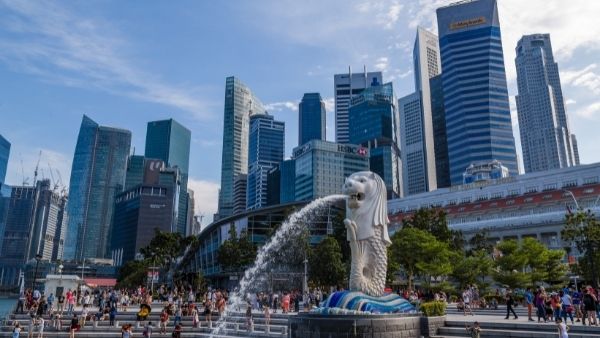
Removal of restrictions pushes up demand for Singapore travels
- Apr 04,2022
- Times of India
Demand for travel to Singapore from Kolkata has shot up following the switchover from bubble flights to scheduled commercial services. The shift has led to removal of multiple restrictions like procuring a vaccinated travel pass (VTP) in addition to the visa and quarantine on arrival for passengers who do not arrive by non-vaccinated travel lane (VTL) flights. “From just 30%-35% occupancy in early March, the daily Singapore Airlines flight is now clocking 70%-80% load. Encouraged by the demand, IndiGo Airlines has applied for a daily flight to Singapore from mid-April,” an airline official said. Singapore Airlines operates an Airbus A 350-900 aircraft that has 150 economy seats and 10 business-class seats. Singapore Airlines was one of the first carriers to return to Kolkata when they resumed daily flights from November 29, 2019. While flights to Kolkata were recording good loads initially with people living there finally getting an opportunity to travel, the return flight fared poorly due to multiple conditions that were in force, including the requirement for travel pass and quarantine on arrival. “Till March, Singapore Airlines did not operate a VTL flight from Kolkata. This led to passengers travelling to Delhi to take the Singapore Airlines VTL flight because that exempted them from having to quarantine on reaching Singapore. Thus, the flight from Kolkata hardly had any loads,” recounted travel agent Manav Soni. That changed with the return of scheduled flight status from April 1 after more than two years. Passengers can now travel freely without having to bother about getting a travel pass. “An RT-PCR test done 48 hours prior to travel and vaccination certificate is all that is required to fly to Singapore now. With Singapore now issuing e-visa that offers multiple entry for two years, it is becoming a sought-after destination like Thailand for leisure travellers as well,” Soni added
Read more
Countries Indians Can Travel To Without An RT-PCR Test
- Apr 04,2022
- Travel Trends Today
According to Agoda’s recent ‘India-genous Travel’ survey, 39% of Indians anticipate traveling internationally in 2022, while Agoda’s Return to Travel survey found that their biggest concern to travel internationally was understanding restrictions and vaccination or quarantine requirements So now we have some good news for them. As Omicron starts to subside, countries are taking tentative steps to reopen borders, easing their entry restrictions and opening their doors to international tourists, including Indians. Fully vaccinated passengers flying to these select countries are no longer required to present a negative RT-PCR test upon arrival at the airport. Egypt, Baharain, Lebanon, France, Turkey and Norway are amongst the detinations where Indian can travel without RT-PCR test.
Read more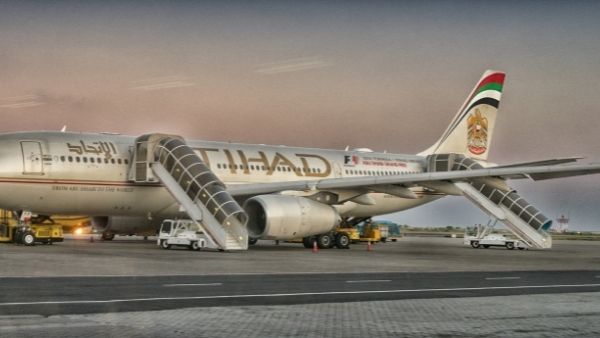
Etihad Unveils New ‘Sustainability 50’ A 350 On Paris Route
- Apr 04,2022
- Travel Trends Today
Etihad Airways unveiled its new Airbus A350-1000, registration A6-XWB, on a special inaugural commercial flight from Abu Dhabi to Paris. The aircraft is the first A350 to be operated by a UAE airline, and the first of five A350s set to join Etihad’s fleet over the coming months. Tony Douglas, Group Chief Executive Officer, commented: “The Airbus A350 is an absolutely incredible aircraft, and we are proud to introduce it into the Etihad Airways network today. Our teams have worked closely together to craft a product and travel proposition that will ensure every journey with Etihad is a choice well made – both for our guests and for the planet. With highly efficient fuel consumption and CO2 savings, the A350 will support our goals to reduce carbon emissions and deliver an unmatched flight experience for our guests.” Mikail Houari, President, Airbus Africa and Middle East, commented: “Etihad Airways has been a long-standing partner of Airbus in the UAE and we are excited to continue our collaboration. The A350-1000 is setting new standards of air travel, offering unrivalled levels of operational efficiency, with a 25 per cent reduction in fuel burn and emissions. This marks the start of a promising new chapter for the UAE’s aviation sector, led by innovation and a commitment to sustainability. We look forward to many more years of partnership and working together to support Etihad Airways expand its network through our most technologically advanced and efficient aircraft.” The aircraft, named Sustainability50, carries a unique livery in recognition of the 50th anniversary of the federation of the UAE and Etihad's commitment to net-zero carbon emissions by 2050. It will join the airline's industry-leading sustainability drive as part of a programme aimed at decarbonising aviation. Formed as a partnership between Etihad, Airbus and Rolls Royce in 2021, the Sustainability50 programme will see Etihad's A350s used as flying testbeds of new initiatives, procedures and technologies to reduce carbon emissions, building on the learnings derived from Etihad's similar Greenliner programme for the Boeing B787 aircraft type. The Rolls-Royce Trent XWB-powered Airbus A350 is one of the most efficient aircraft types in the world, with 25% less fuel burn and CO2 emissions than previous-generation twin aisle aircraft. Etihad recently established a formal framework with Airbus to collaborate on sustainability across a number of areas including the promotion and commercialisation of sustainable aviation fuel, waste and weight management, and the development of data-driven analysis. “We designed our sustainability programme as a vehicle for collaboration, and our strategic partnership with Airbus allows us to harness the sustainability credentials of the A350 through the Sustainability50 programme, as we work towards our joint objectives to reduce aviation’s impact on the environment,” said Douglas. The airline’s new A350-1000s will be deployed on a number of short to mid-range routes in Q2, including Mumbai and Delhi, before being introduced on ultra-long-haul operations to Chicago and New York from July.
Read more
American Express 2022 India Global Travel Trends Report
- Apr 04,2022
- Travel Trends Today
With 93% Indians planning to spend more or the same on travel in 2022 compared to a typical pre-pandemic year and 96% agreeing they like to eat and shop at local businesses to support local economy, Indian travelers are looking to adopt the new normal with more purpose as per the American Express Travel: Global Travel Trends Report, The survey report, based on data from seven countries including the United States, Australia, India, Canada, Mexico, Japan, and the United Kingdom further reveals that the motivation to travel for 48% Indians is for discovering new experiences, 46% for relaxing and 45% for exploring new destinations. Overall, Indians think 2022 will be a better year for planning travel with most of the respondents saying travel will be less stressful this year than in 2021 and many are looking forward to regaining control over their trips in 2022 after feeling overwhelmed last year. The report also shows that like its counterparts, Indians are also traveling to see the people and places they love, celebrate important life events, embark on wish list trips, experience in-person events, and seek greater wellness and self-care. Highest amongst all the other surveyed countries, 91% surveyed Indians agree they will book a dream vacation in 2022 which they normally would not have considered before the pandemic while 87% want to book a once-in-a-lifetime vacation in 2022. Talking about the travel trends in India, Manoj Adlakha, SVP and CEO, American Express Banking Corp., India said, “After two tough years, the travel sentiment amongst Indian travellers is upbeat where spending time with loved ones is a top priority. Our travel trends report shares that to make the most of the lost time, 94% of respondents agree they plan to travel more with family in 2022 than they did in 2021 while 89% shared that they are interested in multi-generational family trips than ever before.” He further added, “With the resumption of all regular international flights and the upcoming summer holiday season, we are seeing a surge in travel bookings amongst our Cardmembers for both international and domestic travel. To make new memories, Indians are mostly booking vacations with their families and preferring experiences that support the local communities revive from the impact of the pandemic.” Key insights from the American Express Travel: 2022 Global Travel Trends Report1 for the Indian respondents include: 1. Indians are ready to travel and spend more: 92% agree that they are willing to book a trip for 2022 even if they might have to cancel or modify it later. Nearly all surveyed Indians plan on taking a trip in 2022 with nearly a fourth saying they will take two vacations, and a fifth saying three vacations during the year. 94% of respondents plan to spend more on international travel in 2022 than they did in the previous year. 2. Impact and purpose driven travel on the mind of Indian travellers: Majority agree they want to have a positive impact on the community they are visiting and want to travel to destinations where they can immerse themselves in the local culture. Travelling responsibly is of high importance for the respondents as 94% stated they would take a 'greencation' and 93% are more likely to book travel with a brand that is committed to improving its environmental impact, ranking highest than their global counterparts. 3. Dream destinations are becoming a reality: Thinking about 2022 travel, 69% of respondents agree they want to travel to their dream destination this year. Five in ten respondents shared they are willing to travel solo now to visit their dream destination. Asia is the number one choice Indians want to explore in 2022 when thinking of their dream destination, and within Asia, exploring different cities within India itself remained the preferred choice for 51% of respondents. 4. Multiple activities, in-person events, and luxury drive choice of vacations and destinations: 94% of respondents prefer to visit destinations that have access to more than one scene (e.g., beach, city, mountain, desert, etc.) while 91% are interested in cultural immersion and all-inclusive luxury travel resorts than before the pandemic. 89% of consumers held off on traveling for major entertainment events last year but have plans to return to these types of events this year.
Read more