84% Indian consumers plan to spend on leisure travel in next 4 weeks

Deloitte Touche Tohmatsu India, in its latest analysis of wave 28 of its Global State of the Consumer Tracker, indicated that there is a ray of positivity amongst Indian consumers who are now cautiously balancing their happiness and spending, and saving more for the future. The survey indicates that Indian consumers are indulging in shopping (14 per cent), various social gatherings and events, entertainment activities (14 per cent), and leisure travel (14 per cent). About 87 per cent of Indian respondents in the age group of 35-54 (working population) are concerned about inflation. However, consumers are concerned as the prices of everyday purchases are increasing (71 per cent). Hence, they are delaying expensive purchases (61 per cent) and using credit cards to stretch paychecks (59 per cent), revealed the survey. According to the consumer preferences on travel and tourism, Indian respondents are actively exploring leisure travel 84 per cent plan to spend on leisure travel in the next four weeks. 69 per cent of Indian respondents feel safe about flying and 71 per cent feel safe staying in a hotel. Business travel is also getting back to normal with corporate India returning to “business as usual” and travel restrictions gradually easing. The report mentioned that Indians have resumed their business travels with 83 per cent of consumers are likely to travel for business within the next three months. Commenting on the development, Porus Doctor, Partner and Consumer Industry Leader, DTTILLP, said, “The first three months of 2022 have been an adventurous roller-coaster ride with Indians witnessing the third wave of Covid-19 (Omicron variant), leading to a surge in prices of everyday items, supply chain disruptions, etc. Indian consumers are showing a propensity to save more as the immediate future seems uncertain.”

Read more

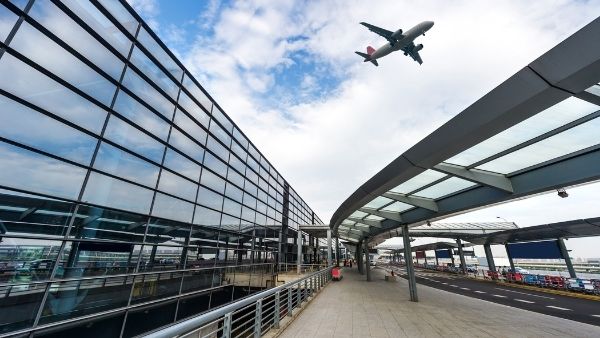
Expanded Hyderabad Airport to handle 34 mn passengers every year

The first phase of expansion of Rajiv Gandhi International Airport (RGIA) Hyderabad to increase its capacity to 34 million passengers per annum will go operational shortly. Airport operator GMR Hyderabad International Airport Limited (GHIAL) stated this on Wednesday, the 14th anniversary of RGIA, the first Greenfield airport built under Public- Private Partnership(PPP) model in the country. The airport, commissioned in 2008 in a record time of 31 months, was initially designed for 12 million Passengers Per Annum (MPPA). It has grown to serve more than 21 million passengers every year. With 6.2 MPPA in Financial 2009, the airport recorded 21.6 MPPA in FY20 with a pre-Covid 5-year CAGR of 15 per cent. The airport had embarked on expansion in 2018 to take the overall capacity to 40 MPPA. The first phase of expansion will increase the capacity to 34 MPPA. The airport recorded air traffic movement (ATM) of more than 81,000 in FY 09 which gradually increased to around 1,84,000 ATMs in FY 20. In FY09, the airport was connected to over 36 destinations (domestic and international). The number of destinations has now gone up to 88. "As one of the fastest airports in India, the futuristic growth for the Hyderabad International Airport continues. To meet the rising demand of passenger traffic, the airport has embarked on a phase- wise expansion. The first phase of the expanded airport has a passenger capacity of 34 MPPA and will go operational shortly," the operator said. The airport, which was commissioned with air cargo handling capacity of 1,50,000 metric tonnes (MT) per annum, handled 56,700 MT per annum in FY 09 and it increased 1,12,744 MT in 2021. "Hyderabad is known as the pharma hub of India. Keeping pace with the rising global demand of pharmaceutical products, GMR Hyderabad Air Cargo (GHAC) has seen a large volume of exports of pharma products. The pharmaceutical products now constitute 70 per cent of the total cargo exports. The share of engineering goods in total import is 50 per cent while pharma is 30 per cent so far," the operator added. The airport operator claims that the airport initiated growth in trade and tourism, created economic drive in the region and generated a lot of business opportunities across India. The airport also spurred the growth of the city infrastructure, improved the quality of life, and unleashed the untapped potential of the city. As per the National Council of Applied Economic Research (NCAER) Study, the Airport City's development activities will contribute INR 1,67,000 crore in income to the national GDP. The study also forecasts that in 2023-24, Airport City's operations will contribute about INR 93,000 crore in income to the national GDP and will create 56,186 jobs. In the past, RGIA operations contributed 840,800 jobs. The total comprises 13,500 directly contributed jobs, 1,19,600 indirectly contributed jobs through supply chain (multiplier impact) and 7,07,700 jobs in induced impact through tourism and investment. RGIA's construction activities contributed 1,21,700 jobs during the entire construction phase. This total comprises 9,317 directly contributed jobs and 1,12,400 indirectly contributed jobs through multiplier effect. RGIA is credited with many firsts in India. It is the first airport in India to offer an end-to-end E-boarding facility for all domestic flights and for select international flights. It is also the first airport in the country to offer an 'Express Security Check' facility for passengers travelling with only hand baggage, and to initiate face recognition trials. It is the only airport in the country to have all its domestic Baggage Screening machines 100 per cent compatible with the Automatic Tray Retrieval System (ATRS).

Read more

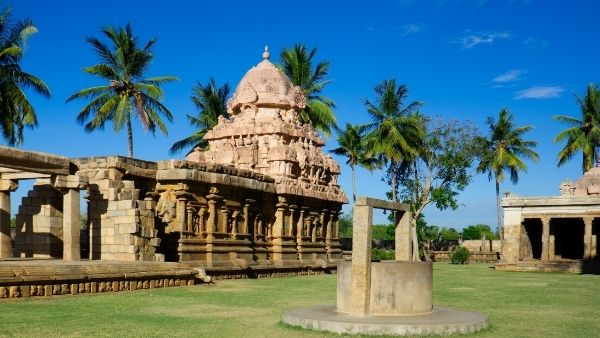
Tamil Nadu tourism gears up to welcome tourists

Tamil Nadu Tourism Secretary, Chandramohan, recently stated that the state is already prepared to receive the tourists. Celebrity photographers will be engaged to capture pictures of tourist destinations in the state to be displayed in all the airports. As a first step, the photographs will be displayed widely in Coimbatore airport and from April onwards, Chennai and Madurai airports will follow suit, he said. The state will also promote pilgrim tourism and a display system will be brought to provide details of these temples. It would also include details about the pooja timings, the period it was constructed and the deities. After the state has reopened post-Covid-19, 75 per cent of the domestic tourism is back. Role of private-public partnership is being redrawn in the state Chandramohan said, adding that a new comprehensive tourism policy will emerge in the state soon. He also said that a lot of departments are involved in inter-departmental consultation process before a final consensus is arrived at. He also said that the joint project between Tamil Nadu Tourism Corporation and Royal Madras Yacht club for providing boating tourism as well as various water sports is in the final leg. Chandramohan said, "To promote water sports in Chennai- Mahabalipuram sector, adventure sports guidelines are ready and released shortly. We will also be issuing guidelines on the Caravan tourism that is popular in North India." The state tourism department is also in the process of coming out with guidelines for homestays. Medical tourism is another major area that is being promoted but the guidelines on the same are yet to be prepared.

Read more

No PPE kit for cabin crew, pat-down search reintroduced

The Ministry of Civil Aviation has relaxed COVID-19-related regulations stating that cabin crew members need not wear PPE kit, airlines need not keep three seats vacant on international flights for medical emergencies and security personnel at airports can resume pat-down search of passengers. The relaxation has been given to facilitate “smooth conduct of air operations”, the ministry’s order, dated March 21, stated. The aviation market in India is currently recovering after the Omicron variant suppressed the demand in January. Around 76.96 lakh domestic passengers travelled by air in February, approximately 20 per cent more than in January. The Ministry of Civil Aviation (MoCA), in its order, said that the restriction of keeping three seats vacant on international flights for handling medical emergencies related to COVID-19 stands removed. “Airlines may carry a few additional PPE protective gears, sanitiser and N-95 masks, to handle any respiratory infections related to cases on air, for passengers as well as the crew,” the MoCA noted. It said it had allowed full domestic flight operations from October 18, 2021, and has now decided to recommence scheduled international flight operations from March 27, 2022, “in view of the declining COVID-19 cases, high level of vaccinations and prevailing COVID-19 situation”. The requirement of a complete PPE kit for crew members stands removed, the MoCA stated. “However, use of face mask and maintenance of hand hygiene/sanitiser continue to be mandatory,” it added. The pat-down search by security personnel at airports is reintroduced, wherever needed, as per directions of the Bureau of Civil Aviation Security, the MoCA noted. “During the process, the security personnel must wear N-95 mask and sanitise hands after each pat-down search, besides following regular COVID-19 protocols,” it mentioned. India reported a single-day rise of 1,581 fresh COVID-19 cases, taking the infection tally to 4,30,10,971, while the active cases further declined to 23,913, the Union Health Ministry said on Tuesday. The death toll has climbed to 5,16,543, with 33 daily fatalities, the ministry data updated at 8 am stated.

Read more

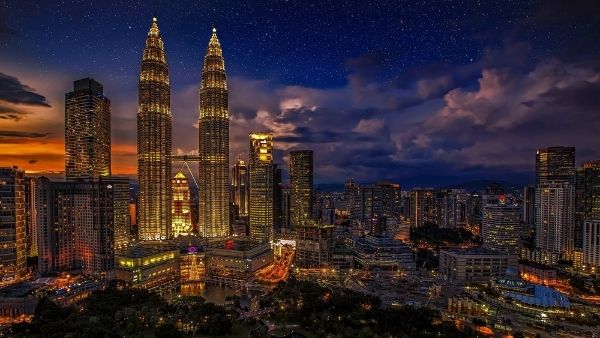
Malaysia, Singapore pledge to work toward full travel resumption

The health ministers of Malaysia and Singapore agreed to work on resuming travel completely between the two countries considering the pandemic situation has stabilized, Malaysian Health Minister Khairy Jamaluddin wrote on Twitter. The two ministers agreed they can immediately work on enabling full resumption of air and land travel for fully vaccinated people, Khairy said. He met with his counterpart Ong Ye Kung earlier Wednesday to discuss details for the border reopening, Khairy said in an earlier tweet. Malaysia is set to reopen its borders to fully vaccinated travelers from April 1 after two years of restrictions to contain Covid, which is now shifting toward the endemic phase of the outbreak. Malaysia and Singapore allowed visits between the two nations in November by air and land on a limited quota basis. Air travel initially started with flights between Singapore and Kuala Lumpur, while services to Penang were added last week. Singapore is also planning to further open its borders to fully vaccinated travelers sooner than later, the country’s Transport Minister S. Iswaran said earlier this month. Currently, the island city allows inoculated people from 32 countries and territories to enter without having to quarantine under a vaccinated travel lane program. Ong also took to social media Wednesday to talk about his meeting with Khairy, saying the pair had a “fruitful and frank discussion.” Singapore was Malaysia’s biggest source of visitors in 2019 with some 10 million arrivals, according to the Ministry of Tourism, Arts and Culture Malaysia. That number fell to 1.5 million in 2020, primarily made up of visitors in the first couple of months of the year before lockdowns. Singaporean tourists also bring in the most money for Malaysia, spending about 20.5 billion ringgit ($4.9 billion) in 2019.

Read more

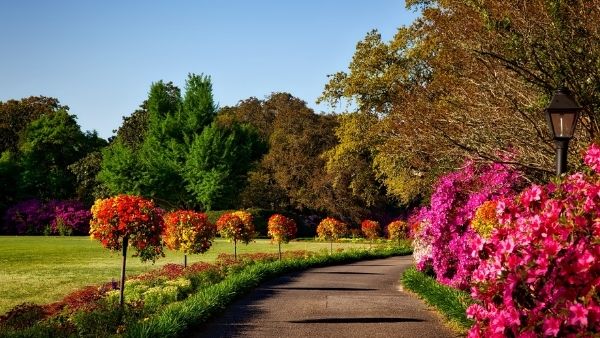
Jammu and Kashmir's Tulip Garden set to reopen for tourists from March 23

Preparations have reached the final stages for opening Srinagar's Tulip Garden, the largest such garden in Asia. The preparation for opening the garden for people and for the Tulip Festival has been going on in full swing. The garden is visited by lakhs of tourists every year. The entire workforce in the garden including gardeners, labourers, masons, painters and electricians are working to make the garden ready with the tourism season in Valley set to begin in April. Gardeners are doing different jobs under the supervision of the officials of the Floriculture Department. A large number of tourists had visited Kashmir during winters including the famous destinations of Gulmarg and Pahalgam. After a successful winter season, authorities expect a good spring season, especially after the opening of the Tulip Garden. "Last year, we had a great tourism show in the garden and that's why we began early this time. We have been working for nine months and expect more tourists," said Sheikh Fayaz, Commissioner, Department of Floriculture, Jammu and Kashmir. The flowers will bloom fully in the famous garden in the coming days. Zameer, a worker at the garden, said they were giving attention to all aspects including decoration. Tulip Garden has played a vital role in boosting tourism in Kashmir. Tulip Festival attracts tourists before the summer season from all over the world and also helps open more employment avenues for the locals. The Tulip garden, situated on the foothills of Zabarwan Range with an overview of Dal Lake, is expected to be thrown open for tourists and locals from March 23. The garden is built on sloping ground in a terraced fashion. Apart from tulips, many other species of flowers - hyacinths, daffodils and ranunculus - have been added.

Read more