
Indian embassy promotes tourism to Jammu and Kashmir, Ladakh in Brussels
- Mar 09,2022
- ET Travel World
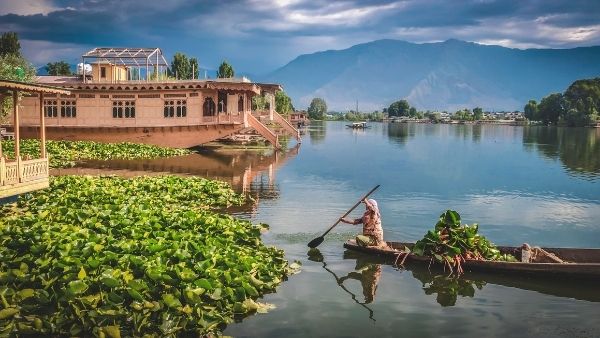
The Embassy Of India in Brussels, Belgium is promoting tourism to Jammu and Kashmir and Ladakh here and the campaign is being carried out on multiple buses and tram lines, running on major routes of the city for a fortnight. The promotion campaign is being run in French and Dutch languages for effective and wider outreach. While Kashmir posters highlighted its very existence as the literal "Paradise on Earth" with picturesque views of Dal Lake and its mystic sceneries, Ladakh was promoted as an opportunity to "Discover Yourself" by exploring the varied and vibrant culture and traditions there. With the approaching summer season in India, the Embassy said that it expects more visitors from Belgium, where these beautiful terrains cover two seasons in the upcoming months, i.e., Spring (March to early May) and Summer (early May to late August). "Beauty of J-K and Ladakh vibrating in the heart of Europe!!! Embassy Of India Brussels promoting tourism to Jammu and Kashmir and Ladakh in Brussels," the Embassy tweeted along with pictures from the initiative.
Read more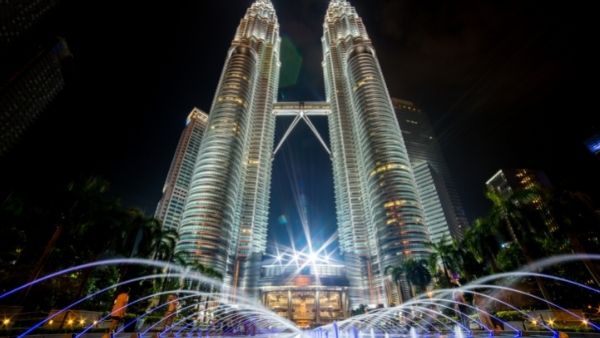
Malaysia to reopen for tourists after two-year Covid closure
- Mar 09,2022
- ET Travel World
Malaysia's economy contracted 5.6 per cent in 2020 as Covid hit but rebounded slightly to grow 3.1 per cent last year. Malaysia-based AirAsia, one of Southeast Asia's top budget airlines, called the move "timely" and said it "will provide a strong impetus" for recovery in tourism and aviation. Group Chief Executive Bo Lingam told AFP the carrier hoped to move around a million passengers in the first week. Vaccinated travellers will not be subject to quarantine but will need to produce a negative PCR test two days before arrival and take an antigen test in the 24 hours after entry. Previously only travellers from Singapore were allowed quarantine-free entry. Malaysia has recorded more than 3.6 million Covid cases to date with more than 33,000 deaths. About 80 per cent of the country's 32 million population have been fully vaccinated.
Read more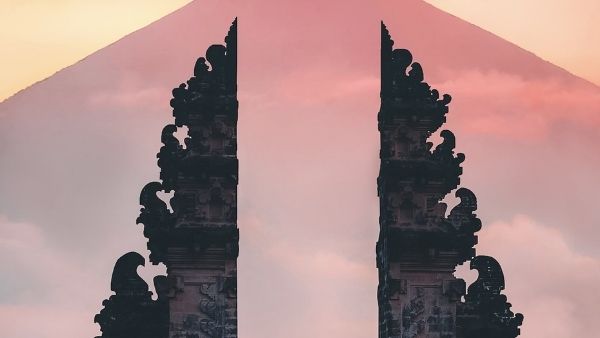
Bali scraps quarantine for fully vaccinated travellers from March 14
- Mar 09,2022
- Travel Trends Today
Those visiting Bali will no longer be required to stay in mandatory hotel quarantine as the government will be rolling back its costly travel rule starting next week. As of now, foreign visitors are required to undergo quarantine upon arrival in Bali for at least three days at their own expense. As per the reports, Bali recently waived off quarantine for vaccinated tourists from more than 20 countries, and reintroduced visas on arrival as it pushes ahead with reopening after two years of the COVID crisis. The updated rule comes after some international airlines resumed direct flights to Bali in recent weeks, and as the wave of Omicron infections registered a drop across the archipelago. Reports have it that Maritime Affairs and Investment Minister Luhut Binsar Pandjaitan said, in a briefing, that President Joko Widodo has agreed to trial a no-quarantine policy for overseas travellers to Bali starting on March 7. As such, fully-vaccinated travellers will now remain exempt from the isolation rules, but will be required to provide a negative PCR test report and will also need to provide proof of a four-day hotel booking. Also, reports suggest that visas on arrival, which were suspended two years ago when the pandemic first hit Indonesia, will now be available to travellers from 23 nations. Regarding this, the Minister added that if this trial succeeds, they will implement a quarantine-free policy to travellers from all countries by April 1 or even earlier.
Read more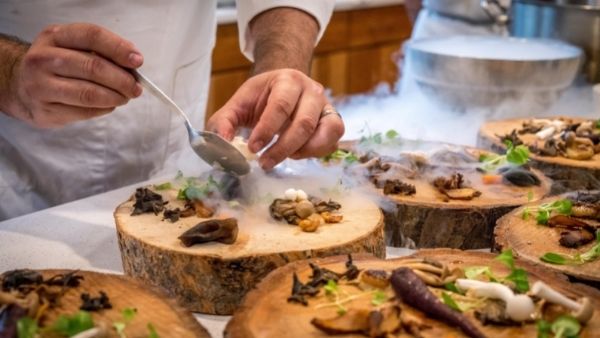
World’s most remote Michelin restaurant, Koks, moves to Greenland
- Mar 09,2022
- Hindustan Times
Dining at the Michelin-starred Koks has always been something of an expedition. To get there, you first have to fly to the Faroe Islands, a rugged semi-autonomous Danish archipelago 200 miles north of Scotland in the frigid North Atlantic. Once in country, you take a twisting drive along narrow roads cutting through a Lord of the Rings landscape and through an undersea tunnel to arrive at the lonely edge of Lake Leynavatn. From there, you must abandon your car and, fortified with fermented fish beer and cod-skin snacks in a curing-shed-turned-reception-area, climb into the back seat of a Land Rover for the rocky ascent to your final destination: an isolated wooden farmhouse that houses the most remote fine-dining restaurant in the world. Yet even that, apparently, was not epic enough. On Feb. 23 the restaurant’s head chef, Poul Andreas Ziska, flew 1,300 miles to the west to a spot 200 miles above the Arctic Circle to begin the work of transplanting Koks to Greenland. For the next two summers, the restaurant will be housed at the Ilimanaq Lodge, a 40-minute boat ride across the bay from Ilulissat, a town best known for its icebergs. This will be the first time a restaurant offers Michelin-approved cuisine in Greenland. To hear Ziska tell it, the move was a decision born at least in part of necessity. The Faroe Islands location that’s housed the restaurant since 2018 was always meant to be temporary while its owners looked for a spot to build their own place. “The house was built in 1741, and its ceilings are about 2 meters [6 ½ feet] high, so the waiters always had to duck down,” Ziska says. “I don’t think the farmers ever thought back then it would be used as a restaurant.” But even after they found a plot of land, bureaucratic hurdles, concerns from environmental organizations, and a host of other obstacles prevented them from commencing construction. “It’s been four years, and we still haven’t gotten permission to build the new restaurant,” Ziska says. Then the Koks team was approached by World of Greenland, a tourism company that runs the Ilimanaq Lodge, as well as several other hotels and tours in the country. It seemed the perfect solution to a practical problem. The restaurant, seating just 30 guests, will open from mid-June to mid-September in 2022 and 2023. Most reservations will go to guests of the lodge, but bookings for remaining tables opened on March 1. The relocation doesn’t just serve a practical purpose, though. It also allows Ziska to pursue a long-held fascination. Like the Faroe Islands, Greenland is a constituent country in the kingdom of Denmark with a harsh terrain and climate. “As a Faroese person, I’ve always felt like there’s a connection there,” the chef explains. “It’s a place we identify ourselves with, at least when it comes to the raw materials.”
Read more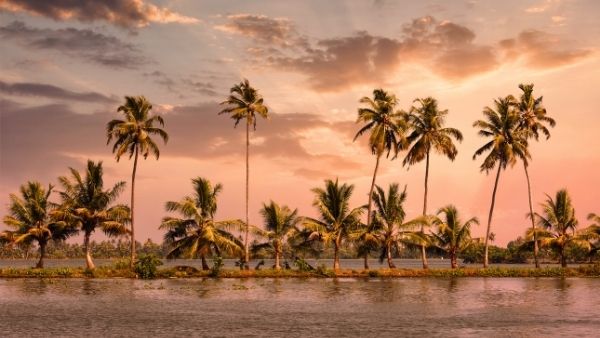
Kerala makes a strong pitch as an all-season long-stay tourist hub
- Mar 09,2022
- Travel Trade Journal
Rising to the demands and preferences of travelers and vacationers in the post-pandemic era, Kerala has made a strong pitch as a safe and riveting all-season long-stay destination by rolling out novel products like caravan tourism while consolidating its time-tested assets to host domestic and foreign guests all through the year. In a paradigm shift from one-stop location-specific approach, Kerala has firmly marked itself as a destination for extended holidays for all segments of visitors with a bouquet of diverse experiences stacked across the state like homestays, Drive Holidays, ‘Change of Air’ based wellness vacations and adventure tourism activities, State Tourism Director Shri V R Krishna Teja, told a press conference on the sideline of a partnership meet here today. The new strategy has boosted stakeholder confidence in Kerala with the travel and hospitality industry sounding confident of a busy year ahead with a steep increase in footfalls. “For Kerala, 2022 is going to be the year of Kerala Tourism. The year ahead is packed with a hectic schedule of absorbing events and festivities including the Kerala Travel Mart in May, Champions’ Boat League (CBL) in August-November and Kochi Muziris Biennale in December-March besides several cultural and literary fests and adventure tourism activities,” Shri Krishna Teja said. What is unique about Kerala is that the state has a variety of experiences for tourists like houseboats, caravan stays, jungle lodges, plantation visits, homestays and city life, ayurveda-based wellness solutions, countryside walks and adventure activities including trekking to verdant hills. Kerala has also launched a major initiative to open up the whole of the state for tourists in a sustainable manner without disturbing the ecology and cultural milieu of the destinations by partnering with the local communities and civic institutions. This project to explore the unexplored destinations across the state has been integrated with Kerala’s world acclaimed heritage-preserving Responsible Tourism movement. Side by side the new projects, the state’s core assets like beaches, hill stations and houseboat and backwater segment will heighten the totality of the visitors’ experience. Starting with a Partnership Meet in the national capital, a series of travel trade networking activities, including participation in Trade Fairs, and organizing B2B Partnership Meets and roadshows have been planned to introduce the new products to a wider audience. Various media such as TV, print, radio, digital, OTT and theatres are also being leveraged for this. With the pandemic-caused international travel restrictions being lifted, Kerala is in a resurgent mode now and the recently launched products will woo travelers from both inside the country and outside, Shri Krishna Teja said. Major international tourism events where Kerala plans to showcase its strength in the next three months include the 28th International Mediterranean Tourism Market (IMTM) at Tel Aviv (Israel) and at BIT Milan (Italy). Also, B2B Meets will be held in Madrid and Milan. As for the domestic events, it will attend trade fairs such as OTM Mumbai, TTF Chennai and South Asian Travel and Tourism Exchange (SATTE), New Delhi, and organize partnership meets in Ahmedabad, Hyderabad and Bengaluru. The domestic market has always been a key segment in making Kerala’s tourism a throbbing enterprise. In the post-COVID phase also its role will be paramount. It is this belief that forms the essence of our pan-India promotional campaigns, he added. ‘Keravan Kerala’, the state’s caravan tourism initiative, has elicited tremendous response from the industry within a short span of time, emerging as a major product after Kerala Tourism recorded an exponential rise powered by the houseboat cruise some three decades back. To promote the state as a safe and glamorous honeymoon destination, Kerala Tourism has launched micro video songs to lure honeymooners from India and abroad.
Read more
Online segment leads revival of tourism, travel and hospitality sector in India
- Mar 09,2022
- Financial Express
The tourism sector is bouncing back from the impact of COVID across the world. Data suggests that the industry will crawl back to the pre-Covid-19 levels in a few months. According to the IBEF data, by 2028, the Indian tourism and hospitality industry is projected to earn US$ 50.9 billion compared with 2018. This indicates a good sign for the industry. The sector’s confidence is also boosted by some special incentives from the government. Between 2020 and 2021, the pandemic caused job losses, loss of companies, and disruption of plans for many in the industry. Also, the industry witnessed a 60-80 percent decline in international tourism in 2020. In 2020, foreign tourist arrivals slump by 75.5% YoY to 2.68 million, and arrivals through e-Tourist Visa (Jan-Nov) lessened by 67.2% YoY to 0.84 million. Companies noticed that upper-middle-class and lower-middle groups are using more mobile technologies, leading to increased regional connectivity among people. This is the reason why many companies are now ready to use technological solutions to reach a wider audience by offering the best deals. The recent bounce-back in the travel sector is witnessed in its online booking segment compared to the offline one. There has been a marked growth in online bookings and increase in online travel market over the years and it is changed compared to offline bookings. Rikant Pittie who is co-founder of EaseMyTrip and an industry expert stated that while offline bookings might have been the established norm for many years, customers are now showcasing a strong preference for online bookings and have started exhibiting a strong dependency on online travel platforms and apps. “Apps and travel platforms provide a seamless and convenient booking experience, especially considering customers now prefer booking their travel tickets through their phones. One of the biggest reasons why customers now prefer online bookings is because it offers a seamless & safe way they can make their bookings,” Rikant Pittie said. Explaining the reason behind this shift, he explained that when booking through websites or apps, customers can get their tickets within minutes, which is significantly faster as compared to booking it offline. “One of the key measures implemented during this period was to use technology for processes that were human resource-intensive. At EaseMyTrip, we invested in technological innovations such as a customer-friendly Whatsapp chatbot that aids and eases bookings for customers. The company automated processes like seat booking, meal booking, cancellation, customer service, among others. Despite this shift to online travel bookings, we also have over 56 thousand travel agents working with us to provide a range of ancillary services to customers, especially to those that are booking complete travel and holiday packages,” he said. Elaborating on destinations that people have booked the most, Pittie said that over the past few months, they have witnessed a significant jump in travel bookings, especially owing to the vaccination drives being implemented across the country. “For international destinations, Dubai leads the pack followed by the Maldives, Sri Lanka, US and Australia. For domestic travel, customers are opting for destinations such as Jaipur, Goa, Uttarakhand, and North East India. We have witnessed a 30% jump in domestic bookings. Additionally, we have also witnessed a sharp growth in air ticket bookings to and from Tier 2 and 3 cities, since the pandemic. While this was initially due to the travel restrictions and safety, it has led to a behavioral change in travel patterns for these cities.” The revival in tourism is expected to bring back its pre-covid golden days. Before the covid-19, WTTC stated in its report, the travel and tourism industry contributed to India’s GDP which was about 6.8 percent of the entire economy. This shows why the Travel and tourism industry is important for any country which got standstill in the pandemic. Central and state governments are easing the rules and regulations for the travel enthusiast in India. Now as international flights have also opened, recovery is expected to be slightly faster in all regions.
Read more