Foreign tourism to Spain jumped to 60% of pre-pandemic levels in January

Spain received almost 2.5 million foreign tourists in January, a fivefold jump from the same month a year ago and roughly 60 per cent of the total that came before the pandemic hit in January 2020, official statistics showed on Thursday. Total expenditure by foreign tourists rose to EUR 3.03 billion (USD 3.36 billion) compared with EUR 562 million a year ago and EUR 4.78 billion in January 2020, the National Statistics Institute (INE) data showed. Covid-19 and the ensuring international travel restrictions brought Spain's economically vital tourism sector to its knees in 2020, but the industry rebounded by some 64 per cent last year and the government expects close to a full recovery this year. "The January data confirms that the impact of the Omicron variant on tourism has been lower than expected," Spanish Tourism Minister, Reyes Maroto, said in a statement. She added that her Ministry was monitoring how Russia's invasion of Ukraine could affect tourist flows. "The Spanish government is already looking for alternatives to a possible absence of Russian tourists this high season," she said. According to the INE, more than 18,000 Russian tourists visited Spain in January this year.

Read more

Andaman & Nicobar admin exempts fully vaccinated travellers from carrying negative RT-PCR report

In a fresh order issued by the Andaman and Nicobar Administration, the Union Territory has made an important announcement regarding Covid-19 testing norms for incoming travellers and tourists. All asymptomatic fully vaccinated visitors coming to Port Blair are exempted from carrying a negative RT-PCR test report with immediate effect, irrespective of type of vaccine and country of origin. The notification issued by the Principal Secretary, Health and Civil Aviation, Dr V Candavelou stated that such fully vaccinated individuals shall produce the final vaccination certificate at the origin airport/seaport in the mainland and at the Port Blair airport or seaport. Other travellers who are unvaccinated, partially vaccinated, or symptomatic of Covid-19 will continue to be required to produce a negative RT-PCR test report not older than 48 hours before the scheduled departure. If found positive, they will have to quarantine under the covid protocols while maintaining social distancing at all times. The A&N Administration further asked all the airlines to ensure strict compliance of the order and observe Covid appropriate behavior. Earlier in February, the authorities had announced the opening of all tourist sports on the islands for tourism activities. Night curfew has also been withdrawn with no restriction on movement. In another update, The Veer Savarkar International Airport in the Port Blair is scheduled to remain closed for four days a week till May 2022 for runway repair works. The move is expected to severely impact tourism activities and arrival numbers on the islands. In view of rising Omicron cases, the A&N Administration in the second week of January had announced closure of all tourist spots until further orders. Last week, the authorities had announced to open tourist spots with 50 per cent capacity and specific operational timings for tourism activities. The stakeholders are suggesting the UT Administration to reconsider the decision and have urged the Ministry of Civil Aviation, Ministry of Home Affairs and Ministry of Defense to explore all possibility to avoid closure of the runway.

Read more

California issues permits to Cruise, Waymo for autonomous vehicle service

The California Public Utilities Commission (CPUC) on Monday issued permits to self-driving units of General Motors and Alphabet Inc to allow for passenger service in autonomous vehicles with safety drivers present. CPUC said that the GM unit Cruise and Alphabet's Waymo are under Drivered Deployment permits authorisation to collect fares from passengers and may offer shared rides. Prior to the announcement Cruise and Waymo had been permitted to provide passenger service only on a testing basis with no fare collection permitted. Starting Monday, Cruise is allowed to provide the Drivered Deployment service on some public roads in San Francisco between the hours of 10 pm and 6 am at speeds of up to 30 miles per hour, while Waymo can offer service in parts of San Francisco and San Mateo counties at speeds of up to 65 miles per hour, CPUC said. Neither company is allowed to operate during heavy fog or heavy rain. Earlier this month, GM and Cruise petitioned US regulators for permission to deploy a limited number of self-driving vehicles without human controls like steering wheels or brake pedals. Waymo on Monday said that it would use what it has learned operating its autonomous commercial ride hail service in Arizona and apply it "to our growing service in San Francisco." Waymo said that it has tens of thousands of riders on a waitlist in California after it launched a tester programme in August. "We'll begin offering paid trips through the programme in the coming weeks," the company said. Prashanthi Raman, Cruise's Vice President for global government affairs, said in a statement that the announcement was "another positive incremental step forward. Our mission has always been to launch a driverless commercial ridehail service here in San Francisco, and that's what we'll continue working with our regulators to deliver." Cruise has not received a response from the CPUC on its request for a driverless deployment permit.

Read more

IATA expects air travellers numbers to reach 4 billion in 2024, exceeding pre-Covid-19 levels

The International Air Transport Association (IATA) expects overall traveller numbers to reach four billion in 2024 (counting multi-sector connecting trips as one passenger), exceeding pre-Covid-19 levels, 103 per cent of total air travellers recorded in 2019. Expectations for the shape of the near-term recovery have shifted slightly, reflecting the evolution of government-imposed travel restrictions in some markets. The overall picture presented in the latest update to IATA’s long-term forecast, however, is unchanged from what was expected in November 2021, prior to the Omicron variant. Commenting on the development, Willie Walsh, Director General, IATA, said, “The trajectory for the recovery in passenger numbers from Covid-19 was not changed by the Omicron variant. People want to travel. And when travel restrictions are lifted, they return to the skies. There is still a long way to go to reach a normal state of affairs, but the forecast for the evolution in passenger numbers gives good reason to be optimistic.” In its February update to the long-term forecast, IATA said that in 2021, overall air traveller numbers were 47 per cent2022, 94 per cent in 2023, 103 per cent in 2024, and 111 per cent in 2025. In 2021, international traveller numbers were 27 per cent of 2019 levels. This is expected to improve to 69 per cent in 2022, 82 per cent in 2023, 92 per cent in 2024, and 101 per cent in 2025. In 2021, domestic traveller numbers were 61 per cent of 2019 levels. This is expected to improve to 93 per cent in 2022, 103 per cent in 2023, 111 per cent in 2024, and 118 per cent in 2025. This is a slightly more optimistic near-term international recovery scenario compared to November 2021, based on the progressive relaxation or elimination of travel restrictions in many markets by IATA. This has seen improvements in the major North Atlantic and intra-European markets, strengthening the baseline for recovery. Asia-Pacific is expected to continue to lag the recovery with the region’s largest market, China, not showing any signs of relaxing its severe border measures in the near future. The outlook for the evolution of domestic traveller numbers is slightly more pessimistic than in November. While the US and Russian domestic markets have recovered, the same is not true for the other major domestic markets of China, Canada, Japan, and Australia. “The biggest and most immediate drivers of passenger numbers are the restrictions that governments place on travel. Fortunately, more governments have understood that travel restrictions have little to no long-term impact on the spread of a virus. And the economic and social hardship caused for very limited benefit is simply no longer acceptable in a growing number of markets. As a result, the progressive removal of restrictions is giving a much needed boost to the prospects for travel,” Walsh commented. Market scenario Asia-Pacific: The slow removal of international travel restrictions, and the likelihood of renewed domestic restrictions during Covid outbreaks, mean that traffic to/from/within the Asia Pacific will only reach 68 per cent of 2019 levels in 2022, the weakest outcome of the main regions, according to IATA. ‘2019 levels should be recovered in 2025 (109 per cent) due to slow recovery on international traffic in the region.’ Europe: In the next few years, the intra-Europe market is expected to benefit from passenger preferences for shorthaul travel as confidence rebuilds, stated IATA. This will be facilitated by increasingly harmonised and restriction-free movement within the EU.

Read more

Garuda Indonesia negotiating terms of Airbus, Boeing orders

Flag carrier Garuda Indonesia is negotiating the terms its aircraft deals with manufacturers Airbus SE and Boeing, with cancellation of the orders among the options, its chief executive officer told Reuters on Tuesday. The step was taken based on consideration of the airline's short-term demand, CEO Irfan Setiaputra said. Garuda's learnings have been hard hit by the pandemic, which forced the company to launch a major restructuring seeking to slash its debt to USD 3.7 billion from USD 9.8 billion. "Hopefully we can get a win-win solution," Irfan said of the negotiations with the manufacturers. Garuda is undergoing debt restructuring proceedings, known locally as PKPU, after a vendor petitioned a Jakarta court over unpaid liabilities. Garuda has proposed converting part of its debt to equity, offering a debt haircut and a new coupon debt. With Airbus, Garuda has outstanding orders for nine A330-900 jets and four A330-800s. Garuda has previously said it would cancel the remaining orders of Boeing 737 Max 8 following fatal crashes of the aircraft in Ethiopia and Indonesia. Garuda ordered 50 of the aircraft in 2014, valued USD 4.9 billion at that time, and had only received one unit, in 2017. The airline has said it would return more planes as it seeks to scale down its fleet to 66 from 142 before the pandemic.

Read more

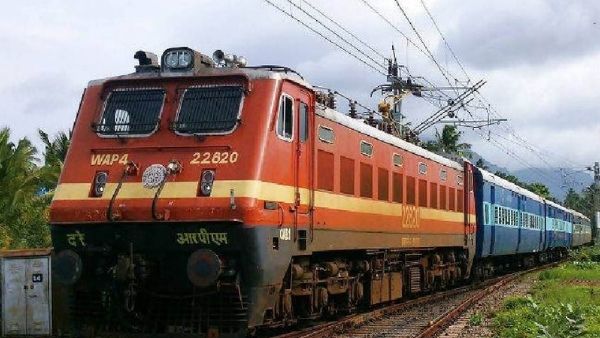
Ambala division to take over Chandigarh railway station from April

Hopes of making Chandigarh railway station a world class one have been revived with Ambala division all set to take over again. The station will be taken over by Ambala division from April 1 onwards, said Ambala division railway manager (DRM) Gurinder Mohan Singh. He also said that a novation agreement has been signed between Indian Railway Stations Development Corporation (IRSDC) and Senior Divisional Commercial Manager (Sr DCM), Ambala division. Ambala Division Railway Manager (DRM), Gurinder Mohan Singh, said, “Development of the station has been handed over to our division as the government had dissolved IRSDC. Now, we will chalk out plans to develop Chandigarh as a world class railway station. We will take over the station from April 1 onwards.” Divisional railway manager Gurinder Mohan Singh said that as per the decision taken by the Railway Board, on February 25, 2022, Ambala division of Northern Railway signed novation agreements (Replacement of one contract with a new one with mutual agreement of parties concerned) of all contracts with IRSDC and contractors concerned. Senior DCM Hari Mohan said that the novation agreements would come into effect from April 1, 2022. In the meantime, there will hand-holding by Ambala division for smooth takeover of the station. Apart from this, the division has started work on inviting new tenders to exploit the full earning potential of Chandigarh station, from parking, NFR, catering and other earning contracts. Senior DCM Hari Mohan said, “The agreement has been signed between IRSDC and Sr DCM Ambala. It means that one to one agreements by IRSDC for parking, catering, maintenance, upkeep of infrastructure, new contracts of facility management, parking and catering have been made. Fresh agreements have also been made with contractors. The same process was followed when we handed over stations along with running contracts to them three years ago.” A special purpose vehicle of IRSDC was constituted in 2012, after which IRSDC officially took over Chandigarh Railway Station in 2019. However, since then, no work was done in this respect. IRSDC took over Chandigarh Railway Station by the end of February, 2019. It was to manage passenger amenities and other infrastructure. In the first phase, IRSDC was to make improvement in passenger amenities like providing better platforms, waiting rooms, washrooms, eating and food stalls, drinking water facilities, cleanliness of coaches and adequate parking facilities with latest technologies, said Kumar. In the second stage, construction of the station was to be taken up, in which state-of-the-art lounges, restaurants, serais and buildings were to be constructed.

Read more