Indian govt boosts tourism sector with initiatives, offers

The Indian government, in the last few years, has taken many initiatives to provide enough impetus to the tourism sector by launching a cleanliness drive, providing better air connectivity to several places, improving digital connectivity in and around tourism places, building infrastructure and improving overall hospitality sector, said a media report. The Indian economy has become not only the world's 7th largest economy in terms of tourism but also the world's third-largest when it comes to health tourism, Saudi Gazette reported. It further reported that the medical tourism sector has grown by more than 350 per cent since 2014 right before the COVID-19 pandemic as a result of the central government's continued attention in this regard. The revenue from this was Rs. 1.23 lakh crore in 2014 but it climbed to Rs. 2.10 lakh crore in 2019. In early December 2021, Wolter Simon Milio, 69, from Chicago, USA, and John, 80, visited India on an 18-day tourist visa for the first time since the COVID-19 lockdown of March 2020. The travellers described tourist spots in India as safe and they praised India COVID-19 vaccination programme as better than other countries in the world, Saudi Gazette reported. Regarding traveling at this point in life, he said, "Age is no bar to tourism. As long as you are in good shape, you still have a chance to have an adventure." During the COVID era, Wolter and John came to India as part of an initiative by the government of India to provide 5 lakh free visas to promote tourism and they liked the atmosphere so much that they are encouraging other tourists to visit India, Saudi Gazette reported. Be it faith-spiritual-study tourism or health-wellness tourism, cultural tourism or heritage tourism or eco-tourism, youth tourism or tourism-related to business activities, India is becoming the "most attractive tourist destination in the world". In November 2014, the government announced e-Visa for citizens of 44 countries in order to make it easier for foreign tourists to visit India. This facility now serves people of 165 countries, up from 44 in 2018. The e-Visa is now available at 25 airports and five seaports around the country, Saudi Gazette reported. Today, the world is getting attracted to India yoga, philosophy, spirituality, and culture. Today, India is one of the three major countries in the world when it comes to health tourism. The primary goal of healthwellness tourism is to treat sickness and promote wellness.

Read more

New Zealand gears to end Covid-19 travel curbs, travellers need not isolate

New Zealand is ending a requirement that incoming travellers isolate themselves as it continues to remove coronavirus border protections in the face of a growing domestic outbreak. Prime Minister Jacinda Ardern on Monday said the requirement that vaccinated travellers isolate for a week after arriving would end on Wednesday. Initially the changes will apply only to returning New Zealanders, as tourists are still not allowed to visit. Travellers will still need to test negative for the virus before leaving and after arriving. “I know this will be welcome news to the members of our team overseas, eager to travel home to see loved ones as soon as possible,” Ardern said. “We can’t wait to see you.” The changes were welcomed by the tourism industry, although leaders wanted more certainty over when tourists could return. International tourism used to account for about 20% of New Zealand's foreign income but has evaporated since the pandemic began. Ardern said Monday her Cabinet was considering fully reopening the borders to tourists sooner than the current scheduled date of July for Australians and October for those from elsewhere in the world. Earlier this month, the government announced it was ending the requirement that most incoming travellers spend time in quarantine hotel rooms run by the military. For now, that requirement remains for unvaccinated travellers. New Zealand enacted some of the world’s strictest border controls when the pandemic began. The measures were initially credited with saving thousands of lives and allowed New Zealand to eliminate or contain several outbreaks. But the controls have increasingly been viewed as out-of-step in a world where the virus is becoming endemic, and in a country where it is now spreading rapidly.

Read more

Singapore Airlines Becomes First Asian Carrier To Report Post-COVID Quarterly Profit

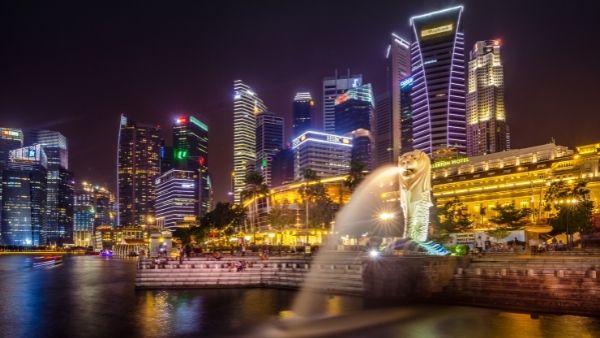
As cases of COVID-19 continue to decline, business sectors across the world are slowly reviving. Recently, Singapore Airlines (SIA), co-owner of Gurgaon-based Vistara Airline, revealed that the company, for the first time since the outbreak of the COVID pandemic, has recorded a net profit of SGD 85 million (USD 62.8 million) for the third fiscal quarter that ended in December 2021. The airline's company attributed this significant growth to an increase in foreign travelers as Singapore has lifted air travel restrictions and allowed foreign travelers via the VTL (Vaccinated Travel Lane) program. The carrier asserted that record cargo revenues were driven by "robust demand and tight capacity, which supported loads and yields." This was a major factor that contributed to this growth. The airline's company continued its network and grew the number of destinations, which resulted in high growth. The restoration of air services to 12 cities in India, including VTL services from Chennai, Delhi, and Mumbai, as well as the resumption of flights to several points in Southeast Asia, played a major role in the company's profit. It is worth mentioning here that Singapore's VTL scheme allows vaccinated people from only selected countries, including India, the US, the United Kingdom, and some European and Asian countries. Allowing quarantine-free entry into the country has also contributed to the growth factor. Visitors, however, are required to show a negative COVID test report before entering the country as Singapore's VTL is unilateral, which means foreign visitors will still have to adhere to their countries' COVID protocols while returning home.

Read more

No RT-PCR report, vaccination certificate needed for Indians from Ukraine

The Centre on Monday revised Covid-19 international travel advisory in wake of the evacuation of Indian nationals from war-hit Ukraine. The Ministry of Health has provided exemptions for the Indians who returned home from the eastern European country. Mandatory pre-boarding negative RT-PCR test report and vaccination certificate has been exempted for the Indian nationals. The evacuated Indians have also been exempted from uploading documents before departure on Air Suvidha portal.The travellers who have not been able to submit a pre-arrival RT-PCR negative report or hasn't completed covid-19 vaccination, they have been allowed to submit their samples on arrival with the advice to continue to self monitor their health condition for 14 days after arrival in India. As on 28th February 2022, 1,156 Indians from Ukraine have arrived in India with none of the passengers kept under isolation.A video appeal from Ukraine shared by Priyanka Gandhi: 'We are stuck in Kyiv' India has been carrying out evacuations of stranded citizens from Ukraine on a war-footing. On Prime Minister Modi's direction, the cabinet secretary has spoke to all the chief secretaries of states and union territories and briefed them about the Centre's efforts to bring back students from Ukraine.The Cabinet secretary has also requested all the district collectors to contact the family members of the students and keep them informed about the arrangements being made to bring their children back home.

Read more

India: Scheduled international flights suspended until further notice

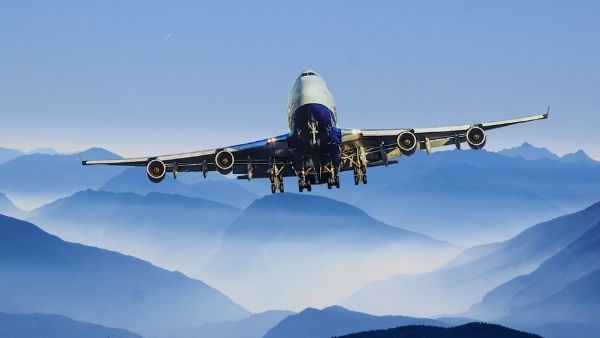
In a recent development, scheduled international flights have been suspended until further orders. The Director-General of Civil Aviation (DGCA) has decided to further extend the suspension of scheduled international commercial passenger flights, amid the ongoing speculations around the resumption of international flights soon. Now, with this announcement, it is clear that scheduled international commercial flights will not operate to and from India until further orders. In a circular dated February 28, the DGCA elaborated that international cargo flights and flights under air bubble arrangement will continue. As reported earlier, special passenger flights are operating between India and around 45 countries since July 2020 under air bubble arrangements formed with them. Currently, India has air transport bubbles with Australia, Afghanistan, Bangladesh, Bahrain, Canada, Bhutan, Ethiopia, France, Finland, Iraq, Germany, Kazakhstan, Japan, Kuwait, Kenya, Mauritius, Maldives, the Netherlands, Nepal, Oman, Nigeria, Qatar, Rwanda, Russia, Saudi Arabia, Singapore, Seychelles, Switzerland, Sri Lanka, Tanzania, United Arab Emirates, Ukraine, United States, United Kingdom, and Uzbekistan. The Indian Government had earlier planned to resume scheduled international flight operations from December 15, 2021, but couldn’t due to the emergence of Omicron. International flights were first suspended in March 2020, after a nationwide lockdown was announced to fight the first wave of COVID-19.

Read more

Delhi Metro to get online deliveries at destination station.

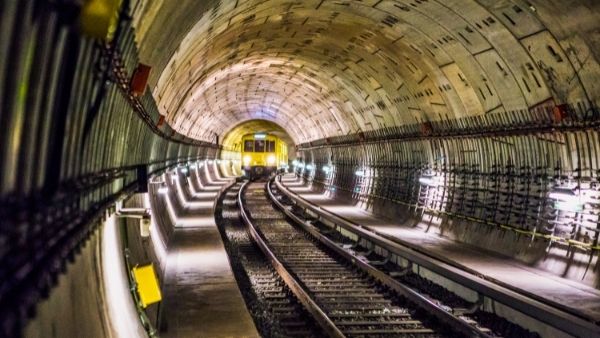
The Delhi Metro Rail Corporation (DMRC) has hired a top consulting firm to work on a visionary project that seeks to integrate its regular services with e-commerce via cutting-edge digital platforms.  We have started working on this vision, and a top consulting firm, McKinsey, has been hired to work on the plan that we have envisioned," a top official said. Under this project, a passenger will be able to order a product while travelling and can get the same delivered destination station through advanced digital platforms of the urban transporter. DMRC chief Mangu Singh had said that the urban transporter is planning to integrate its digital platforms with "e-commerce in a big way" to allow commuters to get other services in the course of their journey. "In the next two-three years, we think this is likely to go on a next level," he had said. The Delhi Metro Rail Corporation (DMRC) had recently launched its revamped website and mobile app, giving commuters more facilities and ease while using metro services. The project is still in its "infancy" and this is just a broader vision to upgrade the digital platforms so that commuters can also access e-commerce services while riding a Delhi Metro train. According to sources, the plan is to let a commuter also access e-commerce services via DMRC digital platforms while on the go. "According to the vision, once a commuter ends his or her journey, the order placed, say for grocery or something else, can be completed at the destination station, where there could be arrangements for say, a digital locker, which could be accessed with an OTP received on mobile or something like that. Though, it's all in infant stage as of now," the source said. This service also enables passengers from any part of the country to use their NCMC-compliant RuPay debit card for seamless travel. The same card can also be used for shopping, banking transactions etc., across the country. DMRC's system will be able to accept transactions from 23 banks through the RuPay debit card issued by them, officials had then said.

Read more