Madhya Pradesh: Travellers stepping out with caution, bookings rise to 50%

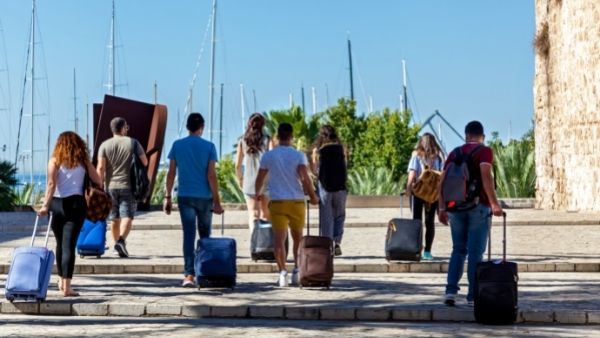
As Covid-19 cases going down, travellers have now started stepping out. However, the rush is still far from what from the pre-covid times, say travel operators. City travellers who are going out for taking a break are mostly from the young age groups, families still cautious, operators said. Same is the condition of corporate tours, still only halfway, say the operators. “We deal only in corporate tours it is seeing some improvement as it was close to nil till a few months ago has now started opening but it is hardly 50% of what it used to be,” Anil Pillai, a travel operator who deals only with corporate clients in city told TOI. Another travel agent who specialises in train ticket bookings, Rajesh Meena said, “People are mostly travelling for work or urgency or exams. From our Bhopal biggest part of travellers go to Tirupati, Shirdi or Vaishno Devi, but these type of travellers are now only 10% of the total. And this 10% also comprises mostly of youngsters, people are still cautious about travelling with families. Like one of my client booked a lot of tickets to Shirdi for his entire extended family, travel was scheduled for March, but as cases increased in January end, he got it cancelled. However, he had not taken the refund from me, instead he asked me to keep it as he will definitely go when things become normal”. Another travel agency owner, Rajesh Raghuvanshi in the city echoed the sentiments. “Normal leisure travel is hardly 20% of what it used to be in pre covid times, people are still cautious and I feel there are some financial implications of Covid-19 also. Corporate bookings are also around 40% of what it used to be. I believe it will still take time for things to normalise, though they have improved a bit in recent times”. A travel agent from city, Mahendra Meena who dealt with people going to countries like Thailand said, “There are absolutely no bookings even now. I hope as Covid-19 ends, people will move out”.

Read more

Canada immigration policy: How new rules will benefit Indians

Canada is increasing its immigration targets yet again to fuel post-pandemic growth and help fill critical labour shortages. This is good news for Indians who want to get settled as they comprise the single largest source country for immigrants to Canada. Canada aims to attract about 1.3 million new immigrants over the next three years, overall admissions amounting to 1.14% of the Canadian population by 2024. These are the targets the Canadian govt is looking at: 2022: 431,645 permanent residents. 2023: 447,055 permanent residents. 2024: 451,000 permanent residents. The majority of immigration into Canada is in the economic class, with Indians making for almost 60% of those numbers, according to a Hindustan Times report. The 2021 Annual Report to Parliament on Immigration, tabled this week, showed that India remains the largest source country for immigrations into Canada. “The arrival of the Covid-19 pandemic in 2020 reduced the intake severely, but of the 184,606 permanent residents admitted that year, Indians accounted for 42,876, or 23% of the total and almost two-and-a-half times the numbers for the next highest, China, at 16,535," according to the report. India has consistently been the biggest source country since 2017, when it overtook China among permanent residents (PRs). In 2019, as many as 85,593, Indian-origin PRs, a quarter of the total, were admitted into Canada. In 2021, Canada welcomed more than 405,000 new permanent residents—the most immigrants in a single year in Canada's history. The Canadian government has struggled to clear a backlog of about 1.8 million visa/citizenship due to covid-19.

Read more

Swadesh Darshan Scheme's Eco Theme gets six projects

Eco Circuit is going to be on the fifteen thematic circuits for development in the country, under the Swadesh Darshan scheme. The Ministry of Tourism has identified this theme in order to promote eco-tourism in the country. A total of six projects have been sanctioned for this theme. G Kishan Reddy, Minister of Tourism, Government of India has written a reply at the Rajya Sabha with this information. The Tourism Ministry has also signed a Memorandum of Understanding with the United Nations Environment Programme (UNEP), and the Responsible Tourism Society of India (RTSOI). The purpose of the MoU is to take measures that will help to promote and support sustainability initiatives in the tourism sector. Eco tourism is the buzzword for travel in these times, as countries are becoming more and more eco friendly, and are understanding the burden that weighs on the environment. India too has gone in the eco friendly way in certain tourism aspects, a prime example of this is the state of Sikkim. According to reports, The Ministry of Environment, Forest and Climate Change has issued guidelines for sustainable ecotourism in the country. Its guidelines talk about preparing an ecotourism plan including the carrying capacity capacity analysis-based description of the eco- tourism site. It also talks about monitoring the various eco tourism sites in the country. The Government of India had launched the Swadesh Darshan Scheme in 2014-15 to develop theme-based tourist places in the country.

Read more

IndiGo takes delivery of its first A320 neo plane powered with sustainable aviation fuel

The country's largest airline IndiGo on Friday took delivery of its first aircraft from Airbus that operated on a blend of sustainable aviation fuel and normal fuel. After the plane landed at the airport here from France on Friday, IndiGo CEO Ronojoy Dutta said the airline is also talking to a lot of manufacturers on Sustainable Aviation Fuel (SAF). While SAF is yet to be approved for commercial flights, various test flights, powered by such fuel, have been operated. SAF will reduce carbon emissions. "IndiGo has taken delivery of its first aircraft operating on Sustainable Aviation Fuel (SAF) from Airbus... This is the first international flight operated by any Indian carrier using SAF," the airline said in a release. The A320 neo plane -- which took off from Toulouse in France on Thursday and landed at the Indira Gandhi International Airport (IGIA) here on Friday had a blend of 10 per cent SAF and 90 per cent normal fuel, according to airline officials. Emphasising that IndiGo is committed to sustainability, Dutta said, "By 2050, we will be carbon neutral... It is not just a promise, we have an action plan in place". Over a period from 2016 to 2023, the airline is aiming at a 16 per cent reduction in carbon emissions, he said while speaking at an event at the airport to mark the arrival of the aircraft. Dutta said the airline is talking to a lot of manufacturers, including Shell, and the Indian Institute of Petroleum, Dehradun. "They assure us... that as volumes pick up, cost will come down. It is a little bit of a chicken and egg; the airline needs to get the volume then the refiners and producers will bring the cost down. That's why we are all making baby steps. Let's start the journey, start consuming SAF so that refiners can start producing more volumes. That is where we are," he said while responding to a question.

Read more

Vietnam to reopen for foreign travellers from March 15

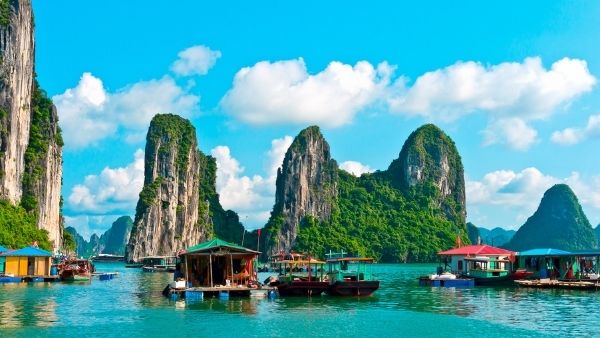
Vietnam is planning to reopen for foreign visitors as early as March 15. The country’s tourism ministry has proposed this, and also decided to lift almost all of the travel restrictions from mid March. This is not what was decided upon previously, and it is now reopening three months before expectation. Vietnam decided to reopen for those international travellers who test negative for COVID 19 before their departure to the country. Moreover, visitors should have been vaccinated against the virus in the last six months, and 14 days before entering into Vietnam. Also, it must be noted that visitors have to be quarantined for the first day of the trip, besides carrying travel medical coverage for up to $ 10000. On the other hand, unvaccinated travellers will be permitted to enter the country, but they are required to quarantine for seven days in a hotel. They must also take RT PCR test on the first day, and the seventh day. Vietnam is cautiously following other southeast Asian countries such as Thailand and Philippines, and gradually welcoming back visitors. The country is still dealing with a rise in COVID 19 infections. According to the World Health Organization, the country reported 32000 new cases of COVID 19 cases on Wednesday alone. Vietnam is quite a popular destination for travellers from across the world, who are looking for a budget friendly destination.

Read more

New Zealand expands Pacific quarantine-free travel

One-way quarantine-free travel to New Zealand will be extended to include Nauru, Tuvalu and American Samoa, a senior official said on Friday. From 11.59 pm on February 27, eligible travellers from Nauru, Tuvalu and American Samoa will be able to enter New Zealand without entering managed isolation and quarantine facilities or self-isolation on arrival, Associate Minister of Foreign Affairs and Trade Aupito William Sio said in a statement, adding that this is in recognition that these countries have no Covid-19 community cases. "Initially travel will be open to people who have a right to reside in New Zealand and those covered by border exceptions. There will be no predeparture test required, but non-New Zealand citizens must be vaccinated," Xinhua news agency quoted the Minister as saying. If travellers transit another quarantine-free travel country (like Samoa or Vanuatu) they will still enter New Zealand with no isolation or quarantine required. If travellers transit a non-quarantine-free travel country (like Australia or Fiji), they will be subject to the same entry and testing requirements as other travelers from that country, he said. The New Zealand government has announced its plan for the staged opening of the borders, which will make it easier for many more people to reconnect and travel to New Zealand from other parts of the world, Sio said. Opening up to travellers from parts of the Pacific where Covid-19 risks are low is part of this plan. New Zealand currently has quarantine-free travel for travellers coming to New Zealand from the Cook Islands, Niue, Samoa, Tokelau and Vanuatu. "Extending this to Nauru, Tuvalu and American Samoa is an important step in further reconnecting with our Pacific whanau (communities), bringing significant social and economic benefits and reflecting the importance of links across the region," he said

Read more