
Vietnam To Further Loosen Entry Requirements For Tourism Reopening
- Feb 08,2022
- Travel off Path
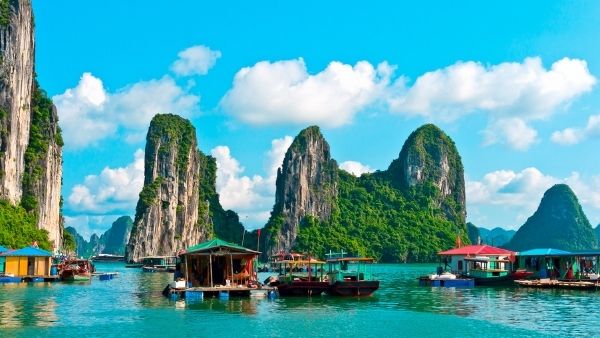
After a two-year closure, plans are being finalized for Vietnam to fully reopen to international tourism by this April. Vietnam’s Ministry of Culture, Sports and Tourism sent a proposal to Prime Minister Pham Minh Chinh this week that the country should reopen by March 31 rather than waiting until May. The pitch is that an earlier reopening will boost international arrivals by Vietnam’s high tourist season, and help those in the travel industry which have been struggling over the past two years. The ministry stated that, ”If the country is slow in reopening, it would lose its opportunity to attract foreign tourists as many regional countries have already restarted their international tourism.” According to reports in this local paper, the Prime Minister released a statement on Thursday saying that Vietnam can reopen when certain groups of the population have received their booster shots and suitable immigration control policies are in place. Plans Include Extending Eligibility Of ‘Green Zones’ And More Freedom Of Movement The plans submitted by the Ministry include extending the eligibility of the regions currently allowed to welcome foreign tourists, also known as “green zones”, given that the locals have received their third Covid shot and any potential outbreaks in the regions are contained. The regions of Phu Quoc, Da Nang, Hoi An, Nha Trang, Ha Long Bay, Ho Chi Minh City and Binh Dinh were the first regions in the country to welcome foreign visitors since locking down in early 2020 but tourism is yet to come back full swing. Vietnam is currently in the second phase of reopening, which is scheduled to end on March 30.
Read more
Kerala Tourism Focuses on Popularising Caravan Tourism in the State
- Feb 08,2022
- Outlook Traveler
Kerala Tourism recently announced a comprehensive, stakeholder-friendly Caravan Tourism Policy, largely to meet demands and preferences of tourists in the post-pandemic world. The two major components of this policy are Tourism Caravans (specially-built vehicles for travel, leisure and stay) and Caravan Parks (designated places to park the vehicles and enable the visitors to spend a night or a day or station for an extended period to explore the destination). Although caravan tourism has been part of the future roadmap of India for some time now, its adoption has been rather slow over the years. It was in the 2009-10 Annual Report published by the Union Ministry of Tourism that caravan tourism and its role as a niche product was first recognised. The policy covered Recreational Vehicle (RV), Campervans, Motor Homes etc. "Caravans are unique tourism products, which promote family oriented tours even at circuits/ destinations where adequate hotel accommodations are not available," the report said. It also focused on the importance of creating Caravan Parks (where basic or advanced amenities and facilities would be provided and where caravans can stay overnight in allotted spaces) along identified circuits. ‘Considering the immense land area and the multitude of landscapes in India, Caravans and Caravan Parks are sure to add an exciting new facet to tourism’, according to the report. However, the pandemic and fears of being infected by the COVID-19 virus has changed people’s perception of travel in many ways. People now want to travel in a safe bubble, with close family or in small groups of people they know, stay away from crowds or crowded destinations, explore lesser known destinations, travel responsibly and support sustainability. This has made policymakers realise how caravan travel fits this new change in travel perceptions. The best part of caravan tourism is that it is suitable for all kinds of travellers, from millennials to senior citizens as well as families with children. Madhya Pradesh Tourism, probably one of the first to introduce caravan tourism in India, renewed their focus on caravan tourism in 2020 under a special campaign called ‘intezaar khatam hua’. According to the plan, which was launched during the monsoon, travellers would undertake five to six days of road trips in a caravan to places where they would be able to enjoy the beauty of the rains. The COVID situation prompted other states to explore caravan tourism as part of safe bubble-travel options. In 2020, Karnataka Tourism launched a scheme to promote caravan tourism. Travellers desirous of caravan travel may hire a fully-equipped vehicle with amenities such as modern toilet and shower, smart TV, kitchenette, refrigerator, freezer and microwave, etc. The caravan could be parked at select state tourism facilities and a few other places. Maharashtra Tourism too has come up with caravan tourism with the state government declaring several incentives and exemptions to operators. The caravan has been launched in collaboration with Motohom and are self-contained vehicles with bathrooms. Travellers may park the caravan at MTDC’s lodge premises, surrounding open areas, or eco-parks, according to the tourism website. Kerala Tourism too has intensified its focus on caravan tourism with the latest policy. “This marks a paradigm shift in almost three decades after the state made it big with houseboat tourism that provided a unique experience to visitors and positioned the state as a major global destination,” said state tourism minister P A Mohamed Riyas. “Like other successful tourism products of Kerala launched since 1990s, caravan tourism is also to be developed on PPP mode with private investors, tour operators and local communities being key stakeholders,” he added. The government will soon announce the details of investment subsidy to be offered to caravan operators. The release from Kerala Tourism highlighted there will be two types of caravans—one for two guests and the other for a family of four. The tourism caravans will have all the necessary facilities for a comfortable stay such as sofa-cum-bed, kitchenette with fridge and microwave oven, dining table, toilet cubicle, partition behind the driver, air conditioner, internet connectivity, audio-video facilities, charging system and GPS. Eco-friendliness being a major feature of caravan tourism, preferably Bharat Stage VI-compliant vehicles will be pressed into service, the release said. Assuring complete security of the guests, there will be IT-enabled real-time monitoring of caravans. To promote caravan tourism, one of the key areas which needs to be looked into is caravan parks, where travellers can safely park their vehicles. According to Kerala Tourism, the caravan parks are to be developed in private sector, public sector or in the joint sector. The configuration of parks will vary from location to location, even though the fundamental attributes remain the same. A caravan park will be a completely safe and secure zone offering hassle-free and stress-free environment to tourists, protected with necessary features like compound walls, adequate security and safety arrangements, patrolling and surveillance cameras. The park authorities will maintain effective coordination with local authorities and medical establishments to attend to medical emergencies. The parks will have Tourist Facilitation Centres to inform the visitors of amenities and services available.
Read more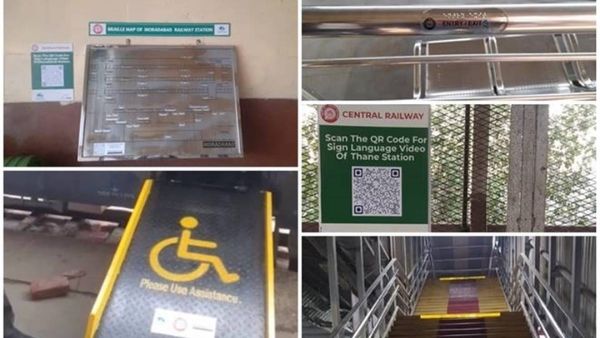
Soon 30 Indian Railways’ stations to be disabled-friendly
- Feb 08,2022
- Financial Express
Soon, Indian Railways will have many disabled-friendly railway stations! Standard Chartered Bank is joining hands with Anuprayaas and Samarthanam Trust for making a total of 30 railway stations across the country accessible for those with disabilities by providing a host of disabled-friendly facilities. This is being done under the Standard Chartered Bank’s initiative of “Seeing is Believing”, which tackles avoidable blindness and visual impairment. According to the bank, the project aims to aid people with visual disabilities, people utilizing wheelchairs, as well as those with hearing disabilities to travel independently as well as with dignity by reducing their dependency on others while travelling by Indian Railways. The disabled-friendly facilities which will be provided are as follows: - Guiding Braille indicators will be installed at station platforms and railings to identify platform numbers and facilities - Braille General Signs will be provided for facilities like a male-female toilet - Reflective strips to be provided at stairs for those with low vision - Braille Maps of the station will be provided - Braille information booklets will be provided at the station enquiry counters - There will be QR code to watch the video about the railway station in sign language - Portable ramp and wheelchair to board the divyang coach Though the Thane railway station in Maharashtra will be the first to be ready, all these facilities will be made available at these 30 railway stations across the country by 1 April 2022. Some of the major stations out of the 30 railway stations to be covered under this project include Bandra, Agra, Jaipur, Ahmedabad, Egmore Chennai, Bhopal, Mathura and Secunderabad. According to Karuna Bhatia, Head of Sustainability, India, Standard Chartered Bank, making stations accessible for those with disabilities is a positive step in the bank’s journey towards being an inclusive organisation. Bhatia also mentioned that this project under the bank’s Seeing is Believing initiative, reaffirms the Standard Chartered Bank’s commitment to increasing accessibility as well as dismantling barriers for people with disabilities.
Read more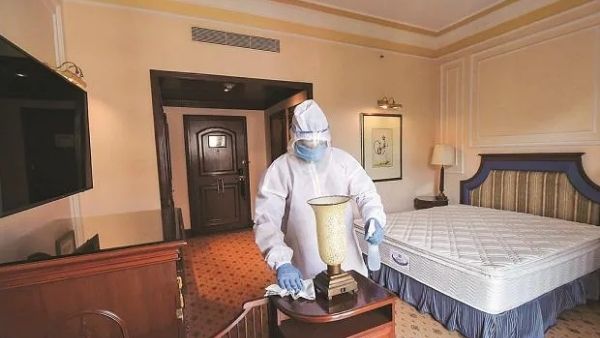
Indian hospitality sector witnessed a 100.3 percent YoY RevPAR growth
- Feb 08,2022
- Daiji World
With improved vaccination rates and fewer travel restrictions the Indian hospitality industry is currently on an upward trend, with traveller confidence. The Revenue Per Available Room (RevPAR) witnessed a growth of 100.3 percent year-on-year (YoY) in Q4, 2021. The quarterly RevPAR of Q4 (October-December) was at 41.9 percent , according to JLL's Hotel Momentum India (HMI). Whilst the latter part of Q4 started to witness some impact from the Omicron wave, last quarter (Q4, 2021) was largely the best performing period of the last year bolstered by long weekends, holidays during festivals and social gatherings. Business travel also resumed albeit in low numbers in some markets. The last quarter of 2021 (Q4 2021) also witnessed a significant increase in international arrivals as compared to the same time in the previous year "Hotel performances across major cities in India witnessed stellar growth in Q4 2021 before the onset of the third wave of the pandemic. Corporate travel started to witness a recovery on the back of improved confidence in the office sector as commercial real estate witnessed the highest net absorption rate over the last eight quarters. Furthermore, staycations, long weekend leisure demands, weddings, and social gatherings continued to remain the base business for the hospitality sector. Improved road infrastructure particularly to hill destinations has given impetus to road travel. This immediate recovery would not have been possible without improved confidence in the minds of travellers due to the high vaccination rates achieved by the nation. The hospitality sector is likely to recover well in 2022 even as uncertainty around different Covid variants and waves continue," said Jaideep Dang, Managing Director, Hotels and Hospitality Group, South Asia, JLL. The next two quarters are expected to witness growth in airline and rail travel and provide impetus to hotel performances as the current wave subsides. The domestic segment will continue to drive demand for both corporate and leisure travel. As restrictions against social gatherings ease, the social MICE (Meetings Incentives, Conferences, and Exhibitions) segment will improve to provide much-needed business to the industry going forward. The total number of hotel signings in Q4 of 2021 stood at 85 hotels with 7,347 keys. The hotel signings witnessed a significant increase of 81.9 percent as compared to signings in Q4 2020. Domestic operators dominated signings over international operators with a ratio of 52:48 in terms of inventory volume.
Read more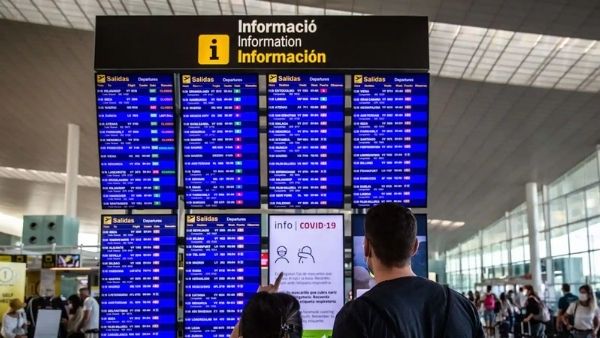
IATA to govts: Covid is becoming endemic, do away with travel bans
- Feb 08,2022
- Times of India
Global airlines trade body, the International Air Transport Association (IATA), has requested governments to remove all travel bans and barriers, including quarantine and testing, as Covid-19 moves from a pandemic to the endemic stage. In India, an association that represents the country’s tourism, travel and hospitality industry has requested the government to remove the ban on international commercial passenger flights. World wide, quite a few countries will be easing travel restrictions this month. The UK will remove testing requirements for vaccinated international passengers arriving from February 11; Australia, one of the countries with the strictest entry barriers, will open its border on February 21; and New Zealand will begin its five -stage reopen on February 27. In India, currently, commercial passenger international flights stand suspended till February 29, close to 23 months now. But curtailed flight operations are on, though limited to the 28 countries that have a bilateral air bubble arrangement with India. The Federation of Associations in India Tourism and Hospitality (FAITH) on Monday urged the Indian government to “announce the opening up of our borders and resumption of full commercial airline flights with zero quarantine for fully vaccinated travellers across all Indian ports.” It has requested the tourism ministry to take up the matter with the health ministry. Continued entry curbs will cost the industry, which in 2019-20 received about $ 30bn in revenue, it added. Willie Walsh, IATA director general, said with the experience of the Omicron variant, there is mounting scientific evidence and opinion opposing the targeting of travellers with restrictions and country bans to control Covid spread. “The measures have not worked. Today Omicron is present in all parts of the world. That’s why travel, with very few exceptions, does not increase the risk to general populations. The billions spent testing travelers would be far more effective if allocated to vaccine distribution or strengthening health care systems,” he said. Referring to a recent research by Oxera and Edge Health in the UK, Italy and Finland, IATA said it supports the conclusion that travel measures do little to control Covid spread when it is already broadly present in the local population. Studies found if implemented at a very early stage, travel curbs may at best delay the peak of a new wave by a few days and marginally reduce cases. Walsh said while the study was specific to these countries, “It is clear that travel restrictions in any part of the world have had little impact on the spread of Covid-19, including the Omicron variant.” The UK, France and Switzerland have recognized this and have begun removing travel measures, he said.
Read more
Sri Lanka travel update: COVID-19 insurance mandatory for all arrivals
- Feb 08,2022
- Times Travel
The Civil Aviation Authority of Sri Lanka (CAASL) has announced revised rules for all international arrivals. While sharing an update, it stated that all tourists on arrival to the island nation must hold a valid travel insurance policy. In its notification, the authority elaborated that all tourist visa holders will now need a mandatory Sri Lanka COVID-19 insurance coverage that can be purchased online or on arrival. As per the reports, all tourist visa holders travelling to the island nation will not have to mandatorily carry a travel insurance coverage of a minimum of USD 50000, including hospitalisation cover for COVID-19 treatment. CAASL added that the travellers can purchase the said policy cover from www.portal.pionline.lk/covidinsurance. However, Sri Lankan passport holders will be exempt from this requirement and would not need the COVID-19 insurance coverage while travelling to Sri Lanka. As per a notification issued by CAASL Chairman Upul Dharmadasa, the COVID-19 insurance coverage will not be required to board an aircraft. But, after arrival in Sri Lanka, if the tourist visa holder is not carrying the COVID-19 insurance coverage of a minimum of USD 50000, they will be required to purchase the policy prior to leaving the respective airport in Sri Lanka. The CAASL, in another update, announced that tourists from 31 countries, including the United States, United Kingdom, Australia, and Germany, who are unsuccessful in making credit card payments for Electronic Travel Authorisation (ETA) for travel to Sri Lanka, due to the ongoing upgrade and maintenance of the ETA front end system, will be issued on arrival ETA (at the port of entry to Sri Lanka) as an alternate channel.
Read more