Stellar start for Maldives tourism sector in 2022

- Arrivals cross 24,000 within first five days of Jan - Russia emerges as largest source market The year 2022 has started off with a bang for the Maldives tourism sector, as over 24,000 tourists visited the country within the first few days of January. Data from the Tourism Ministry of the Republic of Maldives showed that from January 1 to 5, the archipelago welcomed a total of 24,527 guests. The arrivals in the first five days of the month are a 56.4 percent increase when compared with the corresponding period in 2021. The figure is a few thousands less than the 27,314 arrivals recorded during 2020 but higher in comparison to the 22,121 arrivals recorded in the same period of 2019. Russia emerged as the largest source market, as it accounted for 27.3 percent of total arrivals. In Sri Lanka too, the highest number of arrivals for January thus far has been from Russia. Following Russia’s lead in the Maldives is Italy, accounting for 12.96 percent of the traffic and Germany, with 6.8 percent. Other notable contributors to the tourism traffic were India (6 percent), the UK (6 percent) and Ukraine (4.8 percent). The Maldives ended 2021 on a high note by meeting its arrival target. By the end of 2021, an excess of 1.32 million tourists visited the country.

Read more

Jammu & Kashmir imposes more Covid curbs as cases rise. Details here

Complete restrictions will be imposed on non-essential movements in Jammu and Kashmir from every Friday 2 pm till Monday 6 am in view of the rising cases of Covid-19, said the union territory administration in a new order issued on Thursday. In addition to this, officials also exempted pregnant employees of the UT government from attending the office. “They shall be allowed to work from home," the order said.

Read more

Karnataka govt revises Covid testing, quarantine guidelines. Details here

The Karnataka government on Wednesday issued new guidelines for the testing and home isolation of Covid-19 patients in the state in line with the central government's protocols. As per the fresh order, all symptomatic people will be required to compulsorily undergo a rapid antigen test (RAT). If the test shows a negative result, it will be followed up by an RT-PCR, as per ICMR protocols. Further, all primary contacts of Covid-19 patients (at home or workplace) will be tested for the infection even if they are asymptomatic and irrespective of their age and comorbidities. The patients will have to undergo home isolation and will be released after seven days if they have not experienced fever for three preceding days. “There is no need for re-testing after the home isolation period is over," said the order. The primary contacts will also be required to quarantine at home for seven days. For healthcare workers, the state said that if they show any signs or symptoms indicative of Covid-19, they will be tested for the infection. Those HCWs who are asymptomatic or exhibiting mild symptoms will have to isolate themselves for five days at home or a hotel. “If asymptomatic for during the preceding three days with oxygen saturation greater than 94% at room air, they will be released from isolation with an advisory to strictly wear a mask or PPE when people are around for the next five days," said the order.

Read more

Enjoy noise-free, pollution-free, futuristic travel in Delhi! First electric bus starts service in the city

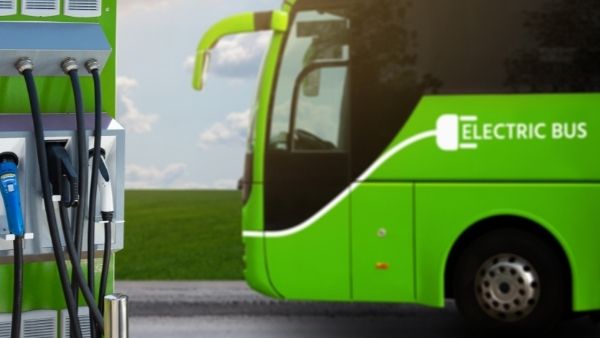
Delhi’s first electric bus starts service! From now on, enjoy noise-free, pollution-free, futuristic bus journeys across the national capital. On Monday, Bus E-44 was made operational between IP Depot and Pragati Maidan. It will be a circular bus service from Delhi Transport Corporation’s (DTC) Indraprastha depot via several important locations in the national capital like ITO, AGCR, Tilak Marg, Barakhamba Road, Mandi House, Janpath, Connaught Place, Rajesh Pilot Marg, Prithvi Raj Road, Aurobindo Marg, Ring Road, AIIMS, South Extension, Ashram, Jangpura, Bhogal, High Court, India Gate, Pragati Maidan and the bus will terminate at IP depot, according to an IE report. Tilak Raj (48), who made two complete trips on the route on Monday, was quoted in the report saying that the bus is completely noise-free, and is easy to drive. Driving the electric bus does not require as much effort, and one can drive the bus for many more hours without being tired. Also, the bus is emission-free, he said. Amit Kumar, a DTC conductor who is assigned to Bus E-44, said the electric bus was much better. According to him, earlier, there used to be too much sound in the bus because of the engine at the back. Also, there was heat from the engine. There is no such issue on this bus, he said. These electric buses are the future since they will counter pollution, he added. The E-44 bus service will be available daily from 05.30 AM to 08.20 PM. The electric bus charges from a 240 KW fast charger, and takes from 1 to 1.5 hours for a complete charge. There is only one charger at the IP depot as of now but once more buses are added to the fleet, there are plans to install more at each depot. From one charger, two buses can charge at most but the charging time doubles, resulting in a charging time of approx. two to three hours, a DTC official was quoted saying in the report. On Monday, Delhi Chief Minister Arvind Kejriwal said the government plans to acquire 300 more electric buses by April. The ultimate plan is to buy 2,000 electric buses in the coming years. The electric buses boast various modern features such as kneeling ramps for differently-abled commuters and special pink seats for women commuters. These buses are equipped with CCTVs, linked to a two-way central command and control centre at Kashmere Gate in Delhi along with as many as 10 panic buttons on each bus and a hooter. Moreover, there are ‘stop’ buttons in these buses, which alert drivers when commuters want to alight. Also, the bus has a provision whereby the kneeling ramp by 60 millimetres to open effectively for those who are physically challenged.

Read more

American Cruise Lines to double capacity with Project Blue

American Cruise Lines has revealed details of Project Blue, a brand-new fleet of go-anywhere ships for the United States market. The company announced plans for 12 identical sister ships. When completed, they will more than double capacity for domestic coastal cruises with the line. Featuring an innovative hybrid catamaran design, these distinct boats will have unprecedented near-shore operating versatility. The new United States-built fleet will operate exclusively in the United States, with a focus on small towns and close-to-home adventures. Charles Robertson, chief executive of American Cruise Lines, said: “Project Blue started as a design challenge to create a boat small enough for New England harbours and stable enough for the Alaska Inside Passage, with a draft shallow enough for the Atlantic Intracoastal Waterway. “These boats can run almost anywhere, and because there will be 12 of them, they will be deployed all over the United States.” The Project Blue expansion further reinforces the growing interest in small ship experiences and personalized cruising. The entire fleet will be built by Chesapeake Shipbuilding in Salisbury, Maryland. The first two Project Blue ships are already under construction and are due for delivery in 2023. Each boat in the Project Blue fleet will accommodate 109 passengers and 50 crew.

Read more

England set to lift Covid-19 travel curbs betting Omicron has peaked

British Prime Minister Boris Johnson is set to announce the end of most Covid-19 measures introduced to curb the rapid spread of the Omicron variant in England as he looks to live with the virus after an apparent peak in cases. Britain was the first country to limit international travel over the Omicron variant, raising alarm bells about its mutations, and in December introduced work at home advice, more mask-wearing and vaccine passes to slow its spread. But while cases soared to record highs, hospitalisations and deaths have not risen by the same extent, in part due to Britain's booster rollout and the variant's lesser severity. Johnson's approach to avoid lockdowns and live with the virus contrasts with a zero tolerance approach to Covid-19 in China and Hong Kong, and tougher restrictions in many other European countries. He will hope his approach has been vindicated as health minister Sajid Javid said on Tuesday Britain had likely already reached the peak in both cases and hospitalisations. "I'm cautiously optimistic that we'll be able to substantially reduce measures next week," Javid said in parliament, referring to when the so-called Plan B measures are formally due for review. Johnson has faced criticism for his handling of the pandemic overall, and Britain has reported 152,513 deaths, the seventh highest total globally. Scotland, Wales and Northern Ireland have followed their own anti-coronavirus measures, generally with tougher restrictions. He will address parliament on Wednesday on next steps for Plan B and hopes to reset his agenda following furore over the lockdown gatherings at his office, which has some in his party plotting to remove him. Johnson admitted he attended a party in the garden of his Downing Street office and residence in May 2020 while social mixing was banned. The lifting of Plan B measures, along with Johnson's navigation of Omicron without resorting to stringent lockdown, could help him appease vocal opponents of restrictions in his own party amid the party unrest. "Decisions on the next steps remain finely balanced," a government spokesperson said. "The Omicron variant continues to pose a significant threat and the pandemic is not over. Infections remain high but the latest data is encouraging, with cases beginning to fall." Javid said that a third of Britain's 15 million cases had been reported since the onset of Omicron. By contrast, Britain has reported 5% of its Covid deaths since Omicron was identified in late November. "The idea was by really trying to put a lot of impetus on the booster programme, it would be possible ride it out without the most coercive methods," Professor Francois Balloux of University College London's Genetics Institute, told Reuters. "In terms of morbidity and mortality, I think it could be seen as probably the right decision."

Read more