
World's safest low-cost airlines 2022 revealed
- Jan 19,2022
- The National
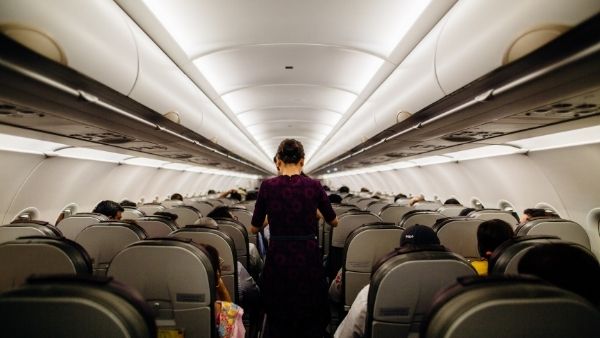
AirlineRatings.com has revealed its top 20 safest airlines for 2022. While Air New Zealand nabbed the top spot, Etihad Airways came in at second place. Emirates also ranked in the top 20. AirlineRatings was launched in June 2013 and judges the safety credentials of 385 airlines, taking into consideration elements such as crashes over five years; serious incidents over two years; audits from the aviation industry's governing bodies and lead associations; fleet age; and Covid-19 protocols. Also appearing in the top 20 are Singapore Airlines, TAP Air Portugal, SAS, Qantas, Alaska Airlines, EVA Air, Virgin Australia/Atlantic, Cathay Pacific, Hawaiian Airlines, American Airlines, Lufthansa/Swiss Group, Finnair, Air France-KLM Group, British Airways, Delta Air Lines, United Airlines and Qatar Airways. “Our top 20 safest airlines 2022 are always at the forefront of safety innovation, operational excellence and the launching of new more advanced aircraft like the Airbus A350 and Boeing 787,” says Geoffrey Thomas, editor in chief of AirlineRatings.com. “However all airlines have incidents every day, and many are aircraft or engine manufacture issues, not airline operational problems. It is the way the flight crew handles these incidents that determines a good airline from an unsafe one.” Thomas cites Air New Zealand’s constantly high safety standards and the care it has shown for its flight crews as reasons for its ranking at the top of the 2022 safety list. “Air New Zealand has won countless awards and has a firm focus on safety and its customers. Over the past 18 months, Covid-19 has brought yet another new dimension to the challenges. Air New Zealand has excelled across the broad safety spectrum, never losing sight of the smallest detail while caring for its flight crews who have worked under significant stress.” AirlineRatings.com's top 20 safest airlines for 2022: Air New Zealand Etihad Airways Qatar Airways Singapore Airlines TAP Air Portugal SAS Qantas Alaska Airlines EVA Air Virgin Australia/Atlantic Cathay Pacific Hawaiian Airlines American Airlines Lufthansa/Swiss Group Finnair Air France-KLM Group British Airways Delta Air Lines United Airlines Emirates In a separate ranking by the Jet Airliner Crash Data Evaluation Centre, Emirates was named the world’s safest airline in the world. The carrier ranked first among 25 global airlines, with a risk index of 95.05 per cent in a JACDEC survey carried out for aviation magazine Aero International. JACDEC ranks the safety credentials of the 100 biggest airlines in the world, based on revenue passenger kilometres.
Read more
Travellers going to Hawaii might need a booster shot in the near future
- Jan 19,2022
- Times of India
With Omicron still thriving in most parts of the world, there are talks of a booster shot. Now Hawaii has gone ahead to implement a booster shot rule for travellers. The American state will soon require its visitors to have a COVID booster shot. According to David Ige, Governor of Hawaii, the authorities are now looking to change the definition of fully vaccinated by upgrading the requirements to three shots. All travellers who have not taken booster shots will have to quarantine for five days upon arrival. This will be done at their own expense. Hawaii is presently only allowing American citizens to visit the state, with the exception of a few international destinations. Travellers can upload their vaccination records to an online portal before their flight. Governor Ige said in a statement, "We know that the community needs time to react to that, so we would have to provide at least two weeks for those who may not be up to date to have the opportunity to go and get vaccinated if they need to." Hawaii is one of America’s most beautiful states, and is a destination that is known for its islands. Travellers come to Hawaii to live the island lifestyle, and experience unique adventures. It has been made clear that any change in travel rules, and any news regarding the booster shots will be made public well in advance. It is getting increasingly clear that the need of a third booster shot against COVID 19 could be made mandatory in the near future for many other destinations across the world.
Read more
Oakwood Going Ahead With Its Expansion Plan
- Jan 19,2022
- Travel Trends Today
Leading global serviced apartment brand Oakwood continues its dynamic growth momentum across Asia Pacific with the aim of doubling its portfolio by 2025. Starting the year on a high note, Oakwood Hotel & Apartments Azabu Tokyo marks the first of 20 new openings scheduled for 2022, along with strategic partnerships to advance the fast-growing brand’s frontiers into China’s tropical southern resort island of Hainan as well as Dhaka, Bangladesh. “As countries gradually re-open borders and the world progresses against this battle with the pandemic, we have reasons to be optimistic about the travel outlook for 2022. For more than 50 years, Oakwood has pioneered a distinctive style of hospitality that appealed to myriad needs of travellers in different cycles of their life. Starting the new year with a bang, we are confident that the opening of our 13th property in Japan, Oakwood Hotel & Apartments Azabu in Tokyo and announcement of new projects in China and Bangladesh will complement the evolved traveller’s preferences in the new era of travel,” said Dean Schreiber, CEO, Oakwood. “Over the past two years, we have introduced new brand experiences to augment our portfolio and set new industry benchmarks in response to an emerging segment of sophisticated travellers who push the boundaries of traditional hospitality. Through resilience and creativity, Oakwood has learnt to speak to the post-pandemic traveller’s sense of individuality, penchant for aesthetics and quest for positive social impact.” The opening of Oakwood Hotel & Apartments Azabu Tokyo on 14 January 2022 represents the brand’s 13th property in the land of the rising sun, fortifying its presence in the Japanese market. The property’s opening is hot on the heels of Oakwood’s 12th property launch in Japan, Oakwood Hotel Oike Kyoto, which opened in October 2021. Advancing its expansion into key travel destinations in China, Oakwood recently signed a strategic partnership agreement with China Green Development Group, one of China’s biggest state-owned enterprises for the management of projects in China. Oakwood’s aggressive growth momentum in Asia Pacific will also see its market entry into Bangladesh, represented by the opening of Oakwood Hotel & Apartments Dhaka and Oakwood Suites Dhaka in April 2022, both owned by Aara Hospitality. Located in Dhaka City’s upscale enclave of Gulshan 2, the 89-room Oakwood Hotel & Apartments Dhaka will offer an unique experiences to guests. Nestled in Sayeed Khokon Autograph Tower, Dhaka’s most prestigious business area, Oakwood Suites Dhaka will house 32 well-appointed studios and one-bedroom apartments with state-of-the-art ‘smart’ technology, personalised butler and round the clock concierge services. 2022 will see Oakwood’s aggressive expansion with 20 new openings across Asia Pacific, including the debut of Oakwood Beluxs, a brand that was launched in Mainland China in 2020. Created in partnership with Country Garden Commercial and Culture Tourism Group, the new brand is styled for a ‘new generation of travellers’ who see smart, sustainable and personalised sanctuaries, with the aim to open 100 Oakwood Beluxs properties in China by 2030. The first three properties are slated to launch in April, August and October 2022 in Dalian, Yantai and Qingdao respectively.
Read more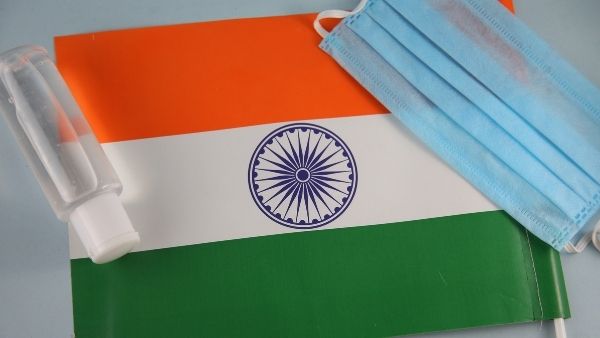
India should adopt risk-based approach not blanket bans to contain Covid: WHO India head
- Jan 19,2022
- Economic Times
Blanket approaches such as complete restriction on the movement of people and travel bans can be counterproductive in containing Covid in a country like India, says WHO's India representative Roderico H Ofrin while advocating target, risk-based strategies to counter the pandemic. Stressing on the need to protect both lives and livelihoods, he said that the public health action in India and across the world must be continually guided by evidence from four key questions- how transmissible is the variant, severity of the disease it causes, how well vaccines and prior SARS-CoV-2 infection protect and how common people perceive risk and follow control measures. "WHO does not recommend a blanket travel ban, nor complete restriction of people's movement. In many ways, such blanket approaches can be counterproductive. India with its diversity in population distribution and geographic spread, the risk-based approach remains the wiser public health practice to counter a pandemic," Ofrin told PTI in an email interview. Depending on the epidemiological situation, available public health capacities and social and economic context, governments should tailor their measures to prevent and control the transmission, the Delhi-based official said as an Omicron driven surge pushed India's Covid tally to 3,76,18,271 (37.6 million/3.76 crore) on Tuesday. "WHO advises governments to adopt nuanced, targeted and risk-based approaches which involve layered control measures, reducing the risks associated with travel and transmission,” Ofrin said. If all the dos and don'ts are followed, there is no need for lockdowns. "In the current scenario, existing tools and solutions continue to be effective — expanding vaccination coverage, using masks, maintaining hand hygiene, physical distancing, ventilation of indoor spaces and crowd avoidance help in cutting the chain of transmission. If these are followed, there will be no need for lockdowns," Ofrin maintained. He said the emergence of the new variant of Coronavirus in this magnitude "has been beyond expectation" and it is evident "Omicron has a growth advantage over Delta spreading rapidly across states and territories". The country reported 2,38,018 new Coronavirus infections, according to the Union Health Ministry on Tuesday. With this, active cases have increased to 17,36,628 (1.7 million/17.3 lakh), the highest in 230 days, while the death toll has climbed to 4,86,761 with 310 fresh fatalities. Though it is not possible to undertake genome sequencing of every sample, experts are agreed the current wave is largely being driven by the Omicron variant. Elaborating on ways to handle the current Covid situation, Ofrin, who joined as WHO's India Representative in July 2020, stressed that it is not just the responsibility of the government but also of every individual. "This is the same virus/disease with a different variant. The mitigation measures put forth against earlier variants are still recommended to combat Omicron. Strategies to test, trace and treat along with strengthening surveillance and health systems; expanding vaccination coverage, maintaining essential health services, and community-level containment measures effectively underpin response efforts to combat the pandemic," he added. On whether the Indian government was late in deciding to administer booster doses to doctors, and other healthcare and frontline workers, the WHO India head said, "WHO's main recommendation continues to be to prioritise access to vaccines for vulnerable populations and those who have not yet completed their doses, and deployment of boosters is secondary. This has also been India's vaccination strategy. "Boosters as per recommendation of the WHO Strategic Advisory Group of Experts (SAGE) remains for those who are immunocompromised, those with chronic diseases especially the elderly.” Implementing a blanket booster programme while large segments of the population remain unvaccinated is likely to prolong the pandemic and misses the larger population that it aims to protect, Ofrin explained. Vaccination for children should be introduced after a proper study on the safety of children keeping in mind India's epidemiological and social context, he said. "Although a majority of Covid-19 vaccines are only approved for use in adults aged 18 years and above, an increasing number of vaccines are also being authorised for use in children now. Only after evidence on safety for children is well studied and deliberated as per the country's epidemiological and social context, can a vaccine be introduced for this age group.” "India is already vaccinating the 15-18 years age group. The National Technical Advisory Group on Immunisation (NTAGI) and National Expert Group on Vaccine Administration of Covid-19 (NEGVAC) are deliberating and considering scientific evidence related to the justification of vaccines to children below 15 years." Discussing WHO's role in helping the Indian government combat the pandemic, Ofrin said it has been providing technical and on-ground support through it network of 2,600 field officers and personnel based in 23 states and also reaching out all states and union territories (UTs). "Our people deployed across programmes including immunisation, tuberculosis, neglected tropical diseases etc. have been repurposed to work with health authorities at all levels to respond to the pandemic." Will 2022 see the current pandemic coming to an end? "It is very difficult to put a date on the end of the pandemic. Do remember that as the virus keeps transmitting, there is a chance for new variants to appear which can be more transmissible or severe. It is possible to bring this virus under control by ensuring availability and strategic use of the tools we have." Ofrin replied.
Read more
Sweden scraps demand for negative Covid test to enter country
- Jan 19,2022
- Economic Times
Travellers to Sweden will no longer be required to show a negative Covid test before entering the country, the government said on Tuesday. Sweden introduced rules for a recent negative Covid test on December 28 last year in a bid to slow the spread of the more contagious Omicron variant. Since then, Sweden has repeatedly set new daily case records with Omicron now the totally dominant variant. "Travellers are no longer considered to pose a particular risk of affecting the spread of Omicron in Sweden," the government said in a statement. Sweden has recorded more than 20,000 new daily cases over the past few days, roughly double the previous record from earlier waves. The number of cases has put a strain on healthcare services but not to the same extent as before the vaccine rollout.
Read more
Bring tourism under a unified body and include tourism in the Concurrent List: ASSOCHAM
- Jan 19,2022
- Economic Times
The Associated Chambers of Commerce & Industries in India (ASSOCHAM) in its pre-budget memorandum to the Finance Minister has suggested faster implementation of some of the tourism projects announced in the previous budgets. The Industry chamber among other things has also suggested the creation of a unified tourism body for the country to make uniform rules and guidelines in relation to tourism development in the country. To make that happen, ASSOCHAM has proposed the subject of tourism to be brought under the Concurrent List of the constitution. There are many Ministries, departments, and other agencies involved and closely associated with tourism in the country. Each state has its own rules on licensing, investments, etc. “It is suggested to move tourism to the concurrent list to ensure uniformity in policies and an umbrella organisation to promote tourism investments,” the memorandum says. The government in its 2017 Union Budget, proposed the creation of 5 Special Tourism Zones. The 2018 budget proposed development of 10 tourist sites into tourism destinations. Both these proposals are yet to be implemented, the memorandum notes. While India is blessed with a long coastline, the country has not been able to tap the potential of coastal tourism sustainably, ASSOCHAM says. “We believe there is a huge potential with respect to cruise tourism, seaplanes, marinas, etc., which would be the economic drivers for tourism,” it says. The industry chamber also suggests more relaxed CRZ norms to allow coastal tourism. The decision-making process on tourism developments in areas coming under CRZ III should be left to the States. The ASSOCHAM memorandum also asked for more reliefs and incentives to the tourism sector in the wake of the rampaging Covid-19 impact on the crucial services sector. ASSOCHAM has asked for an extension of the Export incentive scheme like SEIS for another 5 years for the tourism service providers to help them mitigate the huge losses. Tourism Exports, ASSOCHAM asks, to be treated at par with other exports and services, and such transactions may be zero rated for GST without stopping the flow of input credits.
Read more