Indian passport gets stronger; climbs up seven places from 2021 rankings

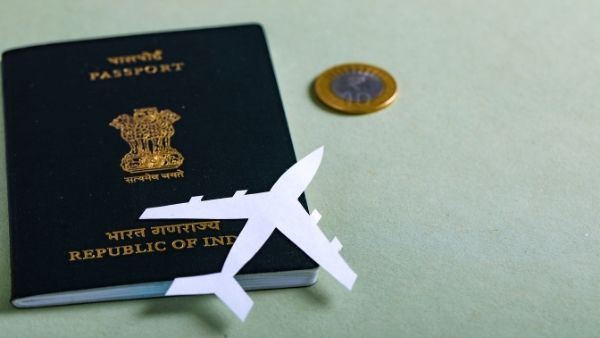
There is good news for Indian passport holders even as the travel industry stays fragile with the ongoing pandemic. The passport ranks at 83rd position, seven positions up from its 90th ranking in 2021. A passport's strength is measured by the number of countries its holders can visit without requiring a prior visa. Those holding an Indian passport can now visit 60 countries across the world without the need for a prior visa. In 2021, the number of such countries was reported to be 58. The rankings are as per the Henley Passport Index, based on data from the International Air Transport Association (IATA). The index also suggests that the average number of countries that any individual can visit without the need of a prior visa is 107. Holders of passports from a number of countries including the USA, Singapore and Japan can access as many as 180 countries on the said parameter! World's strongest passports The top spots in the index are grabbed by Japan and Singapore; passports from both the nations can let one visit a whopping 192 destination without a prior visa! This does not take into account the current COVID regulations and restrictions. The disparity It is believed that the disparity between the world's strongest and weakest passport (Afghanistan) has increased because of the pandemic as well as the widening economic differences. A popular views also suggests that vaccine distribution should be done in a more equal way to bridge the gap.

Read more

All tourist spots in Andamans to remain closed; Check new guidelines here

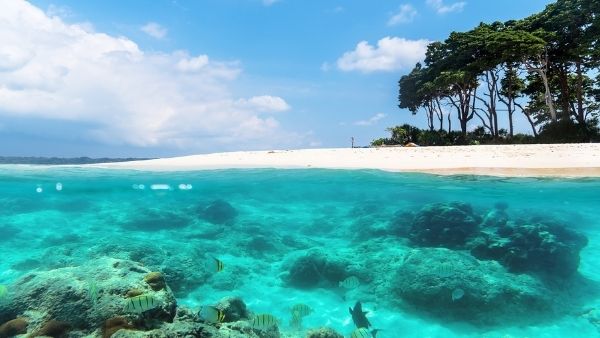
The Andaman & Nicobar Administration, in its new guidelines for curbing the spread of Covid-19, has ordered that all tourist spots in the Andamans- South, North and middle districts will remain closed till further orders with immediate effect effective January 11. Moreover, all social, political, sports, entertainment, academic, cultural, religious, festivals related, and all other gathering and congregations will also be prohibited. Night curfew shall be enforced in all three districts with no movement allowed between 9 pm and 5 am until and unless permitted by the District Magistrate on a case-to-case basis. Public transport and buses shall be allowed to ply with 50 per cent capacity after following all Covid protocols. All parks, gyms, playgrounds, and yoga institutes have also been ordered to be closed with immediate effect. Apart from this, travellers who wish to visit the Islands have to follow strict Covid-19 guidelines for entry which include mandatorily carrying RT-PCR negative test reports not older than 48 hours. All incoming passengers who have an overseas travel history in the last 30 days and all unvaccinated and partially vaccinated should undergo an RT-PCR test upon arrival, which will be free of cost. They will also have to self-isolate themselves till the test results are procured. Meanwhile, the Member of Parliament from the Andaman & Nicobar Islands, Kuldeep Rai Sharma has requested the Administration and Lieutenant Governor of Andaman and Nicobar Islands to restart tourism activities in Wandoor, New Wandoor, and Jolly Bouy, after Covid-19 restrictions are lifted. The Islands have a total of 412 active Covid-19 cases with a test positivity rate of around 1.23 per cent. 43 new cases were reported on Tuesday.

Read more

Pre-Budget Expectations From Hotel Association Of India

The hospitality industry was slowly getting into a recovery mode on the strength of domestic tourism – leisure and events, only to be plunged back into uncertainty on account of the omicron threat. It is critical to protect the industry during such prolonged periods of flip-flop in business prospects. The support required from the government cannot be emphasized enough. Policy interventions are imperative for the sector’s survival and its early and quick re-bound to normalcy. According hotels the status of ‘Infrastructure’ will resolve a large number of the issues being faced by hotels and hospitality companies. It will also help survive operationally and encourage investments in the sector. Access to softer funding, longer periods to repay loans, resultant shortening of the gestation period will make hotel investments more attractive and sustainable. More hotels would mean more jobs, more development. The sector’s cascading effect on the economy has already been well established and documented. Infrastructure Status will also enable hotels to avail benefits of lower taxation, utility tariffs and simplified approval process for projects. Additionally, the road to recovery can also be aided through measures like extended moratorium, rationalization of taxes and facilitating ease of doing business. HAI has submitted detailed suggestions to the Finance Ministry on some easily doable policy reforms which will greatly help in revival of the industry and will also enable it to flourish in the long run. Hospitality industry contributes 9% to India’s GDP employing nearly 4.5 crore people and providing livelihoods to around 16 crore people. Due to the pandemic, the potential shock to livelihood of millions working in the hospitality industry is enormous. The Indian hospitality sector has a critical role to play in the post pandemic economic revival and has been announced as the fourth pillar of the Indian economy.

Read more

Thailand opens 3 more beach destinations to tourists amid Covid spike

Thailand added three popular beach destinations to a visa program that allows foreign visitors to bypass a mandatory isolation, throwing a lifeline to its Covid-hit tourism industry seen as key to a nascent economic recovery. Starting Tuesday, vaccinated foreign tourists can enter Krabi, Phang Nga, and Koh Samui in addition to Phuket under the so-called sandbox program that won’t require them to go through quarantine, provided they spend at least a week in these destinations. The relaxed visa rule is yet another attempt by Thailand to restart its travel industry as the emergence of the omicron variant triggers a new wave of Covid infections. The tourism-reliant nation indefinitely suspended a wider quarantine-free program last week to quell a flareup in new cases, though it helped attract some 350,000 travellers in just two months. While the tourist arrivals under the sandbox program are likely to be 50% less in Samui, “it’s still better than zero, still better than a total travel ban,” said Ratchaporn Poolsawadee, president of the Tourism Association of Koh Samui. “The suspension came during the peak travel season so the impact on the sector is quite significant.” Faltering Strategy The faltering reopening strategy is set to weaken Thailand’s growth outlook as the tourism sector contributed almost a fifth to the nation’s economy before the pandemic, with 40 million foreign tourists generating more than $60 billion in 2019. “The emergence of new variants and subsequent border controls, both in Thailand and elsewhere, poses a risk” to Thailand’s tourist arrival estimates and growth, Juliana Lee, an economist with Deutsche Bank AG, said in a report Monday. “It may take years for a full normalization of global tourism, in fact. It will take time for tourists to gain confidence in travelling overseas – people will be loath to travel to faraway and unfamiliar places until they are confident about the efficacy of treatments.” The resort island of Phuket, which was the first Thai province to waive mandatory quarantine for immunized travellers from July 1, is currently grappling with its biggest surge in daily cases since the pandemic began, with about 60% of its hospital beds occupied. But local officials have vowed to keep the program going, saying the island’s healthcare system can cope with the resurgence. “The outbreak situation in Phuket is no different than many other countries. We’re now adding capacity for travellers to isolate in hotel rooms,” said Bhummikitti Ruktaengam, president of the Phuket Tourist Association. “What Thailand did with the suspension and the adjustment showed that we were quick to make a call to limit the damage, and made changes as we learned more.” Covid infections have been surging across Thailand after the New Year holiday and celebrations, and omicron cases now account for the majority of new infections detected upon entry and among local clusters. On Tuesday, Thailand reported 7,133 new cases.

Read more

UK: No requirement of pre-arrival COVID testing for international travellers

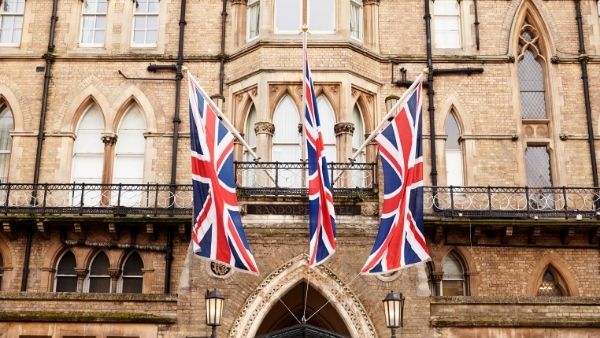
In a major development in the UK, the government has lifted off the requirement of pre-arrival COVID testing for international travellers. Reportedly, international travellers can also skip self-isolation on arrival; earlier, it was mandatory to self-isolate on arrival till a negative-PCR report is received. Moreover, travellers can alternatively take lateral flow test on the second day of their arrival in the country; the test is believed to cost less when compared to a PCR test. UK PM Boris Johnson addressed the Parliament and announced the above rules; Indian travellers will also come under the exemptions. He made the said exemptions clear and commented that, "We will also be lifting the requirement to self-isolate on arrival until receipt of a negative PCR, returning instead to the system we had in October last year, where those arriving in England will need to take a lateral flow test no later than the end of Day 2 and, if positive, a further PCR test to help us identify any new variants at the border." In addition to the above revisions, pre-departure tests would be no longer required as well. Mr Johnson commented that the test discourages many from travelling, with the fear of getting "trapped overseas" on the travellers' minds. A few days back, the UK removed all countries from its red list as well. Currently, the UK is grappling with a massive wave of Omicron; it is believed that the said regulations have been lifted to ease unnecessary burden from the testing bodies. Mr Johnson has also urged people to get vaccinated as well as social distance and follow COVID protocols as no further lockdowns would be imposed in the country.

Read more

Major airlines waive off ticket rescheduling fee and offer free change on flights till January 31

Major Indian airlines across the domestic sector have announced relief measures for air travellers in view of rising Covid-19 cases around the country, which is also termed as the third wave of the pandemic. Carriers such as Air India, IndiGo, SpiceJet, and AirAsia India have announced waiver of ticket rescheduling fees and are offering free change on flights booked till January 31 and travel till March 31. The airlines had taken similar steps during the second wave of Covid-19 in May 2021. Leading low-cost carrier IndiGo on Sunday announced that it will be waived off ticket rescheduling fees for all new and existing bookings made up to 31st Jan 2022 for the travel up to 31st Mar 2022. While, SpiceJet has announced its Free Date Change Offer, where it is offering a one-time waiver on the change fee on all international and domestic flight tickets booked with SpiceJet. The said request must be made at least 48 hours prior to the flight departure else a normal change fee will apply. National carrier Air India has also come forward with a similar announcement and revealed in a social media post that it will allow One Free Change on all domestic flight bookings. One Free Change is applicable to all confirmed tickets with a travel period till March 31, 2022, where Change is defined as a change in date or flight number, or sector. In case of passengers decide to change sector ONLY re-issuance charges will be waived once, other charges will apply. Whereas, a low-cost carrier owned by the TATA Group, AirAsia India has extended its rescheduling offer and announced free rescheduling for all flights on their network for bookings made till January 31, 2022, for travel until March 31, 2022.

Read more