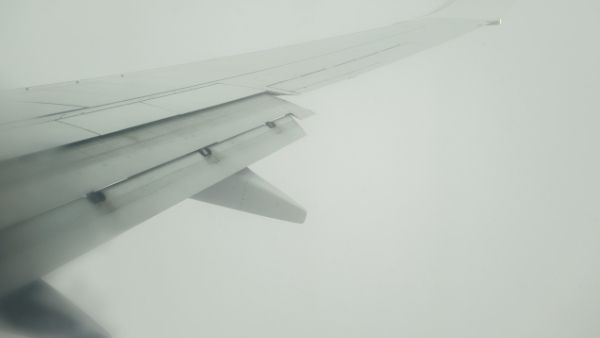
Several flights delayed at Delhi airport due to dense fog

Several flights to and from Delhi airport were delayed as a thick blanket of fog hovers over the national capital leading to poor visibility but there was no cancellation or diversion reported, said a senior Delhi airport official on Tuesday. The official said that several flights got delayed by 5-15 minutes due to dense fog. Passengers are requested to contact the airline concerned for updated flight information, any inconvenience is regretted. Dense Fog was reported over Palam airport reducing the visibility to just 50 metre between 06:30 and 08:00 hours in the morning. Delhi airport took to Twitter to inform passengers about the flight operations, "Low Visibility Procedures are in progress at Delhi airport. All flight operations are presently normal. Passengers are requested to contact the airline concerned for updated flight information." He added that they are updating information related to flight operations on social media handles of Delhi airport for passengers. According to the IMD, 'very dense' fog is when visibility is between 0 and 50 metre. In case of 'dense' fog, visibility is between 51 and 200 metre, 'moderate' is between 201 and 500 metre, and 'shallow' is between 501 and 1,000 metre.

Read more

Nepal's Covid Crisis Management Center recommends making vaccination cards compulsory and reworking of flight schedules

In view of rising Covid-19 cases in Nepal, the Covid Crisis Management Center (CCMC) on Sunday has recommended to the cabinet to shut schools until January 29. A meeting of CCMC summoned in wake of rising Covid infection in the nation made recommendations which now would need to undergo cabinet approval to be implemented. "Many of the schools now have given winter vacation to their students which extends from a week to a month. We have recommended the government to extend it till 29th of this month seeing the surging cases of Coronavirus infection," CCMC spokesperson Sunita Nepal told over phone. As per the official, the decision has been taken as the students are yet to be vaccinated against Covid and the possibility of the third wave induced by Omicron variant. Though the Directorial meeting of overseeing mechanism can execute decisions, Sunday's meeting was made by managerial meeting which has the provision to undergo cabinet approval. Along with, the body has made vaccination certificates mandatory to take public services or use public places starting from January 17. "Vaccination cards also are to be made compulsory to enter public places such as government offices, hotels, cinema halls, stadium, amusement park and during Domestic flights also. In order to minimise the flow of passengers at airports we have requested the Civil Aviation Ministry to work further on the flight schedules," Nepal added. Though the schools would remain shut for virtual classes vaccination campaign targeting school level students would continue as planned, the official stated. Also, the number of people gathering at public places has been capped to 25 by the body. Decisions over the recommendation made by the CCMC are expected to be approved by end of the week as all the major leaders of the nation are isolating themselves after falling under contact tracing. CPN-Maoist Center Chairman Pushpa Kamal Dahal along with nearly a dozen senior leaders have tested positive for Coronavirus which has forced major political figures including Prime Minister Sher Bahadur Deuba to isolate. As per government sources, Deuba will be in isolation for at least three days starting from Saturday morning after he had a meeting with former Prime Minister KP Sharma Oli. Prime Minister Deuba along with other senior leaders of the ruling coalition were present in the meeting of the political coordination committee on Friday held at the Prime Minister Residence. Friday's meeting was attended by PM Deuba, Congress Leader Ramchandra Paudel and Purna Bahadur Khadka along with Minister Gyanendra Karki, Maoist leaders Narayan Kaji Shrestha and Dev Prasad Gurung. Leader of Socialist Party Madhav Kumar Nepal, Secretary Beduram Bhusal, JSP Chairman Upendra Yadav amongst others.

Read more

Maharashtra Covid restrictions: HRAWI requests govt to allow restaurants to operate till 11 pm

The Hotel and Restaurant Association of Western India (HRAWI) has requested the Maharashtra government to allow hotels and restaurants in the state to operate at least till 11 pm amidst the Covid-19 restrictions placed to contain the spread of the Omicron virus. The Uddhav Thackeray-led government recently issued fresh guidelines which ordered closing down restaurants by 10 pm. In a letter, Pradeep Shetty, Senior Vice President said that over 35 per cent of hotels and restaurants have closed down in the last two years and the state government should lend a helping hand. “Hotels and restaurants had just started to return to normalcy after about 15 months of restricted operations. After the two successive lockdowns, hotels and restaurants have infused significant capital to reopen and restart operations. Presently there is considerable fear and anxiety in the sector. The effects of the new Covid wave will debilitate the hospitality industry. We request the state government to allow us to operate at least till 11 pm. There has been a lot of effort put in to bring back workers. Repayment of loans taken to restart operations after the lockdowns is another major area of concern. The state government will have to support us this time around if a disaster is to be averted. It should immediately come out with a direct salary transfer scheme for hospitality employees in addition to waiving off all statuary fees, taxes, and utility bills.” Shetty further mentioned that it is also imperative for the government to come up with a credit extension scheme or some kind of moratorium to protect the owners and operators from credit defaults owing to the third wave of Covid-19. “The situation is deeply distressing, to say the least. While we stand behind the state government and support the fight against Covid without reservations, the hospitality industry will not be able to fend the challenge off on its own. We have been operating under various restrictions, be it in terms of timing or capacity since the pandemic started in March 2020. The impact of lockdown measures and restrictions considered in totality amounts to a loss of business to the tune of 80 per cent. The industry has suffered massive losses with many hotels and restaurants facing closure and bankruptcy. Such restrictions have a long-term impact on trade, industry and their effect on the economy will be harmful. This wave has rendered us locked in even without a literal lockdown as the hotels and restaurants are deserted. The government will have to step in and lend us a supporting hand this time around. The industry will be permanently debilitated if urgent relief measures are not forthcoming,” Shetty stated.

Read more

It’s now or never; time for the trade to unite for a rightful place in the aviation ecosystem: Biji Eapen

As the national President of the IAAI, Eapen always preferred to take a stand that is consistent on issues and never hesitated to go to any extent to get his stand vindicated. On the airline commission issue, on the ticket refund issue during the first phase of the Covid-19, etc., Eapen and the IAAI was the first trade association to take the legal course for the public cause and the cause of the trade. With the privatisation of the airline system in the country is now complete, and the airports are also getting privatised slowly and steadily with favourable policies of the government, Eapen feels that it is high time the travel trade in the country get their acts together and join forces to commence a national campaign to get their long-pending and legitimate demand for ticket commission re-established. While the trade and industry are fighting a survival game in the light of the Covid-19, Eapen feels that it’s now or never for the industry and therefore, the trade as a whole has to get their acts together and stand upright for a legitimate and rightful place in the aviation ecosystem. IAAI will be launching a national signature campaign soon to press their demand for the airline commission to be re-established. “We don't want any sympathy. We only ask the government and its regulators to implement and enforce the law that mandates commission to travel agents. Our mission is to save the industry where no one is deprived of law,” Eapen said. Being one at the forefront of the fight in the regulatory system and the legal system on the commission issue over the decade, Eapen feels it is IAAI’s primary duty to take the responsibility and become the “collective voice” of the industry. “Travel agents represented and sold airline tickets and were remunerated with the commission, like cargo agents, LIC agents, and petroleum dealers. Unfortunately, the vested interests discriminately circumvented regulatory orders to indemnify ticketing agents,” he says. Airline revenue is generated from passenger and cargo sales, and both are carried in the passenger cabin and cargo compartments, respectively, onboard the same aircraft. When airlines are paying commission to accredited cargo agents, they are looking the other way when it comes to ticketing agents. Cargo agents are paid a 5 per cent commission through MoCA intervention and directed to provide air waybill stock to all accredited agents in India, Eapen says. While statutory and regulatory rules are supporting agents' commission, because of the lack of unity in the trade, airlines continue to call the shots while the regulators look the other way round. Eapen cites the Aircraft Act 1934 and Aircraft Rules of 1937 to establish his argument. “After Kerala High Court passed an order in favour of the IAAI, DGCA has passed Order No. AV. 26012/2/2008-TE in March 2010 mandating 'commission' as the legal remuneration to travel agents and categorically ruled out that zero commission, transaction fee and net fares as illegal in India, and mentioned that PLB could not be replaced as commission,” he says. DGCA had even issued notices to over a dozen airlines for nonimplementation of the order. But, “the vested interests” played the spoilsport, Eapen observed. IAAI will be launching a national e-signature campaign and the same will be presented to the government calling for urgent action. “Through the campaign, we want to urge upon the government to implement and enforce the statutory position under rule 135, which requires airlines to determine Tariffs corroborating DGCA Order No AV 26012/2/2008-TE of 05.03.2010, mandating 'commission' and displaying the single consolidated fare' with break-up for the consumer's benefit, thereby instructing airlines operating from and within India to pay 5 per cent agency commission to travel agents.”

Read more

Don't shut renowned tourism sites amid Covid-19 surge, Aurangabad body tells Thackeray

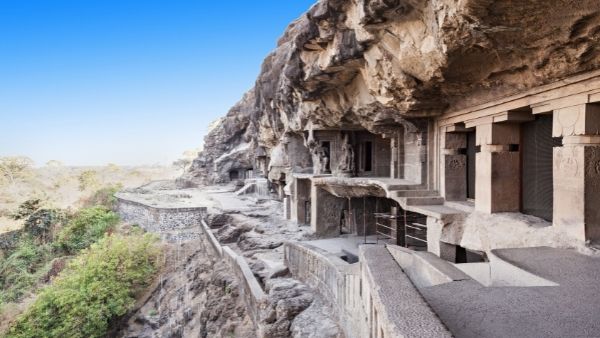
An Aurangabad-based tourism association has written to Maharashtra Minister Aaditya Thackeray demanding that world renowned sites like Ellora and Ajanta Caves must not be shut for people amid the rise in Covid-19 cases as these are spread over a vast area. The Aurangabad Tourism Development Foundation (ATDF), in its letter to Thackeray, who is state Tourism Minister, said that theatres, which are closed venues, were being allowed to operate with an attendance cap but not such sites. It said the number of visitors to these sites must be restricted in view of the pandemic but they should not be closed completely. ATDF functionary Sunit Kothari said keeping these sites and monuments shut will adversely affect the tourism sector in the region, especially transport operators, handicraft and souvenir sellers, street vendors and hotel staff.

Read more

Jharkhand announces incentives up to INR 10cr for investment in tourism

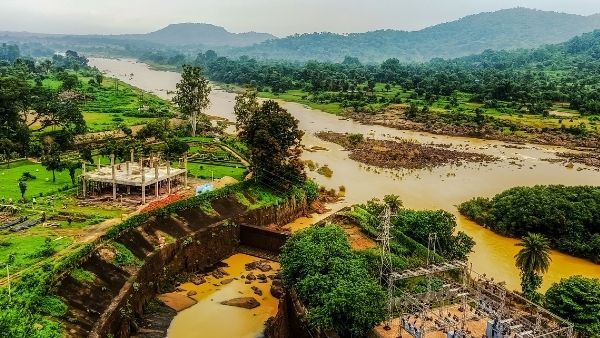
The Jharkhand government announced a slew of fiscal incentives for those willing to invest in developing tourism facilities, including hotels and resorts, amusement parks, ropeways and adventure sports, to give a boost to the sector and attract tourists to the state. The incentives were announced in the recently-unveiled state tourism policy, which aims to make Jharkhand a "must-visit destination" by tapping its unexplored potential. "Fiscal incentives are to be provided for the promotion of tourism in Jharkhand... To provide incentives for increasing the competitive attraction of Jharkhand as compared to other states... All the fiscal incentives shall be routed through the Single Window System of Department of Industries," the policy mentioned. Those eligible for incentives are hotels, resorts, amusement parks and ropeways set up with a minimum investment of INR 10 crore, it said. Besides, wayside amenities built with a minimum investment of INR 2 crore and water sports facilities set up with a minimum investment of INR 1 crore are also eligible for incentives. Cruise ships and houseboats with a minimum investment of INR 1 crore, and camping sites and adventure sports facilities set up with a minimum investment of INR 50 lakh are eligible for the incentives. Among others, aero sports facilities set up with a minimum investment of INR 50 lakh, sound and light show and laser show with a minimum investment of INR 25 lakh, and rural tourism sites set up with a minimum investment of INR 25 lakh are also eligible for the incentives. The policy said capital incentives up to INR 10 crore will be provided and 50 per cent of it will be paid at the time of commission and the rest at the end of the first year of operations. However, the details regarding how much would be paid in which category were not mentioned. Other benefits include subsidies for captive power generation, SGST related incentives and electricity duty related incentives. An additional 5 per cent incentive up to INR 5 lakh will be provided to SC and ST entrepreneurs, women entrepreneurs, disabled persons and ex-servicemen. An additional incentive of 5 per cent would be provided for setting up units in Scheduled Areas outside the urban hubs, the policy said. Any project that starts commercial operations after Jharkhand Tourism Policy 2021 came into force would be eligible to apply for the benefits. The Hemant Soren government has also engaged National Geographic to produce documentaries on Jharkhand, in a bid to promote tourism. Jharkhand, carved out of the southern part of Bihar in 2000, shares its border with Bihar, Uttar Pradesh, Chhattisgarh, Odisha and West Bengal. It has a number of forests, including the Palamu Tiger Reserve, waterfalls, hills and temples.

Read more