
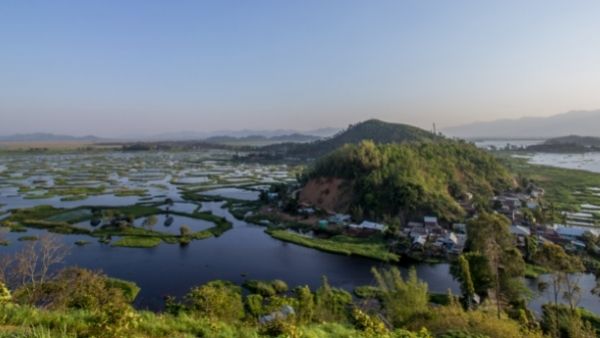
Centre to provide INR 97 cr to protect Manipur's iconic Loktak Lake
- Jan 04,2022
- Economic Times
Manipur Forest, Environment and Climate Change Minister Awangbow Newmai after holding a meeting with the Union Environment, Forest and Climate Change Minister Bhupender Yadav on Sunday, said that the Centre has assured to provide INR 97 crore to protect the famous Loktak Lake. Loktak lake in Manipur's Bishnupur district, Deepor Beel in Guwahati and Rudrasagar lake in western Tripura are the three lakes in Northeast India which are categorised as wetlands of international importance under the Ramsar Convention. This convention provides the framework for national action and international cooperation for the conservation and wise use of wetlands and their resources. Minister Newmai told the media that the Sunday's review meeting in presence of the central minister was held with an objective to save the Loktak Lake. He said that the Union Minister gave assurance to give his full support to all the plans to preserve and protect the lake, which has floating land masses and 'phumdis' (series of floating lakes) available which cannot be found in other places in the world. "The Union Minister gave his commitment to provide INR 97 crore to undertake various protection measures of the Loktak Lake," the Minister said. Loktak Development Authority Chairman, LS Meitei said that the Union Minister is concerned with the conservation efforts of the Loktak Lake. "A detailed conservation plan was put up in the Sunday's review meeting. The plan also included to provide sustainable livelihood for fishermen in the periphery area," Meitei said. The Union Environment Minister's meeting was the second within a week on the development and protection of Loktak Lake. Yadav earlier said that the Loktak is not only a lake but also an important historic landmark of India's independence struggle. It is a sacred place from where Netaji Subhas Chandra Bose showed the dream of an independent India to the people of the country. Chief Minister, N Biren Singh, earlier said that the government is unable to timely and wisely utilise the gift given by nature in the various forms of flora and fauna which is abundantly found in the state. In Sunday's review meeting representatives of various NGOs including Good Will Mission Manipur, Joint Coordination Committee on Wildlife and Biodiversity, Environmental Social Reformation and Sangai Protection Forum, the Yaralpat Integarted Farming Cooperative Society, Loktak Lake Tourism Development Cooperative Society Ltd Sendra and Loktak View Point Development Organisation were present. The meeting was also attended by the senior officials of the Forest Department including Principal Chief Conservator of Forests and Head of Forest Force Dr Aditya Kumar Joshi.
Read more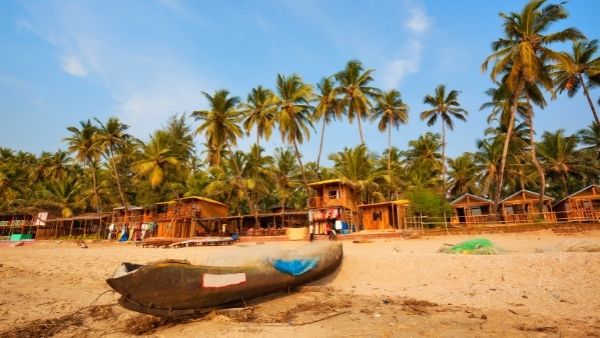
Goa imposes night curfew amid surge in Covid cases. Details here
- Jan 04,2022
- Live Mint
The Goa government has also decided to shut schools and colleges till 26 January. The decision was taken by state Chief Minister Pramod Sawant at the Task Force's meeting on Covid-19 today. In the wake of a rise in Covid-19 cases in the coastal state, the Goa government on Monday imposed a night curfew in the state. The curfew orders are said to be in place from 11 pm to 6 am everyday. The Goa government has also decided to close schools and colleges till 26 January. The decision was taken by state Chief Minister Pramod Sawant at the Task Force's meeting on Covid-19 today. Meanwhile, Goa on Monday reported 631 fresh cases of coronavirus with the positivity rate jumping by 16 per cent to 26.43 per cent, officials said. On Sunday, Goa had recorded a COVID-19 positivity rate at 10.7 per cent and 388 cases. With the new infections, the overall caseload in Goa mounted to 1,82,201 on Monday. Goa has so far reported five cases of the Omicron variant, including four on Monday. The positivity rate is the percentage of all coronavirus tests performed that are actually positive. As cases surged, the state government has decided to close schools and colleges till January 26. After chairing a meeting of Task Force earlier today, Chief Minister Pramod Sawant told reporters that the government would also impose night curfew in the state. The COVID-19 death toll remained unchanged at 3,523 in Goa as no fresh fatality was reported on Monday, officials added. The number of recoveries rose to 1,76,438 after 62 people were discharged during the day, leaving Goa with 2,240 active cases, an official said. "With 2,387 new tests, the total number of tests conducted so far in Goa went up to 16,37,091," he added. Earlier in the day, Goa Health Minister Vishwajit Rane said 66 of over 2,000 people on board the Cordelia cruise ship, which came to Goa from Mumbai, have tested positive for coronavirus.
Read more
Air India to start direct flights to Frankfurt from Mumbai, operate additional frequency from Bengaluru
- Jan 04,2022
- Economic Times
Before completion of the handover to Tata Group, national carrier Air India has announced that it will start new direct, non-stop flights to Frankfurt from Mumbai starting January 19. The new flight will be operational till March 25, 2022. The soon-to-be private-full-service carrier also informed that it would operate additional flights from Bengaluru on Fridays. Sharing the information on Twitter, the airline said that the flight from Mumbai will fly from the Mumbai International Airport on Wednesdays and Fridays, while from Frankfurt, it will depart on Wednesdays. Booking is open through the Air India website, booking offices, call centre, and authorised travel agents. Air India is now also offering its passengers the flexibility to cancel or rebook their existing bookings online through the Manage Your Trip option on its website www.airindia.in. Earlier, it had announced to operate additional flights every Sunday between Delhi & Melbourne from January 2 to March 27, 2022, under its winter schedule. Apart from this, the airline will operate additional flights between Delhi and Hong Kong every Sunday in January 2022 under the Vande Bharat Mission. Earlier, the airline had announced to run additional flights between India and the US from December 21 till the end of March 2022 under the air bubble flight agreement. Air India later announced to extend flights between Kolkata and Bangkok as well till March 2022, which was earlier scheduled to run till December 29, 2021. Notably, India has signed an air bubble travel agreement with Germany under which Indian and German carriers are permitted to operate flight services between both nations. Passengers travelling on flights from India to Germany should be destined for countries in the EU/Schengen area, South America, or Africa only. Similarly, only passengers originating from countries in the EU/Schengen area, South America, or Africa should be allowed to travel on flights from Germany to India.
Read more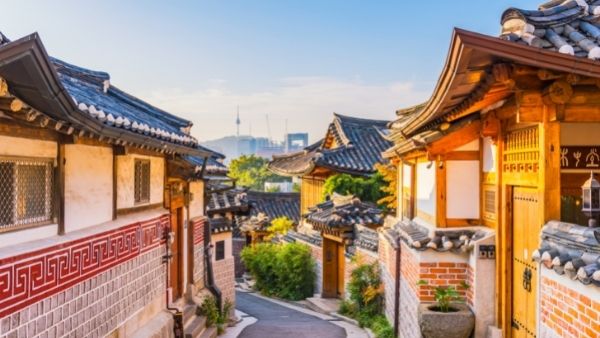
South Korea focus on BLeisure to entice the corporate traveller once travel opens up from India
- Jan 04,2022
- The Economic Times
As the world opens up to a transformed atmosphere, travel, and tourism, the industry to take the biggest hit due to the pandemic, is also showing signs of recovery. With many countries opening up their borders for tourists and businessmen, the tourism industry is slowly but surely limping its way back. But, will corporate travel help leisure tourism? It is a fact that the travel between India and Korea had come to a standstill during the pandemic. But with the vaccination drives all over the globe, business is perking up and as soon as South Korea relaxes its quarantine rules, corporate travel will pick up too. Due to the sudden upswing in the business between the two nations, business travel is simply waiting to surge. The South Korean President Moon Jae-in's new initiative, the New Southern Policy aims to pursue closer ties with India and Southeast Asia in social, cultural, political, and economic aspects. This may lead to a major boost in corporate as well as leisure travel. According to Korea Tourism Organization (KTO), South Korea is becoming the go-to destination for BLeisure (business + leisure) travel. With cities like Seoul, Incheon, Busan, Daegu, and Daejeon, South Korea is at the top of the list for many corporate travelers and travel enthusiasts. Seoul The capital city of Korea is one of the top convention destinations in Asia. Seoul blends Korean history, culture, and its naturally stunning landscape with modern and state-of-the-art infrastructure. High-level meetings, international conventions such as the G20 Summit, scaled-up conventions like the Rotary International Convention, and other such diverse events are regularly hosted by Seoul. With unique venues, amazing team-building activities, and incentive tours, Seoul offers a business traveler everything from fun to learning. You cannot go to Seoul and miss the Gyeongbokgung Palace or the Trick Eye Museum. You can easily pick up some souvenirs from the Gwangjang traditional market or the Myeongdong shopping street. Hongdae and Caface cafe offer some great local cuisine that you can relish. Apart from an impressive portfolio of shrines, temples, palaces, and monuments, Seoul is rich in natural wonders and mountains. Daegu A city that has a thriving mix of tradition and technology, Daegu is considered the tourism and cultural hub of Southeast Korea. With a sprawling textile, automotive, metal, and machinery industry, Daegu is also technically advanced. It is a regular host to many IT events showing advanced technology, energy conventions, and others. A MICE city, Daegu offers a fulfilling visit to a history buff with Gyeongsanggamnyeong Park and Daegu National Museum. For those who are connoisseurs of local folk medicines, Daegu is home to Daegu Yangnyeongsi Oriental Medicine Cultural Center, which showcases the history of local medical traditions. Incheon Bordering Seoul, Incheon is known as the transportation hub of Korea. If you have flown in from India, chances are you have landed at the ultra-modern, state-of-the-art Incheon International Airport. Seoul and the other cities of Korea are well connected to Incheon. Incheon is also a major port and business hub due to the Songdo smart city, which is financial and knowledge-industry capital. As a corporate traveler with a short stay, you are bound to touch base at Incheon. The city offers boat tours near the super popular Incheon fish market. These boats take you to nearby beachlined islands like Yeongjon and Muui-dong. Incheon boasts of some great adventure sports for its leisure activities along with casinos and spas. Busan Busan is the second-largest city in Korea, boasting some stunningly contrasting views. Surrounded by gorgeous mountains, Busan is an eclectic mix of luxurious beaches and peppy urban culture. It is also the largest logistics port city in Korea and frequently hosts international conventions and business events. If your time in Busan is limited, you can simply catch the famed Korean sunset at one of the beaches, while munching on some local and flavourful Korean seafood. Busan regularly hosts some great film festivals and cultural events, making it a robust entertainment hub. Daejeon For a corporate traveler who is interested in science and technology, Daejeon is a must-visit. Daejeon boasts of being the home to Asia's largest R&D cluster, which is at the forefront of world technological advancements and innovation. Not just that, with its huge number of tourist attractions, Daejeon leads with 1500-year-old royal tombs and fortresses that are UNESCO World Cultural Heritages. From Korean traditional villages and guided arboretums to Buddhist temples, lakes, and forests, Daejeon has a rich tourist environment. The well-connected city can be traveled easily as it is located at the heart of Korea. If you are looking to travel to South Korea for business and/or leisure, be sure to visit these beautiful and culturally-rich cities. For more information and regular updates on BLeisure travel to South Korea.
Read more
Afghanistan's blue mountain lakes deserted as tourists stay away
- Jan 04,2022
- ONmanorama
Bamiyan, Afghanistan: The winter landscape around the deep, blue mountain lakes of Band-e-Amir in the central Afghan province of Bamiyan presents an arresting spectacle empty of people - but the absence of visitors is costing locals dearly. After two decades of war and facing its worst economic crisis, the collapse of Afghanistan's vestigial tourism industry might almost go unnoticed. But Band-e Amir, about 3,000 metres (9,840 feet) above sea level and a couple of hours' drive from the Buddhist sites of Bamiyan, usually attracts thousands of visitors a year seeking respite from the conflict. All that changed this year as the Taliban swept through one province after another, culminating in the shock overthrow of the Westernbacked government in Kabul in August and plunging the economy into crisis as foreign aid dried up. “It used to be very good, there were skiing programmes and competitions in the winter," said Sayed Reza, a tourist guide who also rents out rooms to visitors. "There used to be so many tourists in the winter and spring, but since Taliban came, in the last four months we have not seen any tourist in Band-e-Amir," he said. Bamiyan province was one of the rare places that remained sheltered from the conflict that ripped much of Afghanistan apart over the past 20 years. It developed a relatively liberal culture in which mountain sports played a significant role. The skiers and cyclists on the slopes and roads, as well as the thousands of picnickers and sightseers enjoying the natural beauty offered a vision of carefree peace in stark contrast to the violence elsewhere. "Band-e-Amir is a tourist location; it has beautiful lakes and pure weather. People enjoy spending time here," Reza said. The area was declared a national park in 2009 and although Bamiyan as a whole remains generally poor and underdeveloped, the tourism that continued during the years of war has left clear signs of prosperity in the little village by the lake. Reza said the 70 to 80 families living in Band-e-Amir village depend entirely on tourism and are already suffering from the slowdown in visitors caused by the pandemic. The economic crisis that followed the Taliban victory has done the rest. "This year, due to the change in regime we have not seen any tourists in Band-e-Amir," Reza said.
Read more
In pandemic-hit 2020-21, rlys earned over INR500 cr from Tatkal, premium Tatkal tickets
- Jan 04,2022
- Economic Times
The Railways earned INR 403 crore from tatkal ticket charges, an additional INR 119 crore from premium tatkal tickets, and INR 511 crore from dynamic fares during 2020-21, even as much of its operations remained suspended through most of the year due to the Covid pandemic, revealed an RTI reply. Passengers in these three categories are usually last minute travellers who avail these services mostly for emergency travel by paying premium charges. In a reply to a RTI filed by Madhya Pradesh-based Chandra Shekhar Gaur, the Railways said that it earned INR 240 crore from dynamic fares, INR 353 crore from tatkal tickets and INR 89 crore from premium tatkal charges in the financial year 2021-22 till September. In the 2019-20 financial year, when there were no restrictions in train operations, the national transporter earned INR 1,313 crore from dynamic fares, INR 1,669 from tatkal tickets and INR 603 crore from premium tatkal tickets. The data from the railway ministry comes a month after a Parliamentary Standing Committee on Railways remarked that the charges levied on tatkal tickets are "a little unjustifiable" and put a huge burden particularly on those passengers who are financially weak and are forced to travel in urgency to meet their kith and kin or so for a very short distance also. The committee desired that the ministry devise measures for a pro rata fare for distance travelled. Tatkal ticket charges have been fixed as a percentage of fare at the rate of 10 per cent of basic fare for second class and 30 per cent of basic fare for all other classes subject to minimum and maximum. Under the premium version, which was introduced in 2014 in select trains, 50 per cent of tatkal quota tickets are sold using the dynamic fare system. The committee also said that flexi or dynamic pricing appeared to be "somewhat discriminatory" given the facts that fares of Rajdhanis, Shatabdis and Durontos are already higher as compared to other mail and express trains and are almost at par and at some instances higher than those of budget airlines. Data also shows that over 52 lakh people who were on wait list after finalisation of seat reservation charts could not travel by trains in the first six months of the current fiscal. Around 32,50,039 PNRs (passenger name records), against which 52,96,741 passengers had bookings, were autocancelled as they were in wait status after preparation of the charts till September of this financial year. "The problem is that we do not have enough trains to meet the demand of the general public. Those that can afford the premium fares, spend money to get tatkal tickets. Some trains are out of reach for some who cannot pay the dynamic fares. Even if we book in advance, the tickets are wait listed in most trains," said Sujeet Rai, who travels to see his parents in Bihar every year. "What I do is book tickets in advance and when they are wait listed till the very end, I try and get tatkal tickets and cancel the previously booked ticket. Even if its not an emergency and you have made plans with your family, you have to try to get confirmed tickets," he said. While the Railways did not launch any new trains during Covid-hit 2020-21, it brought in as many as 144 new train services in 2019-20, 266 services in 2018-2019, 170 services in 2017-2018 and 223 services in 2016-2017.
Read more