
Survival first, revival later: Hospitality industry's mantra for 2022
- Dec 20,2021
- Economic Times
When the sun rises in 2022, the Indian hospitality industry will be waking up with prayers for survival, desperately looking forward to some form of support from the government as revival from the impact of the Coronavirus pandemic of the last two years will be an arduous journey. Just as the industry was beginning to see a flickering light at the end of a long tunnel towards the end of 2021, the spread of the Omicron variant of Coronavirus and subsequent extension of suspension of scheduled international passenger flights till January 31, 2022, has come as a dampener to those who were looking to have some business in the winter season. With inbound tourist arrivals unlikely amidst the pandemic, the industry wants the government to incentivise domestic travels with income tax benefits for a limited period so as to help the hospitality and tourism sector get up again by tapping the pent up demand for holidays, within the country. According to industry body Federation of Hotel & Restaurant Associations of India (FHRAI), already 25 to 30 per cent of establishments in the organised sector comprising around 60,000 hotels and 5 lakh restaurants have already shut shop and another 15 per cent could follow suit if there is no impetus from the government to revive the sector. "Right now, we are not even talking about revival because I don't think we should. We can't revive. Revival is when you bring back something that's gone," FHRAI Vice-President Gurbaxish Singh Kohli told PTI. The hospitality industry deals with the most "perishable commodity" because if a hotel room or a table booking can't be sold on a particular day, "it's gone forever", he said. "So, revival is out of the question. First you need to survive... our lost business is lost forever," Kohli said adding certain people have utilised their funds kept for expansion and growth to meet contingency and working capital expenses and are now running out of cash. "To survive, how long will they be able to carry on now with zero funds is a guess we have to take...So, the number one priority should be how to safeguard the industry from going down further because neither the government nor the fraternity can afford to let it happen," he said. Expressing similar views, National Restaurant Association of India (NRAI) President Kabir Suri said, "Most of us are still trying to survive. There are a few that are sort of trying to revive but I cannot say that everyone's on revival. I would assume 60 percent of people are still trying to survive and any new disruption would only cause further pain." Reflecting on how badly the sector has been hit by the pandemic, he said, "There has been quite a lot of erosion when it comes to our industry, 30 per cent of restaurants across India have shut down permanently. "There were about 7 lakh restaurants in India in both organised and unorganised sector. There's been a great amount of unemployment that has been caused due to restaurants closing down." When asked how long could the sector take to revive, Kohli said, "There is still a very long way and a long ladder ahead to go on level, which we take as the pre-pandemic level...We think to bounce back to pre-pandemic levels it will take at least a minimum of 12 months, provided things remain normal." Yet, hope is eternal and the sector is trying to stay positive, drawing inspiration from people who are beginning to travel and dine out as vaccinations increased and Covid-related restrictions were eased and there is cautious optimism in the air albeit the threat of the Omicron variant. "The outlook in general, there is optimism, because since September onwards, business has picked up, people are dining out," Suri said, adding things were looking up till the outbreak of Omicron variant was reported which has made people cautious again. Kohli said more people are looking forward to travel to beat the fatigue of restrictions due to the pandemic and it is a good time for the government to hard sell India as a destination with facilitative measures and incentives to encourage the 28 million plus people who travel out to stay back and holiday within the country. Incentivising domestic travel through tax cuts or by way of tax deductions for a pre-agreed duration of two to three years will fill the void and help local tourism survive until international travel resumes, he said. Besides, Suri said companies in the sector should be allowed to get funding from Employee Provident Fund (EPF) and Employees' State Insurance (ESI) "when there is some disruption of this kind, and businesses are not able to sort of sustain" because that "money is already with the government". Moreover, he said, "Our GST input credit was removed when GST was implemented. So, as simple as giving us our input credit back would bring a great amount of relief. We're one of the only industries in India that don't get any sort of tax credit input credit on our purchases." On the operational side, Federation of Associations in Indian Tourism and Hospitality (FAITH) Consulting CEO Aashish Gupta said if the Omicron variant doesn't pose a serious threat the decision to ban scheduled international passenger flights till January 31, 2022 must be reviewed at the earliest to salvage some winter season business. "The Indian tourism travel and hospitality industry was eagerly looking forward to the resumption of flights on December 15. Since March 2020 the inbound tourism has been shut and the flights resumption as was earlier announced was one ray of hope," he said. Amid all these, as 2021 draws to a close, the hospitality and tourism industry will be desperately hoping that there is no repeat of the second wave witnessed earlier in the year in 2020.
Read more
Omicron: Finland's Santa Claus Village welcomes tourists ahead of Christmas
- Dec 20,2021
- Hindustan Times
Workers at Santa Claus Village, a holiday theme park on the edge of the Arctic Circle, chipped away at a frozen dome, using chisels to put the final touches on an ice restaurant-hotel filled with sculptures of snowmen, penguins and huskies. The Christmas season is in full swing in Finnish Lapland, where venue operators happily report that visitors have returned in numbers approaching pre-pandemic levels. Tourists from elsewhere in Finland and abroad come to revel in the festive spirit at the sprawling theme park, take a reindeer or husky sleigh ride and if they’re lucky, glimpse the Northern Lights. How long the winter fun will last is uncertain as the omicron coronavirus variant leads to new travel restrictions, test requirements and quarantine measures. “It is a worry, of course, because no one knows what’s going to happen,” Sanna Karkkainen, CEO of Visit Rovaniemi, the tourism board for the capital of Finnish Lapland. “There’s always the worry that are we going to get cancellations.” The Covid-19 pandemic and subsequent lockdowns and travel restrictions hit the northern Finnish region’s travel industry hard. Before the pandemic, about 60% of Rovaniemi's more than half-million annual visitors came from abroad, mostly from elsewhere in Europe and some Asian countries. According to Visit Rovaniemi, just over 11,000 people visited the city last December, an 82% drop from the same month a year earlier. Having survived a wretched 2020, many businesses see this winter as a “turning point," Karkkainen said. “They could not suffer another year, another Christmas, without customers, that’s for sure,” she added. Winter is the busiest tourist season in Finnish Lapland, and Air France and Eurowings recently added new direct flights to Rovaniemi from Paris and Dusseldorf, respectively. Local businesses say demand was high this month as visitors made their way north, relieved to have gotten away after last year's lockdowns. "I think the last week, last few days, have been busier than ever,” Tuomas Palmgren, co-owner of Rovaniemi taxi service Santa Line, said. Newlyweds Stefanie and Mauro Sammut decided to honeymoon in Finnish Lapland, a complete shift in temperatures from their native Malta. The couple said they feared the trip might get canceled right up until they boarded their flight. “Once the plane took off, we said, ‘OK, we’re fine,’” laughed Mauro Sammut, as young children slid past the couple on sleighs at Santa Claus Village and families posed for photos next to a temperature gauge that read minus 14 degrees Celsius (6.8 degrees Fahrenheit). SantaPark, a Lapland theme park built in an old air raid shelter, decided to close its doors in March 2020, and with the pandemic continuing to keep visitors away, only reopened this winter. The park's chief experience officer, Ilkka Lankinen, recalled the mental distress of not knowing when they might return. “We missed last Christmas season totally," he said, standing in the park's “Elf School,” where children can take a crash course on becoming one of Santa's trusty helpers. "We tried to have the hotel open, but we also gave up on that one. So, basically, SantaPark has been closed for two years.” Sisters Laura and Anne Marie Spencer of Dublin, Ireland, originally booked their Lapland getaway for December 2020. The pandemic forced them to push back the family trip by a year. “It wasn’t the only holiday that we had to rebook, but we were determined to get here,” Anne Marie Spencer said. There are currently no hugs with Father Christmas at Santa Claus Village — visitors are separated from Santa by a gingerbread cookie-shaped plexiglass screen. But returning tourists are a welcome sight for many, including a restaurant in central Rovaniemi that opened in August 2020. “Most people thought we were completely crazy that we would even think about opening the restaurant in August when the situation was at its worst,” Elisa Honkavuori, the co-owner of Gustav Kitchen and Bar, said. The restaurant’s chefs are now preparing their modern, Finnish-inspired dishes, such as rainbow trout and roasted potatoes with a caper butter sauce, to domestic and international guests. Yet Honkavuori worries the uncertainty and renewed restrictions that have arrived with the omicron variant will make people “feel that it’s not nice to travel.” Restaurant patrons over age 16 have been required to show Covid certificates to enter Finland's eateries since Dec. 4. For now, individuals are eligible if they can prove they are fully vaccinated against the coronavirus, present a negative test result or show they recently recovered from Covid-19. Starting Tuesday, however, Finland is reintroducing increased health screening on all travelers from outside the European Union or Europe's 26-nation Schengen Area, requiring all arriving passengers to show proof of a negative test taken within the previous 48 hours. For Karkkainen and her tourist board colleagues, keeping up with new rules and what they might mean for business is a daily “puzzle,” and one with no end is in sight. “You look at the latest updates” each day and wonder, ‘What’s happening with the travellers?’” she said. “It’s been a really rough one and a half years, and the most surprising factor is that we don’t know when it’s really going to end.”
Read more
Covid-19: India, Central Asian nations support restoration of tourism, business ties
- Dec 20,2021
- Economic Times
India and Central Asian nations on Sunday supported gradual restoration of the people-to-people contacts, tourism and business ties as they called on for early mutual recognition of Covid vaccine certification. This dialogue saw participation from Foreign Ministers of Turkmenistan, Kazakhstan, Tajikistan, Kyrgyzstan and Uzbekistan. In a joint statement, Kazakhstan and Kyrgyzstan welcomed the mutual recognition of Covid-19 vaccination certificates between India and their countries, while Tajikistan, Turkmenistan and Uzbekistan looking forward to early mutual recognition of vaccine certification with India, said the joint statement after the India-Central Asia Dialogue. "The Ministers supported gradual restoration of the people-to-people contacts, tourism and business ties between India and Central Asian countries. The Ministers of Foreign Affairs of the Republic of Kazakhstan and the Kyrgyz Republic welcomed the mutual recognition of Covid-19 vaccination certificates between India and their countries while the Ministers of Tajikistan, Turkmenistan and Uzbekistan looked forward to early mutual recognition of vaccine certification with India." They highly appreciated the role of the India-Central Asia Dialogue, as an effective platform for strengthening the multifaceted cooperation and exchanging views on various regional and international issues of mutual interest. They emphasised that the establishment of long-term relations between Central Asia and India is aimed at enhancing regional peace, security, stability, sustainable economic growth and prosperity in the region. They discussed further strengthening of the India-Central Asia Dialogue and agreed to hold regular annual meetings of the Dialogue. The Ministers expressed satisfaction at the ongoing Central Asia-India cooperation in the fight against the Covid-19 pandemic. The Foreign Ministers of Central Asian countries appreciated India's assistance in the supply of vaccines and essential medicines during their early stage of fight against Covid-19. External Affairs Minister, S Jaishankar, expressed gratitude for the supplies received from Kazakhstan and Uzbekistan and the offer made by Turkmenistan during the second wave of Covid-19 in India in April-May 2021. In the statement, the ministers also noted the current level of trade and investment between India and Central Asian countries and stressed on the importance of making concerted efforts to achieve the full potential for trade, especially in sectors like pharmaceuticals, information technology, agriculture, energy, textiles, gems and jewellery etc. They encouraged the development of direct contacts between the States of India and the Regions of Central Asian countries, including through the signing of Agreements/MoUs on the establishment of twinning/partnership relations between the states of the Republic of India and the regions of Central Asian countries. The ministers further noted the need for continued large-scale and long-term economic cooperation between Central Asian countries and India in order to strengthen and expand interconnectivity. In this context, the Foreign Minister of Turkmenistan stressed on the importance of the TAPI (Turkmenistan Afghanistan - Pakistan - India) gas pipeline project. The sides also expressed their desire to deepen cooperation between India and the Central Asian countries in the health-care sector, including medical tourism. Increasing tourist arrivals, including in the segments of pilgrimage and historical and cultural tourism, creating tourism trails across the region, encouraging investment in tourism infrastructure were emphasised. Taking note of a large number of students from India and the Central Asian countries studying in each other's higher educational institutions, the Ministers stressed the importance of ensuring their welfare. The ministers also expressed interest in strengthening mutual cooperation in the field of Science, Technology and Innovation by enhancing direct cooperation between government organisations, research institutes, innovation centres and technological enterprises of India and the Central Asian countries.
Read more
Andaman and Nicobar Islands achieve 100 pc double dose COVID vaccination
- Dec 20,2021
- Economic Times
Andaman and NicobarIslands have achieved 100 per cent double dose COVID vaccination of its target beneficiaries. The administration said it was the first among the states and Union territories to achieve the feat using only Covishield. "A&N achieved 100% Covid vaccine coverage making it 1st State/UT to achieve the feat using only Covishield. UT Admin overcame Insurmountable odds for this extraordinary feat in one of the remotest parts of world," it said in a tweet. "Vaccination in A&N was extremely challenging as the UT is spread over 836 islands Spread over 800 km from North to South separated by Rough Sea, Extremely Dense jungle, hills & exposed to Inclement weather," the administration said in another Twitter post. The vaccination drive in the islands kickstarted with the rest of the country on January 16 this year. As per a health bulletin, 2.87 lakh people have received both doses of the COVID-19 vaccine against the target of 2.86 lakh beneficiaries, leading to 100.41 per cent vaccination. A total of 74.67 per cent of the islands' total population has been inoculated, it said. Meanwhile, the islands' coronavirus caseload rose to 7,701 on Sunday as one more person tested positive for the infection, the health bulletin said. The new case was detected during contact tracing, it said. The Union territory now has two active cases, while 7,570 people have recovered from the disease so far, including one in the last 24 hours, and 129 patients have succumbed to the infection to date, the bulletin added.
Read more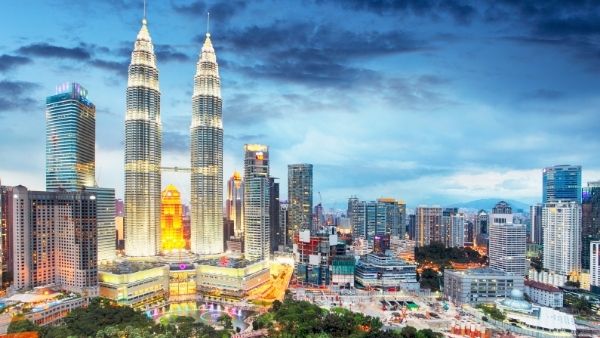
Malaysia has set new rules in view of the Omicron variant
- Dec 20,2021
- Times Travel
Malaysia has announced new COVID-19 restrictions in view of the new Omicron variant. The country has decided to go ahead and ban mass gatherings, while also making booster doses a requirement for high-risk groups. Malaysia's Health Minister Janaluddin said in a statement that the authorities are also working to verify 18 more suspected cases of the variant. The country's first case of the new virus was reported earlier in the month, from a traveller coming in from South Africa. Malaysia has now decided to ban mass New Year gatherings. On the other hand, those who are attending private New Year and Christmas celebrations should get COVID-19 self-tests done. Also, those people above 60, and adults who have received Sinovac COVID-19 vaccine need to get a booster dose by the month of February. This will ensure that their vaccinated status remains at fully vaccinated. Singapore too has decided to go ahead with a similar policy. Furthermore, researchers have urged people to take a third dose of the vaccine, as according to studies, antibodies resulted by Sinovac, and BioNTech can ward off the new variant of Omicron. Foreign travellers from eight countries in Southern Africa have now been temporarily banned from entering into the country. Moreover, nine countries have been marked as high-risk, such as India, Britain, Australia, and the United States. Arrivals from these countries need to go into mandatory quarantine, and also have digital tracking devices fitted on them. Malaysia is a major Asian destination for tourism, but the new variant of COVID-19 has made it hard for tourism to sustain in the country, much like most of other parts of the world.
Read more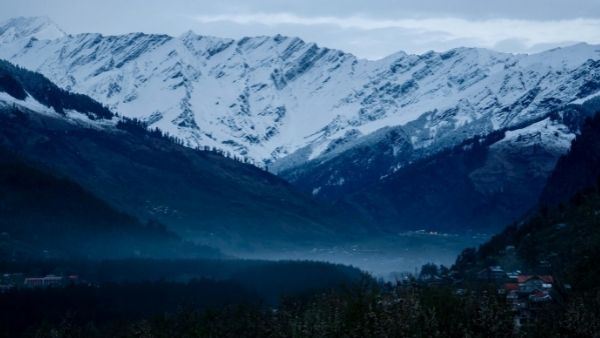
Fresh snowfall in Manali, tourists, hoteliers rejoice
- Dec 20,2021
- Tribune
Tourists and hoteliers were elated at fresh snowfall in Manali town this evening. A large number of tourists were seen strolling on the Mall Road enjoying snowfall. The hoteliers of Kullu and Manali were happy to see snowfall, which would give impetus to the tourism industry. They expected good business in the coming days. Lahaul and Spiti district also experienced snowfall, forcing the Himachal Road Transport Corporation (HRTC) to suspend its bus service between Kullu and Keylong. Due to snowfall beyond the Atal Tunnel towards the Lahaul valley, the Manali-Leh highway has become slippery for the movement of vehicles. The HRTC also suspended its bus service on the Keylong-Udaipur route in Lahaul and Spiti. Due to the warning of inclement weather today, the movement of tourist vehicles was restricted towards the Lahaul valley beyond the Solang valley. Only 4x4 tourist vehicles were allowed up to Sissu from Manali. Lahaul and Spiti DC Neeraj Kumar said that due to fresh snowfall in the region, traffic movement towards Lahaul from the Manali side had been restricted during night hours. The hoteliers of Kullu and Manali were happy to see snowfall, which would give impetus to the tourism industry. They expected good business in the coming days.
Read more