Croatia takes big step towards passport-free EU travel

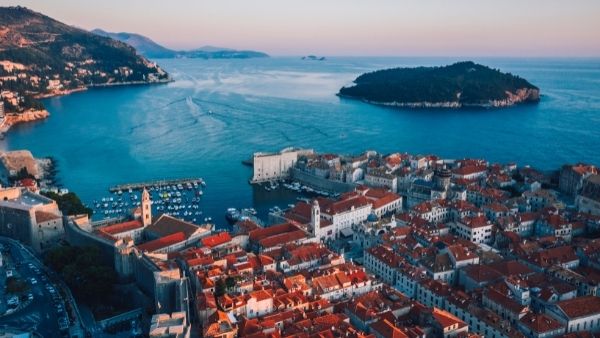
European Union interior ministers agreed on Thursday that Croatia fulfils the criteria for membership of the bloc's Schengen Area, a key step towards passport-free travel. Croatia joined the European Union in 2013 but is one of five member states that have not yet joined the travel zone created by a 1985 agreement signed in the Luxembourg city of Schengen. The other 22 member states, plus non-EU members Iceland, Switzerland and Norway, have abolished border controls within the Schengen area. Some members, however, periodically exercise their right to suspend participation and re-establish the right to check arrivals to counter a threat such as terrorist activity. Croatia, the newest EU member, has been keen to join the join to make citizens' travel easier, but fellow members want to be sure it meets standards for sharing police information and securing outer borders. A statement issued after the meeting said Croatia had completed all the necessary conditions to become a Schengen member, but that a decision to permit this would have to be adopted at a later date. Ales Hojs, Slovenia's Interior Minister, chaired Thursday's ministerial meeting in Brussels, and afterwards announced the breakthrough for his Southern neighbour. "I think that this is the right moment to... congratulate Croatia, and to thank everyone" who has "contributed to this important achievement", he said. "But this is only the first step in Croatia entering into the Schengen area. I do believe that other steps will follow in quick succession. And this will be beneficial especially for the citizens of both Slovenia and Croatia because this border between us will cease to exist," he added.

Read more

Over 80 lakh passengers travelled on RCS flights: MoCA

According to the Ministry of Civil Aviation, Government of India, over 80 lakh people have travelled on RCS (Regional Connectivity Scheme) flights since the scheme was launched five years ago. In a written reply to a range of questions on the effectiveness and success of the RCS services in the Lok Sabha, Gen (Rtd) VK Singh, Minister of State for Civil Aviation informed that 155,776 flights operated under the RCS till midNovember, 2021 and these flights carried 80.12 lakh passengers. When it comes to RCS routes, out of the 948 valid routes awarded so far, only 395 routes connecting 63 unserved and underserved airports including 6 heliports and 2 water aerodromes have been operationalised, the Minister informed. RCS - UDAN is a demand-driven scheme and the scheme is reviewed in consultation with stakeholders periodically and necessary course corrections are carried out, the Minister said. For a separate question on the financial impact of the global pandemic on the aviation sector, the Minister said that the airlines and airports in India have suffered an estimated financial loss of INR 19,564 crore and INR 5,116 crore respectively in 2020-21.

Read more

Senior Citizens no longer enjoy rail ticket concession; students, disabled persons unaffected

New Delhi: The Indian Railways has withdrawn the travel ticket concession hitherto offered to senior citizens. Meanwhile, the Railways would continue to give travel concessions to disabled persons and students. Though the trains resumed normal services in the country by discontinuing the special services introduced during the COVID-19 lockdown period, the train ticket concessions prevalent earlier were not restored. The Railways said that it did not find it feasible to restore concessions on rail tickets that have been suspended since the pandemic. Previously, Railways provided concessions in 54 categories. In view of Covid protocol, a concession to all categories of passengers (except 4 categories of Divyangjan, 11 categories of Patients and Students) were withdrawn in March 2020. Senior citizens, medal-winning police officials, national award-winning teachers, widows whose spouses died in wars, farmers and artists going for exhibitions and sports persons going for national meets used to avail themselves of a minimum concession of 50 to 75 per cent in train fares.

Read more

Meghalaya updates Covid-19 travel rules, downloading Aarogya Setu App mandatory

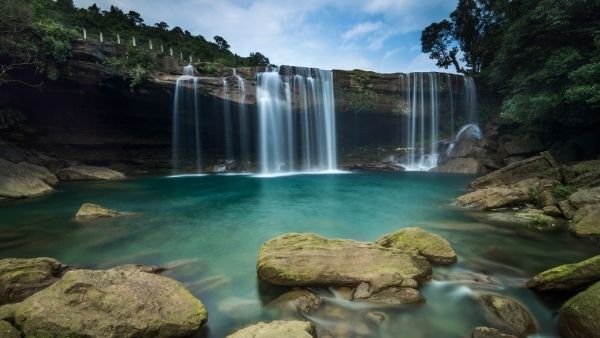
Meghalaya government has issued new guidelines making it mandatory for people entering the state to register with the government website and download the Aarogya Setu App and the Behavioural Change Management App, an official said. The new guidelines were issued after the Omicron variant of Covid-19 was detected in some states, the official said on Tuesday. "It is mandatory for all persons entering Meghalaya to register themselves prior to their travel at http://meghalayaonline.gov.in/covid/testing.htm and to download the Arogya Setu App and the Behavioural Change Management App of Meghalaya from Google play store or App store. However, tourists should register on the Meghalaya portal at https://meghalaya.gov.in/ to generate the 'e-invite for tourists'," the state government said in a statement. For international arrivals, it is mandatory to fill up the Self Declaration Form (SDF) and uploading of negative RT-PCR test reports for all international travellers as per notification from the Ministry of Health and Family Welfare, Government of India dated November 28. "RT-PCR testing at entry is mandatory for all persons coming from countries at risk such as countries in Europe including The United Kingdom, South Africa, Brazil, Botswana, China, Mauritius, New Zealand, Zimbabwe, Singapore, Hong Kong, Israel," it added. Travellers shall be at home quarantine for seven-days. Retesting shall be done by the concerned officials of district surveillance unit on the 8th day and if negative, self health monitoring by the traveller shall be maintained for the next 7 days. If tested positive on a repeat testing, sample shall be sent for genomic testing. Travellers coming from countries excluding those enlisted as countries at risk, a random sample of 5 per cent travellers to undergo RT-PCR testing upon arrival at the entry points, the statement said. If tested negative self health monitoring for 14 days and if tested positive sample for genomic testing needs to be done, it added. For domestic travellers, the entry protocol remains the same for the rest of the travellers and the travellers are advised to follow the Covid Appropriate Behaviour at all times which includes wearing a mask, maintaining social distance and frequent sanitization of the hands.

Read more

18th century George Everest house gets facelift, thrown open to public

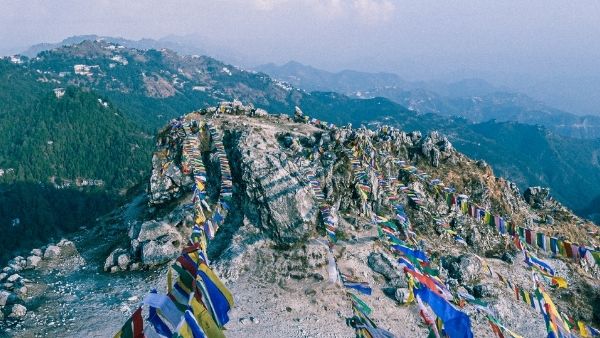
Around 8 km from Mussoorie is the George Everest peak, atop which is the 18th century house of George Everest, the man after whom Mount Everest, the tallest mountain in the world is named -- although he likely never set eyes on it. It is in this house that Everest, then the Surveyor General of India lived between 1832 and 1843, when he returned to England. For years, the house lay locked and dilapidated (it was under the management and ownership of the Archaeological Society of India). On Tuesday, Uttarakhand tourism minister Satpal Maharaj dedicated the restored iconic heritage house of George Everest, a cartographic museum and an observatory at Park Estate in Mussoorie to the public. Gopal Bhardwaj, a local historian who received a plaque from the tourism minister for his research work on the area, said, “The George Everest House was built in 1832 but later became dilapidated. When tourism minister Satpal Maharaj was requested in 2017 to restore the house, he readily agreed , and today we see it in a new avatar”. The location of the house is strategic and it was used as an observatory to view mountains that demarcated the boundaries of British India. It does not provide a view of Mount Everest though. Mount Everest was mapped by the British only in the 1850s and named after George Everest in 1856 -- in honour of the fact that he completed what is called the Great Trigonometric Survey of the Subcontinent. He was succeeded by Andrew Waugh; Radhanath Sikdar a so-called “computer” for the Geological Survey of India, was the first person to measure Mount Everest’s height, and many people believe the world’s highest peak should have been named after him. It is reported that George Everest himself protested when it was suggested that the newly discovered mountain the world’s tallest, be named after him, but that he was overruled. Satpal Maharaj said, “Our vision to restore the iconic House of the Sir George Everest House and the surroundings has finally been fulfilled. The project has been completed with an estimated cost of around ₹ 23 crores with an objective to attract tourists not only from India but abroad too. Once the cartography museum is fully equipped, the descendants of Sir George Everest will be invited to see the restored George Everest House”. Maharaj said the house has been restored using the same technology that was used for the construction of the original structure. The project was taken up with financial support from the Asian Development Bank (ADB). The minister also flagged off a shuttle service from George Everest House that will bring tourists to the spot from Mussoorie. The tourism minister also released the book “The Great Ark” on the occasion and planted a tree in the George Everest House premises. Sandeep Sahni, president Uttarakhand Hotel and Restaurant Association said, “It is indeed a boon for the tourist town of Mussoorie that the iconic George Everest House along with cartographic museum and observatory have been restored so that tourists can learn about the survey completed by Sir George Everest”. Sir George Everest (July 4, 1790 –December 1, 1866) was a British surveyor and geographer who served as Surveyor General of India from 1830 to 1843. For his contributions, Mount Everest, the highest mountain on Earth which was earlier called Peak XV, was named in his honour. He worked on Great Trigonometric Survey, and was largely responsible for surveying the meridian arc from the southernmost point of India north to Nepal, a distance of about 2,400 kilometres . George Everest House and laboratory, where he lived for 11 years, is located at Park Easte near Hathipaon, about 8 kms from Gandhi Chowk in Mussoorie.

Read more

Kashmiri Harud: An Invitation for Tourists and Boon for Farmers

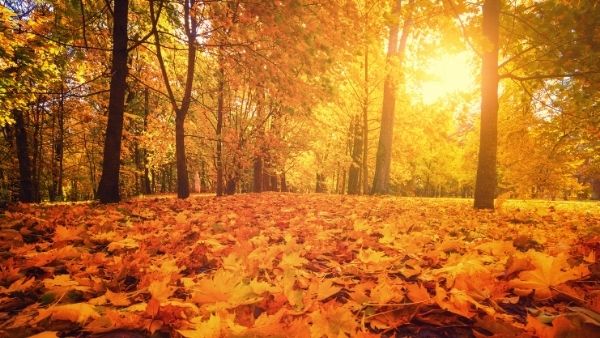
The mesmerising Autumn of Kashmir, also known as 'Harud' in the local language, was yet again a major attraction for tourists. While it occurs between the end of September to mid-November every year, the season arrived a little late this year due to the delayed onset of summer. During Harud, the weather turns delightful, with mornings being mostly misty and mercury levels hovering between 5 to 20°C. The crimson, orange and golden leaves of the Chinar tree paint the state in warm tones. Autumn hues of Kashmir The University of Kashmir, especially Naseem Bagh, is filled with rows of Chinar trees, thus becoming the most attractive portion of the campus during this season. Besides the university campus, visitors from across India also visit Kashmir Valley and Mughal Gardens to witness the autumn fall. A gift for farmers Apart from tourism, the season also marks the time for harvest. From saffron picking to walnut plucking, farming during autumn goes in full swing, lifting Kashmir's spirits and existence. While in the North of Kashmir, yellows and reds of Chinar bring joy to tourists, farmers in the southern regions of Kashmir look forward to the large stretches of purple carpets that the Saffron blooms create. Farmers tirelessly work in the fields, handpicking purple saffron blossoms. Each flower is separated into petals, yellow strands and red strands. The expensive spice is derived from the red strands, which are the stigmas of the flower. Much like the exquisite saffron spice, walnut harvesting is also crucial for Kashmiris, but the job is quite tedious. The process involves beating the fruit-bearing branches with a stick. Once the fruits fall to the ground, they are washed and dried in open fields for a week. Kashmiri walnuts are known to be among the best quality walnuts across the globe. Invitation to migratory birds As autumn approaches, Kashmir also invites migratory birds from Siberia, China, the Philippines, and eastern Europe, to enjoy the local water bodies. The state’s wildlife department has been actively working to prevent poaching and human interventions for the benefit of these migratory birds. Whether it is for locals or tourists, the 'Golden months' of Harud undoubtedly become the months to experience Kashmir.

Read more