
Karnataka govt issues guidelines for isolation, treatment, management facility of Omicron cases
- Dec 09,2021
- Economic Times
With the emergence of the new Covid-19 Omicron variant, the Karnataka government on Wednesday issued guidelines of dedicated isolation, treatment and management facility for Omicron cases. As per the new guidelines, the District Health Authorities shall ensure necessary arrangements of health care facilities. It is mandatory for all international passengers from 'at risk' countries to get tested for Covid-19 (RT-PCR) at the airport on arrival. Those who test positive shall be shifted to the identified health care facility for further treatment and management as per the protocol issued by the Centre, the guidelines said. "A separate block with a sufficient number of beds and other facilities shall be earmarked for isolation, treatment and management of Covid positive cases detected among international arrivals," the guidelines read. It further said that the Omicron cases should remain isolated from other non-Omicron Covid patients under treatment in the same health care facility. The District Surgeon, District Health Officer and District Surveillance Officer are also instructed to provide daily updates on the health status of such cases to the State Surveillance Unit. According to Karnataka Government, there are two hospitals (Bowring and Lady Curzon Hospital in Bengaluru and Wenlock Hospital in Mangaluru) that are identified for institutional isolation, treatment and management of Covid19 cases. Yesterday, Chief Minister Basavaraj Bomai announced that a genome sequencing lab that conducts tests for the Omicron variant will be established in Karnataka. "All the districts have Covid-19 testing labs. Genome sequencing needs expert systems and modern equipment. The spread of the new variant 'Omicron' has necessitated sending test samples in suspect cases for Omicron, to genome sequence testing in NCBS. Arrangements would be made to get the test reports quickly," Bommai had said. Earlier on Monday, Karnataka Health Minister Dr K Sudhakar informed that only two cases of Omicron were found in the state and the genomic sequencing analysis report of the rest are awaited. A new variant of Covid-19 was first reported to the World Health Organisation (WHO) from South Africa on November 25. As per the WHO, the first known confirmed B.1.1.529 infection was from a specimen collected on November 9 this year. On November 26, the WHO named the new Covid-19 variant B.1.1.529, which has been detected in South Africa, as 'Omicron'. The WHO has classified Omicron as a 'variant of concern'. Dozens of countries have imposed travel restrictions on the southern African nations since the mutation was discovered. The new Omicron Coronavirus variant has been confirmed in 23 countries and their number is expected to rise, DirectorGeneral of the World Health Organisation (WHO) Tedros Adhanom Ghebreyesus had said. India has also added several countries to the list from where travellers would need to follow additional measures on arrival in the country, including postarrival testing for infection.
Read more
India is leading the recovery of the aviation industry in the postCovid era: Jyotiraditya Scindia
- Dec 09,2021
- Economic Times
The Union Minister of Civil Aviation Jyotiraditya Scindia stated that India is leading the recovery of the aviation industry in the post-Covid era during the meeting of the Consultative Committee for the Ministry of Civil Aviation (MoCA) in New Delhi. Charing the meeting, Scindia talked at length on Flying Training Organisations (FTOs). In his opening remarks, Scindia said that the role of India’s FTOs has become critical as the fast-growing Indian aviation industry requires a growing supply of high-quality pilots. He said India has been one of the fastest-growing aviation markets in the world and it is now leading the recovery of the global aviation industry. He further stated that India’s scheduled airlines have a fleet of 710 aircraft which is projected to grow to over 1000 aircraft in the next five years. “With a new liberalised helicopter policy announced on October 8, 2021, a significant increase in India’s helicopter fleet is expected over the next five years,” he said. Informing about the current status, Scindia said that there are 34 DGCA approved FTOs in the country. Out of which, one (IGRUA at Amethi, UP) is under the administrative control of the central government, eight are under the state governments and 25 are owned by the private sectors. “Given the fleet projection, India may require around 9,000 pilots over the next five years implying the requirement of almost 1,800 pilots per annum,” he commented. India had issued 756 commercial pilot licenses this year by November 2021, which is an all-time high. The Minister, however, expressed concern that over 40 per cent of these licenses have been issued to cadets who have undergone their flying training in a foreign FTO. He said that there is a need to expand the capacity of Indian FTOs to reduce the dependence on foreign FTOs. Speaking about actions taken to bridge the gap, Scindia said a liberalised FTO policy has been announced by the Airports Authority of India (AAI) wherein the concept of airport royalty was abolished and the annual fee was rationalised significantly for new FTOs to be set up at AAI airports. He said AAI has issued award letters for nine flying schools to be established at five airports in early to mid-2022. The Minister stated that various regulatory reforms have been taken to enhance the growth of flying hours, productivity, quality standards, and longterm sustainability of FTOs. He said that with a close collaboration between the government, regulatory authorities, FTOs, aerospace companies, and the airline industry, India has the potential to become a global flying training hub by 2030.
Read more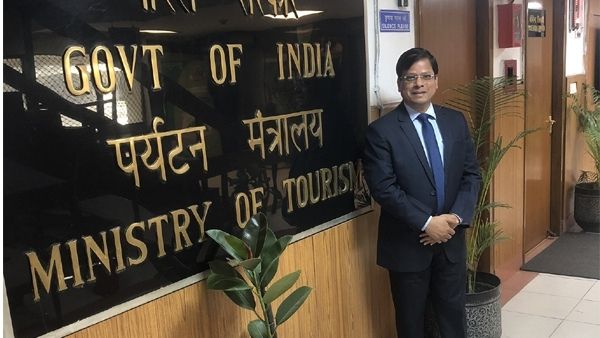
Rakesh Kumar Verma promoted as Additional Secretary in the Ministry of Tourism
- Dec 09,2021
- Economic Times
Joint Secretary in the Ministry of Tourism (MOT), Rakesh Kumar Verma has been empanelled for holding Additional Secretary level post at Government of India with upgradation in his current rank. With this, he has been promoted and posted as the Additional Secretary in the Ministry of Tourism. The Appointments Committee of the Cabinet in the order mentioned that the government has approved Verma’s appointment. According to his work allocation profile in the MOT’s data, Verma currently looks after international cooperation, events, Swadesh Darshan, niche tourism. information technology, overseas marketing, hotels & restaurants, administration I, II, and IV. Hailing from the Punjab cadre, Verma is a 1993 batch IAS officer, who is serving as the Joint Secretary in the MOT since January 2020. He was appointed for a tenure of five years when he took over from Suman Billa, a 1996-batch IAS officer of the Kerala cadre. In the past, he has held the post of Principal Secretary, Department of Science, Technology & Environment in the Punjab Government and the Commissioner of the Municipal Corporation of Ludhiana. He is an alumnus of the Indian Institute of Technology, Delhi from where he pursued a B Tech in Computer Science and Engineering from 1988-1992.
Read more
Nagaland gets over INR 220 crore funds under MOT’s PRASAD and Swadesh Darshan scheme for development of tourist destinations
- Dec 09,2021
- Economic Times
An amount of INR 220.76 crore has been sanctioned to the state of Nagaland for the development of tourist destinations under the Swadesh Darshan and PRASHAD Scheme since 2018-21. The Union Tourism Minister G Kishan Reddy in a written reply in Lok Sabha said that Molungkimong, Noksen, Aizuto, Kohima and Vankhosung has been covered under the PRASHAD scheme. Besides, Paren-Kohima-Wokha as well as Mokokchung-Tuensang- Mon have been covered under the Tribal Circuits of Swadesh Darshan Scheme of the Ministry of Tourism. In another update, the Minister said informed that around INR 120 crore were sanctioned by the Tourism Ministry under the Rural Circuit theme of Swadesh Darshan Scheme in the country during 2017-19. Rural Circuit is one of the fifteen thematic circuits under the Swadesh Darshan scheme aiming to promote rural tourism while a draft national strategy and roadmap for rural tourism has also been formulated. It focusses on developing and promoting local products through tourism subsequently resulting in the generation of income and jobs in rural areas and empower local communities, youth, and women. “The projects/proposals for the development of tourism-related infrastructure, including rural tourism, are identified for development under the circuit in consultation with the state governments/UT administrations and are sanctioned subject to availability of funds, submission of suitably detailed project reports, adherence to scheme guidelines and utilisation of funds released earlier,” mentioned the Minister.
Read more
Omicron and Travel: So, now do I need trip insurance?
- Dec 09,2021
- Economic Times
“The biggest question we get from customers is, ‘What happens if I get Covid during travel and what if I have to quarantine?’” said Jeremy Murchland, the President of Seven Corners, a travel insurance management company. “Covid has created a much broader awareness of travel insurance,” he shared. But will it help you in light of the new Omicron variant, which has already led to new travel restrictions and requirements? In the early days of the pandemic, travel insurance largely failed to protect travellers who wanted or needed to cancel as the world shut down. The following are answers to common questions about travel insurance now. Does travel insurance cover Covid-19, including the new Omicron variant? For the most part, yes, travel insurance policies now treat Covid-19 in all its variants — including Omicron — like any other medical emergency. “Consumers should know that most travel insurance plans with medical benefits now treat Covid like any other illness that you could contract while travelling or that could prohibit you from going on your trip,” said Carol Mueller, a Vice President of Berkshire Hathaway Travel Protection. “If you become ill before your trip, you’ll need a doctor’s note confirming your illness and that you are unable to travel in order to be eligible for benefits. The benefits are the same regardless of whether you contract Omicron, another variant of Covid or any illness for that matter,” she added. Buyers should read the policies carefully and look out for those that exclude pandemics, Covid-19 and its variants. To make a claim, you must have had travel insurance before becoming ill. “We always say, you can’t buy auto insurance after you’ve already had an accident,” said Meghan Walch, the Product Manager of InsureMyTrip, an insurance sales site. “It is designed for unforeseen issues. You have to purchase it before an event,” she stated. I am travelling internationally. If borders close because of omicron, am I covered through travel insurance? No, most policies do not cover you if your foreign destination closes its borders to visitors, as Israel did recently. With a few exceptions, that also goes for a government-issued travel warning to a destination, which is generally not a covered reason to make a claim. Given the added uncertainties of Omicron, should I consider a ‘Cancel for Any Reason’ policy? Cancel for Any Reason, or CFAR, provisions would allow you to claim some of your non-refundable costs if you decide not to go on a trip for any reason, including border closures or fear of contracting Covid-19. The rub is that this form of insurance — in addition to being more expensive — must generally be purchased within a few weeks of booking the trip and will return only 50 percent to 75 percent of non-refundable trip costs. “Most travel insurance policies do not cover you for wanting to cancel out of fear of Covid. We say this 10 times a week,” said Sarah Groen, the owner of the agency Bell and Bly Travel. She counsels clients to consider their worst fears — illness, for example, or quarantine — in troubleshooting travel insurance. “We’ve become like therapists,” she said. What about quarantine and medical expenses? Make sure the policy you choose covers these. In the case of medical coverage, check with your regular health insurer; many policies will not cover you abroad, which is an additional reason to consider coverage if you are travelling internationally. “What travel insurance can do is cover additional hotel stays if you are able to self-quarantine and additional airfare when you’re able to come home,” said Megan Moncrief, the Chief Marketing Officer for Squaremouth, a travel insurance sales site. She added that most policies will extend to seven days past your originally scheduled return date, effectively covering only about seven days in case of quarantine. Do some destinations require travel insurance? Yes, primarily to cover medical care or quarantine accommodations in the event that a traveller tests positive for Covid-19. For example, Singapore requires medical insurance with a minimum coverage of 30,000 Singapore dollars, or about USD 22,000. Fiji requires travel insurance to cover potential treatment for Covid-19, and makes it available from about USD 30. Some destinations, such as Anguilla, recommend rather than require travel insurance. InsureMyTrip.com has a page devoted to countries that require travel insurance. It bears thinking about what it would take to get home for treatment should you contract Covid-19 abroad. Thailand, for example, requires travellers to have medical insurance with the minimum coverage of USD 50,000. “Evacuation out of Thailand would be higher,” said Sasha Gainullin, the CEO of Battleface, a travel insurance startup that unbundles benefits. In the case of a Thailand trip, he advised taking medical coverage up to USD 100,000 for treatment locally and USD 500,000 for medical evacuation and repatriation. Do I need insurance if I have bookings with flexible cancellation policies? Probably not, if you have hotel reservations that allow free cancellation 24-48 hours in advance. The same with flights; if your flight is changeable and will provide a voucher or refund in case of cancellation, you’re covered. I have rented a house with restrictive cancellation penalties. Can I insure against those? Yes, vacation home rentals from Airbnb and the like can be treated just like other accommodations that do not offer refunds. In this case, you would want to get a policy in the amount you would forfeit if you had to cancel for a covered reason like illness. Again, fear of travel is not a covered reason; for that, you would need CFAR.
Read more
India updates travel rules for international travellers
- Dec 08,2021
- Times of India
International passengers travelling to India will now need to mandatorily declare their current health status on the Air Suvidha portal before boarding their flight. This updated rule has been announced by the Ministry of Civil Aviation (MoCA) and the Ministry of Health and Family Welfare. As per the latest reports, the exemption forms from the said portal have been discontinued for the time being. As such, passengers would be required to submit a copy of the passport, their vaccination certificate, and their RT-PCR negative test that should have been conducted within 72 hours of departure. For immigration, a copy received in e-mail will be essential on arrival in India, which has to be verified at the APHO counter. Further, those travelling from ‘at-risk’ countries, will be required to undergo a test on arrival too; the same can be pre-booked by clicking on the testing facility link. As of now, following steps are to be followed by international passengers travelling to India. - They will be required to submit a self-declaration form on the Air Suvidha portal. - On the portal, they will also need to submit a negative RT-PCR test report; the test should have been conducted within 72 hours before the journey. - Further, they will be required to undergo a self-paid COVID-19 test on arrival at the airport. - Passengers are also advised to undergo home quarantine for 7 days. - Also, post-arrival COVID-19 testing is mandatory for travellers from at-risk countries like Europe, the United Kingdom, Botswana, South Africa, Mauritius, Brazil, Zimbabwe, Israel, Tanzania, China, Ghana, New Zealand, Hong Kong, and Singapore.
Read more