Government accords 'inprinciple' approval for setting up 21 Greenfield airports across the country

The government, in the Parliament, has informed that they have accorded inprinciple approval for setting up of 21 new Greenfield airports across the country. So far, eight Greenfield airports namely, Shirdi in Maharashtra, Durgapur in West Bengal, Pakyong in Sikkim, Kannur in Kerala, Orvakal in Andhra Pradesh, Kalaburagi in Karnataka, Sindhudurg in Maharashtra, and Kushinagar in Uttar Pradesh have been operationalised. In a written reply in the Rajya Sabha, Minister of State for Civil Aviation, General VK Singh informed that the additionally, Three Public Private Partnership (PPP) airports at Delhi, Hyderabad, and Bengaluru have undertaken major expansion plan to the tune of INR 30,000 crore by 2025. Additionally, INR 36,000 crore have been planned for investment in the development of new Greenfield airports across the country under PPP mode. According to the statement, the Airports Authority of India (AAI) has taken up a development programme to spend around INR 25,000 crore in the next five years for expansion and modification of existing terminals, new terminals, expansion or strengthening of existing runways, aprons, Airport Navigation Services (ANS), control towers, technical blocks, etc. Talking about the Regional Connectivity Scheme (RCS), UDAN Scheme, Singh said that as of November 24, 393 routes have commenced connecting 62 unserved and underserved airports, including two water aerodromes and six heliports. To date, a total of 14 water aerodromes have been identified in the states of Gujarat, Assam, Telangana, Andhra Pradesh, Andaman, and Nicobar Islands, and Lakshadweep. 28 seaplane routes have been awarded so far and RCS flight operations from other water aerodromes will commence once these are ready for operations. The development of water aerodromes will now be taken up by the Ministry of Ports, Shipping, and Waterways (MoPSW). A memorandum of understanding in this regard has been signed between MoCA & MoPSW.

Read more

Anantara World Islands Dubai Resort to open next week

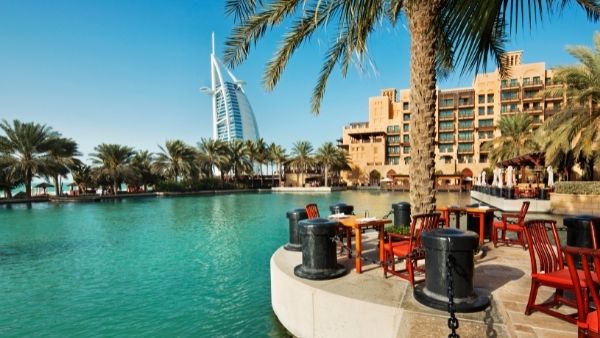
Anantara World Islands Dubai Resort will open on December 18th. Built by luxury hospitality developer Seven Tides, it will become the first resort on the World Islands in Dubai. Situated on Clarence Island, the five-star Anantara World Islands Dubai Resort will feature its own stunning 2,000 square metre private beach. The resort’s 142,000 square metre host island is itself located within the South American continent of the World Islands development – a remarkable offshore archipelago of three hundred man-made isles, just four kilometres from the coast of Dubai. Seven Tides chief executive, Abdulla Bin Sulayem, said: “The Anantara hotel on Clarence Island will set the bar for exclusivity and a luxury lifestyle, while remaining in harmony with nature. Without a doubt, this will become one of the most sought-after leisure and lifestyle destinations in the Middle East, if not the world. Anantara World Islands Dubai Resort is unique. It will offer genuine island tranquillity despite its close proximity to major retail destinations, gourmet restaurants, golf courses and the emirate’s lively nightlife,” Bin Sulayem added. The upscale hospitality project boasts a total of 70 rooms, suites and villas, which combine island living with contemporary luxury. Guests will be able to choose from rooms and suites with ocean views and beach access, while spacious villas with private pools will also be available. Accessible exclusively by boat, just a ten-minute ride from Anantara the Palm Dubai Resort, the development will feature a gymnasium and a guest pool, as well as a series of private infinity pools for the exclusive use of those staying in villas. Ghanim Bin Sulayem, operations director, Seven Tides, said: “Work on the island is advancing incredibly quickly, supported by the ingenuity the engineering team who have made the project a possibility. “Creating an island resort does not come without its challenges, however, thanks to the expertise of all involved, we look forward to showcasing this unique development in December when we officially open to the public.”

Read more

Ganga Expressway: Flagship project is ready to roll

The upcoming 594-km-long Ganga Expressway, as grand in its conception as the river along which it will be developed, is finally off the drawing board, having received an environmental clearance from the state-level environment assessment authority recently. Work on the Rs 36,000-crore greenfield expressway, which would connect Meerut in the western part of Uttar Pradesh to Prayagraj in the east, is all set to begin by the end of December, with Prime Minister Narendra Modi laying the foundation stone for the project. The tender process for executing the project on Design, Build, Finance, Operate and Transfer (DBFOT) basis under the public-private partnership (PPP) mode is in its final stages and the project is likely to be awarded in the coming days. Adani Enterprises, Ashoka Buildcon and IRB Infrastructure Developers are the three companies that have bid for the six-lane, access-controlled expressway project. Almost 94% of the land needed for the purpose has already been acquired by the Uttar Pradesh Expressways Industrial Development Authority (UPEIDA), the nodal agency for the project, which aims to complete it by 2025. In order to expedite work, the project has been divided into four sections, with each section comprising three packages. Traversing through 12 districts – Meerut, Hapur, Bulandhshar, Amroha, Sambhal, Badaun, Shahjahanpur, Hardoi, Unnao, Rae Bareilly, Pratapgarh and Prayagraj – the expressway would cover 140 water bodies and have seven road overbridges, 17 interchange roads, 14 big bridges, 126 minor bridges, 28 flyovers, 50 vehicle underpasses, and 946 culverts. On becoming operational, it is expected to reduce travel time between Delhi and Prayagraj from the current 10-11 hours to just 6-7 hours. The state government has plans to extend the expressway at both ends – by 110 km from Meerut to Tigri on the Uttar Pradesh/Uttarakhand border and by 314 km from Prayagraj to Ballia, in the second phase of the project. In order to get the project rolling, UPEIDA has secured a loan of Rs 4,480 crore from Punjab National Bank for the purchase of land. This has been done by securitising the toll revenues of the already operational Agra-Lucknow Expressway. “The loan amount has been made available in lieu of the securitisation of toll revenues from the Agra-Lucknow Expressway. This is the first project in UP where we have moved towards monetisation,” says an official of UPEIDA, adding that by doing so, the government would be creating additional revenue for the Ganga Expressway project. Says Rajeshwar Burla, vice-president, corporate ratings at ICRA, “the expressway will change the landscape of the eastern part of UP once it becomes operational.” It is expected to act as an industrial corridor and connect far-flung production units and agricultural production centres to the state and national capital. By reducing the travel time from Meerut to Prayagraj, it would provide a huge impetus to the perishable agri products industry. It would also act as a catalyst for establishment of new industrial units, food processing units, dairy industry as well as small and medium units in the region. Movement on the Ganga Expressway project has come within weeks of the 341-km-long Purvanchal Expressway, which connects state capital Lucknow to Ghazipur on the UP-Bihar border, being made operational. Two other expressways, the Yamuna Expressway, connecting Greater Noida to Agra, and the Agra-Lucknow Expressway are already operational in the state.

Read more

Qantas flies to Delhi after 47 years

The first commercial Qantas flight from Australia to India, in almost a decade, has taken to the skies today, marking another milestone in Australia’s reopening to the world. The flight departed Sydney shortly after 6am and will touch down in Delhi after a 15-hour journey. The Sydney-Delhi service and the Melbourne-Delhi service, which starts just before Christmas, have been the fastest selling routes on the Australian national carrier’s international network since borders reopened, with most flights in December almost entirely sold out. Qantas is operating three weekly return flights from Sydney to Delhi, which will increase in January 2022, and four weekly return flights from Melbourne to begin from December 22, 2021. Qantas domestic and international CEO, Andrew David, said that demand for flights between Australia and India had surpassed the airline’s expectations. “We’re thrilled to be beginning commercial flights to India for the first time in almost a decade,” he said, adding that there is a huge amount of pent-up demand from friends and family wanting to reunite after being separated for so long. “There was an incredible response when we announced both our new routes to Delhi. Forward bookings for the next few months are well ahead of our initial forecasts so while it’s early days, it’s an exciting start. The level of pent-up demand on this route can be seen by the fact that almost all customers travelled as planned despite the temporary three-day additional isolation requirement,” he stated. It’s the first time Qantas has operated a commercial service to India since the end of its Brisbane to Mumbai service in 2012 and the airline’s first regular passenger flight from Australia to Delhi since 1974.

Read more

TN govt identified more tourist spots in Nilgiris district

The Forest and Tourism departments in Tamil Nadu have jointly conducted a survey to identify more tourist spots in the Nilgiris district in the state, Tourism Minister Mathiventhan said on Sunday. Speaking at a function got up as part of prize distribution of Ooty Film Festival here, Mathiventhan said that the district had a lot of beautiful locations, where many films have been shot in the past. Considering the situation and also to provide more attraction, more spots including in the forest areas, the departments will create more places so that the government and the people can earn more revenue due to increased tourist activities, the Minister said. Stating that the department had already surveyed various sports, he said the report will be soon submitted to Chief Minister M K Stalin for further action. The district has a large number of tourist attractions like Pykara waterfalls, Mudumalai Tiger Reserve, Botanical gardens, National park, Doddabetta, tea gardens and Sims Park. A total of 200 short films from 32 countries were screened in the festival and a Baduga language film won the first prize.

Read more

Covid-19 Omicron: Rajasthan Travel Guidelines for International and Domestic Passengers

he Omicron variant has once again caught citizens of India in a state of panic. As the tally for a more transmissible variant of the coronavirus crosses 20, fear due to its efficacy against the vaccines is high. States are imposing new travel restrictions at airports now. As of December 6 morning, Rajasthan’s Jaipur has the highest number of Omicron patients, i.e., 9. Four members from one family and five of their acquaintances tested positive for the new variant. The family members recently travelled from South Africa. Here is a complete guide for passengers flying to Rajasthan must keep in mind before travelling: The four South African returnees are currently admitted to the hospital of the Rajasthan University of Health Sciences (RUHS). The swab samples from all nine people have been collected and sent to Jaipur’s Sawai Man Singh Hospital for genome sequencing. The other five, who tested positive for the new variant, have been home quarantined. In the wake of the emergence of highly infectious Omicron, the health department has implemented new guidelines at the airport. Domestic Travel — Those travellers who have been administered 1st dose of the COVID vaccine will be allowed to enter the state. They are neither required to show an RT-PCR negative test report nor would be put in quarantine, be it home or institutional. — Passengers who have not administered the first dose of COVID vaccine must produce a negative RT-PCR test report of not more than 72 hours. Otherwise, they would be quarantined as per extant rules. — Thermal Screening and Oxygen Saturation Tests are mandatory for all passengers. — Passengers must certify their current health status through the Aarogya Setu mobile app or a Self-Declaration Form. — The “No Mask-No Movement” will continue to be followed along with social distancing norms. — Thermal screening is a must for all departing passengers. International Passengers — If an international traveller tests positive, samples will be sent to ascertain whether the individual has been infected with the new variant of Covid or not. Surveillance across the state has also been intensified e for identifying cases early.

Read more