Hilton Opens Conrad Jiuzhaigou In Sichuan, China

Hilton announced the opening of Conrad Jiuzhaigou, ushering in a new chapter for the luxury hotel market in Western China. Set amid the natural beauty of the Tibetan Plateau, 161-room Conrad Jiuzhaigou features modern design fused with Tibetan and Qiang cultural elements. Neighboring a UNESCO World Heritage site famed for its natural beauty and biodiversity, the hotel offers travelers an inspirational getaway complemented by personalized, anticipatory service and exceptional hospitality. Conrad Jiuzhaigou is owned by China Green Development Investment Group Co. Ltd. and managed by Hilton. Qian Jin, president of Hilton Greater China and Mongolia, said, "Conrad Jiuzhaigou introduces another incredible hotel from Conrad Hotels & Resorts to one of the most extraordinary locations in China – adding to our existing portfolio of 12 Conrad properties across Greater China in key destinations like Beijing, Hangzhou, Sanya, Guangzhou, and more. Since ancient times, Sichuan has enticed travelers with its wealth of attractions, and as a key tourist destination in the province today, Jiuzhaigou welcomes millions of tourists yearly. With growing regional tourism, Conrad Jiuzhaigou builds upon our two other hotels in the region – Hilton Jiuzhaigou Resort and Hilton Garden Inn Jiuzhaigou – providing more diverse accommodation options for travelers." Nils-Arne Schroeder, global brand head for Conrad Hotels & Resorts and vice president of Luxury & Lifestyle for Hilton in Asia Pacific, said, “With its breathtaking natural landscape and rich cultural heritage, Jiuzhaigou is an ideal destination for growing Conrad Hotels & Resorts in China. Through the hotel’s desirable location and distinctive bold design, and the brand’s signature intuitive service, travelers can enjoy an enriching stay infused with local connections and excellent culinary experiences.”

Read more

ITDC’s ATT Inks MoU With CRPF To Cater To Their Travel Needs

Ashok Travels and Tours (ATT), the Travel division of India Tourism Development Corporation, New Delhi (ITDC) signed a Memorandum of Understanding (MoU) with Central Reserve Police Force (CRPF). Under the MoU, ATT will provide online travel solution for booking air tickets and travel-related services to CRPF executives during official journeys. The MoU was signed between Rajiv Anand, General Manager (ATT) and M.S. Bhatia, IG (Admin), CRPF in the presence of S.D. Paul, VP(F&A), ITDC and senior officials from both organizations. Sharing details about the MOU, Anand, said, “As travel restrictions are lifted across the country, the tourism and hospitality industry is looking towards a strong comeback. With our expertise in the segment and being one of the largest travel and tour operators in India, we are honored that CRPF has given us an opportunity to provide an essential service to them.”

Read more

Kerala's district panchayat initiates tourism committees in every village area

Kerala's Ernakulam district will have a Village Tourism Development Committee (VTDC) in each village panchayat in the district. The Ernakulam District Panchayat has asked all panchayats in the district to constitute VTDCs in their area to identify and take up environment friendly and sustainable tourism projects in their areas. The VTDC will have the District Panchayat member of the area as Chairman with the President of the local panchayat, standing committee members and experts on the subject as members. Announcing this, Ullas Thomas, District Panchayat President of Ernakulam said that the responsibility of the VTDC will be designing projects, getting approvals and getting the projects completed in a time bound manner. The state government has set a target of having at least one tourism product in each local body area in the state to drive tourism benefits to the grassroots.

Read more

Mumbai airport makes adequate arrangements to handle international arrivals, testing facilities ramped up

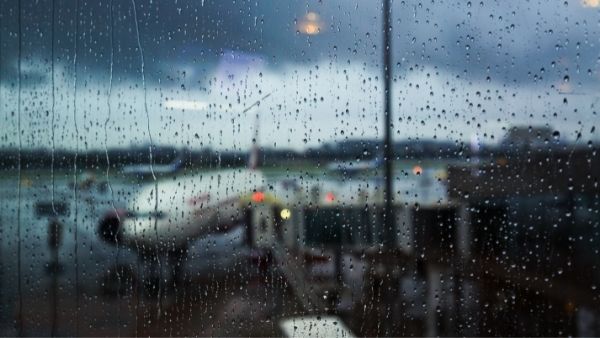
Anticipating a high rush and looking at the ambiguity over travelling amidst the fear of Omicron Covid-19 variant, the Mumbai International Airport has made additional arrangements as it prepares to welcome international travellers on regular scheduled flights from December 1. The airport in a statement said it is also following all relevant guidelines and latest directives issued by the Maharashtra government and the Ministry of Health and Family Welfare (MoHFW). Sharing details on the preparations, a CSMIA spokesperson said that arriving passengers from high-risk countries, will be segregated from passengers arriving from low-risk countries at the airport. “Adequate RT-PCR testing facility for international arrivals have been made in form of 48 registration counters and 40 sampling booths. In addition to normal RT-PCR, 30 Rapid PCR machines, are available for the passengers having connecting onward flights with short connecting time. This facility will be upscaled further if required,” said the spokesperson. The three laboratories already present for RT-PCR testing of international arrivals are Lifenity, Suburban Diagnostics and Acu-MDx (Mylabs). A large sitting area for the passengers awaiting their RT-PCR results has been activated with amenities like washrooms, F&B. The airport, in the official statement, further said that it has also sensitised relevant stakeholders on the new guidelines NS the added facilities for passengers convenience. “Passengers who have not pre-booked their RT-PCR test online, QR codes have been displayed at various locations in the arrival corridor. Physical forms for RT-PCR registration are also made available to the passengers on board with help of airlines which they can fill before disembarking from flight and thus avoid queuing for the registration on arrival,” the spokesperson said. The Maharashtra government, yesterday, had issued revised guidelines for travellers on international flights as well as domestic passengers. As per the latest guidelines, all international travellers will have to undergo mandatory RT-PCR test on arrival. Domestic travellers must carry an RT-PCR negative report not older than 48 hours before they enter the state.

Read more

India’s Paatal Lok: the ancient gateway to underworld that has remained COVID free

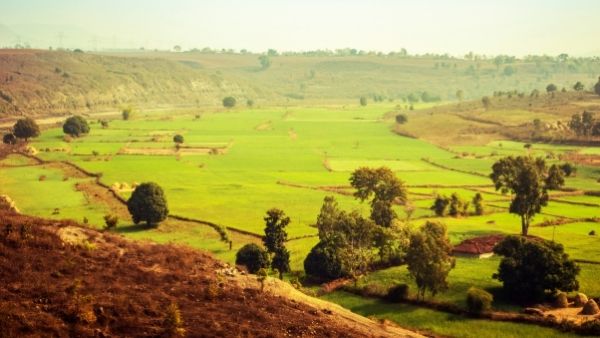
As per ancient Indian lores, Paatal Lok refers to the underworld. And you will be surprised to know that a place like that exists in Chhindwara district of Madhya Pradesh. In fact, there are 12 villages in India that are located 3000 m below the ground, where even the sun rays hardly reach the ground. The place where these 12 villages are located is known as Patalkot. As per the records, this spot is a treasure trove of medicines, and is inhabited by people of Bhuria tribe, who mostly live in huts. What legends say about this place? As per legends, this is the spot where Goddess Sita disappeared into earth, which formed a deep cavity. Another legend stated that Hanuman, the invincible hero of Ramayana, entered the underworld through this region to save Lord Rama and Lakshmana from the shackles of demon Ahiravana. Interesting facts about Patalkot This place is blessed with dense foliage, and is home to several medicinal plants, herbs, and also serves as the home of various species of animals and birds. As per the records, the top of the valley is as high as 1200-1500 ft, and if you take a bird’s eye view of this place, the landscape appears to be in the shape of a horseshoe. Doodhi River serves as the the only source of water for the residents here and, interestingly, the entire region turns dark after noon as not much sunlight can reach the depth of this valley. People of Patalkot It needs to be noted that people of Patalkot do not prefer to have much contact with the outside world. They are self-sufficient as they grow their own food, and get out of their village only to buy salt. If records are to go by, these villages earlier remained completely cut off from the outside world, and it has only been recently that some of these villages have been connected by road. Impact of COVID As mentioned earlier, the villages here are located around 3000 ft below the ground. It has just been a few years that some villagers opted to come out of the deep valley, and settled in the upper part of the hill. It’s even interesting to note that while COVID-19 has created havoc across the world, Patalkot managed to keep the virus away all this while.

Read more

Tel Aviv ranked world’s priciest city for the first time

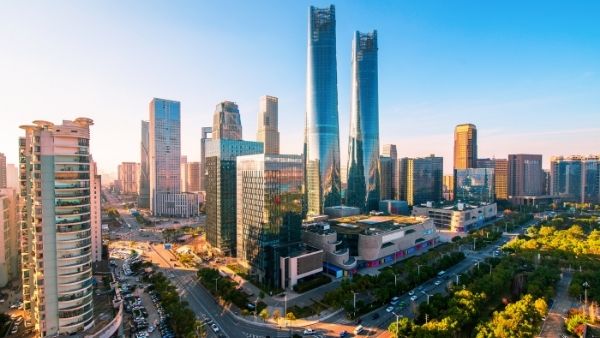
Tel Aviv is the world's most expensive city to live in, according to a ranking compiled by the Economist Intelligence Unit (EIU). The Israeli city climbed five rungs compared to 2020 report, which had Paris, Hong Kong and Zurich tie for first place. In the 2021 report Paris and Singapore came joint second, followed by Zurich and Hong Kong. New York came in sixth, and Geneva took seventh place. What has made living costs increase? Tel Aviv has climbed in the rankings due to the strength of the Israeli shekel against the dollar, as well as increases in transport and grocery prices. This year's data was collected in August and September, when prices for freight and commodities rose worldwide. On average, prices rose 3.5 per cent in local currency terms, which is the fastest recorded inflation rate of the past five years. This average inflation figure does not include four cities with exceptionally high rates: Caracas, Damascus, Buenos Aires and Tehran. Social restrictions due to the coronavirus pandemic have "disrupted the supply of goods, leading to shortages and higher prices," according to Upasana Dutt of the EIU. She added that the rise in petrol prices has been particularly stark. What other cities have moved in the rankings? Berlin has dropped eight rungs down to 50th place, making it the cheapest of the six German cities included in the ranking. Frankfurt, one of the world's major financial centres, was the most expensive German city at 19th place. The biggest jump in the rankings was made by the Iranian capital Tehran, which moved from 79th to 29th place. This change can be explained by US sanctions that caused shortages and price increases. Damascus remains the cheapest city on the list, reflecting the effects of the ongoing civil war in Syria. Second-from-last was Libya's Tripoli, which has also been beset by years of conflict.

Read more