Vietnam’s resort island welcomes first tourists after nearly 2 years

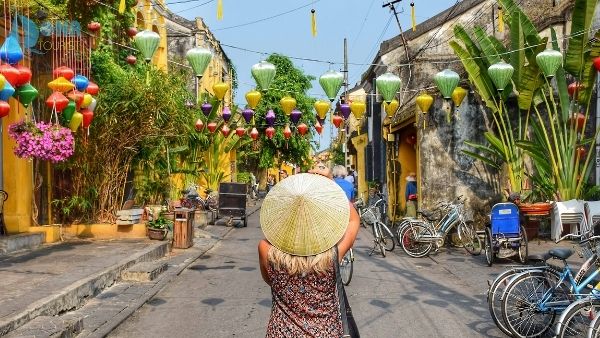
Two hundred vaccinated foreign tourists arrived in Vietnam’s beach-fringed island of Phu Quoc on Saturday, the first wave of visitors to the country in nearly two years as it seeks to resurrect its pandemic-ravaged tourism economy. Vietnam imposed tight border controls at the start of the pandemic in an effort to keep out COVID-19, with some initial success, but that harmed its burgeoning tourism sector, which typically accounts for about 10% of gross domestic product. Vaccinated tourists now do not have to undergo mandatory two-week quarantine, according to the authorities, but are required to enjoy their holiday only inside the mega complex resort Vinpearl and will be tested twice during their trip. “This is the first and vital step to revive our tourism sector and to prepare for the full resumption next year,” Nguyen Trung Khanh, chairman of the country’s tourism administration said in statement. “We want to offer tourists a new experience amid new normalcy which they can live fully in Phu Quoc and then live fully in Vietnam,” Khanh added. The island’s authorities expect to welcome 400,000 domestic and international tourists to the end of this year. Other Vietnamese destinations such as the UNESCO world heritage site Hoi An and Danang beach are also welcoming international tourists back. The move follows similar steps taken by neighbouring Thailand, which hosted vaccinated foreign tourist for quarantine-free holiday earlier this month. Foreign arrivals to Vietnam slumped from 18 million in 2019, when tourism revenue was $31 billion, or nearly 12% of its gross domestic product, to 3.8 million last year. Vietnam, which has inoculated more than half of its 98 million people, is seeking to resume international commercial flights from January next year and eyeing a full tourism reopening.

Read more

Airlines gird for Thanksgiving travel test after rocky year

Thanksgiving will test whether airlines have done enough to insulate their operations from shocks that have roiled air travel in recent months. The Transportation Security Administration said it expects Thanksgiving travel to come close to pre-pandemic levels, with 20 million people likely to pass through U.S. airports over a 10-day period. Airlines including Delta Air Lines Inc. and United Airlines Holdings Inc. said they expect the Sunday after Thanksgiving to be the busiest day since the start of the Covid-19 pandemic. The jump in travelers puts pressure on airlines to deliver a smooth experience after months of stumbles. Short-staffed carriers have been more easily knocked off course. They have struggled to recover from bad weather and other disruptions that they previously might have taken in stride, analysts and consultants said, resulting in dayslong cascades of cancellations and snarling travel for thousands of passengers. “The network is brittle," said Samuel Engel, senior vice president of aviation at consulting firm ICF. “With the slightest slip, the airlines are showing they have limited ability to accommodate disruption." Nine of the largest U.S. airlines canceled 1.9% of flights from June through the end of October this year—a slight uptick from the nearly 1.6% they canceled during the same period in 2019, according to figures from Cirium, an aviation data provider. Frustratingly for travelers, there have been more days of acute misery during that time frame. There were 147 days when these airlines canceled 5% or more of their flights, compared with 85 such days in 2019, according to an analysis of operational data by Brett Snyder, who writes the Cranky Flier blog and runs a concierge travel service. Airlines have been taking steps to try to address operational problems in time for the holiday surge in demand. Southwest Airlines Co. and Spirit Airlines Inc. tempered ambitious plans, scaling back the number of flights from what they had previously planned to offer and keeping more employees on call. American Airlines Group Inc. is paying hefty premiums to workers to make sure it can staff flights, including $1,000 bonuses for some workers and as much as triple pay for flight attendants with perfect attendance. Chief Executive Officer Doug Parker has said the carrier is well-prepared in terms of staffing. Southwest is offering extra pay to pilots and granting frequent flier points to certain workers for shifts over the holidays, which they can redeem for travel. JetBlue Airways Corp. is also offering an extra $1,000 to qualifying flight attendants who don’t call out from work through early January. While flight attendants are encouraged to take time off if they’re sick, that will require a doctor’s note, according to a message to flight attendants. “Our customers have been telling us they’re ready to travel and they are counting us to deliver," Ed Baklor, the airline’s head of customer care, wrote in the message. Even with recent cutbacks, airlines are planning busy schedules around Thanksgiving. They are offering 19 million domestic seats the week of the holiday—up 46% from last year and within 9% of 2019 levels, according to data provider OAG.

Read more

AirAsia to operate VTL flights to Changi Airport from Nov 29

To kickstart the resumption of the Vaccinated Travel Lane (VTL) between Malaysia and Singapore, AirAsia will operate a seven times weekly flight schedule from Kuala Lumpur International Airport 2 (KLIA2) and Changi Airport beginning November 29, 2021. In a statement today, the budget carrier said more routes from other cities in Malaysia will be added and frequencies increased accordingly as travel demand grows in line with the reopening of more leisure destinations in the near future, subject to approval from the authorities. AirAsia Malaysia chief executive officer Riad Asmat said the resumption of travel to Singapore signifies great progress of international travel in the region. “This shows huge pent-up demand for international travel, and AirAsia is ready to serve our guests with stringent health and safety protocols enforced on all of our flights,” he said. Meanwhile, Singapore Tourism Board’s executive director for Southeast Asia John Gregory Conceicao said the VTL scheme is a significant milestone to allow gradual resumption of travel between Singapore and Malaysia. “Singapore stands ready to welcome the return of Malaysian travellers to the city through key partners like AirAsia,” he said. Fully vaccinated travellers from Malaysia who wish to travel to Singapore must meet the requirements set by the Singapore government prior to purchasing their flight tickets and upon arrival, added the statement. ― Bernama

Read more

Assam: IndiGo to reintroduce direct flight between Dibrugarh, Bengaluru

IndiGo is planning to reintroduce direct flight between Dibrugarh and Bengaluru. The airline is also planning to introduce flight to Jaipur from Dibrugarh. IndiGo currently operates daily flights to Kolkata and Delhi each besides one flight to Guwahati. It has recently launched exclusive flights, non-stop flights to Dimapur, Imphal and Shillong. The airline is offering connections to Mumbai, Chennai, Hyderabad and 71 other destinations in India from Dibrugarh. “IndiGo is India’s largest passenger airline with a market share of 57% as of August 2021,” said Narendra Jain, associated with travel business in Dibrugarh. “It primarily operates in India’s domestic air travel market as a low-cost carrier with focus on our three pillars – offering low fares, being on-time and delivering a courteous and hassle-free experience,” Jain added. “IndiGo has become synonymous with being on-time. Since its inception in August 2006, it has grown from a carrier with one plane to a fleet of 274 aircraft today.” “A uniform fleet for each type of operation, high operational reliability and an award-winning service make us one of the most reliable airlines in the world,” Jain said. IndiGo has a total destination count of 95 with 71 domestic destinations and 24 International. This includes Kanpur (KNU) which is now open for sale, he further informed.

Read more

Canada to accept Covaxin from November 30

In a big relief to travellers from India, Canada will recognise Bharat Biotech’s Covaxin from November 30, 2021. The North American country has expanded its list of WHO-approved Covid-19 that will be be accepted for travel to and within Canada from the moth-end by adding Sinopharm (also referred to as Covilo), Sinovac (also referred to as Coronavac) and the made-in-India Covaxin. Travellers will qualify as fully vaccinated if they have received at least 2 doses of a government of Canada-accepted Covid-19 vaccine or a mix of 2 accepted vaccines, or at least 1 dose of Janssen/Johnson & Johnson vaccine, at least 14 full days prior to entering Canada. “Starting November 30, vaccination will be required for travel within and out of Canada. A valid Covid-19 molecular test will no longer be accepted as an alternative to vaccination unless travellers are eligible for one of the limited exemptions, such as a medical inability to be vaccinated. Travellers should contact their airline or railway company to obtain the necessary form and submit it in accordance with their carrier's approval process as of November 30,” a Canadian government statement said on Friday (Nov 19). A leading travel agent said given the vastly improved Covid situation in India, all eyes are now on when Canada allows direct flights from more cities here as currently only fully vaccinated travellers who get a test done at Delhi Airport lab are allowed to board direct flights from IGI Airport. And also when Canada removes the requirement of a person flying from India to Canada via a third country requiring a negative report from a Covid test done in that transit country is keenly awaited. “Once these two restrictions are removed, we can expect travel — and fares — to resume to near normalcy. Today any person eligible to travel from India to Canada has to do so via Delhi,” the travel agent said.

Read more

Nepal won't allow third country nationals to travel to India by rail

Nepal will not allow people from third countries to travel to India by rail via the Kurtha-Jayanagar railroad after Indian officials expressed security concerns, a senior official of the Department of Railways has said. Deepak Kumar Bhattarai, Director General at the department, said, "This was agreed while finalising the Standard Operating Procedure (SPA) for crossborder railway operation," The Kathmandu Post reported. The SPA is a document outlining the procedures to be adopted while operating the railway service. Nepal and India signed the SPA in New Delhi last month. According to Bhattarai, India's security concern was one of the reasons why it took so long to finalise the SPA. With Nepal and India sharing a porous border, India has always been suspicious about the possibility of criminals and terrorists using the porous border to cause harm to India. Both sides have suffered from cross-border crimes over the last several years. According to Bhattarai, Nepal will also notify India about the passengers on board to ensure security clearance at the border point. "Based on the ticket issued, we will have to send details of the passengers travelling to India," he said. Even though the SPA was finalised, it is not clear when the railway service will resume with the Nepal government yet to introduce a law on railway service and the Nepal Railway Company yet to hire staff to operate the service.

Read more