Now, registration must for adventure tourism activities in Kerala

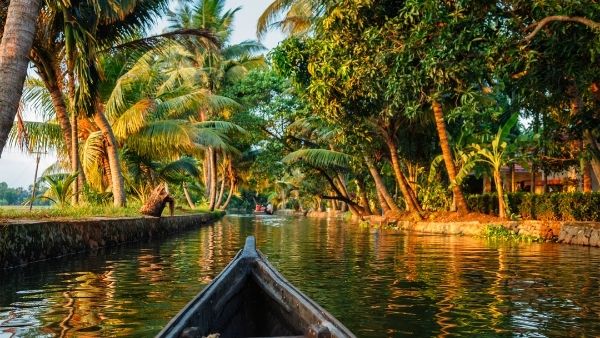
Kerala Adventure Tourism Promotion Society, which functions under the Department of Tourism, had set up an experts’ committee to prepare safety parameters for the Adventure Tourism sector The Kerala government has made registration mandatory for adventure tourism service providers, news agency PTI reported on Wednesday. Registration will be must for conducting a wide range of land, water and air-related activities to ensure their quality and safety. Kerala Adventure Tourism Promotion Society (KATPS), which functions under the Department of Tourism, had set up an experts’ committee to prepare safety parameters for the Adventure Tourism sector. Former KATPS Chief Executive Officer-led panel had prepared a consolidated ‘Adventure Tourism Safety and Security Regulations’ by taking into account the currently popular 31 adventure tourism activities in the state. Tourism Director V R Krishna Teja said Kerala considered adventure tourism as a highly promising segment, especially in the post-pandemic time. "By introducing the registration system, foolproof safety and standard will be achieved in the sector, which will help Kerala attract more tourists to this sector with utmost confidence," he was quoted as saying by PTI. According to the report, the tourism director will accord the registration, valid for two years, after inspection of the facilities and operational features of the service providers by a team of Tourism officials and experts. Kovalam-based Bond Water Sports has become the first adventure tourism activity provider in the state to obtain the registration under the new system for its activities such as scuba diving, kayaking and parasailing. The regulations will be updated in accordance with the new adventure activities that crop up in the sector in future. The captivating landscape of Kerala, dotted with hilltops, forests, and crisscrossed by rivers and backwaters and also a 580 km-long coastline make the state the most suited place for adventure tourism.

Read more

Iran reopens it's border for international tourism after nearly two years

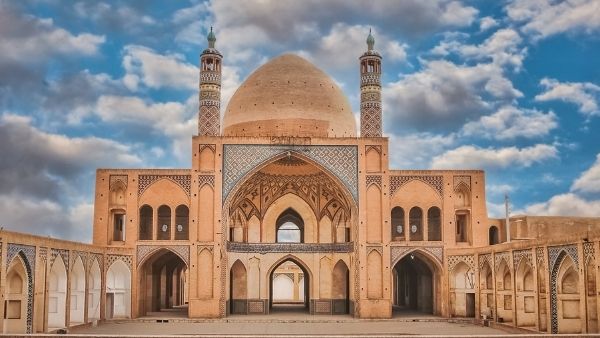
After nearly 20 months, Iran has finally reopened its borders for international tourists who are fully vaccinated against COVID-19. The country had shut down its borders soon after the virus breakout. But recently, the anti-virus taskforce allowed to reopen the borders on the advice of the tourism ministry. To enter the country, tourists must be fully vaccinated and they must also carry a RT PCR negative certificate conducted within 96 hours. During 2020-2021, the nation’s tourism sector was hit hard due to the pandemic and recorded a deficit of USD 1.2 billion. A number of hoteliers and tour operators had to face problems such as bankruptcy, unemployment and debts on the international level. On September 19, Cultural Heritage, Tourism and Handicrafts Minister Ezzatollah Zarghami had announced plans to remove visa restrictions to help the tourism industry. Also, the number of people testing positive for the virus has continued to fall in the nation in the recent weeks. As of September 22, the number has gone below 300 people. Zarghami’s predecessor, Ali-Asghar Mounesan, said that the number of foreign travellers to Iran went absolutely down because of the virus outbreak. Mounesan said, “Tourism of the country was growing before the corona [outbreak], its revenues reached $11.7 billion in 2019, which accounted for 2.8% of GDP, nearing the average share of tourism in the world GDP, which was 3.2 percent.” Before the outbreak, Iran was ranked as the second fastest growing nation in tourism according to the World Tourism Organization. After nearly 20 months, Iran has finally reopened its borders for international tourists who are fully vaccinated against COVID-19. The country had shut down its borders soon after the virus breakout. But recently, the anti-virus taskforce allowed to reopen the borders on the advice of the tourism ministry. To enter the country, tourists must be fully vaccinated and they must also carry a RT PCR negative certificate conducted within 96 hours. During 2020-2021, the nation’s tourism sector was hit hard due to the pandemic and recorded a deficit of USD 1.2 billion. A number of hoteliers and tour operators had to face problems such as bankruptcy, unemployment and debts on the international level. On September 19, Cultural Heritage, Tourism and Handicrafts Minister Ezzatollah Zarghami had announced plans to remove visa restrictions to help the tourism industry. Also, the number of people testing positive for the virus has continued to fall in the nation in the recent weeks. As of September 22, the number has gone below 300 people. Zarghami’s predecessor, Ali-Asghar Mounesan, said that the number of foreign travellers to Iran went absolutely down because of the virus outbreak. Mounesan said, “Tourism of the country was growing before the corona [outbreak], its revenues reached $11.7 billion in 2019, which accounted for 2.8% of GDP, nearing the average share of tourism in the world GDP, which was 3.2 percent.” Before the outbreak, Iran was ranked as the second fastest growing nation in tourism according to the World Tourism Organization.

Read more

Domestic travel sees a rise of 300 per cent from pre-Covid period

A significant demand is being witnessed in travel, especially for the domestic segment which is seeing a rise of almost 300 per cent in comparison to the pre-pandemic period. According to data shared by the travel services company Thomas Cook, travel demand is back to overall 65 per cent of the pre-pandemic level. It further mentioned that in September 2021, domestic travel saw a growth of 290 per cent, while international stands at 55 per cent as compared to September 2019. “This year, we have seen high demand for travel within India. The key drivers for increase in the travel demand include young professionals, family travel, honeymooners and students,” said Romil Pant, Senior Vice President, Leisure Travel, Thomas Cook (India) Limited. Festive season Travel portal Ixigo is also experiencing a rise in travel demand. Data shared by it shows that demand for festive travel for September and October 2021 has seen encouraging growth in all three segments — flights, trains and buses. Some of the most sought after destinations that are seeing strong demand are Rajasthan, Goa, and Andaman and Nicobar. “Recently the market has seen a great bounce with 3 lakh plus daily flyers. For international leisure travel, there is a rise of 15–20 per cent in search queries for destinations like Dubai, Maldives and Russia. We have also seen a rise in search queries in the last two months for destinations like Switzerland, Sharjah, Abu Dhabi, Vancouver and London,” said Aloke Bajpai, Group CEO and Co-founder, Ixigo. With international destinations easing Covid-19 policies and protocols it is expected that the demand for leisure travel will go up further for Christmas and New Year holidays, added Bajpai. Hotel occupancy Meanwhile, larger hotels that are witnessing full occupancy might have to wait longer to go back to their pre-pandemic in terms of pricing level. “Most hotels have been affected by the pandemic, including the five-star properties. As far as occupancy is concerned, hotels are full but there is a remarkable drop in room prices. If things remain as positive as they are right now, pricing will reach pre-Covid levels by mid 2023,” said Gurbaxish Singh Kohli, Vice-President, Federation of Hotel and Restaurant Associations of India.

Read more

US Lifts Travel Curbs On India, Others, Children Exempt From Vaccine Rule

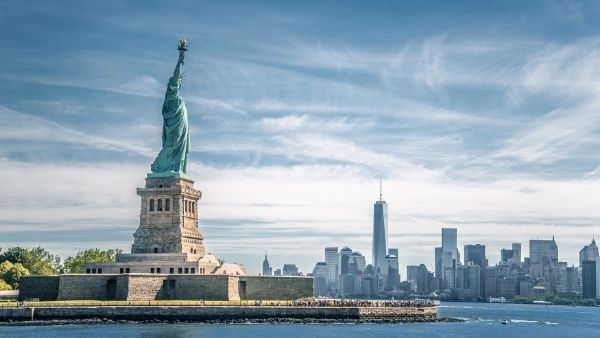
US President Joe Biden on Monday signed an order imposing new vaccine requirements for most foreign national air travelers and lifting severe travel restrictions on China, India and much of Europe effective Nov. 8, the White House said. The extraordinary US travel restrictions were first imposed in early 2020 to address the spread of COVID-19. The rules bar most non-US citizens who within the last 14 days have been in the United Kingdom, the 26 Schengen countries in Europe without border controls, Ireland, China, India, South Africa, Iran and Brazil. "It is in the interests of the United States to move away from the country-by-country restrictions previously applied during the COVID-19 pandemic and to adopt an air travel policy that relies primarily on vaccination to advance the safe resumption of international air travel to the United States," Biden's proclamation says. The White House confirmed that children under 18 are exempt from the new vaccine requirements as are people with some medical issues. Non-tourist travelers from about 50 countries with nationwide vaccination rates of less than 10% will also be eligible for exemption from the rules. Those receiving an exemption will generally need to be vaccinated if they intend to remain in the United States for more than 60 days. The White House first disclosed on Sept. 20 it would remove restrictions in early November for fully vaccinated air travelers from 33 countries. The Biden administration also detailed requirements airlines must follow to confirm foreign travelers have been vaccinated before boarding US-bound flights. One concern among US officials and airlines is making sure foreign travelers are aware of the new vaccine rules that will take effect in just two weeks. The US Centers for Disease Control and Prevention (CDC) is issuing on Monday new contact tracing rules requiring airlines to collect information from international air passengers as needed "to follow up with travelers who have been exposed to COVID-19 variants or other pathogens." The CDC said this month it would accept any vaccine authorized for use by US regulators or the World Health Organization and will accept mixed-dose coronavirus vaccines from travelers. Foreign air travelers will need to provide vaccination documentation from an "official source" and airlines must confirm the last dose was at least two weeks earlier than the travel date.

Read more

Cuba to welcome tourists from November and ease entry requirements

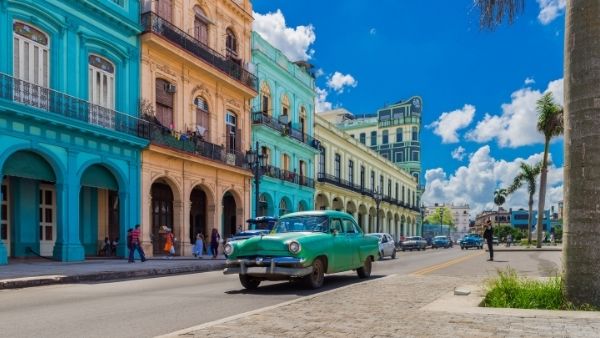
Cuba will open its borders and ease entry requirements next month after vaccinating most of its people with home-grown Covid-19 drugs, allowing it to welcome back overseas visitors and giving a shot in the arm to its ailing tourist industry. Tough restrictions due to the pandemic, a drastic reduction in flights to Cuba, and a U.S. ban on most travel to the Communist-run island under former U.S. President Donald Trump have hobbled the business and left it trailing behind regional competitors such as the Dominican Republic, Puerto Rico, the Bahamas and Cancun. But as November 15, Cuba will only require visitors to carry proof of vaccination or a recent PCR to enter the country, replacing what were previously among the strictest protocols in the Caribbean, involving a quarantine period and multiple PCR tests. A fully vaccinated population will prove a key selling point for an island already well-regarded for its safety, beaches and turquoise waters, said Francisco Camps, who supervises Spanish firm Sol Melia’s 32 hotels in Cuba. "Cuba will be one of the safest sanitary destinations and we believe that we can reach visitations similar to 2019 by the end of next year," he said. Cuba's home-grown vaccines are currently under review by the World Health Organization and most trial data has yet to be peer reviewed. But among countries with more than 1 million people, Cuba is vaccinating faster than any other, according to a Reuters tally of official data. The government says the pace is paying dividends, with Covid-19 cases and deaths falling off at least 80% since their peak mid-summer. At least 90% of the population has received at least one dose of one of the country's three-dose homegrown vaccines. "We are in a favorable moment as we begin to recover our customs, to be able to visit relatives and go on vacation, as well as improve economic activity," Tourism Minister Juan Carlos Garcia said this month. Cuba received more than four million tourists in 2019, contributing 10.6 percent to gross domestic product (GDP), and much more through supply chains and informal economic activity. But this year just 200,000 guests have arrived and only another 100,000 are expected, Minister Garcia said. Cuban economist Ricardo Torres said those numbers meant a "devastating" 92% drop in tourism this year, compared to 2019. "So we are talking about next year for any real tourism recovery...which generates a knock-on effect and so is decisive to economic recovery," said Torres, a visiting professor at American University in Washington.

Read more

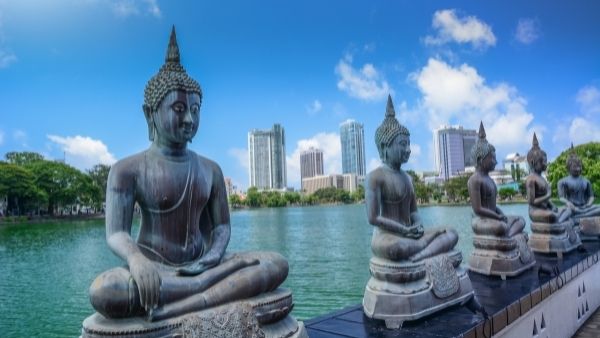
Sri Lanka to expedite implementing tourism programme to attract tourists

Sri Lankan Tourism Minister Prasanna Ranatunga has instructed officials to expedite the execution of a special promotion programme to attract tourists from five major countries, including India, according to a media report. Under the programme, which has been chalked out targeting France, Britain, Germany, India and Russia, the tourism department authorities will organise face to face discussions with Sri Lankan tourism agencies and travel agencies in the five countries to take steps to woo tourists to the country, Colombo Page website reported on Monday. "The directions to expedite the programme implementation were given by the tourism minister to the officers in a bid to boost tourism. The programme will target precisely France, Britain, Germany, India and Russia," the report said. The Minister also instructed the Tourism Promotion Bureau to expedite promotions in addition in Kazakhstan, Ukraine and the Middle East. "It was also decided to give wide publicity in these promotions to Sri Lanka as a country that has successfully carried out Covid vaccination," the report said. Tourism, which is among the main revenue generating sources for the country, accounts for about five per cent of the economy, with Britain, India and China the main markets. The number of international tourist arrivals in Sri Lanka declined in March 2020 by 70.8 per cent in comparison to a year ago as the tourism industry has been hit hard by the coronavirus outbreak. The tourism sector of Sri Lanka has been in bad shape since last year when the country was jolted by the Easter Sunday attacks, which killed over 250 people, including some Indians.

Read more