
Festive Season 2021: Impact On Travel Industry
- Oct 22,2021
- Economic Times
By Arun Bagaria The travel industry is looking up at a steady growth of business to eventually return to pre-pandemic levels in the next 12-15 months. The fear to travel has been replaced with confidence among travellers. Domestic as well as international destinations have opened up with most places doing away with mandatory quarantines. In some cases, especially on the domestic front, even testing is no longer required for fully vaccinated people. With vaccination and a drop in the number of cases, a significant portion of the travellers this festive season is going to comprise those headed to their family homes to celebrate after a gap of two years. There are several new trends and changes of preferences coming into the picture Hygiene first With COVID-19 still not off the radar, the focus during travel will be on hygiene first. Understandably, safety and hygiene are the top priorities at the moment. People are relying more on reviews and hotels that are following COVID-appropriate behavior and protocols for safety of travellers. They do not mind paying more and there is an increased preference for air travel or short, drivable destinations. Planned vs spontaneous Hygiene and lingering concerns around safety also means people are not undertaking spontaneous travel anymore. While most are opting for short-haul holidays in their own vehicles, those willing to travel longer distances are planning well in advance. From conducting thorough research about the safety of the location to the hotel and other aspects, travellers are taking a very systematic approach to their travel. Exploring the unexplored or back to comfort Earlier, foreign travel meant a trip to London or Paris. Those who loved to go the extra mile would go skiing in the Alps or watch the Northern Lights in Norway. Domestically, the crowds thronged Goa for Vitamin Sea and Manali or Srinagar for romantic moments in snow-capped landscapes. While all these destinations will continue to attract travellers even this festive season, there is a greater demand for offbeat travel. “Snowy landscape like Manali, but without the crowds”, and “lovely beaches but not in Goa” are some of the new terms being put forward by the travellers. The rise of travel agents Travel agents are going to emerge again as the winners in this quest for ‘new experiences.’ The good old trip organizers are back in a new avatar. Travel agents deliver a knowledgeable and personalized experience to travellers. Today, agents are using the latest technologies to enhance the service standards. The biggest value that agents are providing to customers in times of uncertainty is the realtime accessibility and the ability to directly resolve concerns. For instance, if you needed to change your hotel room, a WhatsApp message to your travel agent might get the problem resolved in a matter of a few minutes. This festival season will mark the rejuvenation of the Indian as well as international travel market and there is no ambiguity about it! Arun Bagaria is the Co-Founder of TravClan
Read more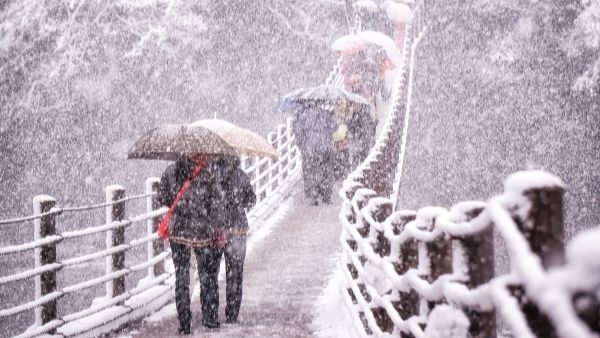
Himachal Pradesh and Uttarakhand receive heavy snowfall
- Oct 20,2021
- Times Of India
The gorgeous hill states Himachal Pradesh and Uttarakhand have turned white after receiving heavy snowfall today. Some parts of these states have been experiencing heavy rainfall from the past few days which today resulted in snowfall. The beautiful Dhankhar village in Lahaul-Spiti district of Himachal and Badrinath in Uttarakhand were covered in white today. A red alert was issued by the India Meteorological Department (IMD) for Uttarakhand with a forecast of heavy to very heavy rainfall. IMD in its daily weather bulletin said, "Heavy to very heavy rainfall with extremely heavy falls very likely at isolated places over Uttarakhand and West Uttar Pradesh." Not only this, the IMD also experienced the dip in mercury in several regions of Gopeshwar district in Uttarakhand including Pipalkoti, Ghat and Pokhari. Besides hill states, the national capital, Delhi also experienced heavy rainfall. The weather department had predicted light to moderate intensity rainfall in Delhi NCR region. The IMD on Sunday issued a statement that said moderate to severe thunderstorms accompanied with lighting and winds is likely over Jammu and Kashmir, Ladakh, Himachal Pradesh, Uttarakhand, Punjab, Haryana, Chandigarh and Delhi, Uttar Pradesh, Northeast Rajasthan, north Madhya Pradesh and Gangetic West Bengal during next 24 hours.
Read more
72 per cent of Indian travellers want to travel in the next year: Amadeus research
- Oct 20,2021
- Travel Trade Journal
The survey of 9,074 consumers across France, Germany, India, Spain, Russia, Singapore, the UAE, the UK, and the US shows the appetite to travel is high. At the same time, it reveals that greater clarity on restrictions and guidelines will be key to unlocking increased traveller confidence. Over a third (35 per cent) of travellers said the current international guidelines around where and how to travel are confusing, making them less likely to book business and/or leisure travel. In Asia Pacific (APAC), 37 per cent of travellers in India and 40 per cent of those in Singapore shared the same sentiment. At the same time, travellers are exhibiting increased openness to embrace technology and a willingness to share health data so they can start traveling again. When asked about the receptiveness to share personal health data, the survey results show: - 93 per cent of travellers globally would be willing to provide personal data for the effective use of digital health passports or certificates, a slight increase from 91 per cent in February 2021. In both India and Singapore, the figure was slightly higher than the global average at 95 per cent. - Almost half (48 per cent) of business travellers worldwide would be willing to provide their health data to visit a conference or event, compared to 53 per cent in India and 54 per cent in Singapore. Meanwhile 36 per cent of leisure travellers would be willing to share such information for an excursion or activity at destination, versus 35 per cent and 38 per cent of Indian and Singaporean leisure travellers respectively. When asked which technology would increase confidence to travel in the next 12 months, mobile solutions continue to be the most popular, with the top technologies including: - Mobile applications that provide on-trip notifications and alerts (44 per cent) (India: 55 per cent; Singapore: 45 per cent) - Self-service check-in (41 per cent) (India: 49 per cent; Singapore: 53 per cent) - Contactless mobile payments (e.g., Apple or Google Pay, Paypal, Venmo) (41 per cent) (India: 47 per cent; Singapore: 47 per cent) - Automated and flexible cancellation policies (40 per cent) (India: 42 per cent; Singapore: 45 per cent) - Mobile applications and contactless technology have remained top technologies across all three studies, with the addition of automated and flexible cancellation policies in this final instalment. The research is the third in a series of traveller sentiment surveys, where Amadeus takes a regular checkpoint on traveller sentiment and concerns to help the industry rebuild travel in the most effective way. Both the 2020 Rethink Travel survey (Sept 2020) and Rebuild Travel Digital Health (Feb 2021) survey revealed how technology can help to increase traveller confidence and Amadeus revisited this question to see how traveller confidence has changed since September 2020. 97 per cent of travellers now say that technology will increase their confidence to travel, up from 91 per cent in February 2021 and 84 per cent in September 2020, showing a growing sense of traveller confidence in technology. When considering the future of travel and sustainability, the survey highlighted what solutions travellers believe might help the industry to become more sustainable long-term. The results showed: - Nearly half (46 per cent) of travellers said greater availability of green modes of transport, e.g., electric planes or trains. The figures in India (51 per cent) and Singapore (53 per cent) were slightly higher. - A similar percentage (44 per cent) believe making sustainable travel more cost effective would be beneficial. Exactly half (50 per cent) of the respondents in Singapore, and 49 per cent in India, felt this way. - 41 per cent say transparency around travel companies’ sustainability policies would help. Here, too, the numbers were higher for APAC travellers, with 54 per cent in India and 50 per cent in Singapore rating this a priority. Although receptiveness to travel in the next year is high, the travel industry needs to consider how to respond to changing traveller concerns as the travel environment continues to adapt. The three main concerns travellers have are: - Fears of catching COVID-19 while traveling (41 per cent) (India: 54 per cent; Singapore: 54 per cent) - Self-isolation or quarantine before and after travel (41 per cent) (India: 42 per cent; Singapore: 44 per cent) - Changing restrictions resulting in last minute cancellations (37 per cent) (India: 29 per cent; Singapore: 41 per cent) - In comparison to the previous studies, fears of catching the virus maintain a top concern for travellers, alongside self-isolation, or quarantine. Mani Ganeshan, APAC R&D Head, Amadeus Labs, India, says, “While there is much pent-up demand for travel, some of the challenges caused by COVID-19 continue to exist. Digital health verification is important to increase traveller confidence and enable smoother travel experiences. Innovations like digital health passports need to be fully integrated into airline, airport and immigration systems to reduce customer pain points along the journey. Amadeus continues to advocate for closer collaboration between stakeholders across the industry including, airlines, hotels, technology providers and governments, to expedite the industry’s recovery.” Decius Valmorbida, President, Travel, Amadeus, says, “The travel industry still faces many challenges in light of COVID-19, but we are seeing positive steps taken as restrictions lift and developments in digital health certificates continue around the world. This research demonstrates the appetite to travel continues to grow, and that travellers are looking forward to advancements in areas such as touchless technology, digital health and sustainable travel. Now is the time to listen even more closely to travellers’ needs so we can rebuild our industry in a way that is more traveller focused, resilient and sustainable.” Francisco Pérez-Lozao Rüter, President, Hospitality, Amadeus, comments, “This three-part series of research has highlighted the essential role that both technology and data have to play in the recovery of our industry and increasing traveller confidence. In hospitality specifically we are seeing how our hotel customers are implementing solutions that complement and streamline experiences without losing the human touch while using data to better prepare for guest demands. At Amadeus we are committed to rebuilding a better industry and working closely with our customers to provide the tools to achieve this.”
Read more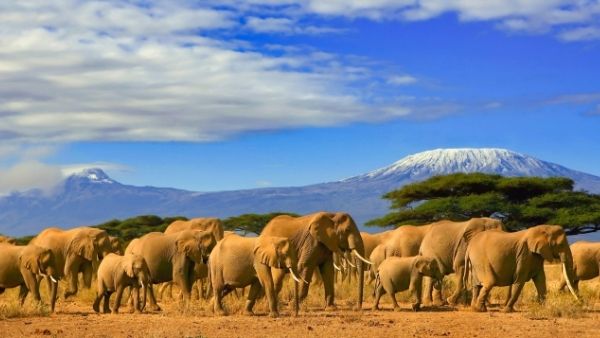
Tanzania allocates USD 39.1 mn for tourism recovery
- Oct 20,2021
- Economic Times
Tanzania has allocated USD 39.2 million for implementation of 23 projects aimed at revamping the tourism sector affected by the Covid-19 pandemic, a cabinet minister said. Damas Ndumbaro, the Minister for Natural Resources and Tourism, told a press conference in the commercial capital Dar es Salaam that the funds were part of the USD 567.25 million approved in September by the International Monetary Fund (IMF), reports Xinhua news agency. The IMF approved the funds in emergency financial assistance to Tanzania under the Rapid Credit Facility and Rapid Financing Instrument to support the authorities' efforts in responding to the pandemic by addressing the urgent health, humanitarian, and economic costs. Ndumbaro said projects to be implemented include renovation of infrastructure, installation of security systems, purchase of mobile test kits for testing Covid-19 infections among tourists and acquisition of transportation facilities. "These projects will simplify access to different tourist attractions and subsequently reviving the tourism sector," said the official. He said part of the funds will be used to renovate roads leading to Serengeti, Mkomazi, Tarangire, Nyerere, Kilimanjaro, Saadani and Gombe national parks. Ndumbaro added that the funds will also be used to conserve forests managed by state-run Tanzania Forests Services Agency.
Read more
Economical & comfortable travel! Indian Railways introduces AC 3 Tier Economy class in Prayagraj-Udhampur Special
- Oct 20,2021
- Financial Express
From now on, train journeys from Prayagraj to Udhampur to get more comfortable and convenient! Indian Railways is constantly striving to make train travel convenient, economical and comfortable for passengers. In this regard, from 18 October 21, the national transporter has fitted AC 3 Tier Economy Class Coaches in Train Number 04141 Prayagraj – Udhampur Special. A few months ago, the first prototype Linke Hofmann Busch (LHB) AC 3 Tier Economy Class coach was rolled out by Indian Railways’ Production Unit, Railway Coach Factory (RCF), Kapurthala. Last month, for the first time, the economical and comfortable class coach was attached to Train Number 02403 Prayagraj – Jaipur Express. Following are some of the salient design features of AC 3 Tier Economy Class coach: The berth capacity in AC 3 Tier Economy Class coach has been increased to 83 berths, compared to 72 berths in 3 AC Class coach: It boasts an upgraded and modular design of berth and seat AC 3 Tier Economy Class has been provided with foldable snack tables for passengers in both longitudinal and transverse bays For each berth, it has individual AC vents Each coach has a wider toilet door as well as an entrance door for Divyangjans Each berth provided with an individual reading lamp and USB charging points There is increased headroom for both middle as well as upper berths The AC 3 Tier Economy Class has public address and passenger information systems It also has improved fire safety by using the material in compliance with EN45545- 2HL3, the global benchmark for fire safety It has been equipped with CCTV Cameras It also has improved design of ladder for accessing the upper berth and middle berth Initially, a total of 50 new AC 3 Tier Economy class coaches, manufactured by RCF, Kapurthala, are ready to offer services in various Mail/Express trains over different zones of the Indian Railways network.
Read more
How New US Travel Rules Affect Various Countries, Including India
- Oct 20,2021
- NDTV
The new US travel policy will block entry to foreign nationals who have recovered from COVID-19 and then gotten one dose of two-dose vaccines -- a standard that France and the European Commission consider full vaccination. The US announced on Friday that it would open its borders to vaccinated travelers beginning Nov. 8, and the Centers for Disease Control and Prevention said that would include "any combination of two doses" from two-shot vaccines. An agency spokeswoman confirmed that people with just one dose would be excluded, regardless of whether they've also recovered from COVID-19. That distinction could hobble travel plans across Europe, where people who've recovered and gotten one shot are considered fully vaccinated by some countries, at least for now. That standard is also one of the eligible scenarios for the EU digital Covid certificate, the bloc's widely accepted vaccine passport. The US has never considered recovery from COVID-19 in its domestic definition of vaccination. US residents are required to have both shots of a two-dose vaccine or Johnson & Johnson's one-shot vaccine to be deemed fully vaccinated, regardless of whether they've contracted the virus. The Biden administration's plan to reject foreign travelers who've recovered but haven't received two shots, regardless of whether their home country considers them vaccinated, may become a fresh point of tension in the relationship between Washington and Europe -- and with France in particular. Ties were strained last month by Australia's announcement that it would abandon a deal to purchase French diesel-powered submarines to enter into a partnership with the US and UK to acquire nuclear-powered subs. US President Joe Biden spoke with French President Emmanuel Macron on Sept. 22 to try and move past the eruption, pledging to "open a process of in-depth consultations, aimed at creating the conditions for ensuring confidence and proposing concrete measures toward common objectives." Varied Vaccination Rules Abroad, the definition of "fully vaccinated" varies. France and Norway each consider someone fully vaccinated after recovering from COVID-19 and receiving a single dose of a two-dose vaccine. Macron is among the residents of his country who are in that category. In Greece, people who get a first dose within six months of recovering from COVID-19 are considered fully vaccinated. In Austria, people who've recovered from Covid and then received one shot can wait a year for their second shot and still be considered vaccinated in the interim. Italy will issue what's known as a "green certificate," which is required to work and access most indoor venues, to people who have recovered from Covid and received one dose of a vaccine within a year of testing positive. The certificate lasts for one year.
Read more