Air Canada to launch non-stop flights between Delhi and Montreal from October 31

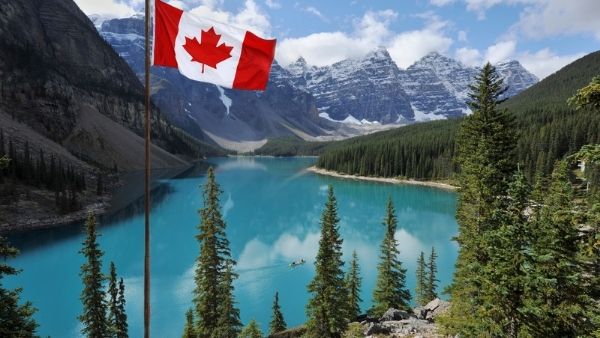
Air Canada is launching a new thrice-weekly, non-stop flight between Delhi and Montreal from October 31. The airline is also increasing its daily non-stop flights from Toronto to Delhi to 10 per week from October 15. Announcing this on Wednesday, Air Canada said, “Starting October 31, just in time for Diwali celebrations, Air Canada will offer three flights per week to the growing Indian community in Montreal. Additionally, the airline is increasing frequency to Delhi from Toronto to ten flights per week beginning October 15.” The thrice-weekly flight will operate on Tuesday, Thursday, and Sunday, leaving Delhi at 1.55 a.m. and Montreal at 8.10 p.m. It will be served by a 298-seat Boeing 787-9 Dreamliner, offering three cabins of service – Air Canada Signature Class, Premium Economy and Economy class. Mark Galardo, Senior Vice President, Network Planning and Revenue Management at Air Canada, said, “Air Canada is the only carrier offering a direct service to Delhi out of Montreal, allowing for easy connections through our extensive network. We continue to focus on the growing visiting friends and relatives market and this capacity expansion is a response to increasing demand.” He said the Canada-India market is “an important and strategic one for Air Canada”. “These additional flights and new route demonstrate Air Canada’s anticipation about the promise and growth of the Indian subcontinent – and we also look forward to further strengthening the cultural and business ties between our two countries,” he said.

Read more

Bali now open to tourists from 19 countries

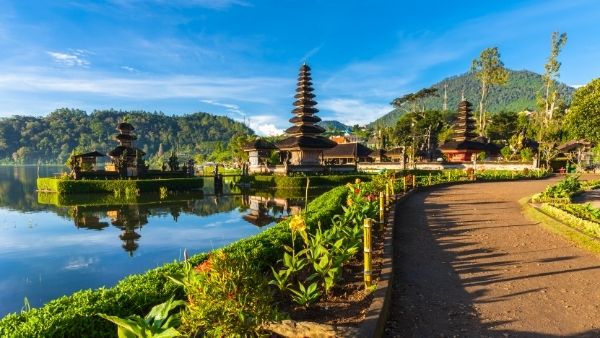
Indonesia's Bali and Riau Islands are reopening to visitors from 19 countries starting Thursday, according to the country's Minister of Maritime Affairs and Investment, Luhut Binsar Panjaitan. "We have given permission to 19 countries to be able to travel to Bali and the Riau Islands," Luhut announced in a meeting in Jakarta on Wednesday. The countries are: China, India, Japan, South Korea, Saudi Arabia, United Arab Emirates, New Zealand, Kuwait, Bahrain, Qatar, Liechtenstein, Italy, France, Portugal, Spain, Sweden, Poland, Hungary, and Norway. The United States is not yet on the approved list. Tourist visas must be obtained in advance. The countries were chosen based on data showing low positivity rates, Luhut said. Travelers from the countries can enter Bali and Riau Islands as long as they follow the requirements before and upon arrival, Luhut said. Eligible travelers must be fully vaccinated with a second vaccine taken at least 14 days prior to traveling to Indonesia, have insurance coverage for Covid-19 treatment worth at least US $100,000 and pay for their own accommodation during a five-day quarantine period. "One of the reasons for the optimism behind Bali's readiness was due to Covid-19 vaccination having reached 99 percent for the first dose and 90 percent for the second dose," the Tourism and Creative Economy Ministry's Crisis Management Special Staff, Henky Hotma P. Manurung, said, according to a report in the state-run news outlet Antara. Luhut added that the reopening will be evaluated periodically and that "this list of 19 countries only applies specifically to direct flights to Bali and the Riau Islands." He hoped that the implementation will boost Bali's tourism-dependent economy. An estimated 54% of the island's income is earned from the tourism industry. Bali's Ngurah Rai Airport (DPS) in Denpasar is ready to welcome international arrivals on Thursday, Taufan Yudhistira, Stakeholder Relations Manager at Ngurah Rai's International Airport Authority, told CNN. However, no international flights are slated to land there yet, Yudhistira said.

Read more

Dubai leads global tourism recovery

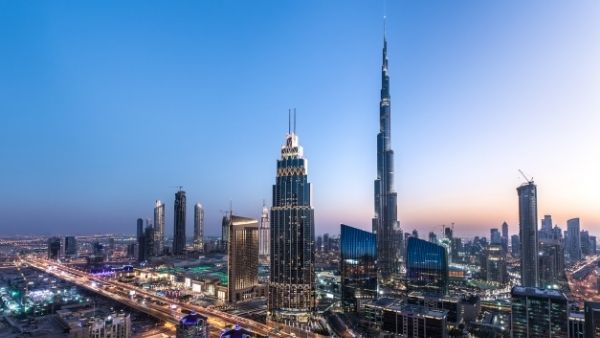
Dubai was one of the first cities globally to reopen its markets and businesses in the wake of the Covid-19 pandemic, and continues to stay open, while ensuring strict compliance with internationally benchmarked health and safety protocols. Supported by a solid network of stakeholders and partners, the emirate has now launched a new tourism campaign as it seeks to build on the steady influx of visitors seen since the reopening in July last year. The move is further evidence of a consistent and calibrated approach since the start of the pandemic to ensure the destination remains resilient and safe for international travellers. The United Arab Emirates has one of the highest per capita vaccination rates in the world, with close to 85 per cent of residents having received at least one dose of the vaccine, and nearly 75 per cent having received both doses to-date. So what has been behind the successful relaunch of the tourism sector? Boosted by demand for staycations in the domestic market and visitation from international markets that are open, hotels in Dubai enjoyed occupancy levels of 61 per cent overall from January-to-July this year. This has further instilled confidence in this sector and demonstrates its capability to attract guests and provide them with world-class hospitality. By the end of July, the hotel inventory in the emirate stood at 718 establishments offering 129,318 rooms with RevPAR increasing to AED225 (£50) compared to AED194 for the same period in 2020. In the first seven months of 2021, the occupied room nights for hotels stood at 16.34 million, compared to 10.74 million for the corresponding period in 2020. According to data from hotel management analytics firm STR, for the first seven months of 2021, Dubai ranked second globally in terms of occupancy after Singapore and ahead of London and Paris. For the January-July 2021 period, year-to-date RevPAR in Dubai was highest among the four destinations, followed by Singapore, Paris and London.

Read more

No 10-day mandatory quarantine for UK tourists in India, earlier order withdrawn

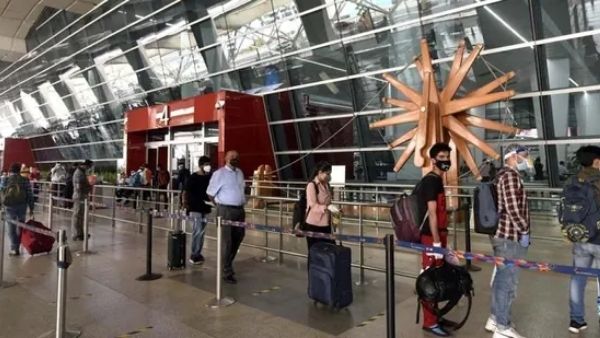
The travel guideline the Centre issued on October 1 in a tit-for-tat move to the United Kingdom now stands withdrawn, the Union health ministry has now written to all states and Union territories, lifting the mandatory 10-day quarantine for passengers coming from the United Kingdom. "Based on the evolving scenario, it has been decided that the revised guidelines...stand withdrawn and the earlier guidelines on international arrival dated 17th February 2021 shall be applicable to all travellers arriving in India from the United Kingdom," joint secretary Lav Agarwal wrote. Following a wide range of discussions between the India and the UK governments, the UK from October 11 exempted fully vaccinated Indians from mandatory quarantine in the UK. The move was long-pending as the UK recognised India's Covishield vaccine, which is a formulation of the Oxford-Astrazeneca vaccine but raised some doubts over India's vaccine certificate. Hence, between October 4 and October 11, Indians administered with both doses of Covishield had to undergo mandatory quarantine in the UK like non-vaccinated travellers. India has not made quarantine mandatory for vaccinated travellers coming from any country. The move for UK passengers was in reciprocation to UK's discrimination against Covishield and the Indian vaccine certificate. India had earlier warned that countries that will not recognise India's vaccines will face similar action in India. "I'm absolutely delighted that the UK government cooperated very well with the Indian government. Now, this enables Indian visitors, vaccinated with recognised vaccines, which include Covishield, to enter the United Kingdom without quarantine. We now have to get people moving between the two countries. People are desperate to come here (India),” British high commissioner to India Alex Ellis said earlier. After the UK agreed to recognise Covishield and its certificate, the Centre said it will issue similar relaxation for UK travellers and the health ministry will issue the guideline. With the mandatory quarantining now lifted, vaccinated people coming from the UK to India will require a negative RT-PCR test report and a self-declaration form.

Read more

Maldives records over 905,000 tourist arrivals this year

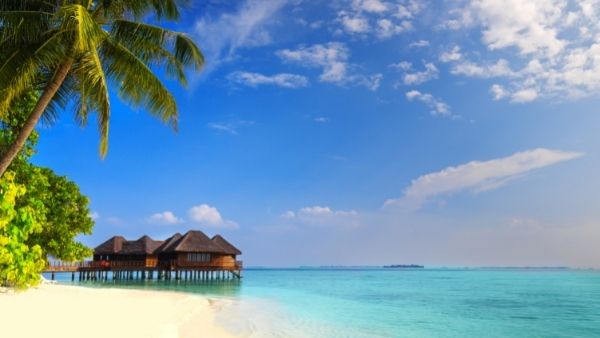
The Maldives has received more than 905,000 tourists so far this year amid the ongoing Covid-19, according to data from the Tourism Ministry. The tourist arrivals were 122.5 per cent higher than in last year as the Covid-19 pandemic led to prolonged border closures and restrictions on international travels in 2020, Xinhua news agency reported citing the Ministry data. However, the 2021 arrivals are 29.9 per cent lower than the same period of 2019, it added. Data showed top sources of tourist arrivals this year for the Asian country were India, Russia and Germany, accounting for 23 per cent, 19.4 per cent and 6.3 per cent of the total respectively. They were followed by France, Kazakhstan, Spain, Ukraine, the UK and the US. The country's borders had been fully closed for three months last year due to the Covid-19 pandemic before they were reopened in July 2020. The borders were closed for South Asian tourists due to a surge of Covid-19 cases in May 2021, but were reopened on July 15. Tourism is the largest economic industry in the Maldives, as it plays an important role in earning foreign exchange revenues and employing thousands of citizens.

Read more

Sikkim decides to lift inter-state travel curbs

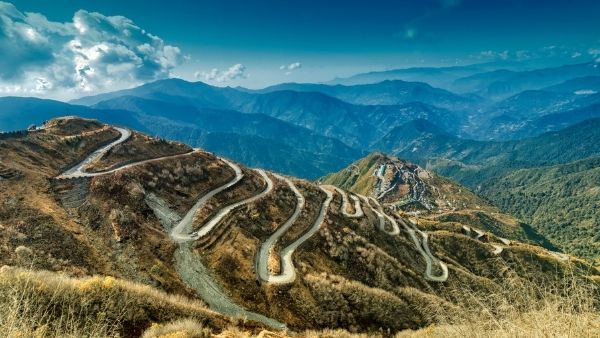
The state of Sikkim has decided to lift curbs for inter-state travel. This means that travellers are not required to show COVID negative test reports, or even vaccination certificates at the state border. All check posts of Sikkim will henceforth remove restrictions, as per directed by the Sikkim home department. The state has seen an improvement in the recent weeks, with the positivity rate coming down. The travel restrictions were in place in order to help curb the spread of the virus. Sikkim is currently the first state in India to have the highest vaccinated population. Moreover, it is being widely reported that the state has administered the first vaccination to 100 percent of its population, but this is unverified information. One of the most popular destinations in the country, Sikkim is seeing a steady growth in tourism since the lockdown got lifted. There has been a steady increase in tourism even in the surrounding areas, such as in Darjeeling, Kalimpong, among others. Tourism is the most important contributor to the economy of Sikkim, and the lockdown was especially hard on the state. Tourists too lost out on many wonderful experiences, such as the Khagyad Chaam, which is a traditional mask dance that was not organised in 2020 for the first time since the 1800s. The festival is organised by the Nynmapa and the Khagyu sects. The state is once more seeing a growth in tourism, especially during the Durga Puja holidays that is widely celebrated in the neighbouring state of West Bengal.

Read more