Thailand desperate for tourists following Covid-19 slump

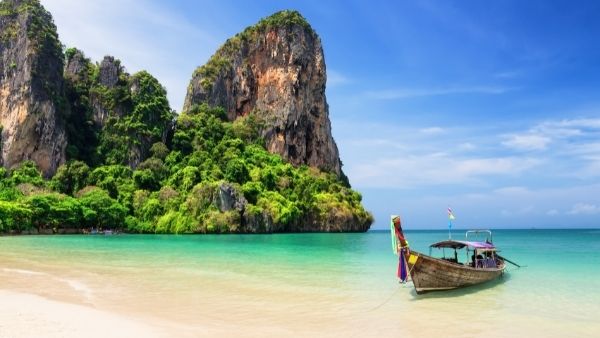
When Sunisa (name changed) learned that the Thai government had greenlit plans to reopen Phuket, the country's most popular resort island, under the pilot scheme to revive tourism, she was overjoyed. Like many, the pandemic has derailed her ability to earn a living. Before coronavirus, she was usually busy running a private tour operator for families and small groups, offering a one-stop service from accommodation to transportation and excursions. "I thought the 'Phuket Sandbox' program would help bring back visitors and it was as I had expected," the 50-year-old told DW. "Some clients have returned and my income has begun to improve." While the number is nothing compared to what she used to make, Sunisa is hopeful about the upcoming peak season from December to March as new bookings started to come in. 'Unpredictable and complicated' Since July 1, overseas tourists have been able to visit the resort island without having to quarantine, provided that they are fully vaccinated and are willing to obey an extensive list of regulations in place to safely revive an industry that is in desperate need of rescuing. After staying in the area for 14 days, they are allowed to travel on to other parts of Thailand. But visitors have been put off by the Thai government's unpredictable Covid regulations and complicated paperwork. Just over 26,000 travellers have visited Phuket through the Sandbox program in the first two months, well short of the 100,000 it was hoped would have visited by the end of September. While the numbers have fallen short of forecasts, officials are still hopeful the trickle of visitors can become a stream. Salvaging tourism industry Like other tourism-dependent nations, Thailand's tourism sector, which made up 20 percent of national income, has been hammered by the coronavirus. As much of the world struggled to contain the first waves of the pandemic, Thailand escaped last year relatively unharmed, although only by shutting its borders and in turn, its tourism industry. But the Delta variant has seen infections, hospitalizations and deaths skyrocket since April, postponing any plans to reopen fully. At the start of September, officials eased local lockdowns, including in the capital Bangkok in order to boost business, despite infection rates remaining high. The move signals a tactical shift from authorities who are now hoping to keep the contagion at manageable levels and return to normalcy. So despite the alarming coronavirus caseload, Thailand is pressing ahead with plans to extend its 'Sandbox' initiative to more provinces, which include the capital Bangkok, the northern city of Chiang Mai, and beach resorts like Pattaya, Cha-An and Hua Hin. Struggling to stay afloat Hotels, small and large across the nation, are one of the hardest-hit industries by Covid-19 and have seen business evaporate due to the lack of visitors. A recent survey by the Bank of Thailand and the Thai Hotels Association (THA) found that 52% of hotel operators were considering closing their doors temporarily while 9% wanted to shut down permanently. Small players in particular are feeling the strain. Normally, Sawita Vibhatasilpin and her business partner would see 20-30 backpackers coming in and out of their small yet lively hostel in downtown Bangkok everyday. But since authorities shut borders last year to contain the coronavirus, there is now plenty of space in the hostel as the number has significantly dropped to 1-2 travellers per month. Small, independent budget backpacker hostels like hers are hard-pressed to survive the Covid-19 outbreak. Two other hostels in the same neighbourhood have already gone out of business and Sawita worries that a similar fate might befall them. I'm afraid that we will eventually be forced to close down. While the landlord has been understanding, we have barely made any money and haven't paid any rent for the past six months," the 30-year-old said. Waiting for better days While the situation has improved slightly for some, there's still a long road ahead until tourist arrivals to Thailand recover fully. "I had zero bookings until the past 4-5 months when some domestic tourists started trickling back," Nattakit Malaichaisong told DW. "But I really doubt we can actually reopen in October. Less than 20% are fully vaccinated and the daily caseload is still high." A tour guide in Chiang Mai, one of the country's most popular destinations, Nattakit was used to picking up tourists as early as 5 a.m. for excursions and having hardly any time to rest but these days, he is spending most of his time at home, raising his two-year-old kid with his wife. "Before the pandemic hit, the demand for my services was so high I was working non-stop for three months as it was the high season," said the 39-year-old. Tourism Minister Phiphat Ratchakitprakarn told local media last month that if the Delta-driven outbreak continues beyond September, the country can expect a mere 500,000-700,000 foreign visitors this year. The Tourism Authority of Thailand was more optimistic, forecasting 1.2 million international tourists would travel to the country this year. But even that more hopeful outlook pales compared to 40 million international travellers who visited the country back in 2019 before Covid. "I think we might have to wait for another year or two until travel really bounces back," said Nattakit. "Restoring visitors' confidence and keeping tourists safe are key."

Read more

Fiji plans to reopen for tourism soon

The beautiful island of Fiji is now planning to reopen for international tourists by November of this year. The country is looking to heal itself from the devastating effects of the pandemic on its economy. The Fiji plans to reopen for tourism soon Delta-variant of the coronavirus has put its grip around the country, and has made it hard for the tourism sector. Prime Minister Frank Bainimarama said in a statement, "Our goal is to free our country, and our economy, from the rut of the pandemic.” Fiji is looking forward to getting eighty percent of its population vaccinated, as thereafter it will open up for quarantine-free travel to visitors. The travellers will be from countries in the green list. As of now, the country has managed to fully vaccinate 66 percent of its population, and it is being estimated that the target will be reached by November 1. The green list of Fiji has the following countries - Japan, Canada, Singapore, New Zealand, Australia, Korea, and some parts of the United States. The prerequisite is that travellers coming to Fiji need to get fully vaccinated, and also test negative for the virus before they depart. The country has made preparations for visitors in such a way that they will be directed to designated zones where every person is fully vaccinated. According to reports, about forty percent of the country’s economy depends on tourism, and hence it is absolutely essential that it gets revived. There are oppositions to the opening of tourism by the opposition political party. According to the members of that party, health comes before the economy.

Read more

Uttarakhand’s Chardham Yatra commences, attracts devotees in huge numbers

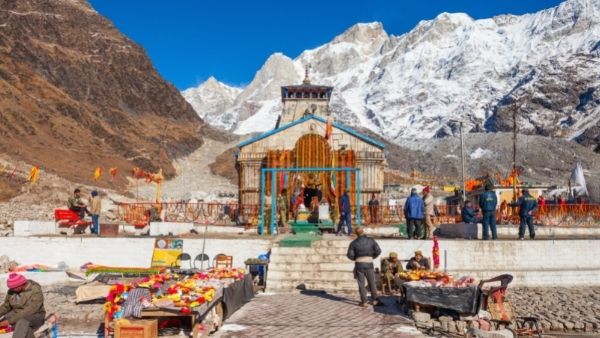
Uttarakhand is currently witnessing an influx of tourists since the High Court has permitted the Chardham Yatra to commence with COVID-19 protocols in place. According to official reports, 42000 e-passes for pilgrims have already been issued for the Chardham Yatra that began on Saturday. It is one of the most important Hindu pilgrimages in the country. Ravinath Raman, Garhwal Commissioner and Chief Executive Officer of Uttarakhand Chardham Devasthanam Management Board said, "A total of more than 42,000 e-passes were issued yesterday and till date, out of which 9,989 e-passes have been issued for Shri Badrinath Dham, 18,934 for Kedarnath, 4,727 for Gangotri and 4,361 for Yamunotri." According to him, a total of 9989 e-passes have been issued for Shri Badrinath Dham, 18934 e-passes for Kedarnath, 4727 e-passes for Gangotri, and 4361 e-passes for Yamunotri. Just Sunday afternoon, a total of 1267 pilgrims reached the four Dhams. All required provisions have been made for the travellers, and COVID protocols are being strictly followed. Travellers are getting adequate clean drinking water, alongside medical health, food, and housing. The state government of Uttarakhand has made it clear that pilgrims will be required to show a valid COVID negative report. At the same time, an e-pass is mandatory for the pilgrims to visit the Chardham. The Chardham are the four important pilgrimage sites in the state of Uttarakhand. These are Gangotri, Yamunotri, Kedarnath, and Badrinath. The journey requires physical and mental strength, but is a great pilgrimage experience for devotees.

Read more

Water sports resume, tourist footfall increases in Manali

The tourist influx to Kullu-Manali has increased these days, benefiting the tourism industry, which had been on the edge for the past two months. From July to September, due to heavy rain and flash floods, the room occupancy in hotels had shrunk below 5 per cent. In view of the tourist safety, the tourism department had suspended the adventurous sports activities like paragliding, river rafting etc till September 15. Now, the department has resumed the adventurous sports activities in Kullu. A large number of tourists can be seen enjoying river rafting in the Beas and paragliding at the Solang valley near Manali. According to hoteliers, the queries for rooms have increased and it is expected that in the coming days, it will increase further. The room occupancy has increased up to 30 per cent in Kullu-Manali. The stakeholders are expecting that the tourist count will increase in the coming days. Nakul Khullar, MD of Baragarh Resort, Manali, said, “It is a good sign for the industry. As the weather is becoming pleasant, we are expecting good business in the coming days.” “Now, adventurous sports activities have been resumed. It will attract the tourists in large numbers,” said another hotelier Hem Raj Sharma. As per official sources, the Kullu-Manali was receiving more than 35 lakh tourists every year before the corona period, while the number of tourists will reduce up to 10 lakh this year.

Read more

Airlines can operate 85 percent of pre-COVID domestic flights

Given the current situation, the Indian aviation ministry has said that airlines can now operate a maximum of 85 percent of their pre-Covid domestic flights. Earlier, the number was capped at 72.5 percent allowed till date. The Ministry of Civil Aviation on Saturday said that till now airlines were not operating to their capacity due to the highly contagious Coronavirus. The order also said that the 72.5 percent cap will remain in place until further order. Apparently, from July 5 and August 12 this year, the airlines were allowed to operate at 65 percent of their capacity. And between June 1 and July 5, it was only 50 percent. But on Saturday, a new order was issued by the ministry modifying the operational percentage. After the flights were resumed in May 2020, almost after a break of two month, the ministry had allowed airlines to operate not more than 33 percent of their pre-Covid domestic services. The percentage was increased to 80 percent by December which remained in place till June 1, 2021. Informing more about the decision,the ministry said, "in view of the sudden surge in the number of active COVID-19 cases across the country, decrease in passenger traffic and the passenger load (occupancy rate) factor." Meanwhile, Jet Airways is also all set to make a comeback early next year. The airline is planning to resume domestic operations in the first quarter of 2022 and the first flight is expected to be from New Delhi to Mumbai.

Read more

UAE hotels hit 62 percent occupancy as tourism industry continues Covid-19 recovery

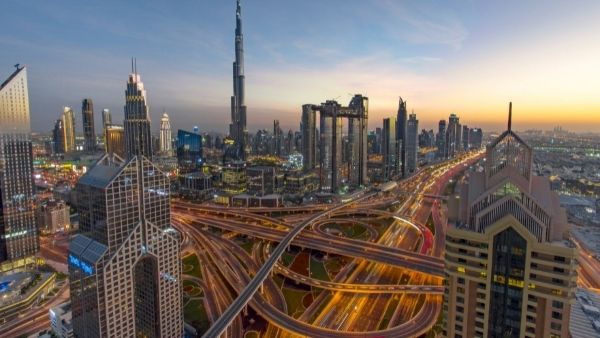
Nearly 8.3 million guests visited the UAE’s hotels and tourism establishments in first six months of the year. UAE hotels hit 62 percent occupancy in the first six months of 2021 as the tourism sector continues to rebound from Covid-19, reports Arabian Business. , Nearly 8.3 million guests visited the UAE’s hotels and tourism establishments in the first six months of the year, 15 percent up on the first half of 2020 when lockdowns prevented much travel and tourism. The UAE outperformed other global tourism destinations from January to June, including China (where hotels reached 54 percent occupancy), the US (45 percent), Mexico (38 percent), the United Kingdom (37 percent), and Turkey (36 percent). Guests spent nearly 35 million nights in UAE hotels reflecting a growth of 30 percent, while the average length of their stay increased to 4.1 nights at a 12.5 percent growth. This is accompanied by a 31 percent growth in hotel establishments’ revenues to reach AED11.3 billion. Domestic tourism accounted for 30 percent of the total number of guests at these hotel establishments. “This increase in demand for domestic tourism has sparked a healthy competition among tourism companies to provide distinctive tourism offers aimed at promoting domestic tourism in nationwide,” said Mohammed Jassim Al Rayes, executive vice president of Al Rayes Travel.

Read more