Govt allows 7.5% more domestic flights

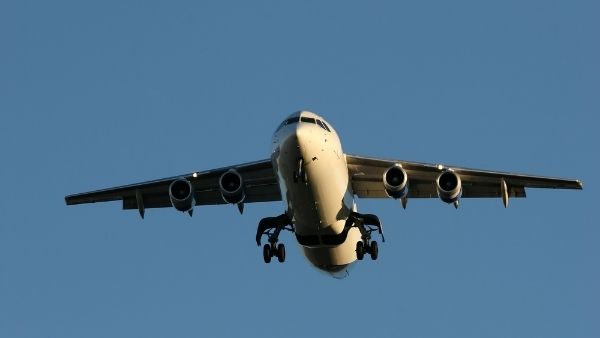
The government has allowed airlines to operate marginally more — 7.5% to be precise — domestic flights. Airlines can now operate 72.5% of their pre-Covid domestic capacity, up from 65% allowed on July 5, 2021. During the pandemic, the aviation ministry has been regulating both domestic fares and capacity that are tweaked as per the Covid situation. With that, the second wave ebbing, the domestic capacity — reduced from 80% of pre-Covid to 50% on June 1 — was first increased to 65% on July 5 and now to 72.5%. The entire travel industry, including airlines and hotels, realise that their survival rests on domestic travelers as international travel could take a long time to open up both ways — Indian tourists being allowed in most countries and foreign tourists being allowed into India. This fact is recognised by government agencies too. For instance, the Airports Economic Regulatory Authority’s consultation paper on Hyderabad Airport (HIAL) tariff says: “The authority has looked into the traffic trends at HIAL and observes that the traffic at Hyderabad Airport is dominated by domestic segment (about 81% of the total traffic over the last five years was domestic passengers). The authority is of the opinion that post-pandemic recovery of traffic at the Hyderabad Airport would be led by domestic segment and that it may recover at a faster growth rate than other major airports which tend to have a higher share of international traffic.” While the norms for international travel will be set by individual countries differently for visitors from other countries depending on the pandemic situation in each place, the travel industry has been seeking uniform norms for domestic travel. Industry leaders say RT-PCR testing requirements should be done away for domestic travel for the fully-vaccinated uniformly across the country. “As of now, there are different rules for traveling from one Indian state to another. This confuses travelers and many therefore decide to defer non-essential travel. There should be one rule — no RT-PCR testing needed if fully vaccinated — for domestic travel. This single step will have a multiplier effect on travel,” said a hotelier.

Read more

Salt Lake Central Park likely to get eco-tourism facelift

The Salt Lake ‘Banabitan’, also known as Salt Lake Central Park, may soon get a facelift. The state is planning to convert it into en eco-tourism destination with all latest amenities and facilities. The forest department has also decided to hand over the management of the park to West Bengal Forest Development Corporation Ltd (WBFDCL). It was, till now, being managed by the state forest directorate through the urban recreation forestry section. A senior official said that one of the main attractions, that is being planned, is a lotus lake. “It will have both boating and angling facilities,” the official added. Besides, A new parking arena and entrance shops and kiosks are also being planned to be developed. “In order to make it an attractive eco-tourism destination, the area will also house mini Jaldapara and mini Sunderbans points, a Bengali legend park, selfie point and signage and interpretation boards,” the official added. According to him, plans are also afoot to develop a garden and waterfront coffee shop. TVN Rao, managing director of WBFDCL, said that things are now in a proposal stage. “We have made some proposals but they are yet to be finalised,” he added. Through a later dated August 6, the department of forests said the MD of WBFDCL had, via another letter in July, made the proposal. “In order to be able to invest funds from its own coffers, the MD has requested the transfer of operation and maintenance of ‘Banabitan’ to WBFDCL,” the letter dated August 6 mentioned. “The said proposal has been examined by the state and it has decided to transfer its management to WBFDCL with immediate effect,” the letter stated. But, it has been decided that expenditure towards establishment cost and other administrative costs will be borne by forest directorate till March, 2022.

Read more

Over 50 lakh domestic air passengers in July, 61% higher than June: DGCA

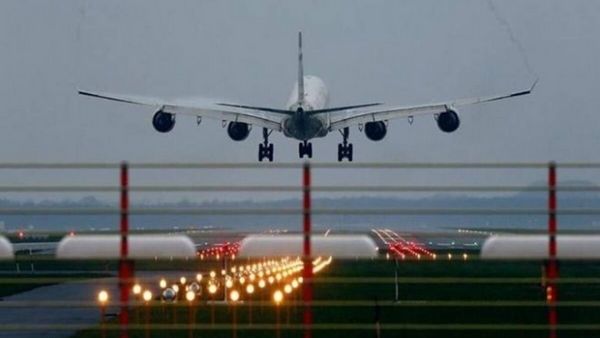
Around 50.07 lakh domestic passengers travelled by air in July, 61 per cent higher than the 31.13 lakh who travelled in June, the country’s aviation regulator said on Friday. According to the Directorate General of Civil Aviation (DGCA), 21.15 lakh people and 57.25 lakh had travelled within the country by air in May and April, respectively. The sudden drop in domestic air traffic in May was due to the second wave of the COVID-19 pandemic that had badly hit the country and its aviation sector. While IndiGo carried 29.32 lakh passengers in July, a 58.6 per cent share of the domestic market, SpiceJet flew 4.56 lakh passengers, accounting for a 9.1 per cent share of the market, according to the data shared by the DGCA. Air India, Go First (previously known as GoAir), Vistara and AirAsia India carried 6.7 lakh, 3.42 lakh, 4.07 lakh and 1.65 lakh passengers, respectively, in July, the data showed. The occupancy rate or the load factor of the six major Indian airlines was between 53.6 per cent and 74.6 per cent in July, it stated. The occupancy rate for SpiceJet was 74.6 per cent in July, the DGCA noted. The occupancy rates for IndiGo, Vistara, Go First, Air India and AirAsia India were 66.2 per cent, 69.2 per cent, 67.1 per cent, 64.3 per cent and 53.6 per cent, respectively, it added. The aviation sector has been significantly impacted due to the travel restrictions imposed in India and other countries in view of the pandemic. India resumed domestic passenger flights on May 25 last year after a gap of two months due to coronavirus. Indian airlines are allowed to operate a maximum of 72.5 per cent of their pre-pandemic domestic flights. The DGCA data mentioned that in July 2021, IndiGo had the best on-time performance of 97.3 per cent at four metro airports — Bengaluru, Delhi, Hyderabad and Mumbai. AirAsia India and Vistara were at the second and third positions at these four airports in July with 96.8 per cent and 95.1 per cent on-time performance respectively, the DGCA said. All airlines in India have opted for cost-reducing measures such as pay cuts, leave without pay and layoffs in order to tide over the coronavirus-induced crisis.

Read more

Indian government working to make international travel easy: S Jaishankar

Given the current COVID situation, the Indian government is working on making overseas travel easy for Indians. India’s External Affairs Minister S Jaishankar said that it is his top priority to make travel convenient for Indian with fewer restrictions in place. The Minister also said that he hopes that Covaxin, one of the majorly used vaccines in India, gets WHO approval soon. In an event held virtually, Jaishankar said, “As a country whose people look at the world as a global workplace, it is up there in my priority.” There are several nations that are not asking for vaccination certificates but for the RT-PCR test to be done at the airport, including the US. He further explained that as of now, it is an issue as the US is not giving permission to people, who have stayed for a long time in India, to go to the US directly. Reportedly, the US is still testing people and entry is test-report based rather than vaccine based. Acknowledging the issue about Indian vaccines, he said that Covishield is approved but Covaxin is not. The government will get some indication by September about the same. He also said that the government is expecting a certain “push and pull” from countries on vaccine certification.

Read more

India leads Dubai Airport's passenger traffic recovery after Covid-19 pandemic

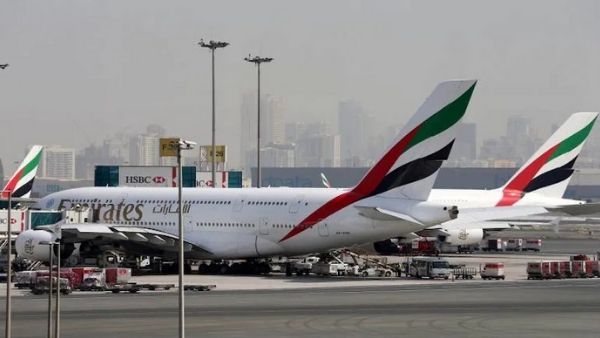
India continued to be Dubai International Airport's top destination country by traffic volume in the first half of 2021 with passenger numbers exceeding 1.9 million (19 lakh), despite travel restrictions due to Covid-19 affecting its key source markets. The world's busiest airport for international travel clocked 10.6 million passengers in the first six months of 2021, Dubai Airports said on Wednesday.as it projected robust growth for Dubai International (DXB) in the second half of the year. "In anticipation of the robust recovery of global air travel, we started the second half on a high note by re-opening Terminal 1 and Concourse D - the home terminal for our 60 international carriers - after 15 months of hibernation to accommodate the seasonal rush of travellers over the summer holidays," said Paul Griffiths, CEO of Dubai Airports. "This was essential to facilitate the continued expansion of the route networks of our home base carriers Emirates and flydubai, whose joint network - currently spanning 168 destinations - continues to grow," Griffiths said. India continued to be the Dubai airport's top destination country by traffic volume in the first half with passenger numbers exceeding 1.9 million, followed by Pakistan with 700,074 customers, Russia with 406,209, and Egypt (401,361), Dubai Airports said in a press release. Other destination countries of note include Ethiopia, Saudi Arabia and the US. The top three cities by traffic were Addis Ababa (354,804), followed by Cairo (345,886) and Moscow (344,175). "We have already witnessed some of our busiest weekends of the year in July, and with major international events such as the Dubai Expo 2020 and Dubai Airshow 2021 lined up for the months ahead, the outlook for 2021 in terms of passenger numbers looks very promising," Griffiths said. He said the UK's recent decision to move the UAE to the 'Amber list' and the UAE's conditional lifting of travel restrictions for passengers arriving from four countries in the Indian subcontinent as well as Nigeria and Uganda will significantly boost DXB's traffic. According to the latest figures issued by Airports Council International (ACI), DXB remains the world's busiest airport for international passengers after retaining the title for the seventh consecutive year for annual traffic in 2020. The airport holds a significant lead over other international airports and has nearly twice the passenger traffic of the next busiest global hub in the Middle East, the press release said. Dubai Airports data showed Dubai airports passenger volumes in the second quarter totalled 4.9 million, taking the half-yearly figure for the year to 10.6 million, a year on year contraction of 40.9 per cent, it said. DXB is currently serving 68 per cent of the destinations in 94 per cent of the countries on 70 per cent of the airlines compared to before the Covid-19 pandemic. Cargo continued to outshine the passenger segment in terms of recovery with cargo volumes nearing 2019 levels in the second quarter. DXB recorded 571,568 tonnes of freight in the second quarter, propelling the first half volumes to 1.1 million tonnes, a year-on-year increase of 27.7 per cent. It recorded a total of 99,392 flight movements during the first half, a marginal year on year increase of 0.9 per cent due to a low base resulting from the impact of the partial suspension of operations from March 25 to July 7 in 2020. Dubai International Airport will see a massive spike in passenger traffic in the coming days as more than a million passengers will travel between August 12 and 22, with daily peaks averaging 100,000 passengers during weekends, The Khaleej Times reported. In a statement issued on Tuesday, Dubai Airports said this could be the hub's busiest weekend so far this year. It urged travellers to stay abreast of the latest travel regulations and plan their journeys for a smooth travel experience. The increase in passenger traffic is attributed to summer holidays when families travel back to the UAE as well as easing of travel restrictions for certain countries by the UAE government, the report said. The UAE recently eased travel regulations for inbound and transit passengers from some Asian and African countries, including India. "We are prepared, and we are doing everything we can to make sure that passengers have a safe and smooth experience at DXB," said Essa Al Shamsi, vice-president of terminal operations at Dubai Airports. "Considering that volume of passengers will be significantly higher in the arrivals area during this period, it is important that those meeting and greeting arriving passengers do not congest the road in the terminal forecourt and that they pick up their friends and family in comfort by using the car park or valet service," Shamsi said.

Read more

UAE: COVID vaccine certificate not required for entry

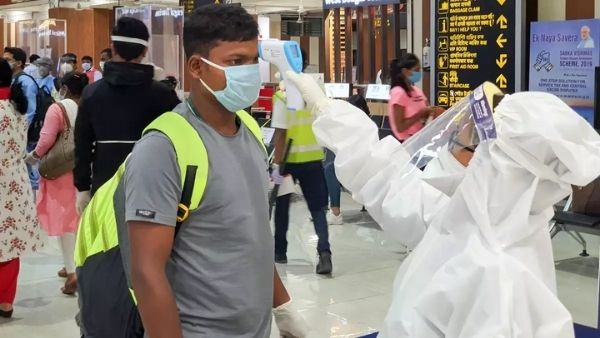
With the UAE all set to reopen its borders, COVID-19 vaccination certificate is no longer required to enter the UAE for Indian passengers with a valid residence visa. Reportedly, the UAE will start accepting Indian passengers, who are UAE visa holders, as long as they are able to submit a negative COVID test result that has been taken at least 48 hours before boarding the flight, and an approval from the General Directorate of Residency and Foreigners Affairs (GDRFA). Moreover, travellers would also have to undergo a rapid PCR test at the airport. Referring to this, while responding to a question on Twitter, Emirates Airline wrote, “As per our latest update, the COVID-19 vaccination certificate is no longer a requirement.” Further, Emirates updated its website and stated that all travellers with a valid UAE residence visa will be allowed to travel to and through Dubai from India, Nigeria, Pakistan, Nepal, Uganda, and Sri Lanka, subject to certain conditions. Here’s all that you need to know about the conditions mentioned by the airline: Dubai visa holders will have to apply for pre-entry approval through GDRFA. Travellers must have a valid COVID-19 test certificate that has been issued within 48 hours between the time of sample collection and scheduled flight departure. Do note that only COVID-19 PCR test reports that have been issued from certified labs, along with a QR code linked to the original report, will be accepted. Everybody must complete a COVID-19 PCR rapid test 4 hours before their flight departure; whereas Rapid Antigen Test will not be accepted. Travellers will have to complete a COVID-19 PCR test on arrival in Dubai. However, UAE nationals will be exempted from the above requirements, but will have to undergo COVID-19 PCR test on arrival in Dubai.

Read more