Nearly 200 Indian Professionals, Students Stuck as Czech Republic Bans Travel from India

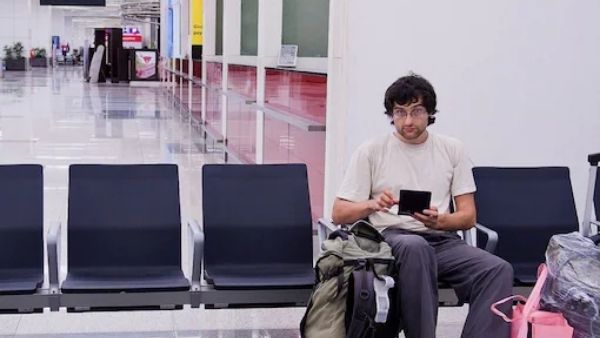
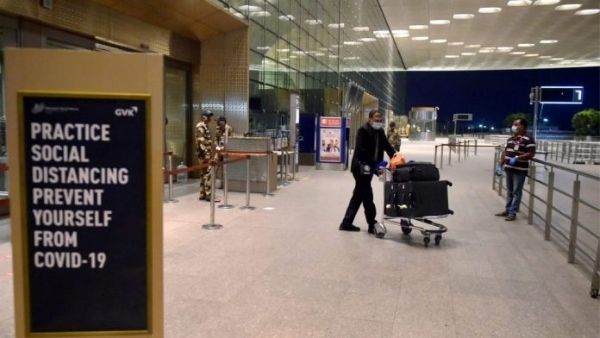
group of nearly 200 IT professionals, newcomers, research scholars among others, most with valid Czech Republic visas, are unable to join their employers in the European country amid India’s Covid-19 travel restrictions. The Czech Republic, however, has only allowed those who acquired visas after August 2 while others still await a response from the authorities. The Czech Embassy officials told News18.com, “conditions of entry into the Czech Republic are regulated by the Protective Measure of the Ministry of Health of the Czech Republic.” “According to the last update of the Protective Measure, a number of categories of travellers arriving from India can enter the Czech Republic, including holders of a long-term or permanent or temporary residence permit issued by the Czech authorities… professional athletes or persons representing countries internationally and holders of a long-term visa issued after August 2, 2021, provided that foreign nationals are authorized to enter into the territory of the Czech Republic,” the official stated. “Based on the updated Protective Measure the Czech Embassy is now authorized to accept visa applications for long-term visas and long-term residence permits for the purpose of study in accredited study programs at Czech universities in the academic year 2021-2022”. Shristi Verma, 25, from Uttar Pradesh, left her job in Hyderabad in April, for what she calls a “once in a lifetime offer” from a Czech-based company in June-end. Being the only breadwinner in her family, Verma now is surviving on her savings, which she says are drying up. “The government has allowed essential travel. To us, our job is essential. My retired parents and my college-going brother depend on me. With savings drying up amid a pandemic market, I don’t know what to do. Since I am yet to onboard my firm in Czech, I am not a full-time employee yet and with their offer in hand, I can’t rejoin my old firm or look for another job only to leave it when my ticket comes.” Srishti now wants the Indian government to hold talks with the Czech and have a clarity on the terms of her employment and visa status.

Read more

About 90% Indians want govt policy on travel booking cancellations during Covid, survey finds

Only 12-13 per cent of people who cancelled travel bookings due to the second Covid-19 wave got timely refunds, a new survey has found. According to the survey by LocalCircles, a community social media platform, 90 per cent of the respondents say they want the government to come up with a travel cancellation refund policy for as long as the pandemic continues. The sudden rise in Covid cases ahead of the second wave, which peaked in April and May this year, forced many to cancel their tickets and hotel stays. While some were able to recover a partial amount, others were asked to rebook flights and hotel stays for a later date as some travel agents (online and offline), airlines as well as hotels did not initiate a refund. This led to the Ministry of Civil Aviation holding meetings in April with representatives of airlines, following which some airlines waived off change fees on domestic flights, while some provided free cancellation and rescheduling of flights. The survey, published Monday, received over 37,000 responses from people located across 359 districts of India. Of them, 64 per cent of respondents were men while 36 per cent were women. Around 47 per cent of respondents were from tier 1 cities, 30 per cent from tier 2 and 23 per cent from tier 3 and 4 cities and rural districts. Only 12% received full refund from airlines Of the 8,713 respondents who spoke about the challenges they faced to claim refunds on their summer bookings, only 12 per cent said “travel agent/airline accepted cancellation and refunded full amount”. Another 12 per cent said “travel agent/airline accepted cancellation but refunded partial amount”, while 32 per cent respondents said “travel agent/airline did not refund anything, and we lost the ticket amount”. Four per cent said “travel agent/airline accepted cancellation and refunded a small amount”, but 24 per cent said “travel agent/airline did not refund anything but rebooked the ticket for a later date.” Sixteen per cent of the respondents did not have an opinion. The survey noted that while some airlines claimed to have waived change fees on domestic flights, a few said they had provided free cancellation while policies of two of others were unclear to consumers. Only 13% got full refund from hotels On the question of how the cancellation and refund experience for hotel stays had been, only 13 per cent of respondents said “travel agent/hotel accepted cancellation and refunded full amount”. Forty four per cent said they lost the entire booking amount, 17 per cent said they received a partial refund, around 13 per cent did not get a refund but rebooked their stay for a later date, while another 13 per cent couldn’t say. This question in the survey received 8,594 responses.

Read more

Release funds under PIDDC for tourism infra development: Sikkim CM to Centre

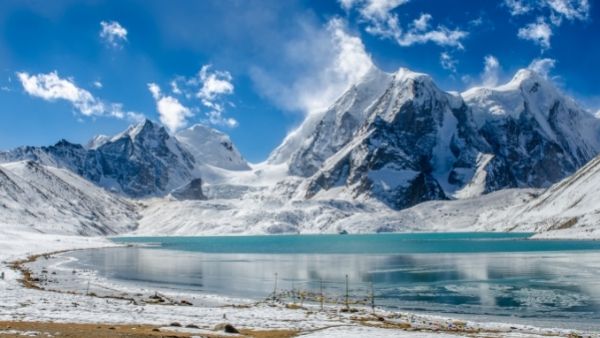
Sikkim CM PS Golay on Sunday urged the Centre to release the remaining funds under the Product Infrastructure Development for Destinations and Circuits (PIDDC) scheme for tourism infrastructure development in the Himalaya state. PIDDC was one of the major tourism infrastructure development schemes of the Union ministry of tourism prior to the launch of Swadesh Darshan Schemes in 2014-15. “The discontinuation of the scheme has led to 51 projects hanging in the balance. These projects are lying in different stages of progress,” said Golay during his meeting with Union minister of tourism, culture and Development of North Eastern Region (DoNER) G Kishan Reddy in New Delhi on Sunday. As the state is at the threshold of reopening the tourism sector adhering to the SOP amid COVID-19, the chief minister said that the delay would not only impede the pace and progress of tourism development programme buts will also have a long-term impact on the state. “The state has maintained an excellent track record in filling up the tourism infrastructure gap at many destinations through Swadesh Darshan Schemes earlier sanctioned by the Centre. Sikkim also achieved the top position in implementing the scheme,” said Golay. “One of the priority projects of the state government under the Swadesh Darshan Scheme-III is pending with the ministry of tourism for the past two years. I request an intervention on this matter,” the chief minister added.

Read more

Kerala to revive tourism sector with bio-bubble concept

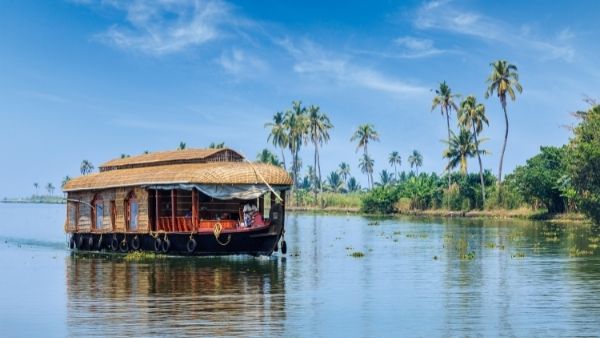
Every time the rules for COVID-19 restrictions changed in Kerala, the tourism sector would be deeply affected. Categorisation of regions based on the test positivity rate (number of people testing positive per 100) would change from week to week. Only regions in the A and B categories — with fewer cases — would get more relaxation. If the categorisation of a place changed to the more worrisome C or D categories, all the tourism units in that region had to close, and the tourists would be sent back. The increasing number of negative experiences of tourists prompted the industry to introduce the bio-bubble concept in the tourism sector. By this, every person involved in a tourist’s visit to the state will be in a bio bubble and vaccinated with at least one dose. This includes the tourists, the airport staff, cab drivers, hotel staff, and people at tourist destinations. Film shoots and sports events have followed the bio-bubble concept, which involves a limited number of members who are tested, remain under quarantine, follow all safety protocols and have no interaction with any others for the entire duration. In the government order dated August 4, open tourist spaces have been allowed to function from Monday to Saturday. All tourism centres and other establishments should display the status of vaccination of employees and the number of customers allowed at a time. "Accommodation facilities like hotels, resorts etc will be allowed in a bio-bubble model in all areas on all days," The order also mentions. “Kerala's tourism was badly affected by the COVID-19 pandemic. As a sector that provides direct and indirect employment to 1.5 million people, the crisis has far-reaching consequences on the state's economy. The revenue loss in the tourism sector is estimated to a tune of Rs 33,000 crore. However, now, Kerala tourism is on a path of revival. We are opening up slowly and getting ready to welcome tourists from all around the globe. A special emphasis will be given to boost domestic tourism also,” Minister for Tourism PA Mohammed Riyas tells TNM.

Read more

Air India To Operate Direct Flights From Kochi to London Starting August 18

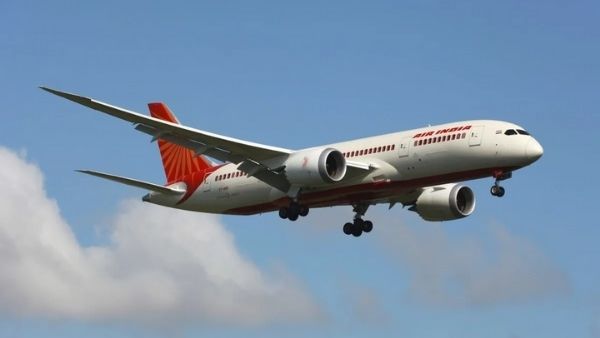
In a major relief to many Indian travelers, Cochin International Airport on Saturday announced that Indian national carrier Air India will start operating direct flights from Kochi to London starting from Wednesdays, 18th August 2021. The announcement comes after the United Kingdom moved India from the country’s ‘Red’ to “Amber” list, which means Indians can now travel to the United Kingdom without mandatory 10-day hotel quarantine. Moreover, In a bid to attract more European carriers the Cochin International Airport Ltd (CIAL) has decided to waive the parking and landing fee for carriers from Europe. It is important to note that that Kochi is the only international airport in the state which offers direct flight connectivity to London. As per the announcement by the flag carrier, it will deploy Dreamliner category aircraft to operate service on the London-Kochi-London sector. Air India in a statement also said that the AI 150/149 aircraft will arrive in Kochi at 03.45 AM and will depart for London at 05.50 AM on Wednesdays.

Read more

Ladakh scraps permit system for domestic tourists, green fee stays

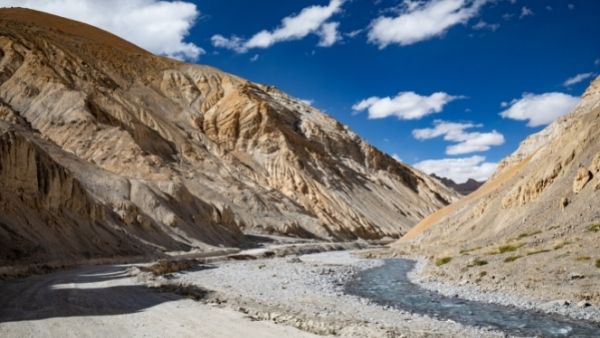
Indian citizens visiting tourist hotspots in the ‘protected’ areas of Ladakh, some of which are in forward areas, will have one less paperwork to deal with. The administration has scrapped the Inner Line Permit (ILP) system in yet another move to underline India’s sovereignty over the territory. Tourists venturing to these areas will still have to pay the environment fee of Rs 300 and Red Cross Fund fee of Rs 100 each. The good news is that they can do so from the comfort of their hotels using the online portal, officials told TOI. All visitors also need to carry valid identity proof during travel and foreigners will still need the Protected Area Permit. The scrapping of the ILP system, however, will not result in unfettered access. The Ladakh administration will separately notify areas, mostly ‘zero-km’ villages on the border, where tourists will not be allowed. The home ministry on Saturday asked for such a list, which will be finalized shortly after consultation with the police and the Army. Thang village on the border with Pakistan in the Nubra valley; Dungti, Koyul, Demchok and Chumar in the Nyoma subdivision in eastern Ladakh are likely to remain out of bounds. In Kargil district, tourists can now travel to places such as Batalik easily. Ladakh was opened up for tourists in October 1974. Although tourists were allowed to travel to a limited number of places, the move attracted droves of foreign tourists and firmly established the frontier area as an undisputed Indian territory in the global mindspace. In early days, access to Pangong Tso, for example, was allowed only between 6am and 5pm, when tourists had to mark their return at the Lukung checkpost. Similarly, Turtuk was opened up only in 2010. A lot of areas have been opened up progressively since then. But many still remain out of bounds, mostly on Army’s insistence, much to the chagrin of local population who want to reap the economic benefit of tourism the way Leh and Nubra Valley have.

Read more