Maldives : Health Protection Agency Eases Rules For Stay at Guesthouses at Local Islands

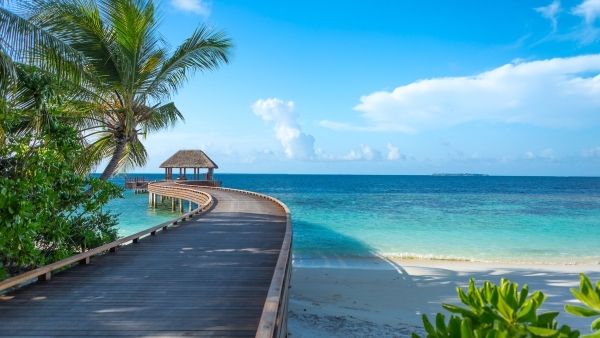
The Health Protection Agency of Maldives has announced easements to tourists looking to stay at guesthouses at local islands in the country. Tourists who have been fully vaccinated by completing two doses of a WHO-approved COVID-19 vaccine will be able to check in at local island guesthouses, given that 14 days have passed since the administration of the second dose. Children who accompany such guests but are under the approved vaccination age will be able to check in as well. Furthermore, tourists who would like to check in at local island guesthouses must carry proof of a negative PCR test taken no earlier than 72 hours prior to their arrival in the Maldives. Guests must also have a negative PCR test while checking out from the guesthouse. Tourists who have not received two full doses of a WHO-approved COVID-19 vaccine will be able to check-in at guesthouses in inhabited islands in the Maldives where 60% of the local population have received two full doses of the vaccine. Additional criteria for such guests stipulates that 95% of staff providing tourism services on the island must have received two full doses of the vaccine. HPA states that 14 days must have passed since the administration of the final vaccination dose for it to be considered a full vaccination.

Read more

Delhi Metro to operate with full seating capacity as govt further relaxes Covid curbs

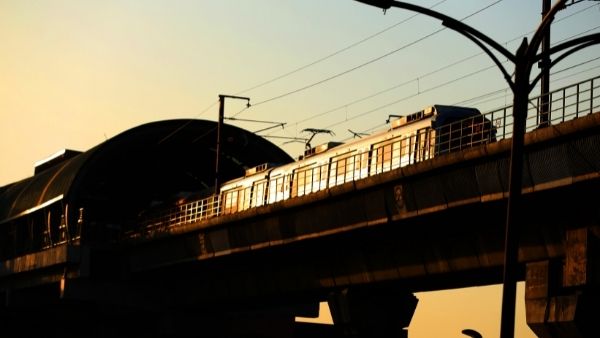
As the Covid-19 positivity rate in Delhi dropped below 1 per cent, the Kejriwal government has lifted restrictions on a commute through public transport. Delhi Metro officials recently announced that its services will now run with full seating capacity from July 26. However, passengers will not be allowed to travel standing on the train. The DMRC started running trains with 50 percent seating capacity since June 7 after the lockdown was partially lifted with a declining number of cases. According to the recent guidelines issued on Saturday about Covid containment, Delhi people will be able to travel in Delhi Metro with full seating capacity, about 50 heads per coach from July 26, cap until further notice. So, each train having a capacity of 300 riders, cut down to 50, the trains will now run 17-18 percent capacity, 7 notches more than 10 percent since June 7 due to the 50 percent rule in place. The Delhi Metro further said that the revised guidelines will be examined again if required and detailed guidelines from the operational point of view and will be communicated accordingly. Meanwhile, entry at metro stations will continue to be regulated to adjust the permitted capacity. Entry will be allowed only through identified gates as per the ongoing practices. The average waiting time at the Rajiv Chowk stations has gone up to over 50 minutes on Saturday, DMRC said. Delhi Metro services were fully suspended since May 10 in view of the surge in Covid cases in the second wave and the lockdown in the capital city. The lockdown was first imposed on April 19 and was extended further by the government. Metro services were operative only for people in the field of essential services. From May 10, it was suspended in view of the rising cases amid the rising number of cases. Delhi has been following a colour-coded strategy for Covid curbs. The Delhi Disaster Management Authority has further lifted restrictions in view of the coronavirus situation getting better. 66 cases were reported in the national capital on Saturday and no deaths, according to data shared by the city health department. This is only the second time when no Covid-19 related deaths were witnessed in the metro after July 18. The DMRC now has 10 lines 264 stations, including the Rapid Metro in Gurgaon, and stretches to Noida and Ghaziabad in the state of Uttar Pradesh, and Gurgaon, Faridabad, Bahadurgarh, and Ballabhgarh in the state of Haryana.

Read more

Thailand planning to roll out ‘island hopping’ program to lure international tourists

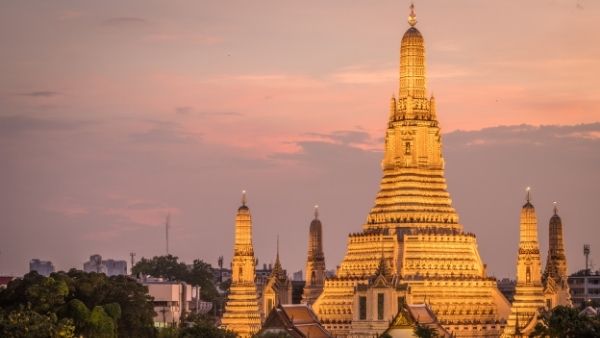
Thailand is planning to launch an ‘island hopping’ tourism program, in a move to boost tourism in the country. As per the program, it will be allowing quarantine-free foreign travellers arriving in the resort island of Phuket to ‘hop’ to other seaside destinations. Reportedly, fully-vaccinated international visitors after a seven-day stay in Phuket, will be allowed to visit other seaside destinations, including Phang Nga, Krabi, or Koh Samui. Reports have it that the tourist can even head to other parts of Thailand after spending seven days at the second destination. As per the country's current Phuket Sandbox reopening program, which came into effect on July 1, foreign visitors who are fully-vaccinated, will be allowed to enter the island without quarantine, but will have to stay in Phuket for at least 14 nights before heading anywhere else in the country. As per Thanakorn Wangboonkhongchana, spokesman of the Centre for Economic Situation Administration, the new adjustment might likely come into effect from August 1. Reportedly, this announcement comes as Thailand continues to report record numbers of COVID-19 cases for the second day in a row. As per the reports, the country on Thursday confirmed 13655 new cases, which is the highest single-day tally since the pandemic began, whereby it took the number of total infections to 453132, as per the Centre for the COVID-19 Situation Administration.

Read more

‘Mumbai, Delhi And Other Big Cities Practically COVID-Free’, India Asks UK to Review Travel ‘Red List’

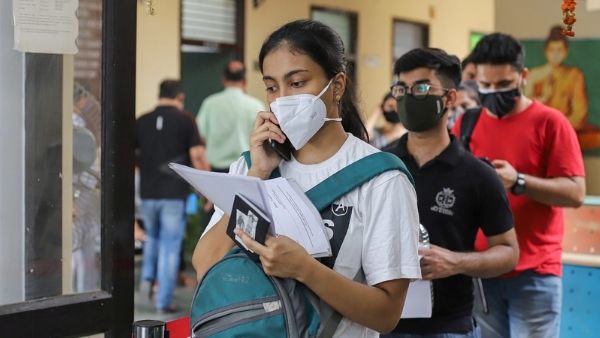
As the Covid situation is gradually improving, Foreign Secretary Harsh Vardhan Shringla has asked UK Foreign Office officials to consider a review of the travel ban on visitors from India. “Mumbai, Delhi, big cities are practically free of COVID. But we can’t rest on that situation because we are constantly vigilant, telling our citizens to take precautions so that we don’t have a third wave,” news agency ANI quoted Shringla as saying. He also shared plans for a reciprocal vaccine certification system to be unveiled by the Indian government soon to facilitate international travel. Notably, Shringla had arrived in the UK for a two-day visit on Friday to take stock of the Roadmap 2030 towards closer UK-India ties agreed between Prime Ministers Narendra Modi and Boris Johnson. Referring to France, the second-largest European Union nation which has recently included Covishield in the list of approved vaccines for travel to the country, Shringla asserted,”I briefed them [UK officials] on the COVID situation in India. I pointed out that France had cleared visitors from India without quarantine, if they are double vaccinated and have a negative test. The US has upgraded India in the travel scheme, encouraged the UK to do the same and they took note of it”. Under the current rules, India remains on the travel red list which effectively bans visitors from India, with returning citizens required to undergo a compulsory 10-day hotel quarantine on entry to Britain. With reference to instances of the India-made Oxford/AstraZeneca vaccine, Covishield, not being recognised by the European Union (EU), the Foreign Secretary reiterated that AstraZeneca had applied to the European Medicines Agency (EMA) on behalf of the Serum Institute of India (SII) in a letter dated May 14.

Read more

International Travel: Open Air Travel For Vaccinated Passengers, Says Global Airlines’ Association

International air travel should be opened up for at least those passengers who are fully vaccinated against Covid-19, global airlines’ association IATA told news agency IANS. As per the association, a comprehensive system should be set in place that allows hassle free travel for those inoculated. Moreover, the system should also ensure testing and verification of those passengers who have not been inoculated but without increasing the already set restrictions. “Vaccination and testing have a role to play in the recovery of international travel. It is not an option to wait for vaccines to be widely available before reopening borders. The global vaccine roll-out is likely to take time,” said Conrad Clifford, IATA’s Deputy Director General and Regional Vice President for Asia Pacific. “That’s why testing is the alternative for those who do not have access to vaccines or are unable to be vaccinated for various reasons,” Clifford added. Cannot maintain a zero case load approach According to Clifford, it is not sustainable to maintain a zero case load approach, especially with scientists believing that Covid-19 will end up becoming an endemic. “We have been and continue to urge governments to make data driven decisions to manage the risks of Covid-19 when reopening their borders to international travel,” he said. Delta variant cases remain a matter of concern Recently, independent data modelling conducted by Airbus and Boeing respectively have shown that strategies without quarantine measures can enable international travel to restart with a very low risk of introduction of Covid-19 to the travel destination. On the global level, vaccination drives have accelerated, thereby, triggering hopes for a faster economic rival of the world economy. However, rising Delta variant cases around the world remains a key concern for governments globally. “We are seeing governments around the world starting to open borders to vaccinated travelers. More than 20 countries have wholly or partially lifted restrictions for vaccinated travellers. In Asia, while there is a travel bubble between Australia and New Zealand, and Thailand has implemented a sandbox in Phuket, the borders of most countries are pretty much closed to international travel,” Clifford said.

Read more

Indian Railways restores Delhi-Katra Vande Bharat and India’s fastest, Delhi-Jhansi Gatiman Express

Indian Railways restores Vande Bharat and Gatiman Express trains! In a bid to facilitate convenient, faster and comfortable travelling, the services of New Delhi – Shri Mata Vaishno Devi Katra – New Delhi Vande Bharat Express and Hazrat Nizamuddin – Jhansi – Hazrat Nizamuddin Gatiman Express have been restored with effect from 21 July 2021. Train Number 22439 New Delhi – Shri Mata Vaishno Devi Katra Vande Bharat Express and Train Number 22440 Shri Mata Vaishno Devi Katra – New Delhi Vande Bharat Express will run daily except Tuesday. While Train Number 12050 Hazrat Nizamuddin – Jhansi Junction Gatiman Express and Train Number 12049 Jhansi Junction – Hazrat Nizamuddin Gatiman Express will run daily except Friday. A few days ago, it was reported by IE that Indian Railways plans to roll out at least 10 new indigenous semi-high speed Vande Bharat Express train sets by August 2022. These trains will connect around 40 cities across the country. In the month of February, a contract was awarded to Medha to supply the electrical systems for 44 Vande Bharat train sets. Now, the engineering company has been told to advance its production plan so that at least two prototype train sets can be rolled out by the month of by March next year. Other than all testing and trials that are required to pass a Vande Bharat train, a contract condition has also been added that the prototype train should complete 1 lakh kilometre commercial operation with passengers before the lot is placed for production. Currently, only two indigenous semi-high speed Vande Bharat trains are operational between Delhi-Katra and Delhi-Varanasi. The plan of the national transporter is to get as many as 100 such trains eventually. To manufacture as many as 100 Vande Bharat train sets, the cost would be approximately Rs 11,000 crore. The Railway Ministry’s new plan is to get maximum Vande Bharat Express train sets rolled out by 2024 by utilizing the three of Indian Railways production units- MCF in Raebareli, ICF in Chennai and RCF in Kapurthala.

Read more