Covid-19 vaccination: Ladakh becomes first Union Territory to achieve 100% first-dose coverage

The Union Territory of Ladakh has become the first centrally administered territory to complete 100% vaccination with at least one dose of the Covid-19 vaccine for its eligible population. According to reports, it has also vaccinated the entire ‘guest population’, including hotel workers, migrant labourers, and Nepalese citizens who earn their livelihood in the region, reports said. While Ladakh has a low population, the achievement is no mean feat considering its arduous terrain, extreme weather patterns, and isolated population centres. According to reports citing official data, 89,404 eligible people from all the eligible age groups, including 18-44 years, were administered the first dose. The second jab was administered to 60,936 people. The administration also vaccinated 6,821 Nepalese citizens living in Ladakh. The Union Territory achieved this feat barely three months after beginning the third phase of the vaccination drive. A senior official said the administration prioritised hotel workers, most of whom hailed from outside, as well as public transport drivers, considering their presence as frontline workers in the tourism industry. Labourers who came from other states during the summer were also prioritised. A large number of the Union Territory’s primary health workers and health centres are experienced in mass vaccination programmes such, which also helped expedite the inoculation drive. The official said the vaccination programme was not new for health workers at the grassroots level, with their huge experience in mass inoculation drives such as those for Polio. They just took it as another programme that needed to be implemented. The Ladakh administration had begun vaccinating people in the 18-44 age group even before the Centre had sanctioned it formally. The official said the administration had a surplus of COVID-19 vaccines. As a result, instead of letting those go to waste, they started vaccinating people in the 18-44 age group after the Centre had in-principle approved their vaccination.

Read more

Flying To Maldives, Sri Lanka And Bangladesh by IndiGo? Check Latest Travel Guidelines

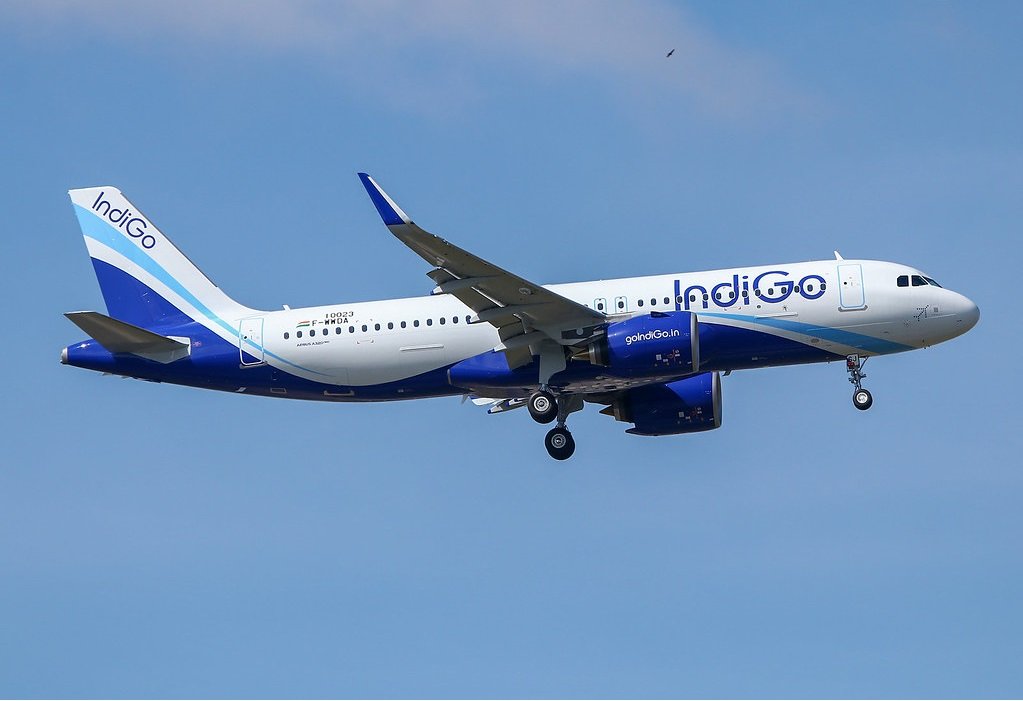
Owing to the current somewhat stable Covid situation across the world, many countries have opened up their borders to international passengers. However, keeping in view the possible third wave of coronavirus, leading low-cost carrier IndiGo has re-started flights to Male (Maldives), Colombo (Sri Lanka), Dubai, Sharjah, Abu Dhabi, Doha, Kuwait City, Muscat and Dhaka (Bangladesh). The airline has listed city-wise guidelines for its international passengers. Please note that IndiGo has warned that passengers not complying with government regulations will be denied boarding the flight. If you have an international flight booked with IndiGo, here’s all you need to know. Maldives The passengers flying to Maldives from India need to produce a negative COVID-19 PCR test report before entry to the island nation. A tweet by Ministry of Tourism, Maldives reads, “#Maldives will restart issuing of on-arrival tourist visa starting 15th July to tourists travelling from South Asia. Tourists need a negative #PCR result to enter the Maldives. Further details will follow accordingly.” Sri Lanka Passengers allowed to fly from India to Colombo in Sri Lanka include Sri Lankan nationals and residents, businessmen, Indian healthcare professionals, engineers, and technicians. Passengers should submit a completed Health Declaration Form to the staff of the Airport Health Office at Health Counters. Also, they are permitting transit via Sri Lanka if the connecting flight is within 10 hours of arrival. Furthermore, travellers who have received a complete dose of the Covid vaccine may be exempted from testing and quarantine restrictions. Dhaka (Bangladesh) According to the latest guidelines, all passengers arriving into Bangladesh are required to fill a self-health declaration form and submit the same to the health authorities upon arrival. Foreign nationals with valid visa for Bangladesh are allowed to travel to Bangladesh and shall mandatorily be in possession of a negative RT PCR certificate issued within 72 hours of their travel. Individuals not in possession of a valid negative RT-PCR certificate shall not be allowed to board the flight.

Read more

Mauritius reopens to vaccinated sun-seekers

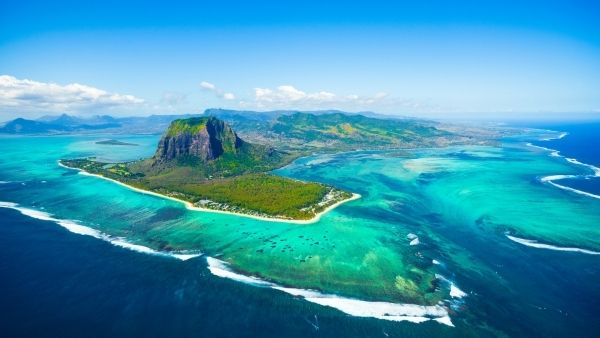
The Indian Ocean island nation opened up its doors to international travel on Thursday, after long months of isolation because of the coronavirus pandemic. But there is a catch -- only vaccinated holidaymakers with a negative PCR test will be allowed in, and even then they will have to be confined to "resort bubbles" for a 14-day quarantine. "Without tourists in the country, we do not have foreign currencies flowing in. We do not have the funds to keep us going," Lepoigner, 55, said. "It is a tragedy," the father of two added. The global coronavirus crisis has battered the economy in Mauritius, a paradise holiday destination known for its pristine beaches, turquoise waters and coral reefs. Before the pandemic hit in March 2020, the tourism and hospitality industry raked in about 24 percent of gross domestic product (GDP) and employed nearly a quarter of the workforce. But in the last financial year, the Mauritian economy shrank by 15 percent, so the country is desperate for tourists to return. "We are preparing for a gradual and sustained recovery of the sector, aiming at 650,000 tourists over the next 12 months," Finance Minister Renganaden Padayachy said in June. He said the government would give the tourism authority 420 million Mauritian rupees (8.3 million euros, $9.7 million) to promote the island in key markets such as China, Europe and South Africa. But with a full reopening to international travellers only planned from October 1, hoteliers will have to wait for business to bounce back. Le Mauricien newspaper reported that 600 tourists were expected to land on Thursday on three flights from Europe and Dubai. They'll be able to use their resort's facilities and beach -- but not the spa, and cannot explore the islands until after the two-week quarantine. - 'Immense economic shock' - Gilbert Espitalier-Noel, CEO of New Mauritius Hotels, which owns a string of resorts, says glumly that he doesn't expect a recovery until the last quarter of the year. The hotel group's revenue plunged in the nine months to March 2021 to 940 million rupees from 7.6 billion a year earlier. "While we have taken steps to minimise expenses, through pay cuts, voluntary retirements and keeping capital and operating expenditure at a minimum, the upkeep of the hotels remains significant," he said, adding that the company had applied for a state-funded subsidy to stay afloat. The effects of the pandemic have not been limited to the tourism sector, spilling out into other areas of the economy including transport, agriculture, retail and support services. "Mauritius has not escaped this immediate and immense economic shock and destruction with ripple effects beyond the sector itself," economist Rama Sithanen told AFP. And Mauritius, like other nations across the world, is continuing to battle more virulent strains of the virus. The nation of 1.2 million people has reported about 2,190 Covid infections and 20 deaths, although the figures may not reflect the true situation because of limited testing. But for Lepoigner, the return of tourists cannot come soon enough. "Even though there is a risk of contamination with the new variant, either we die of hunger, or we die of Covid. I'll pick Covid since 99.9 percent of Mauritians have survived the virus since last year," he said.

Read more

Europe Travel? Restrictions Again As Covid Soars After Re-Opening: What’s Going On By Country

Worry is spreading around Europe after Malta decided this week to ban all but double-vaccinated visitors, opening the possibility that other countries would follow as the Covid Delta variant contagion infects the continent. A few hours after Malta’s announcement, and following warnings from the European Commission that such measures were discriminatory, the island’s government eased the ban, opting instead for mandatory quarantine on arrival. Unvaccinated arrivals from amber-list countries, which include all E.U. members, can enter but must "submit themselves to a period of quarantine," the government’s new statement says. Malta’s changes are an example of the confusion throughout Europe after the continent decided to reopen to the world but now is suffering a worrisome spike of infections. The paradox? The situation in large part is the result of the region’s relaxation of restrictions and the opening of borders in anticipation of tourism, summer vacations and related events.

Read more

WHO panel advises against Covid vaccination proof for international travel

The World Health Organization's Emergency Committee has maintained its stance that proof of vaccination against coronavirus should not be required for international travel, amid a growing debate into blocking the entry of travelers if they are unvaccinated. The independent experts said that vaccinations should not be the only condition to permit international travel, given limited global access and inequitable distribution of Covid-19 vaccines. WHO's emergency committee has also warned that new concerning variants of Covid-19 were expected to spread around the world, making it even harder to halt the pandemic. "The pandemic is nowhere near finished," the committee said in a statement, highlighting "the strong likelihood for the emergence and global spread of new and possibly more dangerous variants of concern that may be even more challenging to control". WHO chief Tedros Adhanom Ghebreyesus also asked China to co-operate better in the probe into the origins of the coronavirus pandemic, the first cases of which were seen in Wuhan in December 2019, "We hope there will be better co-operation to get to the bottom of what happened," Tedros Adhanom Ghebreyesus told a regular press briefing in Geneva, calling in particular for access to raw data which so far has been inadequate. Tedros said investigations into the origins of the pandemic in China were being hampered by the lack of raw data on the first days of its spread there.

Read more

Canada Allows Indians to Travel Via 'Third Country' Route, Issues New Travel Advisory

The Canadian government in its latest global travel advisory has continued to suspend India-Canada direct flights till July 21. The extension comes in view of the deadly coronavirus pandemic. Indian travelers who have to fly to Canada in this period have to book a flight via an ‘indirect route.’ According to the revised official travel advisory, Canada will not accept the COVID-19 molecular test report from India. Therefore, the travelers have to get themselves tested for the coronavirus in a ‘third country’ before they continue their journey to Canada. The revised global travel advisory issued by the Government of Canada for Indian travelers can be read here. As per the advisory, passengers who have previously tested positive for the COVID-19 virus and are traveling from India to Canada have to now provide proof of a coronavirus test conducted between 14 to 90 days prior to their departure. "This proof must be obtained in a third country before Indian travelers continue their journey to Canada. You might need to seek entry and stay in a third country for at least 14 days,” the advisory read. These updated COVID-19 regulations which have been imposed by Canadian authorities have added hurdles to the pre-existing problems of the Indian passengers looking to travel to the country for professional, educational, professional, or other reasons. There are some countries that may put the passengers from India in quarantine for a minimum period of 14 days after arrival. This will lead to hampering their timeframe and will increase their expenses too. However, Canada is not the first country to put travel restrictions for passengers traveling from India. There are many countries that have restricted entry or transit for passengers arriving from India and especially for those who have previously tested positive for COVID-19. If the passenger tests positive during transit, they might be quarantined or sent back to their point of departure.

Read more