Foreign travel bookings rise for end-July, August as restrictions ease

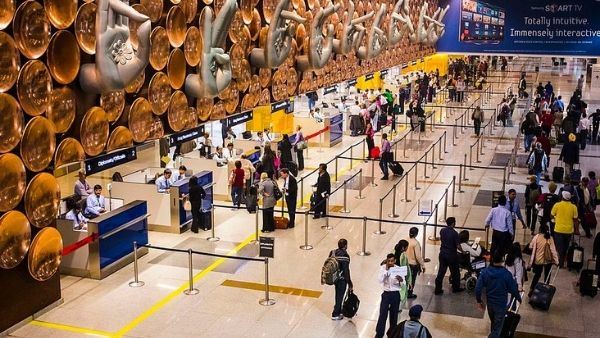
International travel and tourism has started recovering, with some agents reporting a 40 percent rise in booking of foreign flights and hotels as the country recovers from the second wave of COVID-19 and more countries allow Indians in. "In the past week, we have received a large number of inquiries and bookings for flights and tours for Singapore, Malaysia, Hong Kong, and Bangkok for the last two weeks of July and first two weeks of August," an executive from Delhi-based Swan Travels told Moneycontrol. While most bookings for flights have come from students heading for international colleges, which typically start in August or September, inquiries from casual travelers looking for a break have also risen in the last week, people in the travel trade said. They expect a shortfall of international flights from India to Southeast Asian countries in August because of rising demand for these destinations. "Most of Europe, US, Australia still remains shut for travel for India till now, and their embassies are now slowly opening up, but getting approvals for visa is still quite slow. Travelers are looking at countries like Singapore, Malaysia, Maldives and Thailand," an official from Swan Tours said. An executive at Welgrow Travels said the agency also received requests for budget accommodations for a few weeks to a month from some customers who are looking to travel while "working from home" from a new destination. According to an executive at the online travel agency and travel search engine Yatra.com, international flight and hotel bookings have risen by around 40 percent in the last week, while the online traffic of the website is now rising for countries that have started allowing Indian tourists or have eased quarantine rules. Domestic Indian airlines are also looking to increase the number of flights to these countries. Last week SpiceJet announced it would launch international flights to Male from Kochi and Mumbai. The Travel Agents Association of India, a domestic industry body with around 3,000 members, also expects international tourism to constantly rise for the next few weeks as more people get vaccinated and more countries ease restrictions. "Travel to the middle-east, (countries including the United Arab Emirates, Turkey, Qatar, Kuwait), Africa, and Europe will also rise in the next few weeks as international travel opens up," an official from TAAI said. While the pickup in bookings in the last week is encouraging the tourism industry, the numbers are still much lower than the pre-COVID-19 levels. The travel trade is looking for more support from the Indian government for both international and domestic travel to boost the tourism industry. “Most states are unaware of these recommendations and continue to impose restrictions. The Centre should issue an order to have them implemented at the state level, at the earliest, to spare travelers the difficulties,” the official from TAAI said. The TAAI has also requested the government to consider widening the scope of its relief measures announced last month under which tourist guides recognized by the Ministry of Tourism and state governments can avail a loan up to Rs 1 lakh each, and travel and tourism stakeholders recognized by the Ministry of Tourism can get a loan up to Rs 10 lakh each. The International Air Transport Association last week said international and domestic air travel across the globe improved marginally in May, compared with the previous month, but warned that extensive government restrictions continue to deter the complete recovery process in the aviation industry. Recovery in international traffic, in particular, continued to be stymied by extensive government travel restrictions, the global aviation industry body said. "It is disappointing that more governments are not moving more rapidly to use data to drive border opening strategies that would help revive tourism jobs and reunite families," said IATA's director general Willie Walsh.

Read more

COVID negative report, vaccine mandatory for tourists visiting Jammu and Kashmir's Anantnag

Authorities in Anantnag district of Jammu and Kashmir have made a COVID-19 negative report and vaccine certificate mandatory for visitors to tourist places, including the famous resort of Pahalgam, in the district to prevent the resurgence of coronavirus, officials said on Sunday. The district administration of Anantnag in south Kashmir, which is home to several tourist spots and public parks, said the visitors to public parks and tourist spots will be permitted only upon producing vaccination certificates and COVID-negative reports to combat the spread of the virus, the officials said. As per an order issued by Additional District Magistrate, Chief Executive Officer, DDMA Anantnag, joint enforcement teams of civil and police administration have been constituted to ensure observance of COVID-19 SOPs at tourist destinations and public parks. The enforcement teams shall also comprise officials of floriculture department, development authorities and municipalities, the officials said. The prescribed preventive protocols have been issued to prevent possible spread/transmission of COVID infections, they said. The chief medical officer has been asked to deploy teams at public parks/tourist sites for on-spot testing and vaccination of visitors, they added. The order asked the joint teams to file a daily action taken report regarding the imposition of fines, etc. in case of violation of COVID SOPs. The constituted teams shall ensure COVID-19 protocols are followed in Wazir Bagh Park, Achabal Garden, Verinag Garden, Pahalgam, Aru, Betab Valley, Dara Shikoh Garden, Kokernag Botanical Garden and other tourist spots/parks, the officials said. Pahalgam and other tourist spots in the district as well as in other districts of the valley have been witnessing heavy influx of visitors due to rising temperature in Srinagar and other urban areas. PTI SSB HDA.

Read more

Delhi has new guidelines for domestic travellers

The Delhi government has set new guidelines for domestic travellers. The guidelines come at a time when the fear of a third wave runs high. For international travellers, the Central Government's rules shall be followed in the state. The Delhi government's guidelines are aimed at those entering into Delhi from other states, including those that have over 5% positivity rate. The plan is a colour coded one, which has been approved by the Delhi Disaster Management Authority ( DDMA). Divided into four levels, these colour coded groups depend on bed and oxygen occupancy, or the number of new cases, or positivity rate. The first level is Yellow, the second is Amber, the third is Orange, while the fourth and the highest level is Red. The level Red is over five percent positivity, or 16000 new cases in the week, or 3000 oxygen-bed occupancy. So for a domestic traveller there can be three situations wherein he or she would have to face travel restrictions. A Red level alert will be in place for travellers flying into Delhi from those states and Union Territories that have a positivity rate or more than five percent. Restrictions will also be in place for those who are coming into Delhi by trains, buses, by air or by road from those states with more than 10 percent positivity rate. Restrictions will also be in place for those travellers who are entering into Delhi from states or Union Territories that have a new mutant of the virus. Travellers falling into any of the above mentioned categories will be required to show a certificate of vaccination for both the doses, or a negative Rt-PCR test that should be maximum 72 hours old. Travellers who are unable to show either of these proofs, will have to go through a quarantine period of 14 days in a paid centre or institutional centre.

Read more

Amid tourist rush, Uttarakhand cuts hotel occupancy to 50 per cent

After pictures of tourists flocking to Mussoorie, Nainital and other places in Uttarakhand and flouting Covid-19 safety norms went viral on social media, raising concerns among authorities amid a third wave scare, the state government on Saturday issued an order restricting occupancy of hotels to only 50 per cent of their capacity. Chief Minister Pushkar Singh Dhami said hotels in Dehradun, Nainital and other tourist places will now operate with a 50 per cent cap on occupancy to their full limit. “We are making efforts and will follow guidelines to contain the spread of the virus,” he said. Besides, officials of Dehradun and Nainital district administrations tightened the belt and made negative RT-PCR test report mandatory for those entering there from outside the state. Preeti Priyadarshini, senior superintendent of police, Nainital district, said: “The rules are laid down to ensure that Covid-19 safety norms are not violated. We urge people to follow the rules and adhere to the guidelines.” The strict rules are being implemented due to thousands of tourists flocking to the hills, threatening to infect others. Pictures and videos of tourists from the Mall Road in Nainital and Kempty Falls in Mussoorie had gone viral on Twitter and Facebook. Last week, authorities had to stop at least 5,000 tourists from entering Nainital due to the unavailability of parking spaces and for failing to produce Covid-19 negative reports.According to estimates of the state tourism department and police, more than 10,000 people visited Nainital and Mussoorie last weekend — the two most famous hill towns in the state.

Read more

Flying to Andaman and Nicobar Islands? Check THESE Travel Guidelines or Pay The Price

The Ministry of Civil Aviation has re-issued quarantine guidelines for those travelling to the Andaman and Nicobar islands. The rules have been implemented in order to keep fresh coronavirus infections at bay while encouraging tourism in the Indian island. According to the guidelines, all travellers flying to Andaman and Nicobar islands from the Indian mainland need to carry a negative RT-PCR test report issued from ICMR-approved labs within 48 hrs of departure.Also Read - Domestic Flights Update: SpiceJet to Start 8 New Flights Connecting THESE Cities From July 16 Additionally, all passengers will be tested with Rapid antigen test on landing at the Port Blair Airport in Andaman and Nicobar islands, and those who test positive will be sent for institutional quarantine free-of-cost. Such passengers can also opt for quarantine stay at identified hotels on payment basis. All passengers need to undergo mandatory 7-day home quarantine even if they tested negative. Meanwhile, passengers proceeding to Swaraj Dweep, Shaheed Dweep, and little Andaman need to undergo 10 days mandatory home quarantine. Failing to follow the guidelines can lead to a fine up to Rs 5,000 for each violation.

Read more

Now, Belgium recognises Covishield vaccine

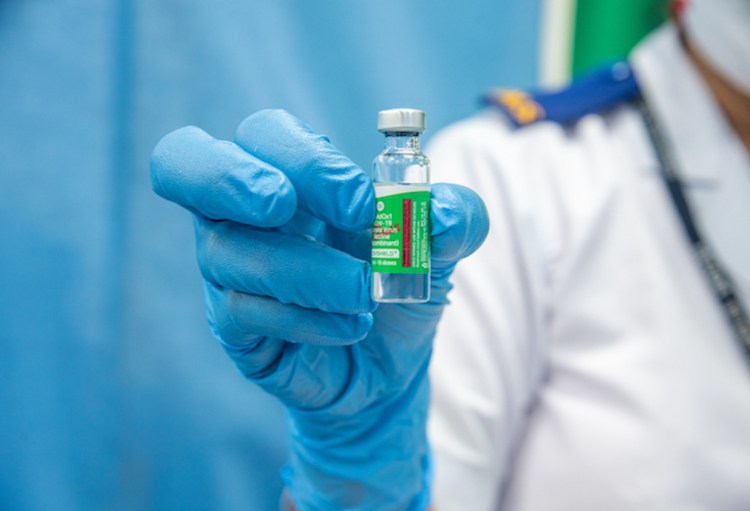
Belgium has recognised the Covishield vaccine produced by the Serum Institute of India (SII) and developed by AstraZeneca and Oxford University, said the Embassy of Belgium in India on Friday. "Belgium recognises Covishield, the @AstraZeneca vaccine produced by @SerumInstIndia and distributed by COVAX. An important decision for India, Nepal, Bhutan, Sri Lanka, Maldives, Bangladesh in the fight against vaccine inequality," Belgium in India tweeted. Earlier this week, the Netherlands approved the Covishield vaccine for travellers. Meanwhile, Switzerland, Iceland and seven EU countries have also allowed the SII-manufactured Oxford-Astrazeneca vaccine on July 1, a day after external affairs minister S Jaishankar said he had taken up with the European bloc to accept Covid-19 vaccines, Covishield and Covaxin. According to sources, Austria, Germany, Slovenia, Greece, Iceland, Ireland, Estonia and Spain have confirmed accepting Covishield for travel entry. Switzerland has also allowed Covishield for the Schengen state. Estonia has confirmed that it will recognize all the vaccines authorized by the Government of India for the travel of Indians to Estonia, said sources. India had requested EU member states to individually consider extending exemption to those persons who have taken Covishield and Covaxin and said it will institute a reciprocal policy for recognition of the EU Digital Covid Certificate, according to sources.

Read more