India-Maldives flights to resume from July 15

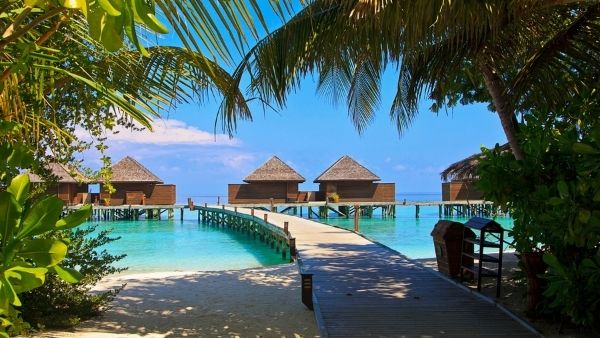
It’s time to go blue once again as India-Maldives flights are resuming from July 15. The happy announcement was made by the Maldivian President Ibrahim Mohamed Solih but he also said that the government will keep a tab on the pandemic situation between 1 and 15 July. Apparently, the Maldivian government has decided to resume international flight services from next week, which is July 15. The country will reopen its borders to other South Asian countries as well. Go First Schedule From India, Go First, which was GoAir before, will be operating flights from Delhi, Bengaluru and Mumbai to Malé from July 15. The flight will be available twice a week on Thursdays and Sundays. Then from August 4, more flights will operate on Wednesdays and Saturdays. If all goes well, then from September 3, flights between the two countries will operate daily. From Delhi, flights for Malé will leave at 9:50 AM, and land at 1:20 PM in the afternoon. The return leg will leave Malé at 2:35 PM, and land in Delhi at 7:05 PM in the evening. From Mumbai, the flights will land at Malé Airport at 12:05 PM, and from Bengaluru at 1:05 PM. IndiGo schedule Direct flights for Malé will be operated by IndiGo from Mumbai, Kochi and Bengaluru. From Kochi and Bengaluru, flights will be available from July 15 onwards, on Thursdays. Flights from Mumbai will begin from July 16 and will be available twice a week on Fridays and Saturdays, then daily from July 20. All these flights will land in Malé between 1 PM and 4 PM. Entry requirements According to recent updates from the Maldives, international passengers need to carry a negative RT-PCR test report before entering the country. A health declaration form on the Maldives immigration portal should be filled by the travellers 24 hours before departure. No mandatory quarantine or test on arrival. If someone shows COVID-19 symptoms, they will have to undergo a PCR test.

Read more

Iceland, Germany, and Norway reopens visa application centres in India

Iceland has reopened its visa application centres in India, making it possible for Indians to travel to Iceland. Indian citizens can now visit the visa application centres in New Delhi, Kolkata, Kochi, Mumbai, Bengaluru, and Chennai. Till now, the visa application centres remained closed since the pandemic began. VFS Global has announced that Iceland’s Mumbai visa application centre is now accepting applications for the short-stay category. Interested applicants can visit every Monday from 8 AM to 2 PM. Bengaluru too is accepting applications for the short-stay category, and will operate from 9 AM to 1 PM every Monday, Wednesday and Friday. The same applies for Kolkata, which is open every Monday for applicants. Germany too has reopened its visa application centre in Kolkata, which is accepting visa applications for Master students, while category C applications should be sent to Mumbai. VFS Global has also made it clear that for now, D visa applications will remain suspended. Norway, on the other hand, has also reopened its visa application centres in India and Sri Lanka. Norway visa application centres located in Bengaluru and Mumbai have already resumed accepting visa stamping services from June 21. The one in Mumbai operates from 8 AM to 2 PM every Wednesday, while the one in Bengaluru operates from 9 AM to 3 PM every Monday. The New Delhi centre has also resumed its visa stamping services, but only on limited days.

Read more

Kerala Relaxes Covid-19 Norms to Boost Tourism Sector

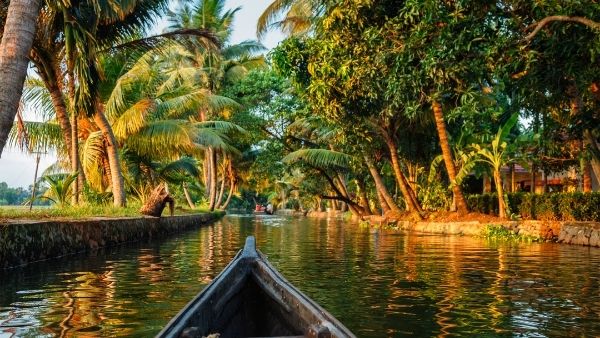
The Kerala government has come out with some relaxation in the standard operating procedures (SOP) of the Covid-19 protocol to boost the tourism sector. Tourism activities are allowed in areas where the TPR is below 10 per cent. However, the staff working in the sector must have taken at least one dose of vaccination. The guests also must either have proof of at least one dose of Covid vaccination or an RT-PCR negative certificate taken within 72 hours. In these areas, accommodation units in are allowed to function adhering to the standard operating procedures issued by the Department of Health, Government of India and the operational guidelines of the Department of Tourism, Government of India. The State has divided places into four categories based on TRP. Category A - Average TPR below 5 per cent (Areas with low spread). B - Average TPR between 5 and 10 per cent (Areas with moderate spread). C - Average TPR between 10 and 15 per cent (Areas with high spread) and D - Average TPR above 15 per cent (Areas with critical spread). According to these categories, all public offices, PSUs, companies, commissions, corporations, autonomous organisations will function with 100 % strength in Category A and B and with up to 50 % strength in Category C. In A and B category areas, hotels and restaurants are allowed to function till 9:30 pm for take-away and home delivery of food. Gyms and indoor sports are also allowed to function in non-AC halls/spaces with adequate ventilation, restricting to a maximum of 20 persons at a time in A and B category areas. The government has also entrusted district collectors to take necessary steps to promote door delivery of essential items, in consultation with the trade associations to reduce crowding in shops.

Read more

About 40% Indians positive about travel this year: Airbnb

Indians are looking at travel in newer ways and exploring flexible, nearby travel and travel to work remotely, according to a three week survey conducted in April, May with a sample size of 1023 participants. "The survey showed that 43% of Indians would like to travel this year when able to (66% to destinations that are a drive away) and are excited about visiting new places with loved ones, relaxing in nature, enjoying offbeat destinations and sharing their experiences and recommendations with others. A third would like to spend time travelling and working in different locations," said a press release issued by Airbnb. "More than a third of respondents (36%) would like to travel and explore new places with loved ones. About eight in ten (78%) said they would like to be closer to their family in order to receive or provide support," it added. A third of Indian travelers (33%) would like to spend time travelling and working ‘anywhere’ in different locations, in a post-pandemic world, the survey said adding that about two-thirds (62%) of respondents say they would opt for off-peak times of the year to travel. "Seven in ten (69%) respondents are interested in unique accommodations such as heritage homes, havelis, farm stays and villas when they travel next and a third (35%) say that they are very likely to stay in unique accommodations when they travel next. GenZ (70%) and Millennials (73%), who comprise a large pool of current and future travelers, are leading this trend," said the release. "Half of new listings globally that were both activated and booked in early 2021 got a reservation request within four days, and for the year ending April 30, 2021, the average annual earnings per Homes Host who has welcomed at least one guest on Airbnb was about $9,600," said the company.

Read more

Government increases domestic flight capacity to 65% from 50%

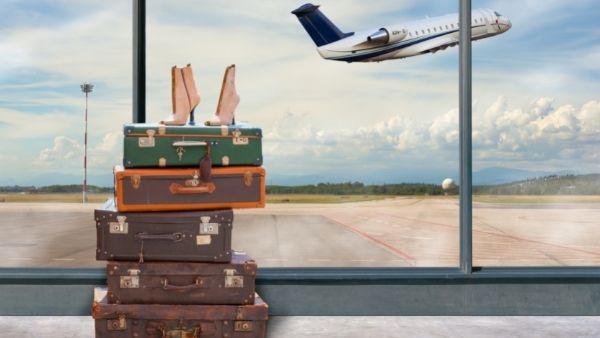
The ministry of civil aviation (MoCA) increased the capacity of domestic flights to 65% from 50% on Monday. The order dated July 5 read, “After the review of the current status of scheduled domestic operations viz-a-viz passenger demand for air travel in terms of the purpose specified in previous order 01/2020 dated 25.05.2020… 50% capacity may be read as 65% capacity.” The MoCA has increased the passenger capacity from July 5 which will be applicable up to July 31 or until further orders, whichever is earlier. Domestic aviation operations continue with all Covid Protocols in place. Number of domestic passengers increases as flying emerges as a preferred, safe & time saving mode of transport. On 4 July 2021 - 1,74,905 passengers on 1,467 flights. Total flight movements: 2,938,” Civil aviation minister Hardeep Singh Puri tweeted. For the first time after May 2020, the government cut down domestic airlines capacity from 80% (of the summer schedule 2020) to 50% from June 1 (in an order dated May 28) to safeguard airlines’ viability battling weak finances in the aftermath of the sudden spike in Covid-19 cases across the country, decrease in passenger traffic and passenger load factor. The government had also increased the upper cap of airfare to go up by around 14% due to the rise in fuel prices. The ministry’s previous order read, “In view of a sudden change in the number of Covid-19 cases, and decrease in the number of passengers and reduced occupancy, the existing capacity cap of 80 per cent is reduced to 50 per cent.” On December 3 last year, the civil aviation ministry allowed the airlines to increase their flights capacity from 70% to 80% of the pre covid levels. After complete flight operation suspension for two months, the government permitted domestic flights from May 25, 2020, with 33% capacity of their pre covid levels which was then increased to 45% in June and so on. However, passenger traffic started to fall from March 2021 due to which the airlines approached the government to decrease the seating capacity from 80% to 60%.

Read more

Germany lifts travel ban on passengers from India, 4 other countries

New Delhi: Germany is lifting a ban on most travellers from five countries hit by 'Delta' variant of COVID-19, including India and the UK from Wednesday, said German envoy Walter J Lindner. "From tomorrow, Germany is removing the entry ban and easing travel rules for five countries where Delta variant is widespread, including India," tweeted German ambassador to India, Walter J Lindner on Tuesday. German public health agency the Robert Koch Institute on Monday said India, Nepal, Russia, Portugal and the UK, currently listed as so-called virus variant countries, would be reclassified from Wednesday as "high-incidence areas". The change means simpler requirements for people visiting those countries. People who have had either both vaccination doses, or who can demonstrate they have recovered from COVID, will not need to isolate on their return or arrival. India was classified as a virus variant area at the end of April, followed by Nepal and the UK in May. The EU country Portugal, as well as Russia, were added to the list on June 29. Germany banned entry for travellers from India due to an upsurge in the number of coronavirus cases.

Read more