

Karnataka makes negative COVID-19 test mandatory on arrival
- May 25,2021
- The Financial Express
As some states report high numbers of daily COVID-19 cases amid the second wave of coronavirus, Karnataka has now announced that a mandatory negative RT-PCR report would be needed for people from outside the state to enter. The announcement was made by state Home Minister Basavaraj Bommai who said that these reports would be checked at different strategic points in the state, adding that the state is already under lockdown with various restrictions in place. This came as the southern state extended its lockdown till June 7 from its earlier deadline of May 24. The minister made it clear that with a negative RT-PCR report, people would not be allowed to enter the state. With this, Karnataka has become the latest state to seek test reports for incoming domestic passengers. Here’s a look at all the states in India where test reports are needed to enter. Domestic travel during COVID-19: States requiring test reports Amid this wave, several states have closed their borders or placed restrictions on movement of people to prevent the spread of the virus apart from the normal thermal screening process. Apart from Karnataka, here are all the states that have mandated testing on arrival of passengers, as per the information enlisted by numerous airlines including Air India, Indigo and Air Vistara, as updated till May 21. Andaman and Nicobar Islands: All passengers arriving in the UT have to possess a negative RT-PCR report taken within 48 hours before the commencement of their journey. Moreover, the incoming passengers would also be required to undergo a mandatory rapid-antigen test. Apart from that, the passengers would also have to be in home quarantine for at least seven days even if they have a negative RT-PCR report. Assam: A rapid antigen test on arrival is mandatory for all passengers going to Assam. If the rapid antigen test comes out as positive, the individual would need to go for either home or institutional isolation. On the other hand, those passengers who get a negative report for the rapid antigen test would have to take an RT-PCR test at the airport itself, and would be allowed to leave the airport on the condition that they would have to remain in home isolation till the result is out. If the RT-PCR test is positive, then the individual will have to go for home or institutional quarantine. Meanwhile, if the RT-PCR test is negative, the passenger would still need to complete seven days of quarantine, and then would be able to go out in accordance with the government guidelines. Bihar: Bihar has mandated that passengers coming in from Maharashtra, Kerala and Punjab would need to carry a negative RT-PCR report conducted within 72 hours before the journey. Moreover, specifically for Gaya, passengers from these three states and those from Delhi-NCR would need to carry a negative RT-PCR report conducted within the same time frame. For passengers coming from elsewhere, rapid antigen tests on arrival would be available. A 10-day quarantine period is mandatory in the state for passengers coming from the three states, and additionally in Gaya, for passengers incoming from Delhi-NCR as well. Chandigarh: The UT requires all incoming passengers to either possess a negative RT-PCR report conducted within 72 hours prior to the journey, or a vaccine certificate which is more than two weeks old certifying that at least one dose has been administered to the individual. Chhattisgarh: Either a vaccine final certificate (which means after the administration of both doses) or a negative RT-PCR report conducted not earlier than 96 hours before the commencement of the journey are required by the state to permit entry to passengers. In the absence of both these things, a test would be conducted on arrival, and these passengers would have to remain in isolation till the declaration of the result. Daman and Diu: As per information updated by the Civil Aviation Ministry in April, passengers coming from Maharashtra are required to carry a negative RT-PCR report with them, and if the report is not in possession, the individual would have to undergo a mandatory test on arrival. Delhi: Apart from random sample collection of incoming passengers, passengers whose journey began from any city or airport in Maharashtra would be required to possess a negative RT-PCR report done within 72 hours prior to the journey, or they would be denied the journey from the point of origin itself. On the other hand, passengers who have transit in any city of Maharashtra have also been advised to carry a negative RT-PCR report of the same time frame, or they would have to get an RT-PCR test done mandatorily upon arrival, post which, they would have to remain in home quarantine for 14 days. Passengers who are arriving at Delhi from Andhra Pradesh or Telangana would have to carry either a negative RT-PCR report taken within 72 hours before the journey or a vaccine certificate stating that both the doses have been taken. If either of these documents are brought along, the passenger would need to undergo a mandatory seven day home quarantine, but in case these documents are not brought along, the passenger would have to undergo a mandatory institutional quarantine for 14 days. Goa: Goa also requires all incoming passengers to either carry a negative RT-PCR report done within 72 hours prior to the journey, or a vaccine certificate received on administration of both the doses. Passengers who are coming in an ambulance or during a medical emergency are exempted from this upon production of proof of such an emergency, and people coming in goods vehicles carrying essential supplies are also exempted, but they shall not carry any passenger who is not related to the supply of such materials. In Gujarat, while the need for passengers to carry a negative RT-PCR report has been eliminated, all incoming symptomatic passengers would have to take the test at the airport on arrival. Himachal Pradesh: As per the recent orders, before a passenger coming from high-load states of Punjab, Maharashtra, Uttar Pradesh, Karnataka, Rajasthan, Gujarat and Delhi can check into a hotel, they are required to present before the staff a negative RT-PCR test report issued within 72 hours before the arrival of the passengers. Jammu and Kashmir has made it mandatory for all arriving passengers, except defence personnel, to undergo a mandatory RT-PCR test upon arrival, and they would have to be in home isolation till the results. Moreover, if a passenger tests positive, they would have to remain in home quarantine for 14 days. Jharkhand: Passengers need to carry a negative RT-PCR or TRUENAT report conducted within 72 hours before the journey. In case a passenger does not possess this, they would mandatorily have to undergo an RT-PCR test on arrival. Moreover, all arriving passengers have to undergo seven days of home quarantine. Kerala requires all incoming passengers to carry a negative RT-PCR report conducted within 72 hours before the journey. In case this report is not in possession of the passenger, they would have to get an RT-PCR test done upon arrival or they would have to undergo a home quarantine for 14 days. However, for people coming in for a short period for business, court cases, etc, would need to mandatorily carry a negative RT-PCR test conducted within 48 hours prior to the journey. Ladakh: Passengers would need to carry a negative RT-PCR test, conducted within 96 hours, and failure to do so would result in passengers having to undergo home quarantine for seven days. A test could be conducted for such passengers after the quarantine period ends. Madhya Pradesh: Passengers coming from Maharashtra are required to present a negative RT-PCR test, or they would have to undergo an RT-PCR test on arrival. For all other asymptomatic incoming passengers, the state has not placed any quarantine restrictions, but has advised monitoring their health for 14 days. Maharashtra: Carrying a negative RT-PCR test report issued within 48 hours before the journey is mandatory to enter Maharashtra, and all passengers would also have to undergo a 14-day quarantine unless they are in the state for less than seven days. All passengers going to Manipur would need to present a negative RT-PCR/rapid antigen/TRUENAT/CB-NAAT on arrival, and the test should be not older than 72 hours before arrival. Meghalaya: Passengers would have to undergo mandatory testing upon arrival if they are not carrying a negative RT-PCR test report with them. Passengers arriving at Mizoram would need to carry a negative COVID-19 RT-PCR report not older than 96 hours before the arrival, or they would have to undergo a rapid antigen test on arrival. Nagaland requires passengers to present a negative test report not older than 72 hours or a COVID-19 final vaccination certificate, without which they would have to undergo a rapid antigen test on arrival. If the RAT is positive, they would have to go for institutional or home isolation, and if it is negative, they would have to get tested for RT-PCR there itself. Odisha: Passengers must possess either a negative RT-PCR test report or a complete vaccination certificate to be able to leave from the place of origin for Odisha. Negative RT-PCR report or a vaccination certificate for complete dosage is required for entry into Punjab. Moreover, all asymptomatic passengers would also have to undergo home quarantine for 14 days. Rajasthan: Arriving passengers need to carry a negative RT-PCR test report not older than 72 hours. In case this is not followed, they would have to undergo a mandatory RT-PCR test on arrival and remain isolated till the test results are out. Moreover, if the passenger tests positive, they would have to remain in home isolation for 14 days. In Tamil Nadu, symptomatic passengers from Maharashtra and Kerala would be tested on arrival, and if they are found positive, they would have to remain in home or institutional isolation. In Coimbatore, a negative test is required for all passengers, or they would be able to take the RT-PCR test on arrival. Tripura mandates all incoming passengers to present a negative RT-PCR/True NAAT/CBNAAT report not older than 72 hours, or they would have to undergo a test on arrival. Uttarakhand: Mandatory negative RT-PCR test report is needed from all passengers, and it should not be older than 72 hours. Moreover, upon arrival, passengers from Kerala, Maharashtra, Karnataka, Punjab, Chhattisgarh, Tamil Nadu, Madhya Pradesh, Uttar Pradesh, Gujarat, Delhi, Rajasthan and Haryana would have to undergo COVID-19 test. Uttar Pradesh requires that passengers coming from Maharashtra and Kerala present a negative RT-PCR report conducted within 72 hours before the journey. In Lucknow, however, all passengers have to possess a negative report. In West Bengal, passengers from all states must possess a negative RT-PCR test for entering the state. Passengers who do not present this report would need to undergo a 14-day quarantine. These guidelines, however, can be changed or updated by the state at any time.
Read more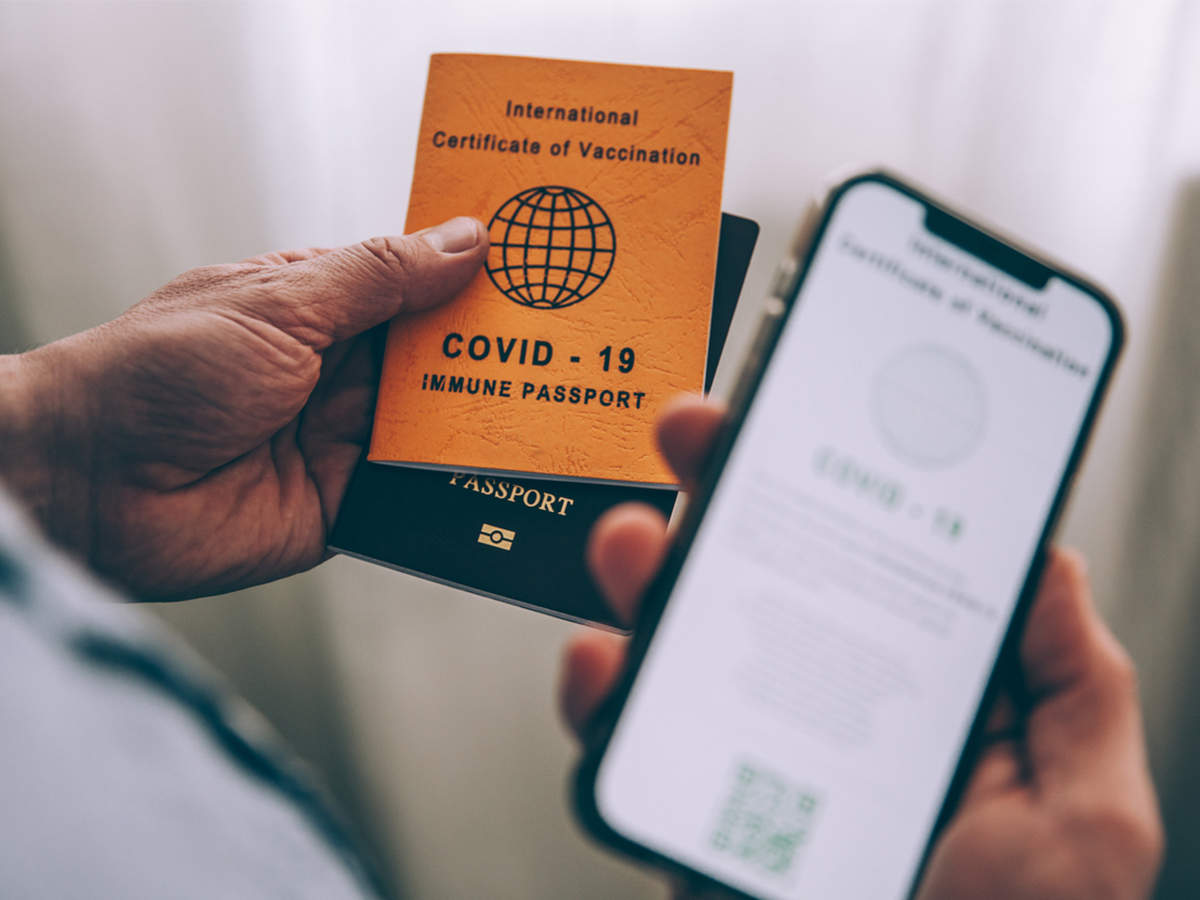
Accepting vaccinated travellers should be global best practice to reopen borders: IATA
- May 25,2021
- ET Travel World
The International Air Transport Association (IATA) applauded the growing number of countries making data and evidence-driven decisions to open their borders to vaccinated travellers. The latest data collected by IATA, including its Timatic service, shows that more than 20 countries have wholly or partially lifted restrictions for vaccinated travellers. IATA supports unrestricted access to travel for vaccinated travellers. In cases where vaccination is not possible, access to quarantine-free travel should be provided through Covid-19 testing strategies based on widely available, free-of-charge tests. Germany is among the latest countries to make quarantine alleviations for vaccinated travellers. Vaccinated travellers are no longer subject to quarantine measures (except from certain high-risk countries). Germany has also removed quarantine requirements for travellers with a negative Covid-19 test result (except from certain high-risk countries). The German government decision followed a review of scientific advice from the world-renowned Robert Koch Institute (RKI), which concluded that vaccinated travellers are no longer significant in the spread of the disease and do not pose a major risk to the German population. Specifically, it stated that vaccination reduces risk of Covid-19 transmission to levels below the risk from a false negative rapid antigen test. The implementation of this policy aligns Germany with recommendations from both the European Commission and the European Parliament, based on similar scientific advice from the European Centre for Disease Control and Prevention (ECDC). In its interim guidance on the benefits of full vaccination, the ECDC said that “based on the limited evidence available, the likelihood of an infected vaccinated person transmitting the disease is currently assessed to be very low to low.” Similar conclusions are being reached on the other side of the Atlantic. In the US, the Centers for Disease Control and Prevention (US CDC) has noted that “with a 90 per cent effective vaccine, pre-travel testing, post-travel testing, and 7-day self-quarantine provide minimal additional benefit.” “A safe opening of borders to international travel is the goal. And scientific evidence and data such as that presented by RKI, ECDC and USC CDC should be the basis for the decision-making needed to achieve that. There is increasing scientific evidence that vaccination is not only protecting people but also dramatically reducing the risk of Covid-19 transmission. This is bringing us closer to a world where vaccination and testing enables the freedom to travel without quarantine. Germany and at least 20 other countries have already taken an important step forward in re-opening their borders to vaccinated travelers. These are the best practice examples for others to quickly follow,” said Willie Walsh, IATA’s Director General. An Important Incentive for Vaccination According to the US CDC, alleviations from Covid-19 restrictions are a powerful motivator for vaccination, particularly in communities where vaccine hesitancy is prevalent. This is an additional and important benefit of restriction-free travel for those vaccinated. IATA polling indicates that 81 per cent of international travelers are willing to get vaccinated in order to be able to travel. Moreover, 74 per cent of people in the same poll agreed that those vaccinated should be able to travel by air without restrictions. Digital Solutions for Vaccination/Test Certificates The decisions of increasing numbers of countries to accept vaccinated travelers without quarantine measures adds pressure for a digital solution to manage vaccine certificates and Covid-19 test results. Paper-based processes could lead to extremely long processing times at check-in and border control. They also open the door to fraud. Digital vaccine/test certificates, coupled with passenger apps such as the IATA Travel Pass, will be needed to manage travel health credentials efficiently and securely in the restart. Recent IATA polling shows strong support for a digital solution: 89 per cent supported globally standardized Covid-19 test or vaccination certifications. 84 per cent want an app to manage their travel health credentials. “A gap is opening up between countries responding to scientific evidence, and those exhibiting a lack of preparation or excessive caution in reopening borders. Countries that seize the opportunity offered by the increasing numbers of vaccinated travellers can protect their populations and reap an economic reward,” said Walsh.
Read more
Kerala’s tourism minister asks officials to prepare post-Covid marketing strategies
- May 24,2021
- ET Travel World
PA Mohammed Riyas, the new tourism minister of Kerala has directed the tourism department to prepare marketing strategies so that the state tourism is ready to roll out when the current Covid wave shows signs of subsiding. As the current Covid crisis is expected to clear up by the second week of June, the minister asked the department to be ready with the plans to attract both domestic travellers and encourage travellers within Kerala to explore the state itself to help tourism survive and revive in the state. The minister said this after addressing a meeting of the officials of the tourism department and other related departments under the department of tourism in Kerala. The marketing strategies are aimed at both improving the confidence of travellers and creating a buzz about the brand ‘God’s Own Country’ in their minds. As international tourism will take time to resume, the minister has directed the officials to focus more on domestic travellers. He also asked officials to prepare a list of all ongoing tourism projects in different districts in the state and prepare the road map for their timely completion. They have also been asked to prepare a framework for creating credible tourism circuits connecting various destinations. While the revival of the Covid stricken tourism sector is of paramount importance in the short term, the minister said that Kerala tourism has to work on long term strategies which can redefine tourism with emphasis on responsible and sustainable tourism. In order to improve tourist facilities at destinations, clean and hygienic washroom facilities will be set up at all tourist destinations. Similarly, major importance will be given to waste management at tourist destinations, the minister said. Regarding the financial crisis in the trade and industry, Riyas promised all possible support and assistance to the tourism sector to mitigate the Covid stress. In order to resolve the issues of liquidity faced by the tourism entrepreneurs and investors, the minister will hold a meeting of the State Level Bankers’ Committee (SLBC). Similarly, immediate measures will be taken to ensure the welfare of the workers in the tourism sector, he added.
Read more
Covid-19: Lockdown extended in Delhi, Haryana, Rajasthan and Puducherry
- May 24,2021
- Live Mint
Lockdown was extended on Sunday in Delhi, Haryana, Rajasthan and Puducherry, with many states already imposing COVID-induced restrictions till May-end to rein in the spread of infection and the mounting deaths which crossed the three lakh mark. Delhi Chief Minister Arvind Kejriwal announced that the ongoing lockdown in the national capital will continue for another week and said the process of "unlock" will start from May 31 in a phased manner if the number of COVID-19 cases continues to decline. The Rajasthan government, which extended the coronavirus lockdown by 15 days till June 8, also said the state may allow some relaxations in commercial activities from June 1 in districts where the COVID-19 situation will show significant improvement. Extending the lockdown till May 31, the Haryana government said the positivity and fatality rates have to be brought down further, though it did allow some relaxations in the curbs. The daily rise in coronavirus cases in India remained below the three lakh mark for the seventh consecutive day with 2.4 lakh new cases recorded in a single day, the Union Health Ministry said on Sunday. With the fresh cases, India's tally of COVID-19 cases climbed to 2,65,30,132. The death toll due to the disease rose to 2,99,266 with 3,741 fresh fatalities, the ministry data updated at 8 AM showed. In the past 24 hours, Delhi recorded around 1,600 positive cases and the positivity rate went further down to below 2.5 percent, Kejriwal said in an online briefing. Haryana State Chief Secretary Vijai Vardhan, in an order, said the lockdown, which was earlier imposed till May 24, has been extended till May 31. However certain relaxations were given like standalone shops have been allowed to function during the day. The other shops, except in malls, are allowed to open from 7 AM to 12 PM on an odd-even basis. Madhya Pradesh Chief Minister Shivraj Singh Chouhan too had Saturday announced that the coronavirus-induced restrictions in the state would be gradually relaxed from the next month. .Lockdown-like restrictions have been extended up to May 31 in most of the districts including Bhopal. Meanwhile, Odisha is under lockdown till June 1. The Uttar Pradesh government had also extended partial corona curfew till 7 AM May 31 on Saturday. Among the southern states, Tamil Nadu, Kerala, Karnataka and Telangana have extended their lockdown this month, while Andhra Pradesh will continue to have curfew. The Puducherry government on Sunday announced the extension of the ongoing lockdown till May 31 as COVID-19 cases continue to soar in the union territory. In the Northeast, the Mizoram government has extended total lockdown in Aizawl and other district headquarters till May 31. Nagaland, Meghalaya and Arunachal Pradesh have extended the restrictions till month-end. Jammu and Kashmir administration has extended the corona curfew till May 31 morning.
Read more
Spain to welcome vaccinated travellers from June 7
- May 24,2021
- Times of India
Spain has said that it will start welcoming vaccinated travellers from June 7. The announcement was made by Prime Minister Pedro Sanchez on Friday at an international tourism fair in Madrid. He also informed that travellers from Britain would be allowed to visit for vacations from next week onwards. The Spanish PM said, "From June 7, all vaccinated people and their families will be welcome in our country, Spain, regardless of their country of origin. From next Monday, the 24th of May, Spain will be delighted to receive British tourists again into our country". The travellers will be allowed to enter the country without restriction. However, it is still not clear whether negative Covid test reports are required or not. Britishers have been one of the biggest sources of tourists for Spain. But due to COVID-19 restrictions, British travellers had to quarantine on arrival along with carrying a negative COVID report. Spain has said that it will also allow Japanese travellers to enter the country for non-essential reasons from Monday. Being one of the most popular destinations in the world, Spain recorded 83.5 million foreign visitors in 2019. As per official records, in 2020, the percentage fell 77 percent compared with a year earlier. The country is expecting more than 45 million foreign tourists in 2021, informed the tourism minister.
Read more
Ireland raises prospect of earlier return to foreign travel
- May 22,2021
- ET Travel World
Ireland may adopt a Covid-19 certificate to help citizens move more freely across the European Union earlier than late July, as previously flagged, amid mounting pressure from airlines and employers to reopen foreign travel. Ireland has the strictest travel restrictions in the 27-nation bloc. It advises citizens against non-essential travel, imposing fines on people heading to airports to go on holiday and a two-week mandatory hotel quarantine for arrivals from a number of countries. While Irish ministers have said it will be late July or early August before they put the EU's so-called "green certificate" into operation, Health Minister Stephen Donnelly said on Friday that it could be earlier. "The finalised date is being worked on and will be announced next week. The government's view is that we want to participate in this as early as possible," Donnelly told RTE as EU leaders look to finalise discussions to enable the certificate to be operational by June 21. The head of global industry group IATA, Irishman Willie Walsh, said on Wednesday Ireland's air connectivity was likely to shrink by 30% and may need five years to recover from Europe's most "repressive" travel restrictions. International Airlines Group-owned Aer Lingus shut its cabin crew base at one of Ireland's largest airports this week, while Ryanair has said it will give priority to other European markets in the coming months and base fewer planes in Ireland. The Irish chief of Facebook said on Friday that mandatory hotel quarantine had created a difficult environment for Ireland's big multinational employers. The United States is one of 56 countries from which people arriving in Ireland must pay almost 2,000 euros each to quarantine for up to 14 days in a secure hotel. "Many felt, especially at the beginning when it was applied to people even if they were fully vaccinated, that it was excessive and potentially even a little discriminatory," Gareth Lambe told an American Chamber of Commerce Ireland event "That was definitely a bit of a hiccup so it's really, really important that we have a clear roadmap on how we're going to open up travel again," said Lambe, currently the chamber's president.
Read more