First flight lands in Australia as India travel ban ends

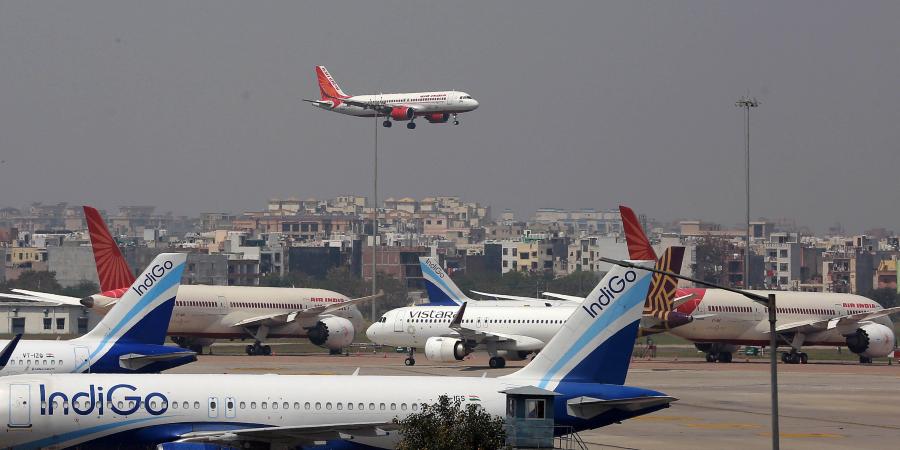
A plane carrying more than 70 Australians fleeing virus-stricken India landed in the country's north Saturday, the first since a controversial ban on arrivals ended. The plane touched down in Darwin on Saturday morning after picking up vulnerable passengers from New Delhi, but 72 of its booked passengers were barred from flying after 48 tested positive for Covid-19 and others were deemed close contacts. Initially planned to carry 150 travellers, just over half of those booked were cleared to board the plane, a Northern Territory Health spokeswoman said. Under the arrangement, those who test positive for the virus, or were deemed close contacts, have to remain in India until they return a negative test. The arrivals will quarantine at Outback quarantine facility Howard Springs for at least a fortnight. Earlier this month, the government threatened to jail anyone, including Australian citizens, who breached the travel ban, which expired at midnight on Friday. Around 9,000 Australians are believed to be in India, where hundreds of thousands of new coronavirus cases are being detected every day, and the death toll is soaring. Since March 2020, Australians have been barred from travelling overseas, and an individual exemption is needed for foreign visitors to enter the country. Australia has no widespread community transmission of Covid-19, but has seen several outbreaks emerge from hotel quarantine facilities, causing disruptive city lockdowns.

Read more

West Bengal lockdown: What's open, what's closed? Details here

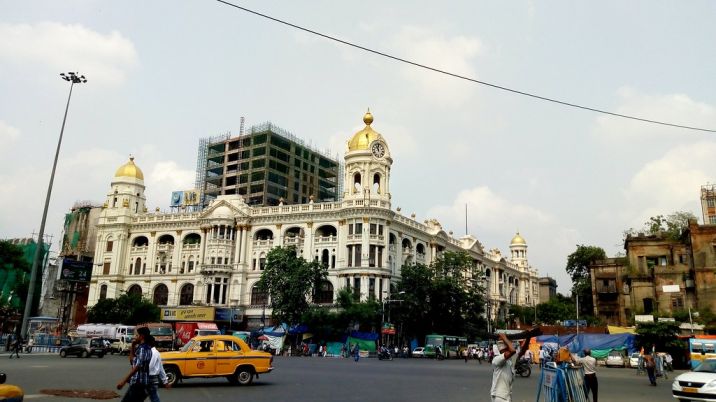
In order to control the spread of Covid-19 in West Bengal, Mamata Banerjee has declared stricter restrictions in the state till May 30. In this near lockdown scenario for the next two weeks, all offices and educational institutions will be shut. Train, Metro services and other transport services including waterways are prohibited in the state. Parks, zoos, sanctuaries will remain closed, stated the order by Chief Secretary, Alapan Bandopadhyay. Movement of private vehicles will be allowed only for emergency and essential services. People who are stepping out to get their vaccine, will be allowed to travel. The notification states that emergency services, which will be allowed, include healthcare, veterinary services, law and court, social welfare homes, correctional services, water supply services, power, media, fire services, disaster management, sanitation and funeral services. Medicine shops and opticians can function as per usual working hours. Groceries and shops selling essential items will stay open between 7am to 10am and sweetmeat shops will be open from 10am to 5pm. Banks will function between 10am to 2pm. Ecommerce and home delivery services are encouraged, so that people stay at home, said Bandopadhyay. While jewellery and saree shops may remain open between noon to 3pm, no cultural, political or religious events will be allowed during these two weeks. Marriages with only 50 people can be organised with prior permission and 20 people may attend funeral rituals, read the order. West Bengal reported 20,846 fresh Covid cases yesterday with 136 casualties.

Read more

Kerala government extends lockdown till May 23

The government of Kerala has decided to extend the lockdown till May 23. This decision come after the state reported a growing number of fresh Covid cases. Triple lockdown will be imposed in districts such as Thiruvanathapuram, Thrissur, Ernakulam, Malappuram. During the lockdown, the government has decided to put in place more severe restrictions here. The government, however, has decided to continue free food kit distribution through June. Social welfare pension, too, will be disbursed in a timely manner. The government will distribute Rs 823 crores through pension disbursement and Rs 1,000 one-time payment will be given to beneficiaries of various welfare schemes. The officials said that temporary employees in the social security, women and children welfare departments, including Anganwadi teachers, will get salaries without any delay. WHAT CM HAS TO SAY: Kerala CM Pinarayi Vijayan said: “We will have to wait for a few more days to understand the benefit of lockdown. Experts have suggested that the month of May is crucial for Kerala." He added that the trends from northern states, where the case are gradually coming down or plateauing, is a positive sign. We need to be extremely cautious in May and keep the death toll down. The CM showed concerns saying that the young generation is getting more infected in the second wave. “Experts suggested that people with comorbidity are facing severe difficulties when they turn Covid positive. It is important that people with high risk seek immediate medical attention,” added the chief minister.

Read more

Archaeological Survey of India extends the closure of monuments until May 31

As reported earlier here at Times Travel, the Archaeological Survey of India (ASI) closed its monuments across the country due to an excessive surge in COVID cases until May 15. Now, the opening date has changed, as the ASI has decided to extend the closure of monuments. According to latest reports, the ASI has extended the closure of monuments until May 31, 2021. A formal statement was issued by the government body saying, “In continuation of the office order dated 15 April, 2021, all the Centrally protected monuments/sites under ASI shall continue to remain closed due to the present Covid-19 pandemic situation till May 31, 2021, or until further orders.” India is still struggling to cope with the increasing number of infections, and deaths, and at such a time it is the right decision. Crowded areas are highly dangerous as it is one of the easiest ways for the virus to spread. Indian Union Cultural Minister, Prahlad Singh Patel tweeted in Hindi stating the same. The minister further said that this decision was taken after the approval of the Union Culture Ministry. The Archaeological Survey of India had closed all centrally-protected monuments back on April 15, and had then decided to keep them closed until May 15. However, that has now changed as India is now recording more than 300000 and 400000 cases in a single day. Not to forget, the record high deaths happening across the country.

Read more

QR code on COVID RT-PCR report a must for flyers from India starting May 22

All the international passengers boarding flights from India need to mandatorily ensure that they are carrying a negative RT-PCR report as per the requirement of their destination country, with a QR code linking to the original report from May 22 onwards. "Effective 22nd May 2021, passengers boarding international flights from India should ensure that the test result has a QR code linking to the original report. This is applicable only to those passengers who are required to carry a negative RT-PCR test report as per the guidelines/requirements issued by the destination country," the Air India Express statement said. The Embassy of the Netherlands in India on May 14 announced that the ban on passenger flights from India has been extended until June 1, 2021. Earlier on April 26, the European country had imposed a temporary ban on all passenger flights arriving from India, citing COVID-19 cases surge.

Read more

Tourism minister says Spain will be ready for COVID travel certificate in June

European Union governments met on Tuesday to discuss progress on a COVID-19 certificate to help citizens travel more freely across the 27-nation bloc and open up summer tourism. While EU officials stress they will not discriminate against those who do not have a certificate, tourism-dependent countries such as Greece hope it will end the current patchwork of national rules, with agreement sought by the end of June. * A COVID certificate would be handed out for free by health authorities in EU countries to people who received a vaccine, had a negative test or are immune, having recovered from COVID. * No one will be obliged to use the EU certificate, the European Parliament says. * EU lawmakers are designing the certificate along with the European Commission and EU government negotiators. Portugal, which holds the EU's rotating presidency, hopes for political agreement on the deal by the end of May to enable the certificate to be operational by June 21. * Negotiators must decide whether faster, but less accurate, COVID-19 antigen tests can be included in the certificate. * The European Commission proposes calling it the Digital Green Certificate. The European Parliament suggests it should be named the EU COVID-19 Certificate. * It is not a vaccine passport, officials say. * The certificate could be a paper or a digital document, with a QR code carrying encoded data that would be uploaded to the central system to allow verification in other EU countries through a single gateway. * EU countries can link their national vaccine records to a central system using a template provided by German developers. * EU negotiators must still agree if all vaccines can be considered for the certificate, or only those approved by the European Medicines Agency. * A dry run is due to start involving more than a dozen EU countries including France and Spain, while a full rollout of the system in all member states is planned in June. * Linking up non-EU countries to the system is technically possible if a political agreement is sealed this month and an equivalence decision granted by the EU to share data.

Read more