
UP developing heritage sites of backward districts as tourist spots
- May 04,2021
- United News of India
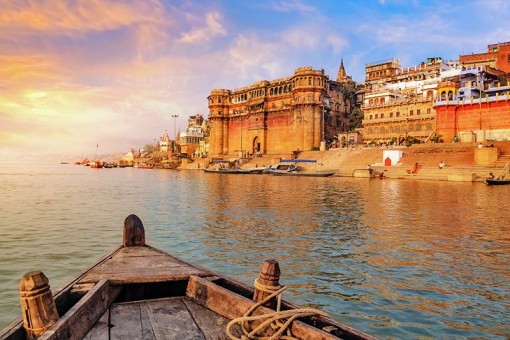
The Uttar Pradesh Government has embarked on a drive to get global recognition for the cultural and religious heritage sites located in backward districts of the state. The state government is currently developing various such sites that have immense tourism potential, namely in the districts of Shravasti, Balrampur, Devipatan and Gonda. People are hardly aware of the significance of these heritage sites due to the neglect by the previous governments. Now the Yogi Adityanath led Government is developing these sites as tourist attractions while simultaneously promoting traditional handicrafts of these regions. Promotion of local handicrafts would go a long way in creating avenues for employment generation for the local youth. Under the guidance of the chief minister, top government officials have accelerated efforts to implement tourism development schemes across the state, officials said here on Monday. The Yogi Government has prepared unique, attractive packages for tourists in the last four years to boost tourism in the state. Employment opportunities are growing in tandem with tourism in the state. Local people have started getting jobs of guides while craftspersons are getting more work and sale of local products and handicrafts have picked up. The Yogi Government is developing tourism facilities in Shravasti, Kapilavastu and Kushinagar in the Buddhist circuit and Chitrakoot and Shringverpur in the and Ramayana circuit. Earlier, the Government held a grand celebration of Uttar Pradesh Day on January y 24 this year, honouring dignitaries who had performed remarkably in various fields. The previous governments had remained oblivious of their contributions. Water sports was launched at Ramgadhatal of Gorakhpur during the Yogi regime itself. The flow of tourists to Pilibhit Tiger Reserve has also seen a rise. The Yogi Government’s unique initiative to promote lesser known tourist destinations in the last four years has received acclaim worldwide. The successful holding of Prayagraj Kumbh 2019 was even acknowledged by UNESCO while the Bhoomi Pujan by Prime Minister Narendra Modi for the construction of a grand Ram temple in Ayodhya became a historic event. The Yogi Government has been promoting pilgrimage sites located within the state of UP through a variety of events for the past four years. One such event ‘Ayodhya Deepotsav’ has got entry into the Guinness Book of World Records for the second year in a row this year. The celebrations of Deepotsav in Ayodhya, Krishnotsav in Mathura, Rangotsav in Barsana as well as Shivratri and Dev Deepavali in Varanasi have established the richness of Indian cultural heritage on the global stage. The UP Government has formed Pilgrimage Area Development Council to promote religious tourism in different districts. The establishment of the Brij Tirtha Kshetra Vikas Parishad, Naimisharanya Teerth Kshetra Vikas Parishad, Vindhya Teerth Kshetra Vikas Parishad, Shukradham Teerth Vikas Parishad, Chitrakoot Teerth Kshetra Vikas Parishad and Devipatan Teerth Vikas Parishad bear testimony to the state govt’s efforts to promote pilgriamge spots. As part of the Yogi government's strategy to promote tourism, the Shaktipeeth and spiritual circuit are being developed on war footing. The development of Kashi Vishwanath Corridor is also included in this. Meanwhile, Mahabharata sites under the Mahabharata Circuit are also being developed. Tourism facilities in Agra and Fatehpur Sikri under Jain and Sufi circuits have also improved considerably in the last four years.
Read more
Lockdown in Delhi, Maharashtra, West Bengal, Goa & many other states; details
- May 04,2021
- The Financial Express
COVID-19 second wave lockdown in India: In the coming weeks, going out won’t be easy for the public! As the entire nation is in distress with surge in novel coronavirus cases under the massive second wave of the COVID-19 pandemic, many states across India are reimposing restrictions and night curfews to contain the spread of covid infection. Some of the populous states such as the states of Maharashtra, Karnakata, Gujarat, Odisha, West Bengal which are reporting a rapid increase in Covid cases, have already implemented or extended the lockdown. Following is the list of major states and their lockdown details: Delhi: As Delhi continues to witness surge in covid cases, CM Arvind Kejriwal, on May 1, announced on his Twitter handle that lockdown in the national capital has been extended by one week. West Bengal: The state government announced a partial shutdown on Friday, an IE report said. During the lockdown, malls, eateries, as well as other non-essential establishments, will remain shut. Every day, markets will remain open from 7:00 AM to 10:00 AM and from 3:00 PM to 5:00 PM. Besides, the government has banned all social, cultural, academic and entertainment gatherings. Grocery shops and pharmacies are exempted. Gujarat: In 29 cities of the state, a night curfew is in place from 8:00 PM to 6:00 AM. During curfew hours, a patient and an attendant can travel. Besides those carrying train, bus, or plane tickets can move as well. All commercial establishments will be closed till May 5 except shops selling essentials and provisions and restaurants giving takeaways. Industrial units, banking and finance establishments as well as construction activities have been allowed with an attendance of 50%. Also, entry is banned in places of worship. Karnataka: The state has imposed a two-week full lockdown from 9:00 PM on April 27 to 6:00 AM on May 12. People can venture out for essential items between 6:00 AM and 10:00 AM. During the lockdown, all inter-state and intra-state bus services, as well as metro services, will remain shut. Those with flight or train tickets can travel. The state has allowed movement of goods. Eateries are allowed to provide take-aways. Units in the construction, manufacturing and garment sectors can function at 50% capacity. Odisha: With a surge in covid cases, the state imposed a night curfew on April 15 across 30 districts. Soon after, the government also announced a weekend shutdown. The state has allowed government offices to function with 50% capacity and it asked private offices to work with minimum manpower. Uttarakhand: Curfew is imposed in the districts of Haridwar, Dehradun, Udham Singh Nagar and Nainital till May 3. Shops selling vegetables, grocery and meat will be open till 4:00 PM. Home deliveries are allowed from eateries, however, public transport is stopped. Construction will continue in the public interest. No restrictions have been announced on industrial activities. Vehicles which are carrying goods and are involved in essential services have been exempted. Medical stores, petrol pumps, LPG supply will remain open. Jammu and Kashmir: The curfew has been extended till 7:00 AM on May 6 in the districts of Srinagar, Budgam, Baramulla and Jammu. Besides essential services, restaurants in hotels can service in-house guests. All shopping complexes, schools, markets, gyms, parks to remain close. Vegetables and grocery shops are allowed to remain open. The UT administration, on Saturday, extended the curfew to four more districts other than the 11 districts, which were already under curfew. Goa: On Sunday, the state extended its Covid-related restrictions till May 10. The restrictions will be imposed in the state from 6:00 AM on May 3 till 7:00 AM on May 10, according to various news reports. Essential services will be permitted but bars, casinos, sports complexes, river cruises, colleges, schools, gyms and weekly markets will be closed.
Read more
EU Wants To Open Up Travel For Vaccinated Tourists
- May 04,2021
- Forbes.com
The European Commission on Monday proposed easing travel restrictions on foreign citizens who have been fully vaccinated against Covid-19, as the bloc attempts to revive the region’s tourism industry that has been devastated by the pandemic. KEY FACTS In a press statement, the European Union’s executive body said it has recommended allowing the entry of visitors from outside the bloc who have been fully inoculated with a vaccine that has been approved either by the EU or the World Health Organisation. The Commission’s proposal asks EU member states to consider accepting vaccine certificates issued by other non-EU countries until the bloc’s planned Digital Green Certificate goes into effect. The proposal will only allow travelers from countries with relatively low infection rates. The recommendation, however, features a so-called “emergency brake” provision that will allow member states to ban all travel from countries where any Covid-19 variants of concern emerge. The proposal requires approval from the member states, and the Commission hopes it will be adopted by the end of the month, so that it can go into effect by June 1, journalist Dave Keating reported. WHAT TO WATCH FOR It’s unclear how such a system will work for tourists from countries like the U.S., which currently does not issue a national Covid-19 vaccination certificate, and is unlikely to do so in the future. The current proposal is also limited to proof of vaccination, whereas the Digital Green Certificate will also allow travelers to submit a recent Covid negative test result or proof that they have recently recovered from the disease. “Time to revive EU’s tourism industry & for cross-border friendships to rekindle - safely. We propose to welcome again vaccinated visitors & those from countries with a good health situation,” Ursula von der Leyen the president of the European Commission tweeted. Critics of such vaccine travel passes or certificates have expressed concern over the discriminatory impact of such a system due to the unequal rollout of vaccines around the world. In January, WHO officials said governments should “not introduce requirements of proof of vaccination or immunity for international travel as a condition of entry” at present. KEY BACKGROUND Last month, the bloc proposed the rollout of a bloc-wide Digital Green Certificate system to enable the safe entry of travelers both between member states and from other foreign countries. Unlike so-called “vaccine passports,” the EU’s proposed Digital Green Certificate will contain proof that either a person has been fully vaccinated against the disease or show that they have received a recent negative test result or have recovered from Covid-19. At the time, EU Justice Commissioner Didier Reynders stressed that the proposed certificates were not the same as vaccine passports as they would not discriminate against those who have not been able to receive a shot.
Read more
Government extends ban on scheduled international flights till May 31
- May 03,2021
- Times of India
Given the uncontrollable rise in COVID-19 cases, the Director General of Civil Aviation (DGCA) has extended the ban on scheduled international flights to and from India till May 31, 2021. The DGCA took to Twitter and made the announcement by sharing a circular. But the circular also mentioned the following: "However, international scheduled flights may be allowed on selected routes by the competent authority on a case to case basis". Though this ban will not be applicable to international all-cargo operations and flights approved by the aviation regulator. On March 23, 2020, all the scheduled international passenger services were suspended in India due to the COVID-19 outbreak. However, some special flights were given permission to operate under the Vande Bharat Mission from May 2020. Several air bubble arrangements were created between countries to ease the evacuation process. Things were easing gradually but a new strain was found that was much more dangerous and contagious. So once again, DGCA had to ban all the scheduled international commercial passenger flight services to and from India till May 31, 2021.
Read more
Saudi Arabia to open land, sea, air borders from May 17: Ministry
- May 03,2021
- ETTravelWorld
Saudi Arabia will permit citizens immunised against Covid-19 to travel abroad from May 17, the interior ministry said on Sunday, more than a year after Saudis were barred from external trips. The ministry said three categories of people would be considered immunised - those who have received two doses of the coronavirus vaccine, those administered a single dose at least 14 days prior to travel, and people who have recovered from the infection within the last six months. Saudis under the age of 18 - an age group that is not receiving vaccines - would also be allowed to travel from May 17, provided they carry an insurance policy approved by the central bank, the ministry said in a statement published by the official Saudi Press Agency. "The decision to lift the suspension on citizens travelling outside Saudi Arabia will go into effect at 1:00 am on May 17," the ministry said, adding that the kingdom will re-open its land, sea and air borders. The policy represents an incentive for citizens, barred from travelling abroad since the pandemic began, to get vaccinated. The kingdom's health ministry said it has administered more than nine million coronavirus vaccine doses, in a country with a population of over 34 million. The country has reported more than 419,000 coronavirus infections and nearly 7,000 deaths from Covid-19. Last month, Saudi Arabia permitted only people immunised against Covid-19 to perform the year-round umrah pilgrimage from the start of Ramadan, the holy fasting month for Muslims. It is unclear whether that policy, which comes amid an uptick in coronavirus infections in the kingdom, would be extended to the annual hajj pilgrimage later this year.
Read more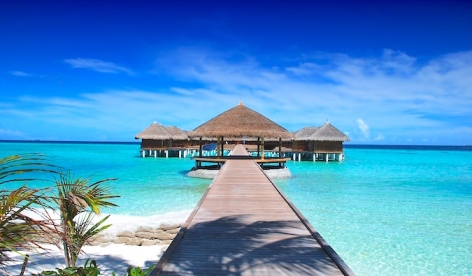
Maldives still welcomes rich Indians, Bollywood stars
- May 03,2021
- Hindustan Times
The Maldives is still welcoming Bollywood stars and other rich Indians to its secluded beaches and crystal-clear lagoons even as countries ban flights because of a brutal Covid surge. The Indian Ocean archipelago of more than a thousand islands reopened its international borders in mid-July after being shut for three months, and Indians have accounted for the most visitors. This week, as a string of other countries banned visitors from India, the Maldives government made only slight changes to its rules for passengers from its giant neighbour. Holidaymakers arriving from India now can only stay at a resort or a safari boat and are not allowed to check into guest houses in inhabited islands where locals also live. "The geographical location of our islets help us to minimise the (virus) risk," Thoyyib Mohamed, the head of the country's tourism authority, Visit Maldives, told AFP. "Each islet is a self-contained single resort. Even if we have a few cases popping up here and there, we can contain it within the resorts without exposing the local population."
Read more