

SJTA issues new SOP: Jagannath temple to remain open from Monday to Saturday
- Apr 05,2021
- The Financial Express
In view of the rising number of COVID-19 cases, the Shree Jagannath Temple Administration (SJTA) issued fresh Standard Operating Procedure (SOP) on Saturday as per which the 12th century shrine will remain open for all days of the week except Sunday for public darshan. There will be complete sanitisation of the temple premises on every Sunday, officials said. A meeting held with all stakeholders under the Chairmanship of SJTA chief Krishan Kumar had a detailed discussions on the implementation of guidelines laid down in the SOP. “It was discussed that a number of suggestions have been received for making changes in the SOP in view of the increasing trend in number of COVID-19 cases,” Kumar said, adding that the matter was also discussed in the Chhatisha Nijog (servitor bodies) on March 23. According to new SOP, the temple will remain open on all days of the week except Sundays. This will be as per the schedule of Niti (ritual) on different days. The public darshan of Lords will start latest by 6 am unless notified. There will be complete sanitization of the temple premises on every Sunday. Night time sanitization of the temple premises will be conducted twice a week after closure of the temple for public darshan, he said. There should be strict enforcement for ensuring Covid appropriate behaviour by all concerned. “The guidelines issued by the state government with respect to restrictions on persons coming from other states, shall be scrupulously followed,” he said. The SOP guidelines will be reviewed further from time to time to time, to facilitate the darshan by the devotees and also for management of COV1D-19 pandemic, he said.
Read more
Weekend lockdown: Maharashtra shuts eateries, malls, curbs travel amid Covid surge
- Apr 05,2021
- Times of India
The rapid spread of Covid-19 finally forced the Uddhav Thackeray government to announce lockdown-like restrictions across the state from 8pm on Monday. On weekends, a complete lockdown will be imposed. A state government notification issued late on Sunday said all shops except essential services would remain shut till the end of the month, leaving people only Monday to buy non-essential goods this month. Restaurants will be allowed to operate only takeaway and home delivery services during the day hours. While night curfew will be imposed every day from 8pm to 7am, gatherings of five or more persons will be prohibited during the daytime — 7am to 8pm — on weekdays. No religious, social, cultural or political functions of any kind will be allowed. The state decided it would conduct board exams, but all schools, colleges and private tuition classes would remain closed. As fresh lockdown looms, many migrants head home from Maharashtra. Vaccinations will continue all days of the week, including weekends. The notification gave an exemption from the restrictions to essential services like hospitals, diagnostic centres, pharmacies and other health services, grocery, vegetable and food stores, trains, public buses, taxis and autorickshaws, all public services by local authorities, goods transportation and agriculture-related services, e-commerce and accredited media. Banking, insurance, telecommunication and mediclaim offices will also be exempted. Private vehicles, including private buses can ply as usual from 7am to 8pm from Monday to Friday, and in emergencies or on essential service duty from 8pm to 7am on weekdays and 8pm on Friday to 7am on Monday.
Read more
Srinagar organises six-day music festival in tulip garden to attract tourists
- Apr 05,2021
- Hindustan Times
Sandwiched between Zabarwan Hills and the picturesque Dal lake, Asia's largest Tulip Garden here reverberated with music as famous singers, including rapper Badshah, mesmerised the audience with some popular numbers on Saturday at the beginning of a six-day festival. The 'Tulip Festival' was thrown open by Jammu and Kashmir Lieutenant Governor Manoj Sinha in the presence of Kerala Governor Arif Mohammad Khan at the majestic Tulip Garden which was opened for visitors last month after two years. Hundreds of visitors, locals as well as tourists, flocked the garden on the first day of the festival amid an almost full bloom of the tulip bulbs to be a part of the festival organised by tourism and floriculture departments. The 30 hectare-garden presented a colourful look as 15 lakh tulip bulbs of various colours and 62 varieties captivated the visitors. Several singers, including local ones, from the Union Territory performed some famous numbers, enthralling the audience. But it was singer and rapper Badshah who stole the show and hearts of many. Badshah treated the audience to many of his hit numbers, including his famous track 'Abhi toh party shuru hui hai', drawing huge applause and whistles from them. For many visitors it was a double treat – to visit Asia's largest Tulip Garden and to see one of their favourite artistes perform. "It is such a treat for us. We knew there was some festival, but we never imagined we would see Badshah perform in front of us,” Gauri, a tourist, said. The tourist said the festival made their visit to Kashmir special. "I will cherish this visit for long. It was a dream to come here and seeing all this beauty and being a part of this celebration is something I will remember and cherish for long,” she said. Another tourist, Mahi from Dehradun, said she had heard a lot about the garden but found it better than her expectations. "This is such a beautiful place. We have enjoyed it a lot,” she said, adding that the festival was an added bonus. A host of activities, including cultural activities, musical evenings, will be held during the festival, officials said. On the sidelines of the festival, various stalls have been set up to display and promote the rich traditions, culture, cuisines and crafts of the valley, they said. This has been done so that tourists become familiar with the valley's rich culture and values, the officials said. They said the festival presents a unique opportunity to display the diverse culture and cuisine of Jammu and Kashmir. Speaking on the occasion, Sinha said his administration is taking several steps to increase tourist footfall. Despite the Covid pandemic, the tourism sector is seeing a significant boom in the UT with tourists coming in large numbers, he said. He said the Tulip Festival provides a perfect opportunity to display the diverse beauty of Kashmir and more plants and varieties would be added to the garden in the coming year to extend the duration for which the garden remains open. Sinha expressed gratitude towards Prime Minister Narendra Modi for encouraging people from across the country to visit Jammu and Kashmir and experience the pristine beauty of "paradise on earth". Sinha said many new destinations are being opened up for tourists to extend their stay in Jammu and Kashmir. "he union territory is endowed with unparalleled beauty and natural landscapes which have huge potential for tourism. Earlier, tourists were visiting other famous gardens and tourist places of Kashmir, but now Tulip Garden has become an iconic destination and attraction for them, the Lt Governor added. Appealing to tourists as well as filmmakers to visit and shoot in the valley, Sinha assured them of a secure environment and all the support. He called upon the visiting tourists to "carry the fragrance of J&K" with them and share their memorable experiences with others. Jammu and Kashmir offers a host of attractions to tourists to experience the scenic beauty, warm hospitality, rich culture and heritage, the Lt Governor said. Meanwhile, the Kerala Governor said not only is Kashmir the most beautiful place in the world but the people living here, their thoughts and vision is beautiful as well. "This is the people's legacy which they have inherited from the great Reshis as the valley is the land of Sufi Reshis who have given Kashmiri people a rich culture, tradition and ethos,” he said, adding, Kashmir is the Crown of India.
Read more
Indigo Introduces Door to Door Baggage Delivery Service
- Apr 05,2021
- Outlook Traveller
India’s private air carrier Indigo has introduced a paid door to door baggage delivery service on its domestic sector wherein the luggage of a flyer with confirmed ticket will be picked up from as well as delivered to a previously declared address. However, the service ‘6EBagport; is currently being offered in select cities, such as Delhi and Hyderabad, to be followed by Mumbai and Bengaluru. The service is expected to help passengers to skip queues at departure/arrival, and especially useful for those who may have to travel with excess baggage or have to rush off to a meeting soon after arriving. According to the airlines, the service is being provided in collaboration with CarterX, a Bengaluru based luggage delivery company. For passengers departing from a city, the baggage will be collected at the doorstep (for which a slot has to be booked before making payment), including collection of excess baggage fee, etc. and dropped at the EBagPort service at the counter; baggage tags will be sent via text. Web check-in is compulsory before luggage is picked up. Apart from the paperwork related to booking and confirmation, customers have to make a mandatory security declaration. Customers will have to meet the CarterX personnel prior to entering the airport terminal and identify the luggage. On arrival, the passenger has to contact a CarterX executive and follow up with transferring of documents. CarterX will send out photos via text or WhatsApp to validate that the right luggage has been picked up. Passengers can also track their baggage from pickup to delivery. Keeping the pandemic situation in mind, the service operator has said that all safety protocols are being followed such as contactless transfer of documents, digital payments, passenger certifying status of health through the Aarogya Setu App (Green/Safe is mandatory for pick-up of order) contactless pick up and drop, etc. The door to door baggage delivery service also adheres to all prescribed rules as per airlines’ policy. Vistara too has a similar collaboration called Vistara Gate to Gate with CarterX
Read more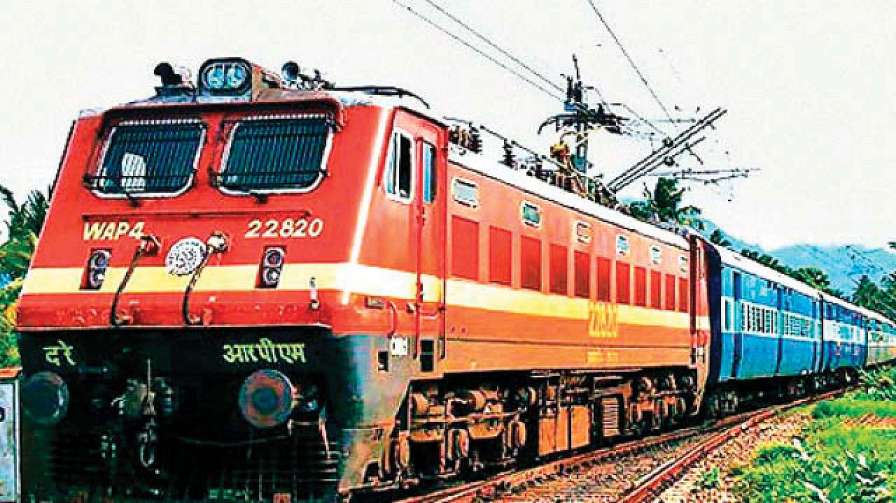
Indian Railways, IRCTC news: 71 unreserved mail/express trains from today, says Piyush Goyal
- Apr 05,2021
- Zee Business
Keeping convenience of passengers in mind, Indian Railways will start 71 unreserved mail/express trains from today (April 5, 2021). These trains will be run by Northern Railway. Railway Minister Piyush Goyal said this has been done keeping rail passengers' comfort in mind. The Northern Railway zone will run these unreserved mail and express trains across the Indian Railways network. Piyus Goyal had also said that Railways will reactivate facility of UTS ON MOBILE App where unreserved train services are being reintroduced. "This will save time, decongest ticket booking counters & help ensure social distancing," he had tweeted. In order to avoid any inconvenience to passengers in booking unreserved tickets and to ensure norms of social distancing at booking counters while purchasing the tickets, It has been decided that in addition to UTS ON MOBILE App facility available on suburban sections, this facility may also be reintroduced on non-suburban sections of zonal Railways, said the Ministry of Railways in a statement.. Zonal Railways have been instructed that whenever unreserved train services are introduced on any zonal Railway, the zonal Railway concerned may accordingly enable UTS ON MOBILE app for issuing unreserved tickets. Here is the list of 71 unreserved mail/express trains 1) Train Number 04335 Moradabad- Ghaziabad running from 15.04.21 2) Train Number 04336 Ghaziabad- Moradabad running from 15.04.21 3) Train Number 04327 Sitapur City- Kanpur running from 16.04.21 4) Train Number 04328 Kanpur- Sitapur City running from 17.04.21 5) Train Number 04329 Sitapur City -Shahjehanpur running from 17.04.21 6) Train Number 04330 Shahjehanpur- Sitapur City running from 16.04.21 7) Train Number 04334 Najibabad-Gajrola running from 15.04.21 8) Train Number 04333 Gajrola- Najibabad running from 15.04.21 9) Train Number 04523 Saharanpur-Nangaldam running from 05.04.21 10) Train Number 04524 Nangaldam- Ambala running from 06.04.21 11) Train Number 04532 Ambala-Saharanpur running from 06.04.21 12) Train Number 04263 Varanasi- Sultanpur running from 05.04.21 13) Train Number 04264 Sultanpur-Varanasi running from 05.04.21 14) Train Number 04267 Varanasi- Pratapgarh running from 05.04.21 15) Train Number 04268 Pratapgarh- Varanasi running from 05.04.21 16) Train Number 04641 Jalandhar City- Pathankot running from 05.04.21 17) Train Number 04642 Pathankot- Jalandhar City running from 06.04.21 18) Train Number 04626 Ferozpur- Ludhiana running from 05.04.21 19) Train Number 04625 Ludhiana- Ferozpur running from 05.04.21 20) Train Number 04627 Ferozpur- Fazilka running from 05.04.21 21) Train Number 04628 Fazilka- Ferozpur running from 06.04.21 22) Train Number 04629 Lidhiana- Lohain Khas running from 05.04.21 23) Train Number 04630 LohianKhas- Ludhiana running from 05.04.21 24) Train Number 04632 Fazilka- Bhatinda running from 05.04.21 25) Train Number 04631 Bhatinda- Fazilka running from 06.04.21 26) Train Number 04643 Ferozpur- Fazilka running from 06.04.21 27) Train Number 04644 Fazilka- Ferozpur running from 05.04.21 28) Train Number 04647 Pathankot- Baijnath Paprola running from 05.04.21 29) Train Number 04648 Baijnath Paprola- Pathankot running from 05.04.21 30) Train Number 04658 Ferozpur- Bhatinda running from 06.04.21 31) Train Number 04657 Bhatinda- Ferozpur running from 05.04.21 32) Train Number 04659 Amritsar- Pathankot running from 05.04.21 33) Train Number 04460 Pathankot- Amritsar running from 06.04.21 34) Train number 04461 Delhi- Rohtak running from 05.04.21 35) Train Number 04462 Rohtak- Delhi running from 05.04.21 36) Train Number 04456 Rohtak- Delhi running from 05.04.21 37) Train Number 04455 New Delhi-Ghaziabad running from 05.04.21 38) Train Number 04469 Rewari- Delhi running from 06.04.21 39) Train Number 04470 Delhi- Rewari running from 05.04.21 40) Train Number 04430 Saharanpur- Shamli-Delhi running from 05.04.21 41) Train Number 04429 Delhi-Shamli-Saharanpur running from 05.04.21 42) Train Number 04452 Kurukshetra- Delhi running from 05.04.21 43) Train Number 04451 Delhi- Panipat running from 05.04.21 45) Train Number 04454 Rohtak- New Delhi running from 05.04.21 46) Train Number 04450 Panipat- New Delhi running from 05.04.21 47) Train Number 04449 New Delhi- Kurukshetra running from 05.04.21 48) Train Number 04437 Palwal- Shakurbasti running from 05.04.21 49) Train Number 04457 Rohtak- Delhi running from 05.04.21 50) Train Number 04447 Ghaziabad- New Delhi running from 05.04.21 51) Train Number 04438 New Delhi- Palwal running from 05.04.21 52) Train Number 04439 Palwal- Ghaziabad running from 05.04.21 53) Train Number 04435 Rewari- Meerut Cantt running from 05.04.21 54) Train Number 04436 Meerut Cantt- Rewari running from 05.04.21 55) Train Number 04441 Ghaziabad- New Delhi running from 05.04.21 56) Train Number 04442 New Delhi- Ghaziabad running from 06.04.21 57) Train Number 04440 New Delhi- Palwal running from 06.04.21 58) Train Number 04446 Shakurbasti- Palwal running from 05.04.21 59) Train Number 04445 Palwal- New Delhi running from 05.04.21 60) Train Number 04465 Delhi- Shamli running from 05.04.21 61) Train Number 04446 Shamli- Delhi running from 05.04.21 62) Train Number 04433 Delhi- Rewari running from 05.04.21 63) Train Number 04434 Rewari- Delhi running from 05.04.21 64) Train Number 04432 Jakhal- Delhi running from 05.04.21 65) Train Number 04431 Delhi- Jalhal running from 05.04.21 66) Train Number 04471 Ghaziabad- Panipat running from 05.04.21 67) Train Number 04472 Panipat-Gjhaziabaz running from 06.04.21 68) Train Number 04459 Delhi- Saharanpur running from 05.04.21 69) Train Number 04460 Saharanpur- Delhi running from 05.04.21 70) Train Number 04444 New Delhi- Ghaziabad running from 05.04.21 71) Train Number 04443 Ghaziabad- New Delhi running from 05.04.21
Read more
Kashmir to get a boost in tourism with direct, evening flights
- Apr 03,2021
- Times Of India
Tourism in Jammu and Kashmir is soon going to get a much-needed boost as direct evening flights got introduced. Night flight operations have already begun at Srinagar airport, thus allowing travellers to get into the valley at all times of the day now. This should also bring an advantage for the hospitality industry in Jammu and Kashmir. The first such flight operated by IndiGo, landed in Srinagar from Bengaluru on March 29 with 184 passengers on-board. Such direct flights from large cities such as Bengaluru is set to attract more visitors to the Union Territory. The Director of Kashmir Tourism, Dr. GN Itoo said in a statement that the valley has been aiming for such a development for a long time. The direct and evening flights will help travellers, especially business class ones to fly and save time. He said that such flights will increase the tourist inflow into the Union Territory. GoAir too had run a test trial for evening flights to Srinagar. According to the Director of Tourism Kashmir, “We are hopeful that more airlines will follow suit as we are expecting good tourist footfall in coming months. We have been promoting Kashmir’s varied tourism products among travellers through our marketing campaigns across many cities of the country. We received a good response and tourists are flying in in good numbers.” Kashmir has been seeing an increase in the number of tourists ever since the restrictions have been lifted.
Read more