
With the surge in cases, Odisha government is taking preventive measures to contain the virus
- Mar 04,2021
- Outlook - The News Scroll
The Odisha government has imposed travel restrictions for passengers coming from 12 states. Travellers coming from Maharashtra, Kerala, Tamil Nadu, Chhattisgarh, Madhya Pradesh, Telangana, West Bengal, Punjab, Delhi, Chandigarh, Karnataka and, Andhra Pradesh must home-isolate for seven days, due to the rising cases in the respective states. According to official announcements, the state government has made thermal screening a mandatory process for travellers coming from these 12 states. People with COVID-19 symptoms will be tested immediately on site, and those who test positive will be taken to Covid Care Centres and treated accordingly. Pradipta Kumar Mohapatra, the additional chief secretary to the health and family welfare department said in a statement, “All the passengers coming from listed 12 states will remain under mandatory home-isolation for seven days. If during the quarantine period they develop any symptoms, they will be subjected to RT-PCR test. If found positive in RT-PCR test, they’re going to be treated as per the Covid treatment protocol.” Keeping in mind the surge in cases and severity of the situation, Mohapatra has written to the directors of Bhubaneswar and Jharsuguda airports, district collectors, municipal commissioners, and to the East Coast Railway general manager. The letter stated that all travellers must go under a mandatory thermal screening at airports and railway stations. He has further added that leniency in lockdown rules might lead to a spike in cases, and that strict protocols and travel restrictions are the need of the hour.
Read more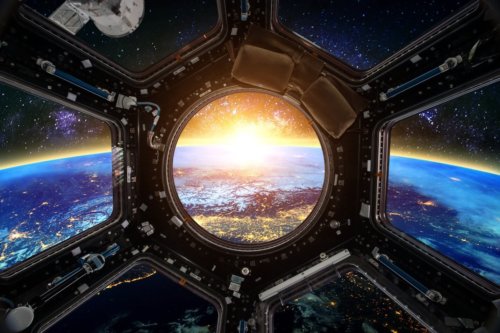
Space tourism: Plans for world's first space hotel to open in 2027
- Mar 03,2021
- BBC
Do you want to go travelling to see the world when you're older? But what if you could see the whole world in one go...? That might be possible in just six years, when the first ever space hotel is expected to open. Floating in low-orbit, guests will be able to see the Earth as they move around the planet. The hotel, called Voyager Station, will have enough rooms for 400 guests, viewing platforms to see the Earth below, a cinema, a spa and a gym - including a basketball court where players can use low gravity for a slam-dunk the professionals would be proud of! Inspired by a "spaceship of the future", the hotel will also have 3D holograms, digital wall art, a digitally interactive table and robots. Orbital Assembly Corporation (OAC), the company behind the idea, say building the hotel will begin in 2025 with plans for it to open its doors, or in this case air-lock hatches, in 2027. "The station will be designed from the start to accommodate both national space agencies conducting low gravity research and space tourists who want to experience life on a large space station with the comfort of low gravity and the feel of a nice hotel," OAC says. The hotel will spin as it travels around the Earth to create artificial gravity. Onboard the gravity will be about a sixth of that found on Earth, which is the same level of gravity found on the Moon. Spinning in space produces the same effect as gravity because it produces a force (called the centrifugal force) just like Earth produces the force of gravity based on the planet's size. The hotel will cruise around the whole world every 90 minutes, at a height of about 1,200 miles up. Guests will also be able to check-in at the hotel without any astronaut training. Although it's not clear how much a stay at the hotel will cost, trips to space don't come cheap. But despite the price, the hotel's website says that guest will have the most comfortable stay possible in space, complete with working toilets! "Historically, a trip to space cost up to $25 million and that resulted in staying in a Zero-G facility, using vacuums for toilets, sleeping in a bag strapped to a wall, and living in a laboratory," the website says, explaining that artificial gravity means guests can enjoy normal " toilet facilities, showers, and beds that function similar to what you are used to on Earth".
Read more
Open Thailand Safely campaign: Tourism sector seeks to reopen country by 1 July
- Mar 03,2021
- Travel Daily Media
The #OpenThailandSafely campaign was launched on 2 March with the support of over 15 major companies including YAANA Ventures, Minor Group, Asian Trails, Capella Hotels and Resorts, EXO and many others. The Open Thailand Safely campaign has laid out its arguments in a petition which will underpin a formal request to the Royal Thai Government to respond favourably to the rollout of Covid-19 vaccination programmes underway in Europe, USA and other Thailand tourism source markets. The petition is open to anyone in Thailand or around the world who would like to see the country reopen. The campaign argues that 1 July is an appropriate date for five reasons: The majority of citizens in many source markets will have been vaccinated by then; It gives time to Thai medical authorities to vaccinate both front line staff in hospitality settings in Thailand and/or vulnerable citizens around the country; It gives international travellers time to make travel plans and bookings; The date gives time to airlines, hotels, tour operators and others to start marketing and sales and get ready for tourism operations to commence; and It will take Thailand at least a year, and maybe longer, to return to the large numbers of international visitors that it had before the Covid-19 crisis. To ensure the safe reopening of Thailand, the petition argues that “international tourists can be asked to satisfy any safeguards the Thai Government may require. This may, for example, include showing officially recognised proof of a Covid-19 vaccination from their home country, purchasing health insurance, showing proof of a negative Covid test within 72 hours of departure, and so on.” #OpenThailandSafely was the initiative of leading Bangkok-based private sector travel companies YAANA Ventures, Minor Group and Asian Trails. The CEO of YAANA Ventures, Willem Niemeijer, said: “The 1 July reopening would be a strategic opportunity for Thailand to show a leadership role among Asian countries and prepare the way for a solid recovery of the Thai economy in 2022.” In the coming days, the Open Thailand Safely campaign will also send the 1st July request to Thailand Prime Minister General Prayut Chan-o-cha, the Minister of Tourism and Sports, Mr Phiphat Ratchakitprakarn, and the Governor of the Tourism Authority of Thailand, Mr Yuthasak Supasorn. According to the Bank of Thailand and official sources in Thailand, tourism, pre-Covid, was worth about 2.9 trillion baht (US$96.5 billion). Some 39.7 million international visitors in 2019 helped sustain up to 8.3 million jobs. However, arrivals fell to 6.7 million in 2020 making between two and four million people unemployed. Meanwhile, destinations such as Seychelles, Maldives, Greece and Sri Lanka have either opened borders already or are in discussions to do so in light of successful Covid vaccine rollouts in their key source markets.
Read more
India to develop 78 maritime tourism landmarks around lighthouses: PM Modi
- Mar 03,2021
- The Economic Times
Inaugurating the Maritime India Summit 2021 through video conferencing, Prime Minister Narendra Modi has said that his government is committed to invest in transforming port and waterways infrastructure in a way which is not seen before. He said that the Ministry of Port Shipping and Waterways has created a list of 400 investable projects in the sector with potential investment opportunities to the tune of INR 2.25 lakh crore to make this transformation happen. Talking about India’s long coastline and its potential to become tourism hubs, the Prime Minister said that the government has drawn up plans to develop landmark destinations around the lighthouses across the vast coastline. India has 189 lighthouses across the country's coastline. “We have drawn up a programme for developing tourism in the land adjacent to 78 lighthouses. The key objective of this initiative is to enhance development of the existing lighthouses and its surrounding areas into unique maritime tourism landmarks,” PM informed. As far as utilising the domestic waterways for environment friendly transportation and tourism, the Prime Minister said that the government has embarked on a comprehensive plan to operationalise 23 waterways by 2030. “Ours is a Government that is investing in waterways in a way that was never seen before. We aim to operationalise 23 waterways by 2030.” He announced that steps are also being taken to introduce urban water transport systems in key states and cities such as Kochi, Mumbai, Gujarat and Goa. The Prime Minister invited the world to come to India and be a part of India’s growth trajectory. India is very serious about growing in the maritime sector and emerging as a leading Blue Economy of the world. He noted that instead of a piecemeal approach focus is on the entire sector as one. The recent renaming of the Ministry of Shipping is a step in that direction, he said.
Read more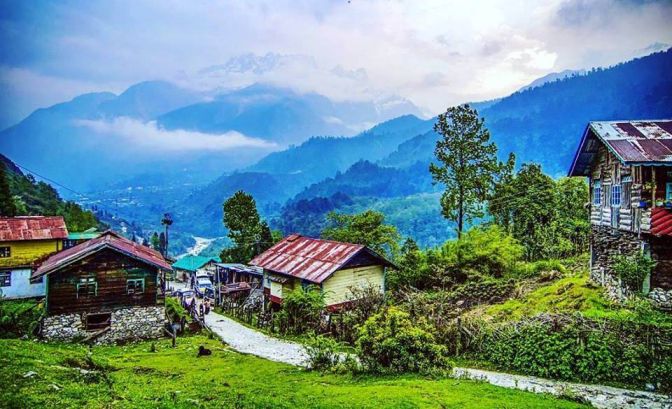
COVID-19 resurgence: Sikkim reimposes travel restrictions
- Mar 03,2021
- East Mojo
The Sikkim government has decided to impose travel restrictions from six states, including Maharashtra, Tamil Nadu, Kerala, Telangana, Karnataka and West Bengal due to an increase in the number of fresh coronavirus cases in these states. Principal Secretary (Health) K Sreenavasansulu said the decision has been taken in view of the increasing cases of the mutant virus and difficulties faced by other states in containment of the same. “The five states in South India and West Bengal will be included in travel embargo to Sikkim. It is mandatory for any person coming to Sikkim from these states to be RT PCR negative. We won’t consider the Rapid Antigen Test,” Sreenavasansulu said. Noting that thousands of young people from Sikkim are students at various colleges in South India, Sreenavasansulu made clear the restrictions have been imposed on everyone coming from these states. “Sikkim has worked hard to reach a single digit in the number of COVID cases. Now our vaccination drive is working well and there is no urgency in Sikkim. But, as a precautionary measure, we will be issuing the order on travel restrictions today,” Sreenavasansulu said. To enforce the same, Health Department will depute officials at Siliguri in West Bengal to check on individuals coming from the aforementioned states. “When people reach Siliguri, it remains untapped as to where they are coming from. Hence, we will establish a mechanism for scrutiny of such people entering Sikkim. The same will be discussed with the Chief Secretary today,” he said. The government will also impose similar restrictions at Sikkim’s Pakyong Airport. “We already have a medical team at Pakyong, but more importantly, SpiceJet Airlines has been taken into confidence to impose restrictions on individuals travelling to Sikkim without the RT PCR negative certificate. Those without the negative certificate will not be allowed to board the plane,” the principal secretary said. Also, the RT PCR negative test certificate must be done within 72 hours of an individual reaching Sikkim from the restricted states. Meanwhile, the State Health Department has initiated second phase of vaccination for senior citizens above the age of 60 years and those with co-morbidities within the age bracket of 45 years to 59 years from March 1. The vaccination drive is currently underway at the STNM Hospital, which is being flooded by the elderly for vaccination, a department official said.
Read more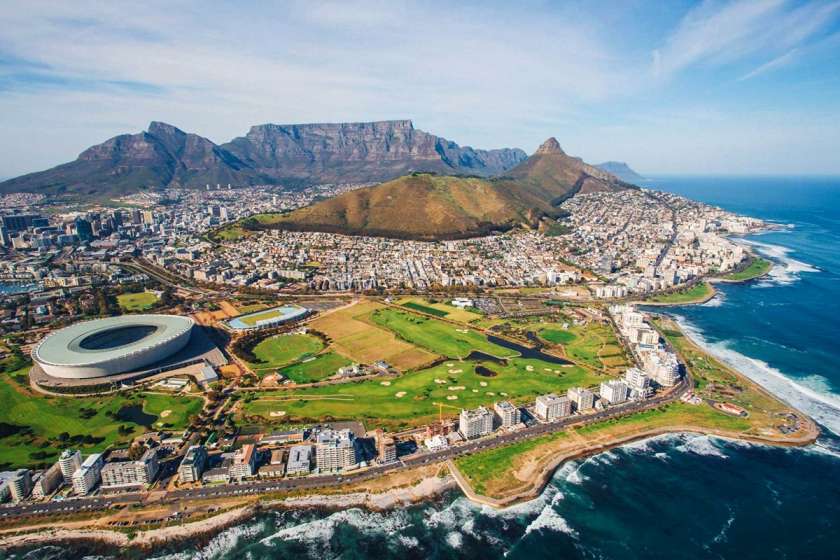
South Africa Reopening For Tourism As 5 International Airports Resume Operations
- Mar 02,2021
- Travel Off Path
As pandemic-induced restrictions continue to affect travelers around the world, it’s heartening to hear news stories that suggest international travel might be soon making a return. Though such stories are few and far between, one such story has emerged in the past day in the form of South Africa. Africa’s third most visited nation, South Africa has recently moved to lockdown level 1 – its least severe level of lockdown – and has opened five international airports in the process. Here’s what the level 1 restrictions are, and why travelers might want to consider South Africa for their next trip. South Africa at Level 1 – What Travelers Should Know The spread of the “South African” variant of Covid-19 caused panic around the world, leading to heightened travel restrictions for travelers who had visited South Africa, and for other countries where the strain was prominent. However, less than two months after posting its highest daily case figure of 21,980, South Africa has rolled back its own lockdown restrictions. Speaking in a national address last night, President Cyril Ramaphosa revealed the positive news to the nation, citing the fact that the country had clearly passed its second wave as a result of the strict restrictions and observation of basic health protocols. The move to level 1 sees South African citizens afforded a greater deal of freedom compared to the level 3 restrictions citizens had to adhere to prior to today. Curfew now runs from midnight until 4AM, whilst the sale of alcohol is permitted once more and gatherings of up to 100 people indoors and 250 people outdoors may now take place. Some restrictions are still in place despite the move to level 1. Nightclubs are still required to be closed, whilst some land border posts will also be closed. Mask wearing is still compulsory, and failure to wear a mask is deemed a criminal offence. Infection rates in South Africa continue to fall, with fewer than 10,000 infections reported in the past week. The country is also well underway with regards to its vaccination program, vaccinating 67,000 healthcare workers in the past ten days. The country aims to increase its vaccination sites from 17 to 49, as it begins to ramp up the vaccination campaign and return to normality once more. Alongside the move to a level 1 lockdown, the country has also reopened five international airports. The airports in question are OR Tambo, Cape Town International, King Shaka, Mpumalanga and Lanseria – the first three of which are the busiest in the country, welcoming in excess of 30,000,000 travelers in a typical year. Cape Town International was awarded the Best Airport In Africa at the 2020 Skytrax World Airport Awards. South Africa is popular with overseas travelers, with millions visiting the country each year. British travelers make up the bulk of overseas travelers, with 430,000 reported in 2018, whilst American travelers come second with 376,000. Visiting South Africa – What Travelers Need To Know Whilst many countries around the world have imposed restrictions on flights coming from South Africa due to fear of the virus variant, South Africa itself is open to tourists. Those wishing to enter the country must provide a negative Covid-19 PCR test certificate that is not older than 72 hours from time of departure. The test must be recognized by the World Health Organization. Failure to submit a certificate will result in the passenger taking an antigen on arrival at their own cost. Should the test come back positive, the passenger will need to self-isolate – at their own cost – for a period of 10 days. There is no mandatory quarantine. With the country’s stunning beaches, unmissable safari experiences and perspective-altering cultural experiences – not to mention affordability – South Africa is bound to be on countless lists of places people want to visit after the pandemic. Should variant-centered restrictions on travel to South Africa be lifted, the country may yet welcome tourists again once more in the near future.
Read more